Business Management Knowledge

Stay updated on the latest trends and insights in management, AI, and automation to help your business operate more efficiently every day

1.000+

Articles Published

60+

Article Topics

200+

Ebooks & Templates

Featured

Digital transformation in recruitment & HR management

The booming era of 'Digital Transformation' According to Aaron Levie, an American entrepreneur and CEO of the enterprise cloud company Box, "The next ten years of IT will be about transforming your entire business.” This shows that Vietnamese businesses are embracing a new identity in the digital transformation era to operate and grow. [caption id="attachment_3994" align="aligncenter" width="700"] The booming era of Industry 4.0[/caption] Digital Transformation is the change associated with the application of digital technology in all aspects of society and human behavior, helping to increase collaboration efficiency, optimize work performance, and deliver value to customers. This is an inevitable trend for businesses; if they do not undergo digital transformation, they will surely fall behind and be eliminated from the game.  Read more: The current state of digital transformation in Vietnam Applying AI in corporate recruitment Recruitment is the first step in human resource management within a business. So, how can you recruit quality personnel who meet the company's needs? How can you reduce the time spent filtering, compiling, and entering candidate CVs? How can you evaluate the performance of recruitment specialists and recruitment channels? These are the questions that always cause headaches and stress for HR professionals. When the market has an abundance of quality talent, but your company still can't secure any quality CVs, it becomes a difficult problem for the recruitment department. In the era of digital transformation, traditional recruitment methods are no longer suitable. Instead, human resource management software will help the HR department solve this challenging problem.  [caption id="attachment_3995" align="aligncenter" width="700"] Recruitment in the digital age[/caption] Applying digital technology will make this recruitment problem easier than ever. When implementing digital transformation, the business management software is responsible for downloading resumes and CVs that match recruitment needs from recruitment channels and job boards to the software.

How to improve management capability in a business?

Today, in any business, technology management should be considered an important part of overall business administration. Technology management involves building and implementing policies to address the development and use of technology, especially in planning and enhancing a company's technological capabilities. Characteristics of Technology In the most general sense, technology is a collection of methods, processes, skills, know-how, tools, and means used to transform resources into products. Thus, technology can be understood as systematic knowledge of processes and techniques used to process materials and handle information, including all the skills, knowledge, equipment, and methods used in creating goods and providing services. A technology has four closely related and complementary components. First is the technical aspect, which includes all physical means such as tools, machinery, equipment, vehicles, and other infrastructure, often forming a chain corresponding to a specific technological process. Second is the human element, which includes knowledge, experience, and skills learned and accumulated through activities, as well as qualities such as creativity, wisdom, coordination ability, and work ethics. Third is information, which is the data compiled and systematized for use in the technology. The final component is organization, manifested through regulations on responsibilities, authority, relationships, and coordination among individuals working with the technology, including worker training processes and arrangements to make the best use of equipment. Besides finance, human resources, marketing, and sales, one of the levers that many businesses worldwide are placing great expectations on is technology, especially digital technology. A recent statistic from MIT CISR shows that 42% of businesses expect technology strategies—including social media, mobile, analytics, cloud computing, and the Internet—to create breakthroughs and new competitive advantages for them. A Company's Technology Management Capability Today, in any business, technology management should be considered an important part of overall business administration. Technology management involves building and implementing policies to

8 Human Resource Management Lessons from Steve Jobs

Steve Jobs is known as an icon associated with the world-famous bitten apple logo. Besides creating distinctive products, Steve Jobs also had a very unique art of personnel management. Let's join 1Office to explore 8 noteworthy lessons from Steve Jobs' management style! 1. Tech Engineers are the Operators The people involved in Apple's daily operations are the engineers, not any other management component. The company's project teams are divided into small groups, and most members of these projects are tech engineers. According to long-time HR managers at Apple, most of the company's managers started as tech engineers. This is because they have a deep understanding of technology, know what the project needs, and make the process of working with other members easier. 2. A Culture of Mutual Respect Between Managers and Employees This is an unwritten rule in personnel management. Here, the concept of "subordinates obeying superiors" does not exist. Instead, a very special culture is present everywhere: mutual respect between managers and employees. This is because both managers and employees have a certain understanding and experience in technology. They support and interact with each other within a team to complete projects, and this is one of the key reasons for Apple's success. 3. Employees Have the Freedom to Build and Develop Products Unlike most other businesses, Steve Jobs' policy allowed his employees to freely correct their own mistakes without going through any procedures. Therefore, sometimes the most outstanding results bear the strong personal mark of the employees. 4. Creating Challenges for Employees Steve Jobs was truly talented at managing his employees and equipping them with the necessary skills for self-development within the company. Each of his employees might be assigned tasks that exceeded their capabilities to encourage them to be creative, complete the work, and thereby gain more motivation

10 Tips for Effortless, Effective Work Management

These are the "secrets" that can help you complete your daily tasks with the least amount of energy and end each day in the most relaxed way. Do one thing at a time. This method will help you handle all tasks in a less stressful, chaotic, and more effective way compared to multitasking. When you feel stressed or overwhelmed, remind yourself of this simple rule to regain your focus and inner clarity. Keep your workspace minimalist. This helps you stay more focused and think more clearly. A workspace consisting of only a desk, chair, laptop, and a glass of water or a cup of tea will help you pay more attention to your work. Slow down. A great way to work with focus is to move a little slower than your usual pace. Working at a slower pace also helps you feel more at ease and reduces the urge to procrastinate. Eliminate.Don't do things just because you feel you "should" or because it's always been done that way. Occasionally ask yourself: is there anything today or this week that I can skip without negative consequences? Asking this question helps you free up more energy and time. There is always room in life to simplify by eliminating. Work intensely, rest completely. Applying this method will help you stay sharp and energized throughout the day and week. You can set a timer for a focused work session of about 45 minutes. During that time, you focus on only one task. This makes it more manageable because you know you only have to do that task for a limited time. When the timer goes off, you can take a 5-15 minute break. During the break, you can have a snack, take a short walk, or lean back in your chair and close your

Secrets to Increasing Business Revenue at Year-End

Compared to other times of the year, people's shopping levels are much higher at the end of the year. This is also a time when people "treat themselves" by shopping for relatives and family. To increase sales revenue, businesses need to create new breakthroughs in their business strategy. The end of the year is when businesses quickly look for solutions to rapidly increase sales How to increase revenue for businesses at the end of the year Sell in combos to attract customers This is an effective idea to help increase sales profits. And the best way to increase revenue is to choose related or complementary products to sell as a combo. With these items, you will reduce the time spent searching and comparing the quality and price of each item, and instead get a satisfactory product set at a preferential price. Besides, at the end of the year, customers often look for items with discounts, discount vouchers, and suitable product combos. Because when buying in combos, customers will receive many accompanying benefits. See more: What is an SLA? Understand SLAs and KPIs to guide development Push advertising to attract customers Advertising will bring your goods closer to customers. Investing in advertising on social networks and in the press is also a better way to promote products to customers. This is also a solution to help increase revenue during the pandemic that many businesses choose. Use trade promotions to generate profit for the company The end of the year is when customers wait for clearance sales and promotions. If businesses know how to apply promotions during this period, they can reap huge profits. In addition, applying clearance sales also helps make business in the new year more effective, as you have cleared out all the stagnant goods after a long year.

Smart and Flexible AI & No-code Solution Suite

Accelerate operations, reduce costs, and improve management efficiency with centralized data

LEARN MORE

Digital Transformation Knowledge

Digital transformation in recruitment & HR management

The booming era of 'Digital Transformation' According to Aaron Levie, an American entrepreneur and CEO of the enterprise cloud company Box, "The next ten years of IT will be about transforming your entire business.” This shows that Vietnamese businesses are embracing a new identity in the digital transformation era to operate and grow. [caption id="attachment_3994" align="aligncenter" width="700"] The booming era of Industry 4.0[/caption] Digital Transformation is the change associated with the application of digital technology in all aspects of society and human behavior, helping to increase collaboration efficiency, optimize work performance, and deliver value to customers. This is an inevitable trend for businesses; if they do not undergo digital transformation, they will surely fall behind and be eliminated from the game.  Read more: The current state of digital transformation in Vietnam Applying AI in corporate recruitment Recruitment is the first step in human resource management within a business. So, how can you recruit quality personnel who meet the company's needs? How can you reduce the time spent filtering, compiling, and entering candidate CVs? How can you evaluate the performance of recruitment specialists and recruitment channels? These are the questions that always cause headaches and stress for HR professionals. When the market has an abundance of quality talent, but your company still can't secure any quality CVs, it becomes a difficult problem for the recruitment department. In the era of digital transformation, traditional recruitment methods are no longer suitable. Instead, human resource management software will help the HR department solve this challenging problem.  [caption id="attachment_3995" align="aligncenter" width="700"] Recruitment in the digital age[/caption] Applying digital technology will make this recruitment problem easier than ever. When implementing digital transformation, the business management software is responsible for downloading resumes and CVs that match recruitment needs from recruitment channels and job boards to the software.

3 Features That Help Businesses Succeed in Digital Transformation

In Vietnam, digital transformation in businesses is predicted to be the core of the National Digital Transformation process. This has been posing challenges for Vietnamese businesses, especially small and medium-sized enterprises. As Vietnam's leading all-in-one business management platform, 1Office is committed to accompanying businesses throughout their digital transformation journey. 1. Automation Feature The "Automation" feature helps transform a company's operational framework. It is a complete solution that guides businesses toward digitizing their activities and moving closer to a full digital transition.  [caption id="attachment_4029" align="alignnone" width="900"] Automation Feature[/caption] This feature provides tight control over all business activities, anytime, anywhere, on a single platform. It synchronizes data by combining three modules: Workplace (Online workspace), HRM (Human Resources), and CRM (Customer Relationship Management). Additionally, it fully automates data, supports, and sends notifications and reminders to help users manage work effectively: asset management, customer care, marketing activities, smart reporting, etc. Above all, with a dynamic process, this digital transformation solution helps to efficiently and optimally solve the business operations problem. 2. Workflow Management Feature This is a unique feature ONLY available on 1Office. Every business operates with numerous workflows, which are a measure of its operational efficiency. Workflows help employees understand what needs to be done, and managers can assign tasks more easily, with a clear view of who is doing what. A workflow management tool is essential to create consistency across all business activities. However, no such solution existed before. [caption id="attachment_4030" align="aligncenter" width="900"] Process management feature[/caption] Now, a digital transformation solution has emerged - process management to manage thousands of processes running within the business. The functions of this feature help minimize financial losses, time, and human resource waste within the company's structure, such as: Allowing the redefinition of currently applied processes: implementation steps, responsible person (group), execution statuses, and deadlines. Smart

What is Digital Transformation in Business? 12 Must-Have Detailed Implementation Steps

If businesses want to keep pace with the current rate of digital change, they must work to improve technological efficiency in every aspect. In other words, this is like inheriting agile principles through business operations. So, what is the current state of digital transformation adoption in Vietnamese businesses? Let's explore this with 1Office in the following article! I. What is digital transformation in business? Digital transformation is the process of applying advanced technologies to solve societal or everyday problems, based on the digitization of data and information across various industries.     Digital transformation is the golden key to solving business challenges For businesses, digital transformation is not simply about "moving" records, documents, and a few individual tasks to an internet-based application platform as some might think - that is merely "digitization." Digital transformation is a challenging yet promising process of "reinvention," because the benefits it brings to a business upon successful implementation are immense. Read more: Digital Transformation in Business - From Good to Great II. Why do businesses need digital transformation? Howard King once said that businesses do not transform by choice because it is extremely costly and fraught with risk. When a business fails to "evolve," it is forced to undergo transformation. A key factor for business growth is implementing the digital transformation revolution And that is one of the key factors helping businesses survive and thrive in the digital age. Here are the reasons that answer the question of why managers need to implement digital transformation. Save time and reduce costs for the overall management activities of the business. Enhance the ability to reach potential customers and customer segments that match the business's search needs. The process of summarizing and reporting to superiors will be faster, more detailed, and more in-depth. No more cumbersome, "off-topic," or

Digital Transformation in the Construction Industry in Vietnam

The pandemic brought the global economy to a standstill, with commercial activities "hibernating" for three long months, making the situation for businesses of all sizes more difficult than ever. The aftermath of COVID-19 has left a trail of disruption, causing businesses across various industries to struggle, with some even teetering on the brink of bankruptcy. Consequently, leaders are now urgently seeking a solution to save their companies from this "death sentence" in a volatile environment. Can applying digital transformation in the construction industry make a difference? The Plight of the Construction Industry After COVID-19 Challenges in HR and Work Management for the Construction Industry One of the most apparent challenges for the construction industry post-COVID is the alarming decline in the workforce. Although the government has controlled the pandemic, everyone remains vigilant to prevent reinfection and protect themselves.  The COVID-19 situation forces the construction industry to work online For this reason, project implementation and construction can no longer be carried out in concentrated areas as before. Instead, contractors are forced to extend timelines and work in smaller, separate teams, which creates significant challenges in supervising and tracking project quality and progress. Read more: Examples of Digital Transformation – 5 Latest Digital Transformation Trends in 2022 Challenges in the construction industry in tracking project progress Manual management processes also face significant disadvantages due to poor and ineffective coordination between departments. This stems from being forced into a rigid and mechanical "digitization" using free software like Google Drive, Skype, etc., which severely diminishes both work quality and efficiency. Forced digital transformation in the construction industry leads to negative efficiency Additionally, many other problems arise, such as employees missing information or forgetting client appointments. Tasks are not completed on time due to an unclear and illogical scheduling process. Challenges in the construction industry

Digital Transformation in the Design Industry – Should You or Shouldn’t You?

After the COVID-19 pandemic, the world is facing a crisis and economic recession. All businesses are suddenly at risk of bankruptcy and dissolution, and the design industry is one of the sectors that has suffered heavily from the pandemic's impact. At that moment, questions were raised everywhere about whether there was any solution to "save" the situation and help businesses survive. The clearest answer is a comprehensive "digital transformation" of the design industry. Problems for the design industry after COVID-19 Problems with partners and customer sources in the design industry Since it is not an essential industry for society, this is one of the sectors that suffered heavy losses post-COVID-19 as the number of potential customers decreased, business partners went bankrupt, and all projects and jobs were canceled or suspended. The design industry suffered heavy losses after COVID-19 For the units that "survived" after 3 months of "hibernation" due to the pandemic, they have to continuously face fierce competition in the market, struggling to find ways to turn the tables and make a successful comeback. Problems with human resource management in the design industry With the motto "he who changes first, wins," all businesses began to increase their work speed and employee efficiency, while also prioritizing cutting unnecessary costs and limiting unwarranted expenses for the company.  Businesses are forced to cut costs after COVID-19 However, cutting costs in this area does not change the fact that businesses still face difficulties in controlling the quantity and quality of personnel in the current era of "racing" to recover their "strength."  Problems with work performance in the design industry After COVID, managers who stick to manual methods for managing projects, tracking progress, and working through tools like the Microsoft Office suite and Google Drive will waste a lot of time.  Free digitalization apps

Digital Transformation in the Real Estate Industry – A Comprehensive Overview

The COVID-19 pandemic has passed, leaving heavy consequences for the global economy. However, the pandemic also served as an opportunity for businesses of all sizes and across all industries to review their operating models and development paths, identify shortcomings, and reshape their entire operational mechanisms. Amidst a constantly changing market storm, how can businesses turn risks into opportunities to survive and bounce back stronger? Is the answer the digital transformation of the real estate industry? The State of the Real Estate Industry Post-COVID-19 After the COVID-19 pandemic, "gloomy" and "stagnant" are the two keywords that best describe the situation of the real estate industry. Most potential customer sources were lost due to financial difficulties. Real estate projects were frozen, and some business premises were closed or repossessed because owners could no longer afford to pay, leading to mounting debt and increasing losses. Stagnant Operations in a Gloomy Real Estate Sector Since sales activities could no longer be organized on a large scale as before, real estate exchanges also operated at a minimal level, putting real estate businesses in a more difficult situation than ever. Some businesses were even forced to transfer many of their assets to maintain their operations. After the pandemic, real estate sales activities of businesses faced many difficulties Capital Mobilization - A Difficult Problem for the Post-COVID Real Estate Industry Finding ways to mobilize capital from customers is also a headache for businesses because everyone wants to invest in industries that meet essential consumer needs. Therefore, real estate has never been a priority investment choice at the present time. Legal "Bottlenecks" Causing Difficulties for the Real Estate Industry Administrative bottlenecks are also one of the reasons why real estate businesses are struggling, as housing and land projects have stalled due to legal procedure complications. Because of this

Digital Transformation in the Manufacturing Industry – A Decisive Step for the New Era

In the face of the COVID-19 pandemic, all industries worldwide in general, and the manufacturing industry in particular, are ready to face the reality that businesses are gradually entering a new era - Digital Transformation. Digital transformation in the manufacturing industry is becoming an extremely prominent trend in the current era. People can leverage digital data and internet connectivity to improve business management methods, reform the system, and take the business to a new level, a new stage of development. The state of the manufacturing industry during the COVID-19 pandemic Is demand exceeding supply a blessing in disguise? Due to its important role in both the global and domestic economies, the manufacturing industry has seen significant growth, especially in the medical equipment, tools, and food processing sectors. Demand exceeds supply in the medical equipment and food sectors during the COVID "season" These are items that serve essential human needs. However, due to the severe impact of the pandemic, many businesses still had to close or halt production. Reasons for a series of business bankruptcies The cause stems from the fact that the business structure has not kept pace with market demand and the need for expansion. Therefore, in addition to weaknesses in work management, information storage, and personnel management, these businesses also lack sufficient knowledge and are not ready to change and transform after the pandemic ends. Businesses "struggling" with the wave of digital transformation in the manufacturing industry The post-COVID period is considered a crucial survival phase for all industries and businesses. Because if a business is well-prepared and ready to innovate, it will not be killed off but, on the contrary, can develop rapidly and stand firm in the future. Key points for the manufacturing industry to maintain and develop Regarding personnel management The personnel management process must

Digital Transformation in B2B Commerce: A “Lifesaver” for Businesses

The decline in direct contact, the closure of trade fairs, the shift to remote work models, and the scarcity of direct sales opportunities have put the commerce industry in a more difficult situation than ever before. The COVID-19 pandemic has created major obstacles for companies that have not yet invested in e-commerce services. However, what can companies do in this situation? Is adopting digital transformation for the B2B commerce industry the only right strategy? To answer this question, let's find out more in the article below. The Current State of the B2B Commerce Industry - A Tumultuous Fall Due to the impact of the COVID-19 pandemic, many businesses have had to close down and go bankrupt, making the B2B commerce industry increasingly bleak. For traditional businesses or those that have not yet digitized or prepared, management issues are always poor, leading to an inability to compete in the market and eventual bankruptcy. Post-COVID, the B2B commerce industry faces struggles and hardships Partially digitized businesses may be able to survive temporarily, avoiding premature failure. However, this approach is not promising, because without complete digitization, a business cannot stand firm or compete in terms of speed, price, and service with other companies. Meanwhile, businesses that fully adopt digital transformation are rising strongly and are least affected. These companies continue to survive, transform powerfully, and grow relentlessly. Core Issues to Consider in the Digital Transformation of the B2B Commerce Industry The question arises: why do we suddenly have to undergo digital transformation? But after all, everything requires time, preparation, information gathering, and specific planning. Therefore, we must consider certain issues before adopting and implementing changes step-by-step to successfully apply digital transformation methods to the business. Digital transformation in the B2B commerce industry can help businesses turn the tide The Issue of Situation Assessment

Digital Transformation in the Education Sector – A “Survival” Move During COVID

Digital transformation in the education sector is a "survival" step for the entire industry. Besides bringing many potential opportunities, this change also helps increase development efficiency, expand cooperation, and minimize costs. However, implementing digital transformation hastily and carelessly can "ruin" the opportunities for many generations of students. This requires educators to learn, train, and change to adapt and inherit the essence of the technology world, educational methods, as well as the most advanced and new mindsets and concepts. The State of the Education Sector During the COVID Pandemic The COVID pandemic has significantly impacted the education sector as schools were continuously closed to comply with social distancing policies. The education sector falls into a state of "long-term school closure" Study and examination plans were all postponed, waiting for the pandemic to end. Although they had prepared a fighting spirit and tried to "survive" before and during the pandemic, not all schools were fully equipped with the human and material resources to ensure comprehensive teaching. The fact that teachers and staff often lacked time to prepare lessons and lesson plans was also one of the unavoidable difficulties. In addition, some schools also faced the situation of not being able to build an online learning environment in time, and students encountered many difficulties in proactively approaching and getting used to this completely new way of learning and teaching. Read more: Examples of Digital Transformation – 5 latest digital transformation trends in 2022 The Education Sector's "Response" Methods During the COVID Season Considering the volatile nature of the pandemic, the education sector has implemented the "digitization" of all documents and lecture slides to support online teaching. Some important course modules were "digitized" by livestreaming on social media to help students acquire knowledge. Tuition fees were also collected entirely online. Most schools had already

Should the spa and beauty industry digitally transform during the COVID pandemic?

Most industries are gradually shifting towards technologization and digitalization. More and more businesses are transitioning from traditional offline business models to online ones, including the Spa and beauty service industry. This means that applying a comprehensive digital transformation to the spa and beauty industry to keep up with the pace of the market economy is a crucial step for survival post-COVID. The current situation of the spa and beauty industry during COVID The COVID pandemic outbreak forced large spa centers and beauty institutes to close and cease operations according to the government's social distancing directives, leading to a severe decline in revenue. For small and medium-sized spas, the impact of the pandemic also led to a significant decrease in customers. Consequently, the issue of official salaries and bonuses for employees remains undecided, causing a sense of insecurity among workers. The spa and beauty industry suffered heavy losses due to COVID The inability to implement customer care, promotional, and appreciation programs put many businesses in a precarious situation, as they could not maintain their capital or retain their loyal customer base. The "social distancing" order caused spas and beauty institutes to close en masse Digital Transformation - A Timely Rescue Solution for the Spa and Beauty Industry The most important part of achieving success in the digital transformation revolution is to convert everything into an online business model, minimizing paper usage. This not only saves on storage space rental costs but also helps protect the environment.  Besides helping businesses in general, and spas and beauty salons in particular, to easily adjust and manage their work, digital transformation can also accelerate the achievement of service industry goals. Digital transformation of the spa and beauty industry is the optimal solution during the COVID season Previously, the process of booking and scheduling appointments with

Overview of digital transformation in the IT industry in Vietnam

Digital transformation is affecting every industry across all sectors. Although the responsibility for researching digital transformation for a business often falls to the Chief Technical Officer (or Chief Technology Officer), the final decision-maker is still the CEO. Part of the digital transformation process in the IT (information technology) industry is to devise suitable application methods for the business. Regularly adopt new technologies To lead the organization with a progressive and innovative mindset, personnel within the company need to know and understand new technological innovations relevant to the business's field, as well as how these innovations can help the business undergo a comprehensive "transformation." Technology adoption often follows an S-curve, with exponential growth. It took 70 years for 50% of households to own a telephone, 28 years for the radio, while the internet only took 10 years to become widespread. The speed of reception and adaptation to technology has also increased accordingly. Digital transformation in the IT industry means comprehensive technology adoption for the organization The IT industry plays a key role in promoting digital transformation within businesses. For example, the adoption of Automation. This is a strategy that helps significantly reduce costs and frees up the budget for reinvestment in technology. By pioneering the adoption of new technologies like Face Recognition and Digital Banking, TPBANK has attracted a large number of users, mostly young people. The development of the economy and technological innovations have a mutually supportive relationship. As a result, a future where businesses generate revenue and increase efficiency through platforms and algorithms is born. Enhancing leadership in digital transformation One of the biggest obstacles to improving the customer experience through digital transformation is the lack of leadership in the IT field. Without this position, 56% of managers believe it's impossible to define a clear and precise digital transformation

Digital transformation stories from major brands around the world

With the success of the 4th industrial revolution, digital transformation is now an inevitable trend, a matter of survival for countries, organizations, businesses, and consumers worldwide, opening the door for nations to increase labor productivity, promote innovation, and enhance national competitiveness. Let's explore digital transformation stories from major global brands with 1Office in the article below! I. Digital transformation stories from major global brands 1. AMAZON BUSINESS Amazon Business is a prime example of digital customer expectations transitioning to the B2B (Business to Business) world. Key features of Amazon Business include: free two-day shipping on orders of $49 or more, exclusive price discounts, hundreds of millions of products, purchasing system integration, tax-exempt purchases for eligible customers, shared payment methods, order approval workflows, and advanced order reporting, among many other great features. Amazon Business launched in April 2015, offering a more comprehensive marketplace for B2B companies with over 250 million products. Amazon Business is a prime example of digital customer expectations transitioning to the B2B world 2. IKEA The world's leading furniture retailer from Sweden is one of the outstanding examples of digital transformation. Thanks to new technologies, IKEA is improving the customer shopping experience and optimizing costs in the process. In 2017, IKEA acquired TaskRabbit. This is a website that allows users to find people to help assemble or move furniture purchased from IKEA to their apartments. Through this, IKEA attracts customers who cannot manage these tasks themselves, providing convenience and ensuring the best user experience. Ikea is one of the successful digital transformation examples Additionally, IKEA has decided to implement a smart home project. When shopping on the IKEA app, customers can digitally place new items into realistic 3D images of their homes. They can see how an item affects the arrangement of their current furniture, experiment with new

VIEW ALL

Management & Operations

How to improve management capability in a business?

Today, in any business, technology management should be considered an important part of overall business administration. Technology management involves building and implementing policies to address the development and use of technology, especially in planning and enhancing a company's technological capabilities. Characteristics of Technology In the most general sense, technology is a collection of methods, processes, skills, know-how, tools, and means used to transform resources into products. Thus, technology can be understood as systematic knowledge of processes and techniques used to process materials and handle information, including all the skills, knowledge, equipment, and methods used in creating goods and providing services. A technology has four closely related and complementary components. First is the technical aspect, which includes all physical means such as tools, machinery, equipment, vehicles, and other infrastructure, often forming a chain corresponding to a specific technological process. Second is the human element, which includes knowledge, experience, and skills learned and accumulated through activities, as well as qualities such as creativity, wisdom, coordination ability, and work ethics. Third is information, which is the data compiled and systematized for use in the technology. The final component is organization, manifested through regulations on responsibilities, authority, relationships, and coordination among individuals working with the technology, including worker training processes and arrangements to make the best use of equipment. Besides finance, human resources, marketing, and sales, one of the levers that many businesses worldwide are placing great expectations on is technology, especially digital technology. A recent statistic from MIT CISR shows that 42% of businesses expect technology strategies—including social media, mobile, analytics, cloud computing, and the Internet—to create breakthroughs and new competitive advantages for them. A Company's Technology Management Capability Today, in any business, technology management should be considered an important part of overall business administration. Technology management involves building and implementing policies to

Effective Online Management for the Architecture Industry

Meeting all the requirements of the architecture and interior design industry, 1Office business management software enhances your company's work efficiency by up to 200%. Join the discussion: Customers Ask, 1Office Answers to learn about the superior management system designed specifically for your business! Why is 1Office the dedicated management software for the Architecture and Interior Design Industry? 1Office aims to be a platform that provides a comprehensive toolkit with all the necessary features to manage business operations without needing to use multiple different software. It still ensures flexibility and customization, meaning customers have the right to choose the features their business needs to use on the system. 1Office allows businesses to centrally manage all projects and detailed work processes, from raw material management to the production of finished goods, distribution, delivery, and installation. 1Office provides a toolkit for regular reporting and summarization. This means managers can visually track all work progress. Every stage will be updated on the system for directors to monitor and make the quickest and most effective decisions. So what makes 1Office stand out? Comprehensive Features: You can manage all tasks, projects, and processes within your business on a single software system. Online Environment: 1Office is also an online work environment where each employee is provided with an account full of tools and resources corresponding to their role, enabling them to work anytime, anywhere with just an internet-connected device. Data Analysis: 1Office has developed a fully automated reporting system that allows each customer to custom-design report templates that suit them, similar to working on Excel. In addition, 1Office has designed a library of standard report templates for each module, which customers can easily download and use. Cost Savings: 1Office proves that the cost of using the software is truly an investment. This means that when a business

HR Strategy for Each Stage of Business Development

An HR management strategy is essential for businesses in the current digital transformation era. At a scale of 200 employees, you cannot apply the same HR management strategy as when the company had 20 people. [caption id="attachment_2674" align="aligncenter" width="617"] An HR management strategy is extremely important for every business[/caption] In an article in Entrepreneur, Heather Doshay - Vice President of People at Rainforest Company, divided a business's development process into four stages, corresponding to the four stages of human life. In each stage, Heather Doshay points out the key personnel a company needs to succeed. Heather Doshay completed her doctoral program in Organization and Leadership at the University of San Francisco (USA). She was a member of the Forbes Human Resources Council. See more: What is Turnover Rate? How to reduce the Turnover Rate in a business 1. HR Management Strategy in the Childhood Stage (1-50 employees) The HR management strategy during the childhood stage is extremely important. Because this strategy will shape who your business will be in the future. 1.1 The Situation You have an endless source of energy and ideas. 1.2 Who to Hire Creators: They are people who can connect with energy and inspiration like children. They constantly ask questions, sometimes more than can be answered. They create outside the box. They don't care about the crowd's attention. They just focus on getting the job done as well as possible. They want to experiment with many different projects. In this state, chaos is acceptable. Most mistakes need to happen at this stage so the business can build resistance for the next phase. 1.3 Tips for an Effective HR Management Strategy Don't assign initial employees titles like "Head of/Director of... at Company X." Unless you are sure they will stay with you through the next stage of development.

Management models for each stage of business development

Management is a complex form that business administrators need to pay attention to. Mastering these management styles helps managers optimize human resources and resolve issues within the current personnel structure. Let's explore the 4 management styles corresponding to each stage of business development with 1Office in the following article! 1. Management Style in the Formation Stage Management style: Dream Management method: Management by emotion - relationships. Company size: 5 - 8 people. In the startup stage, the business is formed by a group of people with a common vision and ideals, working with enthusiasm. At this stage, personnel do not work for immediate financial gain but strive out of passion and dedication. They possess abundant energy and an endless well of ideas. [caption id="attachment_10321" align="aligncenter" width="600"] In the startup stage, the business is formed by a group of people with a common vision[/caption] At this time, the company size is quite small (under 10 people), so everyone is closely bonded by emotion and relationships. Although this management method is highly sentimental, it is very suitable for the development circumstances at that time, creating motivation to promote enthusiasm, employee effort, and increase cohesion to develop and perfect the product. See more: When Employees Underperform, What Should a Boss Do to Improve It? 2. Management Style in the Turbulent Stage Management style: Framework Management method: Management through strict methods, establishing a series of criteria, standards, and monitoring systems, and applying pressure to ensure personnel complete their work. Company size: 10 - 40 people. Entering the Turbulent stage, the business begins to undergo internal changes. This is the stage where the company has chosen a business plan and starts to build and assert its position in the field. At this point, the company's financial situation may take a turn for the worse, and

How to manage a business effectively?

There are many reasons for ineffective business management. And one of those reasons is the lack of a suitable management tool. As a pioneering software in digital transformation, the 1Office all-in-one management solution is the toolkit that helps businesses, especially SMEs, solve the problems of ineffective business management.  1. Comprehensive Business Management Using multiple overlapping software for management is one of the current problems in business administration. Although the convenience of using software has helped businesses solve quite a few complex management issues. However, using too many different software applications to solve each individual problem can become counterproductive. Management tasks also become more difficult.  [caption id="attachment_10227" align="aligncenter" width="600"] 1Office - Comprehensive enterprise management solution[/caption] To address this situation, the 1Office software has an outstanding advantage: "Comprehensive Management". The entire business is encapsulated within 1Office; 1Office doesn't miss a single employee or department. Data is updated every second, accurately reporting the work efficiency of each employee and the progress of each project. 1Office monitors closely and provides timely warnings, eliminating the scenario where employees "let apologies become a habit" every time a manager checks on their work. See more: Effective work management toolkit 2. Access anytime, anywhere Work is always "drowning" in piles of paperwork and books; work discussions are conducted via paper, and even reports consume a lot of paper. Or often, employees are "lazy" and don't work, and when the boss is away on a business trip, they can't monitor their staff... These are common business management issues seen in many SMEs. Work doesn't just happen in the office, in meeting rooms, or through reports. Work happens through 1Office, with just a smart device connected to the Internet, anytime, anywhere, in any situation. Even when on a business trip, managers can track the work progress of each employee, making

3 Features That Help Businesses Succeed in Digital Transformation

In Vietnam, digital transformation in businesses is predicted to be the core of the National Digital Transformation process. This has been posing challenges for Vietnamese businesses, especially small and medium-sized enterprises. As Vietnam's leading all-in-one business management platform, 1Office is committed to accompanying businesses throughout their digital transformation journey. 1. Automation Feature The "Automation" feature helps transform a company's operational framework. It is a complete solution that guides businesses toward digitizing their activities and moving closer to a full digital transition.  [caption id="attachment_4029" align="alignnone" width="900"] Automation Feature[/caption] This feature provides tight control over all business activities, anytime, anywhere, on a single platform. It synchronizes data by combining three modules: Workplace (Online workspace), HRM (Human Resources), and CRM (Customer Relationship Management). Additionally, it fully automates data, supports, and sends notifications and reminders to help users manage work effectively: asset management, customer care, marketing activities, smart reporting, etc. Above all, with a dynamic process, this digital transformation solution helps to efficiently and optimally solve the business operations problem. 2. Workflow Management Feature This is a unique feature ONLY available on 1Office. Every business operates with numerous workflows, which are a measure of its operational efficiency. Workflows help employees understand what needs to be done, and managers can assign tasks more easily, with a clear view of who is doing what. A workflow management tool is essential to create consistency across all business activities. However, no such solution existed before. [caption id="attachment_4030" align="aligncenter" width="900"] Process management feature[/caption] Now, a digital transformation solution has emerged - process management to manage thousands of processes running within the business. The functions of this feature help minimize financial losses, time, and human resource waste within the company's structure, such as: Allowing the redefinition of currently applied processes: implementation steps, responsible person (group), execution statuses, and deadlines. Smart

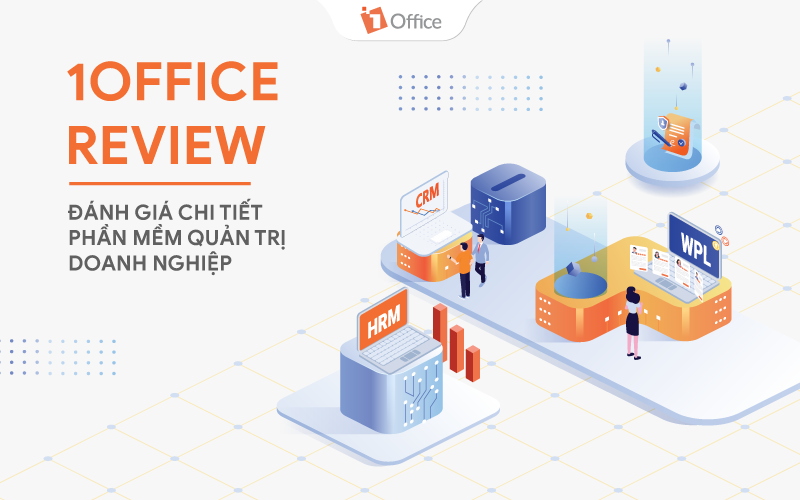
1Office Review: Detailed Review of 1Office Business Management Software

1Office is one of the names dominating the software technology market in Vietnam today, pioneering the trend of corporate digital transformation. Therefore, 1Office reviews are also a topic of interest for many managers and business owners who want to verify its quality and evaluate 1Office comprehensively based on the software's practical application. So, what features does 1Office include? What makes 1Office different from other business management software? Is 1Office the right choice for Vietnamese businesses? Let's get a general overview in the following article. 1. What is 1Office? What business problems does 1Office help solve? 1Office is researched and developed based on scientific thinking methods, consistently combined with a modern technology platform with 3 core development philosophies: Low-code, Automation, and AI, to create a unified, cohesive, and comprehensive all-in-one solution. More than just providing a comprehensive business management solution, 1Office offers an entire online working environment on the Internet. By digitizing your entire business and turning it into a unified entity covering HR, Customers, Work, Sales, and Communication. This allows every member in the system to easily communicate and leverage the benefits to serve their work. The 1Office.vn software operates smoothly on mobile phones, tablets, and computers (laptops, PCs), creating one of the most effective work and human resource management solutions for businesses in the digital era. From planning, assigning tasks, reporting results, to communication, everything is easy to use on a mobile phone, helping users proactively manage their work. Instead of focusing on providing grand features and solutions, 1Office aims to research and analyze user behavior on the software more deeply and meticulously, paying attention to the smallest details to help each individual in the business maximize efficiency and optimize every second of work. 2. Review of the main modules of the 1Office software Overall, 1Office provides a fairly

The Retail Industry in the Post-Covid-19 Digital Transformation Storm

The Covid-19 pandemic has just subsided, leaving many industries and businesses of all sizes struggling as the digital transformation storm sweeps across all commercial fronts. Faced with the intense market fluctuations affecting the retail industry and the global economy post-pandemic, businesses have quickly seized the opportunity to comprehensively implement "digital transformation" to survive and thrive in this new era. The Impact of Covid-19 on the Retail Industry Post-Covid, the retail industry is one of the sectors that has suffered heavy revenue losses. Some small and medium-sized enterprises have had to resort to various methods to attract customers and offset losses after resuming operations. The retail industry suffered heavy losses after the COVID-19 pandemic Therefore, most employees have had to work overtime upon returning to work to keep up with the pace and promote the company's redevelopment process. This issue also leads to increased costs as managers have to raise salaries, provide incentives, and reward employees for working overtime.  Challenges Specific to the Retail Industry Even before the pandemic, the retail industry often faced significant challenges due to some of its specific characteristics: Difficulties in Human Resource Management in the Retail Industry Employees frequently change shifts, work overtime, and have unfixed or unstable work schedules, making it difficult to track and manage human resources and employee schedules.  Retail personnel often face the situation of "more work, less pay" after COVID-19 Read more: Synchronizing Workflows - The Optimal Management Solution Many departments do not have fixed workplaces or must travel to various locations. For example, employees of supermarket chains, convenience store chains, fashion boutiques, cosmetic shops, etc., have to go directly to production factories, distribution agents, or work with customs authorities, etc. For this reason, tracking and evaluating the work progress of these departments is relatively difficult. Difficulties in Work Quality Assessment

Digital Transformation in the Construction Industry in Vietnam

The pandemic brought the global economy to a standstill, with commercial activities "hibernating" for three long months, making the situation for businesses of all sizes more difficult than ever. The aftermath of COVID-19 has left a trail of disruption, causing businesses across various industries to struggle, with some even teetering on the brink of bankruptcy. Consequently, leaders are now urgently seeking a solution to save their companies from this "death sentence" in a volatile environment. Can applying digital transformation in the construction industry make a difference? The Plight of the Construction Industry After COVID-19 Challenges in HR and Work Management for the Construction Industry One of the most apparent challenges for the construction industry post-COVID is the alarming decline in the workforce. Although the government has controlled the pandemic, everyone remains vigilant to prevent reinfection and protect themselves.  The COVID-19 situation forces the construction industry to work online For this reason, project implementation and construction can no longer be carried out in concentrated areas as before. Instead, contractors are forced to extend timelines and work in smaller, separate teams, which creates significant challenges in supervising and tracking project quality and progress. Read more: Examples of Digital Transformation – 5 Latest Digital Transformation Trends in 2022 Challenges in the construction industry in tracking project progress Manual management processes also face significant disadvantages due to poor and ineffective coordination between departments. This stems from being forced into a rigid and mechanical "digitization" using free software like Google Drive, Skype, etc., which severely diminishes both work quality and efficiency. Forced digital transformation in the construction industry leads to negative efficiency Additionally, many other problems arise, such as employees missing information or forgetting client appointments. Tasks are not completed on time due to an unclear and illogical scheduling process. Challenges in the construction industry

Digital Assistant 1AI

Optimize operations, elevate performance, and make instant decisions

LEARN MORE

VIEW ALL

HR Management

Secrets to Retaining Talent for Startups

Low salaries and bonuses, non-standardized work processes, and even an uncertain future for the company... these obstacles are real barriers for startups. How to retain talent? Let's explore ways to retain talented employees with 1Office! 1. Be an Inspirer to Retain Talent "In small and medium-sized startups, I believe the most important factor determining whether an employee stays or leaves is their boss," shares Ms. Vu Ha – HR Director of Harvey Nash Vietnam. According to Ms. Ha, a startup owner will succeed in stabilizing their workforce if they know how to use internal communication to help employees understand the challenges the company must overcome and show them how important their contributions are. "Material incentives are indeed difficult for small startups to use as 'bait' to keep employees, but boosting morale is entirely within reach." [caption id="attachment_1922" align="aligncenter" width="564"] How to manage talent in a startup?[/caption] From failures in retaining talent, Mr. Vu Anh Duc - co-founder of Abbycard, a mobile membership card management application, also concluded that: if a startup wants employees to stay long-term, the boss must first ignite the spirit of "building a company together, not just getting paid to work." According to Mr. Duc, this spirit helps employees understand that they are a part of the company and its development. Even though the startup is small and faces many difficulties, if you can inspire enthusiasm in your employees, they will always be ready to share the hardships with the company. To achieve this goal, startup leaders should not hesitate to share their vision for the company with their employees. When both sides are looking in the same direction, the employee's commitment to the company becomes stronger. Equally important is building employees' belief in the startup's future, because if they think the company will not achieve the

HR Management Lessons from the Story of “The Ant”

"The Elephant and the Ant" is a fable specifically for Human Resource Management. But in reality, it's not just about the singular perspective of HR management, but also about System Operations Management. This is a classic story that everyone in HRM must read. Join 1Office in following this interesting fable and discover some fascinating HR lessons! Every day, the Ant went to work very early and started working right away. The Ant was a great worker and was always happy. His boss, a Lion, was surprised to see the Ant working without any supervision. The Lion thought that if the Ant were supervised, he would surely be more productive. [caption id="attachment_1897" align="aligncenter" width="600"] A classic fable about human resource management[/caption] So the Lion hired a Cockroach as a supervisor. After being hired, the Cockroach's first decision was to install a wall clock to monitor punctuality. The Cockroach also needed a secretary to write notes and reports for him, so he hired a Spider to manage reports and answer calls. The Lion was very pleased with the Cockroach's reports and asked him to create charts to track output and analyze market trends, so he could present them at the Board of Directors meeting. So, the Cockroach bought a new laptop and a laser printer, then hired a Fly to manage the IT department. As for the Ant, who used to be a diligent and relaxed worker, he was now very annoyed by the paperwork and useless meetings that wasted all his time! Meanwhile, the boss Lion concluded that it was necessary to appoint a manager for the entire department where the Ant was working. This junior manager position was given to a Cicada. The Cicada's first decision was to immediately buy a beautiful carpet and a very comfortable chair for his

How to Calculate Probationary Salary Under the Latest 2026 Regulations: What Employees Need to Know

Probationary salary is a topic of great interest to many employees when starting a new job, especially regarding the actual amount received, the probationary period, and legal rights. However, not everyone clearly understands how to calculate probationary salary. In this article, 1Office will provide detailed instructions on how to calculate the latest probationary salary for 2026 according to current regulations so that both employees and businesses can easily apply it. How is probationary salary calculated? Below are some of the most common methods for calculating probationary salary used by businesses in 2026. Calculated based on the official salary (Most common) This is the most common method and is applied in accordance with the 2019 Labor Code. Accordingly, the minimum probationary salary must be at least 85% of the official salary for the job position after signing the official labor contract. Formula: Probationary salary = Official salary x 85% For example:If the official salary for an accountant position is 10,000,000 VND/month, the company must pay a minimum of 8,500,000 VND/month during the probationary period. Calculating Probationary Salary Based on Work Performance Some businesses in the sales, business, or service sectors often apply a performance-based salary structure during the probationary period. Accordingly, the employee's income typically includes: Agreed-upon base salary Commissions, sales bonuses, or KPI bonuses based on actual work performance Formula: Total Salary = Base Salary + (KPI Bonus + % Sales Commission) For example:A probationary sales employee receives a basic salary of 5,000,000 VND/month plus a 2% sales commission. If they achieve a revenue of 300,000,000 VND in the month, the commission received will be 6,000,000 VND. In this case, the employee's total probationary salary is 11,000,000 VND/month. See more: The Latest Basic Salary Calculation Formula 2026 Calculating Probationary Salary for Overtime and Holiday Work Even during the probationary period,
What is a Salary Scale? Updated Regulations and the Standard Calculation Method for 2026

Currently, many businesses and employees are still unclear about: What is a salary scale? How are salary scales calculated to comply with the 2026 legal regulations while ensuring fairness? Let's explore with 1Office the latest regulations on salary scales in detail and learn how to build a professional salary increase roadmap for your business. Overview of Salary Scales What is the concept of a salary scale? A salary scale consists of specific salary levels within the same salary grade or job title group. To fully understand the nature of a salary scale, here are its three main components: Number of salary levels: These are the income steps from minimum to maximum within a salary grade, creating a flexible salary range for the business. Salary coefficient: A specific index for each level; the higher the coefficient, the greater the actual salary received by the employee. Promotion criteria: Standards regarding competency, work performance (KPIs), and seniority used to review periodic salary increases. Why are salary scales necessary? Dividing salaries into scales is not just about classifying income; it also brings many strategic values to both employees and the business: Motivating career progression: Encourages employees to work hard to achieve higher income levels according to a clear roadmap. Recognizing seniority and competency: Clearly differentiates between newcomers and experienced individuals in the same position. Ensuring income fairness: Helps ensure that salaries accurately reflect the competency and contributions of each employee. Optimizing budget management: Makes it easier for businesses to forecast their salary fund and control annual personnel costs. Providing a transparent legal basis: Serves as a basis for calculating social insurance (SI) contributions and implementing periodic salary increases in accordance with regulations. Legal Regulations on Salary Scales in 2026 For businesses For the business sector, the Government has specific regulations to ensure the rights

Free 13th-Month Salary Excel Template & Standard Calculation Guide

Free download of the 13th-month salary template Excel file and an update on the most accurate bonus and salary calculation method for businesses. This tool helps accountants and HR simplify year-end bonus and salary procedures, ensuring maximum benefits for employees. Overview of the 13th-Month Salary What is the 13th-month salary? The 13th-month salary is essentially a bonus that businesses pay to employees at the end of the year (usually for the Gregorian New Year or Lunar New Year). Legally, the 2019 Labor Code does not have the term "13th-month salary". This amount is understood as a form of bonus (according to Article 104). Whether the 13th-month salary is paid depends on: The company's production and business results for the year. The employee's level of work completion. Agreements in the labor contract, bonus regulations, or the company's collective labor agreement. Although not legally required, the 13th-month salary has become an "unspoken rule" of employee benefits in Vietnam to retain talent and boost employee morale. What is a 13th-month salary calculation template? A 13th-month salary calculation template is a document or file (usually in Excel format) created by the Accounting or Human Resources (HR) department to calculate the specific bonus amount for each employee in the company. Using a standard calculation template helps businesses avoid unnecessary numerical errors and saves maximum time processing large amounts of HR data during the busy year-end period. What does a 13th-month salary template include? A 13th-month salary template typically includes employee information, basic salary, working time, 13th-month bonus amount, allowances, deductions, and the total net income. The specific information is as follows: [caption id="attachment_62664" align="aligncenter" width="900"] Basic 13th-month salary calculation template for businesses[/caption] Employee information: serial number, employee ID, full name, position, and department to accurately identify the beneficiary and avoid confusion between departments. Basis for

TOP 6 Legally Compliant Employment Contract Termination Forms for 2026

Using the correct labor contract termination request form is crucial to protecting your personal rights and avoiding legal risks. 1Office provides you with a complete set of 6 standard 2026 forms for all situations, helping you complete the resignation process quickly, legally, and in the most professional manner. What is a labor contract termination request form? A labor contract termination request form (often called a resignation letter) is an important administrative document created by an employee to submit to their employer (the Board of Directors or the Human Resources department).  The purpose of this document is to formally announce the employee's intention to cease fulfilling the obligations and rights committed to in the previous labor contract. Legally, according to the provisions of the 2019 Labor Code, this is the initial step to legally exercise the right to unilaterally terminate a labor contract. Submitting the form helps to accurately determine the notification date, which is then used to calculate the required notice period (3 days, 30 days, or 45 days) in accordance with the law. What content should a labor contract termination request form include? A proper labor contract termination request form should include 5 main sections: Personal and company information, reason for termination, proposed resignation date, handover commitment, and signatures of the involved parties. [caption id="attachment_62586" align="aligncenter" width="900"] 5 important sections required in a labor contract termination request form[/caption] Personal and company information This is a mandatory opening section to identify the parties involved in the civil/labor transaction. Employee: Full name, position, current department/division, employee ID (if any). Recipient: Addressed to the company's Board of Directors, Head of Human Resources, or direct manager. Company information: The full name of the business as per the business registration certificate. Reason for labor contract termination You do not necessarily have to write in

The Secret to HR Management – Winning Hearts and Minds

A talented HR manager often has to shoulder all tasks and activities in every role. This article will give you 6 secrets to make employees wholeheartedly respect your every decision: 1.Show unconditional love and encouragement HR managers need to always show employees that you value their feelings and are always listening to their opinions. You need to try to make time for focused conversations with your subordinates, instead of just responding with indifferent remarks. Not only that, but how you encourage your employees is just as important. You should always show that you appreciate the work employees do and praise their contributions to the company. This is a very effective way to motivate employees to keep trying. And finally, do you know the best way to encourage your employees? Propose promotions and turn efforts into bonuses so that your employees will constantly strive in their work and have more motivation to advance. 2.Show that your subordinates are your top priority Always organize your daily work neatly, and show your subordinates that they are your priority whenever they need your help. This doesn't mean you have to sacrifice more important tasks every time to answer employees, but always know how to show them care and consideration. But sometimes, you have to know how to choose. An editor of an online magazine chose to leave her job to join a lower position at Yahoo!, just to be able to work with her team. 3.Strengthen the team You need to establish rules for the team and require team members to follow these common regulations. Carry out tasks seriously, even if it might sometimes displease employees; however, if maintained over time, your team's work efficiency will increase significantly. And if the rules you set are broken, don't immediately reprimand them. Doing so can affect

Differentiating Gross and Net Salary, and how to convert Net to Gross so HR can’t mislead you

For working professionals, the thing everyone looks forward to the most is the salary received at the end of the month. And currently, many employees are still wondering how to calculate from Net to Gross salary, and what the concepts of Net Salary and Gross Salary are. Let's explore the detailed information on how to accurately calculate salary in a business with 1Office in the article below. If you are a job seeker preparing to sign an employment contract with a company, you will surely face the dilemma of choosing to receive a Gross salary or a Net salary. Because if you are not clear about this issue from the beginning, you will lose many benefits you are entitled to. Even after becoming an employee, if you don't understand it clearly, you should ask whether the company is paying you a Gross salary or a Net salary. [caption id="attachment_2510" align="aligncenter" width="800"] Gross and Net salaries are two common forms of payment today[/caption] Net salary and Gross salary are the two most common forms of salary payment today. For those just starting their careers, this is a rather new concept, but for experienced professionals, it's a very familiar term. However, not everyone clearly understands whether receiving a Gross salary or a Net salary is more beneficial. If you haven't grasped these two concepts, let's explore them with 1Office in the following article! 1. What is a Gross Salary? Gross salary is the total monthly income you receive, including your basic salary and other allowances and benefits, which also includes insurance contributions and taxes. The actual salary you receive will usually be lower than this Gross salary because you have to deduct a portion to pay for insurance and personal income tax as required by regulations. [caption id="attachment_16365" align="aligncenter" width="768"] What is

An Exceptional Recruitment Process – Your Magnet for Top Talent

Recruitment is a crucial step in building a company's workforce. Finding skilled individuals or those who fit the job requirements is very important. Hiring the wrong person is both costly and time-consuming. Today, 1Office will introduce you to the steps in a smart and suitable personnel recruitment process that any business can apply! I- General Overview of the Personnel Recruitment Process 1. What is a personnel recruitment process? The personnel recruitment process consists of the steps to attract and select a new employee to fill a vacancy within an organization. Recruitment is carried out by a recruiter, the HR department, or a hiring manager. The HR department will then issue the job requirements, review applications, and screen CVs to select the best candidates for the company. 2. Why do businesses need a personnel recruitment process? The most important purpose of the personnel recruitment process is to attract and select talent that fits the nature and scale of the business. Through recruitment strategies and plans, managers can reach and select the most potential candidates to join the workforce, building a strong team for the company. In addition, the recruitment process also offers many great benefits, such as: Saving costs and reducing the time the HR department spends searching for candidates Preparing a thorough recruitment plan to facilitate quick and effective candidate screening and searching An effective recruitment process demonstrates the professionalism of the organization Enhances the company's brand image Motivating employees to work with enthusiasm and dedication Increasing personnel work performance II- Steps in the Personnel Recruitment Process Step 1: Identify Recruitment Needs First, you need to start by identifying the recruitment needs within your organization. This need can range from filling a vacant position, managing a team's workload, or expanding into new markets. Simply put, the recruitment need is about

HR Management

VIEW ALL

Work & Project Management

10 Tips for Effortless, Effective Work Management

These are the "secrets" that can help you complete your daily tasks with the least amount of energy and end each day in the most relaxed way. Do one thing at a time. This method will help you handle all tasks in a less stressful, chaotic, and more effective way compared to multitasking. When you feel stressed or overwhelmed, remind yourself of this simple rule to regain your focus and inner clarity. Keep your workspace minimalist. This helps you stay more focused and think more clearly. A workspace consisting of only a desk, chair, laptop, and a glass of water or a cup of tea will help you pay more attention to your work. Slow down. A great way to work with focus is to move a little slower than your usual pace. Working at a slower pace also helps you feel more at ease and reduces the urge to procrastinate. Eliminate.Don't do things just because you feel you "should" or because it's always been done that way. Occasionally ask yourself: is there anything today or this week that I can skip without negative consequences? Asking this question helps you free up more energy and time. There is always room in life to simplify by eliminating. Work intensely, rest completely. Applying this method will help you stay sharp and energized throughout the day and week. You can set a timer for a focused work session of about 45 minutes. During that time, you focus on only one task. This makes it more manageable because you know you only have to do that task for a limited time. When the timer goes off, you can take a 5-15 minute break. During the break, you can have a snack, take a short walk, or lean back in your chair and close your

6 benefits of a workflow management tool

Every business operates with numerous work processes. Essentially, a work process is a collection of repetitive tasks performed collaboratively by different departments within the company.  The Importance of Work Processes “A process is a mandatory sequence for performing a defined activity, designed to meet specific management objectives.” Having a clear work process helps employees or anyone performing a task understand what steps to take within an "activity," how to perform them, and what the desired outcome is. For example, in the "Deploy advertising for client A" activity: It starts with the sales department confirming the order. After sales confirmation, it moves to the accounting department for order verification. If all conditions are met, a production order is issued, and the subsequent steps are carried out. If any step is not completed, different tasks will be triggered. Workflow: "Implementing Advertising for Clients" Thanks to such "workflows," both experienced and new employees can grasp what needs to be done. Managers can also assign tasks more easily and have a clear understanding of what each employee is doing. A business with smoothly running workflows is an efficient business.  The "troubles" of not being able to manage workflows The importance of workflows has been proven. In a business, many processes run intertwined and simultaneously, thus requiring centralized management. However, many businesses and companies lack this management, or more specifically, they lack the tools to manage workflows. Therefore, tasks are usually communicated via email, group chats, etc. Often, managers write down processes on paper or even assign tasks verbally. They also perform management tasks on spreadsheet software like Excel to build and track data, but this is quite complex and lacks consistency.   The "troubles" for managers include: No reminder tools, having to chase each individual for work progress, and employees are also prone to forgetting

How Work Management Helps “Lubricate” the Business Machine

Managing a business is like operating a complex machine. Each employee is like a gear in that machine - if the gears run smoothly, the machine operates efficiently; if a gear gets stuck or rusty, the machine becomes sluggish, or even breaks down completely. Managers need to master and apply effective work management methods to drive the entire enterprise towards its desired goals. The 5 work management methods listed below will serve as a "guiding star" for managers when applied correctly within their business. Work Management Method 01 - Systemize Your Work By systemizing work, managers can know the daily and weekly workload, track which tasks are backlogged or unprocessed, and monitor the actual status of projects the company is undertaking. A work system helps track project progress and achieve goals List your projects and review the goals that managers have set. Evaluate important projects, or adjust goals to better suit the situation of each business. A good system not only helps broaden managers' perspectives but also helps make the process of creating work procedures smoother, faster, and more efficient. Work Management Method 02 - Document Storage For some businesses, document storage is always a top priority. Good storage practices help managers easily control and manage information or important documents. Additionally, when running a large company, information security is crucial. If document storage is careless or sloppy, leaks or losses can easily occur, which can have negative consequences or, even more seriously, create legal trouble for the business. Organized storage helps prevent information loss and makes searching easier The storage process can be implemented by systemizing information and documents in a neat and organized manner for easy retrieval and use when needed. Currently, there are two common forms of storage: "hard" and "soft" storage. So, what is soft storage? Soft

Create a personal schedule in just 4 simple and most effective steps

Time is something that money can't buy, yet we often waste it by using it inefficiently in our daily lives. So, how can we avoid wasting time? In reality, creating a personal schedule is crucial for improving the quality of both work and life. Scheduling ensures we have enough time to complete important tasks, avoid taking on too much work, or wasting time on unproductive activities. Above all, creating a personal schedule helps establish a balance between work and daily life for everyone. To create a reasonable and realistic personal schedule that fits your life and work, refer to the following 4 simple yet effective steps. Creating a personal schedule - Step 1: Determine appropriate work and rest times for the project This is one of the most important steps if we want to create a healthy, balanced work lifestyle. Currently, many businesses experience a serious "imbalance," where the workload is overwhelming, but there is little time for the brain and body to rest. Creating a personal schedule helps balance work and life Once the body is depleted of energy and shuts down, we won't be able to keep up with the set schedule, leading to falling behind on projects and a decline in output performance. Creating a personal schedule - Step 2: Create a project task list and determine priorities A clear list of project priorities will naturally help us save a lot more time compared to not having a list. Determining priority tasks helps focus on goals Usually, there are many tasks to be done in each project, so besides saving time, this also helps us accelerate project progress and manage the workflow more reasonably and with less complexity. Creating a schedule for the project helps save a lot of time Additionally, creating a list and identifying priorities

Manage and monitor projects in detail, all from your smartphone

The race in the digital age has never cooled down for growing businesses as the demand for convenience and speed in project management and monitoring continues to rise. The question that has been raised and become the premise for debates and discussions among business administrators is whether one can directly manage and track project progress with just a smartphone. To explore and answer this question, let's delve into this issue together. Difficulties in project management and monitoring Any business, whether in its startup phase or growing steadily, will face similar difficulties in management. This is because, traditionally, every project required a direct manager who was responsible for reporting to superiors to promptly find solutions if any issues arose. Traditional project management is associated with computers and desks Such direct monitoring creates many hassles for the person in charge due to its inconvenience and difficulty. For example, it's impossible to monitor continuously, work gets interrupted without knowing the cause, reports lack detail leading to reprimands from the boss, long travel distances, and a lot of time and effort are spent without achieving the desired work efficiency. With traditional management methods, employees or superiors involved in the project have limited tasks and cannot independently make changes, updates, corrections, or contribute ideas when necessary. For this reason, if one stage of the project is handled or executed poorly, the entire process can be halted until the root of the problem is found. Causes hindering project management and monitoring Currently, there are many reasons that hinder project management and monitoring, and here are some of the most prominent ones. Unclear work allocation Some people are overloaded with work, while others have nothing to do. This leads to employees shirking responsibility and passing the buck to each other. For a project to run smoothly, interaction

Free Task Management Tool – Should You Use It or Not?

Task management is a pressing issue for many managers. To save every bit of time for strategic thinking and project coordination, managers need to find ways to optimize tasks, procedures, and processes within the business, ensuring operations run as smoothly as possible. In the era of digital transformation, many managers have turned to free task management tools with the hope of reducing the burden of operational costs. Do these tools actually help businesses, and how can they be applied most effectively? Find the answers in this article.  Task Management Tools - Should You Use Them? The short answer is yes. With a massive workload, investing in task and process management from the very beginning is the right move to avoid wasting time, money, and intellectual resources in later stages. Using a task management tool is recommended to avoid waste To achieve this, using a task and process management tool is an essential step, as it will deliver the following clear benefits: Estimating, Planning, and Monitoring Project management tools such as project planners, task assignment tools, project cost estimators, and Gantt charts (a type of chart used for project planning and scheduling) will help managers easily execute tasks set for each project item.   Gantt chart used for planning and managing project tasks Many managers consider the creation and development of a project plan to be the most crucial stage in project management and coordination. These tools will help managers clearly define overall goals and specific objectives for each department and individual in the company. Assigning and Coordinating Human Resources In the field of human resource management, project management tools play a crucial role. Gantt charts, along with reports on progress, performance, and labor costs, will help managers easily assign tasks and coordinate project schedules reasonably. This is a strength that

Work Management Mistakes – 5 Things CEOs Need to Avoid Immediately

As a CEO, you must face and take responsibility for all issues that arise within the business. However, reality shows that not every manager has the ability to see the core of a problem and find the best solution to minimize the impact on the company's reputation and quality. Therefore, despite many attempts to understand and overcome them, making work management mistakes in today's era still causes significant difficulties for both the company in general and managers in particular. Work Management Mistake #1: Not Knowing How to Delegate Tasks to Subordinates This is one of the most common mistakes CEOs make in work management today. Regardless of whether the business has a capable workforce to handle tasks, some managers still have the habit of taking on too many things at once. Of course, you might be able to complete everything faster, more cost-effectively, and even better yourself, but in the long run, this can leave managers with no time to more closely manage or supervise the company's major and minor activities. A major mistake leaders make is taking on too much work themselves Additionally, prolonging the process of "taking on all the work" will cause you to lose mental clarity and focus, significantly reducing your ability to concentrate on the company's core vision. As for your employees or team members, they may feel that their boss doesn't trust them. In the long run, this will foster feelings of being undervalued and disrespected by their own superiors. Always remember that delegating work to subordinates is not an option or a requirement—it is a necessity. Read more: How to Manage Work to "Grease the Wheels" of Your Business Machine Work Management Mistake #2: Cutting Costs Indiscriminately In the general mindset of managers, cutting costs, whether large or small, is a way to

1Office – The solution suite for effective process-based work tracking

In today's fiercely competitive market, every organization wants to surpass its competitors. To meet this demand, businesses are reshaping and improving from within, hoping to eliminate remnants, minimize waste, and increase operational efficiency. To achieve this, managers need an effective, sustainable, and long-term work tracking solution for their business. An effective work management solution helps businesses grow The current state of work management Uneven work distribution This is also one of the issues that can easily cause frustration and conflict among employees. Some leaders focus on assigning important tasks only to competent employees, while easier tasks are given to less experienced ones. The imbalance in work continues This leads to a situation where some people are overloaded while others are idle. Failing to choose the right person for the job Some leaders often only see the surface of the problem and focus on selecting experienced or key employees to handle important tasks. Choosing someone who fits the job is better than choosing someone skilled but unsuitable However, in reality, the best person is not necessarily the most skilled, but the one who is suitable for the position they hold. Instead of solely relying on key members, leaders should consider training and assigning tasks to employees who have potential and are suitable for the job. Difficulty in monitoring project progress For small and medium-sized enterprises, monitoring project progress and tracking work quality is not easy. The reason is the lack of clear unity and connection within the management structure. All departments and employees in each division work and communicate separately, without any sharing or connection. Reporting to superiors is done through poor, passive methods, which wastes a lot of time. The process of updating information is delayed, leading to ambiguity about the project's quality. Poor work management in personnel management How

Effective Time and Work Management Secrets You Should Know Sooner

Think about it: How much time do you spend on living and working in a week? Have you had enough time to complete all your tasks or achieve the goals you've set for yourself? Today, there are many different ways to manage and control time effectively. You can download software, adjust your sleep schedule, or create to-do lists for each day, week, and month. However, if you don't truly understand the importance of time and task management, then no software or tool can help you. I. What is Time and Task Management? Time management at work is learning how to effectively use the amount of time you have to handle all the tasks you are responsible for. However, at present, not everyone can manage their time professionally. Some small and medium-sized organizations are still struggling, fumbling, and unable to find a way to arrange and adjust their time reasonably. Therefore, the situation of backlogged work and missed deadlines still occurs on a regular basis. Effective time management is not an overnight task It's not just businesses in general; the careless and wasteful use of time by employees, divisions, and departments is also one of the issues causing "inertia" for the business. Besides, weaknesses in corporate governance and creating personal schedules are also reasons that make time management very difficult. Tasks that should be prioritized are neglected and forgotten, while tasks that can be handled later "devour" too much of the employees' time. In addition, an unreasonable work allocation process leads to a situation where some people are overloaded with work, while others have too much free time. >> See more: 5 Causes of Wasted Work Time for Employees and Effective Solutions II. The Importance of Time and Task Management Effective time management skills are one of the most important skills a

3 effective work management solutions favored by many businesses

Work management solutions were created to help users organize and manage their workloads. There have been many tools and applications to solve individual problems, from online storage applications to project management tools or accounting software. However, to optimize workflows, reduce wasted time, and the effort of "learning" each tool, having a comprehensive work management solution is crucial. Join 1Office to explore the best work management solutions for businesses today in the article below: 1. Microsoft 365 Work Management Toolkit Microsoft 365 is a work management toolkit trusted by many managers for daily business tasks. With a diverse ecosystem of applications that can easily connect with each other, the Microsoft 365 work management solution is still considered a worthwhile free management solution to use today. The main functions of each work management application in Microsoft 365 are: Word helps users handle basic document processing. In addition to drafting and printing, Word also helps you create and convert files from DOC to PDF and vice versa. Excel is the traditional tool for creating spreadsheets, calculations, and reports. There is also PowerPoint for presentations, and Outlook for email and calendars. [caption id="attachment_11922" align="alignnone" width="1600"] Microsoft 365 work management solution - A basic, traditional work management toolkit[/caption] In the online space, Microsoft has added Microsoft Teams - an online work management solution trusted by many users during the COVID pandemic. With continuous social distancing, conferences, seminars, and even daily team meetings required this software. Microsoft 365 integrates a cloud storage system, so users can access it from any device with an internet browser. Microsoft Office has long been a "benchmark" for recruiting for office jobs. This toolkit has seen various competitors emerge, but the latest version, Microsoft 365, has been thoroughly researched and upgraded to serve all modern business needs. The work management software

11 Steps to Build and Manage Workflows for a 65% Breakthrough in Business Growth

Building a workflow is a must if you want your business to operate smoothly and efficiently. However, many businesses struggle with creating workflows. Join 1Office to explore 11 steps to build and manage an effective workflow, boosting business growth by 65%, in the following article! I. What is a workflow? A workflow is understood as a set of instructions and regulations for performing the steps of a task according to a predefined standard to achieve the task's objective. Additionally, a workflow can be changed and optimized in stages to suit the new requirements and tasks of the business. Building a workflow is crucial for a business Following a workflow ensures quality, progress, and productivity. A standard and professional workflow, if implemented well, will bring many benefits to the business. Some of these benefits include: Ensures work operates smoothly Enhances the performance and efficiency of employees within the business Minimizes operational risks as tasks are standardized and sequenced Saves time and costs on unnecessary steps by improving operational activities Read more: What is project progress management? An effective project progress management process for PMs – PMAs II. 11 steps to build and manage a workflow you need to know 1. Identify the need for the workflow The first step is to identify the need for the workflow: System upgrade. Application of new standards. Due to requirements from management levels... Restructuring. Identify the need for the workflow 2. Define the purpose of the workflow Defining the purpose will help the business determine the steps to perform the work, control methods, work frequency, execution time, etc. How does the process need to comply with the organization's goals/policies? You need to determine the nature of the process. What is it? Significance: The entire set of work steps, control methods, frequency, and deadlines will be

VIEW ALL

Ebook & Template Library for Managers

A practical resource library on management, operations, and digital transformation to help implement and apply technology effectively

LEARN MORE

Zalo Hotline