09/05/2026
  189 views
Sales staff management software is a solution that helps businesses improve performance, control business activities, and evaluate work efficiency in real-time. These platforms support visually tracking KPIs, sales figures, and sales processes. Join 1Office to discover the top sales management software of 2026, chosen by many businesses.

Mục lục
- 1. Top sales staff management software solutions of 2026
- 1.1. 1Office: The Unified Management and HR Development Solution
- 1.2. MISA AMIS CRM – MISA’s Comprehensive Solution
- 1.3. EZSale: Focused on Telesales and Field Sales
- 1.4. HubSpot Sales – A Prominent International Platform
- 1.5. Pipedrive: Visualizing the Sales Process as a Pipeline
- 1.6. FastWork FieldForce/CRM+: Specializing in Customer Visit Monitoring
- 1.7. NextX DMS/Mobiwork – A solution for locating and monitoring field staff
- 2. Core features a sales staff management software must have
- 3. 5+ criteria for choosing the right sales management software
1. Top sales staff management software solutions of 2026
Businesses today need effective sales management solutions to monitor activities, optimize productivity, and increase revenue. Below are the top sales staff management software of 2026 that help businesses operate their sales teams more professionally and effectively.
| Software | Suitable for | Key Features | Pros | Cons |
|---|---|---|---|---|
| 1Office | Small and medium-sized enterprises needing to manage sales + HR | KPI management, sales target management, performance evaluation, revenue reporting, KPI-based payroll calculation | Integrated HRM, CRM, and work management; real-time reporting; flexible pricing | Requires implementing multiple modules to fully utilize the system |
| MISA AMIS CRM | SMEs needing a basic CRM | Customer management, sales opportunity management, process automation, sales reporting | Integrates with the MISA ecosystem (accounting, HR) | Not strong in employee performance management |
| EZSale | Businesses with telesales or field sales teams | Call center, call recording, customer allocation, KPI reporting | Good for telesales and customer data management | Focuses on sales, limited HR management features |
| HubSpot Sales | Medium to large enterprises, especially those using international ecosystems | Sales pipeline management, email automation, conversion reporting | Powerful platform, good automation | High cost, not optimized for internal Vietnamese processes |
| Pipedrive | Businesses needing visual pipeline management | Drag-and-drop pipeline, sales opportunity management, sales reporting | Simple, user-friendly interface | Lacks HRM and internal management features |
| FastWork FieldForce / CRM+ | Businesses with field sales teams | Point-of-sale check-in, sales route management, visit reporting | Good for monitoring field sales activities | Mainly serves field sales |
| NextX DMS / Mobiwork | Distribution and FMCG businesses | Employee location tracking, point-of-sale management, sales route tracking | Detailed field sales management | Few internal KPI management features |
1.1. 1Office: The Unified Management and HR Development Solution
1Office is a comprehensive business management platform developed in Vietnam, designed to digitize all organizational operations, from HR, tasks, timekeeping, and payroll to CRM.
In the field of sales team management, 1Office focuses on core elements such as goal management, performance management, measurement reporting, and KPI-based payroll, helping businesses operate their sales teams more effectively and transparently.
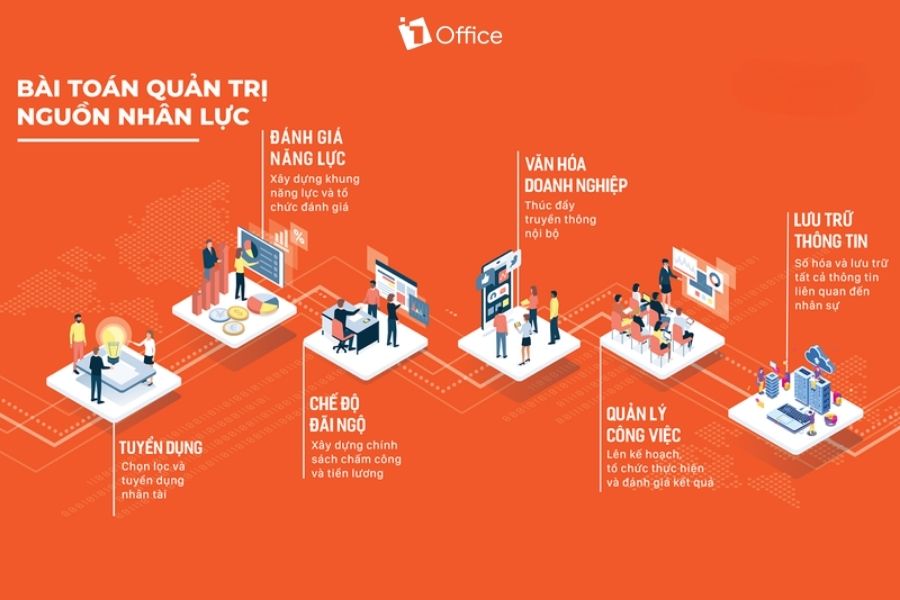
Key features for the sales department:
- Goal and KPI Management: 1Office allows managers to assign sales targets to individuals or teams and track their progress on an intuitive interface. This ensures employees are always aware of their goals and can adjust their work plans in a timely manner.
- Performance Management: The system automatically records timekeeping data, reports, and work results for each employee, making performance evaluations more transparent and accurate.
- Reporting and Measurement: 1Office provides multi-dimensional summary reports on revenue, KPIs, and the performance of each department, helping managers quickly grasp the business situation to make appropriate decisions.
- KPI-Based Payroll: The software automatically calculates salaries based on KPI data and work results, reducing errors and ensuring fairness and transparency for the sales team.
Advantages of using 1Office for sales team management
- User-friendly interface, easy to use, and accessible from mobile devices.
- Seamless connection between departments such as HR, accounting, and sales, ensuring data is always synchronized.
- Supports real-time reporting, helping managers grasp the business situation instantly.
- Flexible pricing, suitable for small and medium-sized businesses, with costs ranging from approximately 40,000 to 60,000 VND/user/month depending on the service package.
Register for a free feature demo!
1.2. MISA AMIS CRM – MISA’s Comprehensive Solution
MISA AMIS CRM is a customer relationship management software within MISA’s AMIS ecosystem, aimed at small and medium-sized businesses undergoing digital transformation. The solution helps manage customers, track the sales process, and support business performance measurement.
Key features:
- Customer Information and Sales Opportunity Management: Allows for storing, classifying, and tracking each customer from the initial contact stage to closing the deal.
- Workflow Automation: Supports customer assignment, scheduling reminders, sending automated follow-up emails, and generating periodic reports.
- Sales Performance Measurement: Provides reports on sales figures, conversion rates, employee productivity, and effective customer sources.
- MISA Ecosystem Integration: CRM data is tightly linked with accounting, HR, and task management software within the same system.
MISA AMIS CRM is a suitable choice for small and medium-sized businesses that need a basic, easy-to-implement CRM platform with the ability to integrate with other products in the same ecosystem. However, the software focuses more on the sales process and customer care, and is not specialized in employee performance management or multi-dimensional KPI measurement.
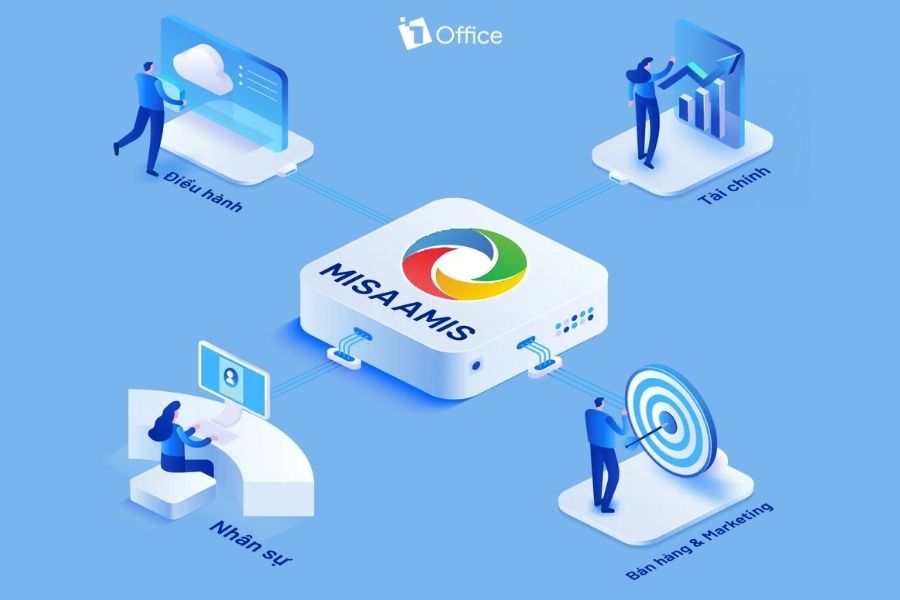
1.3. EZSale: Focused on Telesales and Field Sales
EZSale is developed to support sales activities conducted primarily over the phone and in the field, helping businesses manage customer data, monitor sales teams, and optimize customer care efficiency.
Key features:
- Integrated Smart Call Center: Supports direct calls from the system, call recording, and call quality assessment.
- Automatic Customer Allocation: Distributes customers to employees by region or assigned group, reducing data duplication.
- Field Activity Tracking: Allows employees to check in at points of sale, update information, and report field results.
- Performance Reporting: Provides data on KPIs, sales figures, closing rates, and the effectiveness of each customer source.
EZSale is suitable for businesses with telesales teams or field sales staff who need a system focused on calling, customer allocation, and sales route monitoring. However, the software leans more towards sales rather than HR management and overall performance measurement, making it less suitable for multi-departmental management or integrating all business operations.
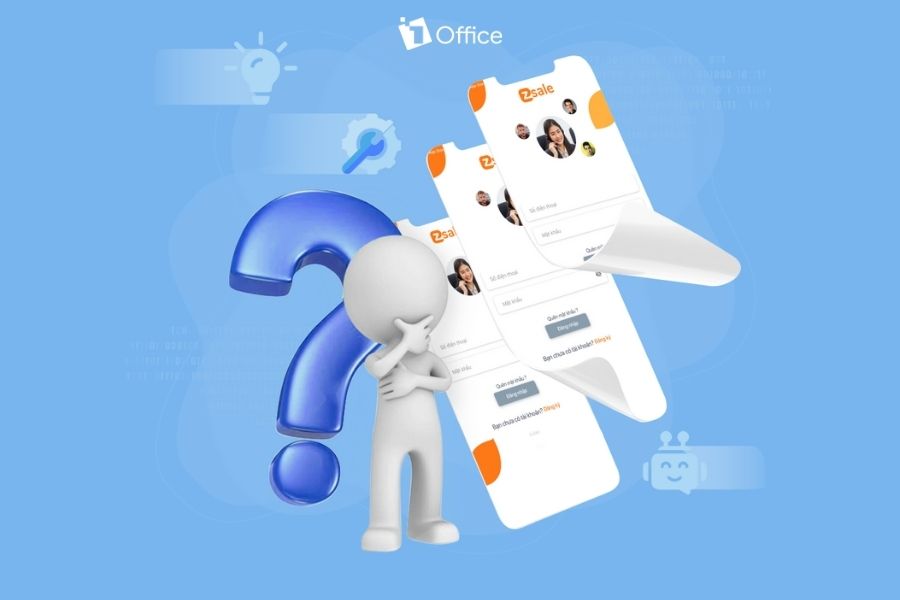
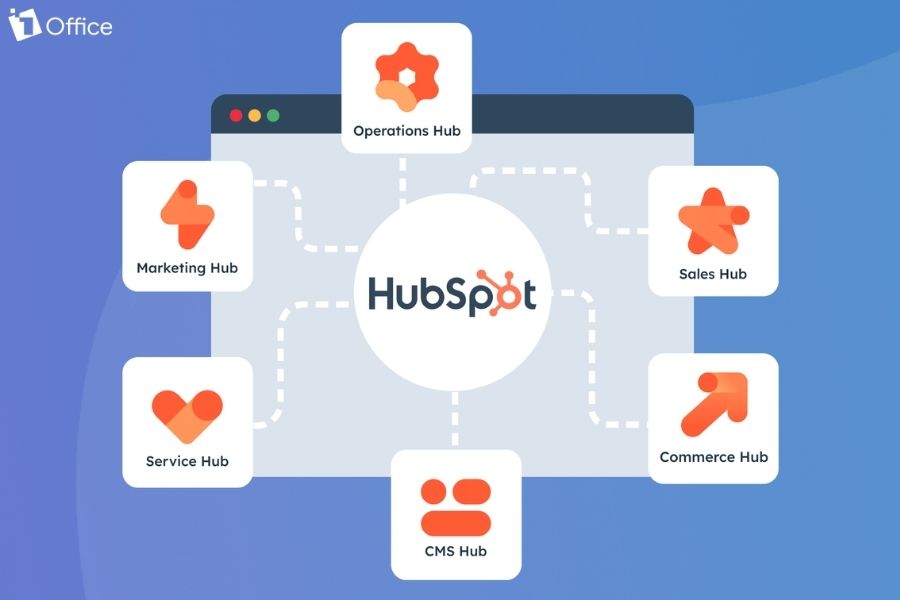
1.4. HubSpot Sales – A Prominent International Platform
HubSpot Sales is part of the HubSpot ecosystem, globally renowned for its Marketing, Sales, and Service solutions. This platform focuses on automating the sales process, managing customer data, and optimizing productivity for the sales team.
Key features:
- Customer and Sales Process Management: Helps track the entire customer journey from initial contact to closing the deal, clearly displaying stages on an intuitive pipeline.
- Sales Automation: Supports sending scripted emails, setting reminders, tracking interactions, and assessing conversion potential.
- Analytics and Reporting: Provides reports on revenue, closing rates, and individual employee productivity.
- HubSpot Ecosystem Integration: Easily connects with the Marketing Hub and Service Hub modules to synchronize customer data across the entire process.
HubSpot Sales is suitable for medium to large-sized businesses, especially organizations with well-defined sales processes that want to leverage an international ecosystem. However, implementation and maintenance costs can be high, and it does not offer in-depth support for activities specific to the Vietnamese market, such as timekeeping, payroll, or internal KPI evaluations.
1.5. Pipedrive: Visualizing the Sales Process as a Pipeline
Pipedrive is one of the world’s most famous CRM software, designed for sales teams that need to manage an intuitive and easy-to-track pipeline.
Key features:
- Sales Pipeline Management: The drag-and-drop interface makes it easy to track the progress of each business opportunity.
- Task Automation: Supports reminders, automated emails, and contact tracking.
- Performance Reporting: Provides data on sales figures, closing rates, and individual productivity.
- Flexible Customization: Users can set up sales stages that fit their specific business needs.
Pipedrive is suitable for small and medium-sized businesses that want to manage a simple sales process, focusing on individual performance and closing rates. However, the software does not fully support features for HR, KPIs, or internal management integration, making it difficult to meet comprehensive management needs.
1.6. FastWork FieldForce/CRM+: Specializing in Customer Visit Monitoring
FastWork FieldForce and NextX DMS/Mobiwork are both platforms focused on managing field sales teams. Both aim to help businesses monitor sales routes, manage visit points, and collect field data in real-time.
Key features:
- Field Activity Monitoring: Employees can check in at points of sale, take photos, send quick reports, and update customer information.
- Sales Route Management: Tracks the travel routes, number of stops, and working hours of each employee.
- Visual Reporting: Summarizes visit data, plan completion rates, and field KPIs.
- DMS/CRM Integration: Some platforms (like NextX or Mobiwork) can connect to a CRM to manage customers and orders simultaneously.
These solutions are very useful for businesses with extensive sales forces, especially in the consumer goods, distribution, or FMCG industries. However, their scope of application is often limited to monitoring and collecting field data. For businesses that want to manage everything from performance, KPIs, and compensation to multi-dimensional reporting, integrating a unified management system like 1Office will help create a more closed-loop and optimized process.
1.7. NextX DMS/Mobiwork – A solution for locating and monitoring field staff
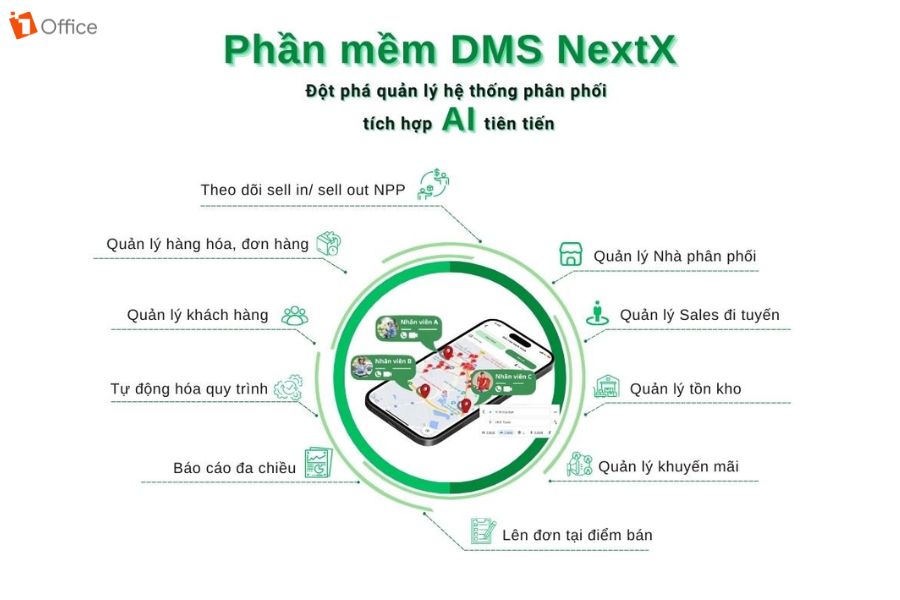
NextX DMS and Mobiwork DMS are two popular platforms in Vietnam for managing field sales teams. Both are designed to help businesses monitor employee activities, manage points of sale, and collect field data in real-time.
Key features:
- Field activity monitoring: Employees can check in at points of sale, take photos of product displays, submit quick reports, and update customer information directly on the app.
- Sales route management: Track the travel routes, working hours, and number of visits for each employee to ensure operational efficiency.
- Visual reporting: The system aggregates visit data, plan completion rates, work productivity, and field KPIs, making it easy for managers to evaluate performance.
- DMS/CRM integration: Some versions (like NextX or Mobiwork) can connect with a CRM to synchronize customer information, orders, and sales within the same platform.
These solutions are particularly useful for businesses with extensive sales teams operating in the FMCG, pharmaceutical, consumer goods, or distribution sectors. However, their application scope remains primarily focused on monitoring and collecting field data.
2. Core features a sales staff management software must have
To manage a sales team effectively, the software needs to incorporate key features. The three feature groups below are the foundation for optimizing processes and enhancing business performance.
2.1. Customer and sales process management (CRM)
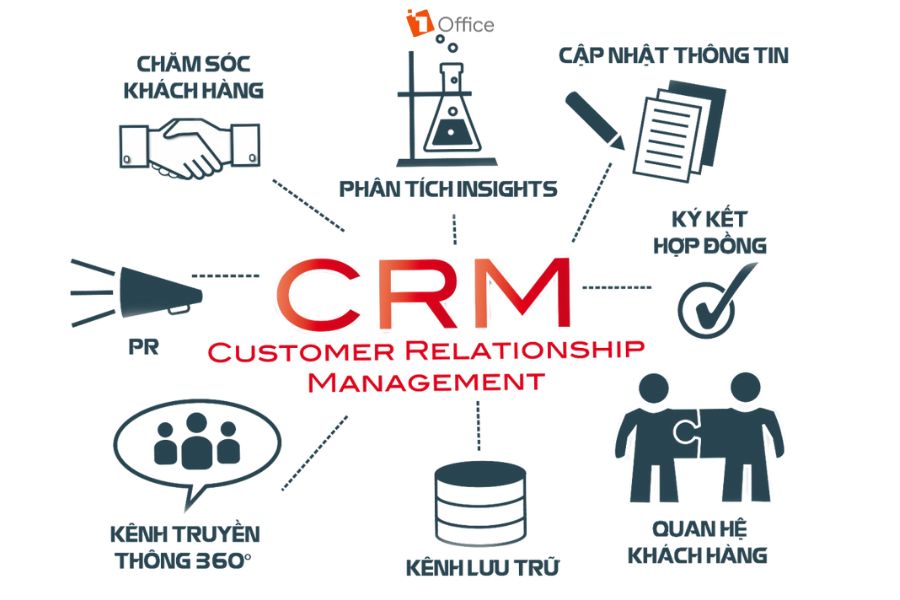
This is a foundational function of any software for a sales team. A CRM helps store all customer information, interaction history, and transaction statuses, thereby creating a comprehensive picture of the customer journey.
Key features a CRM system should have:
- Store, classify, and quickly look up customer information.
- Track the status of each sales opportunity from the approach and negotiation stages to closing the deal.
- Automatically remind staff of scheduled calls, emails, and regular customer care.
- Report on sales, closing rates, and the performance of individual employees or sales teams.
A good CRM helps businesses reduce the loss of potential customers, standardize the sales process, and improve their ability to care for and retain customers long-term.

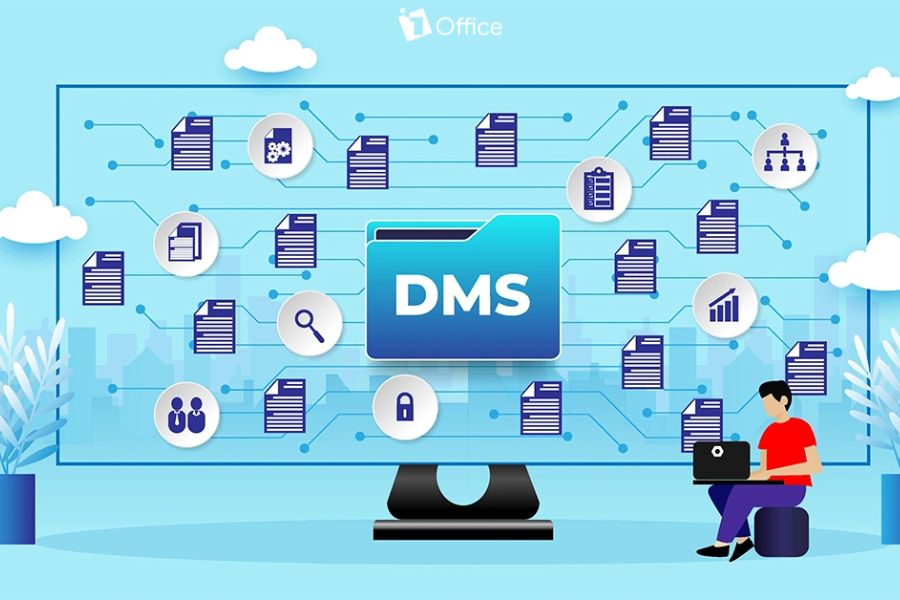
2.2. Monitoring market activities and optimizing real-time performance (DMS)
For businesses with a field sales team, a DMS (Distribution Management System) is an indispensable tool. A DMS helps monitor the location, work routes, visit points, and performance of each employee in real-time.
Important features of a DMS:
- Track employee locations via GPS, manage travel routes, and daily work schedules.
- Check-in/check-out at points of sale, take photos of displays, or authenticate with invoices.
- Automatically aggregate sales data, revenue, and inventory by region.
- Report on performance, plan completion rates, and field KPIs.
A DMS system brings transparency, discipline, and proactivity to operations, helping managers quickly identify potential areas, optimize sales routes, and increase productivity for the entire team.
2.3. Performance management and capability development (HRM/Performance)
Beyond sales, businesses need to track work efficiency and support long-term employee development. HRM and Performance features help managers conduct objective evaluations and align individual goals with the organization’s overall strategy.
Key features to have:
- Set clear goals and KPIs for each employee or team.
- Track progress and measure results in real-time.
- Record achievements, provide feedback, and conduct regular performance reviews.
- Integrate KPI data into the automated payroll and bonus system.
When implemented correctly, HRM/Performance features help businesses build a transparent culture, motivate employees, and create a strong link between individual performance and business results.

3. 5+ criteria for choosing the right sales management software
Choosing sales staff management software depends not only on features but also on its suitability for the scale, processes, and development strategy of each business. Below are 5 important criteria to help businesses evaluate and make the right choice.
3.1. Comprehensive integration capabilities (HRM & Accounting)
Effective sales management software needs to connect seamlessly with other business systems like human resources (HRM) and accounting. This allows sales data, KPIs, compensation, and revenue to be synchronized automatically, reducing errors and increasing transparency in performance evaluation.
Unified platforms like 1Office meet this criterion well by integrating CRM, HRM, and Accounting on a single system. This data linkage helps businesses save processing time, maintain tight control, and make faster decisions.
3.2. Permissions and security
Customer data, sales figures, and internal reports are valuable assets, so the software must have detailed permission settings and multi-layered security. This ensures that only authorized personnel can access and edit data relevant to their roles.
A standard system should support two-factor authentication (2FA), data encryption, and regular backups, giving businesses peace of mind about security. This allows businesses to maintain a stable flow of information while ensuring data safety during operations.

3.3. Scalability (SaaS)
The SaaS (Software as a Service) model offers high flexibility, allowing businesses to scale the number of users or features without investing in complex infrastructure. Updates, upgrades, and maintenance are handled automatically by the provider, saving time and costs.
Thanks to this scalability, businesses can start small and gradually increase the number of users as they grow. Platforms like 1Office or MISA AMIS are effectively applying this model, offering rapid deployment and reasonable costs.
3.4. Intuitive, user-friendly interface
Software with a friendly, clear, and easy-to-navigate interface will help the sales team quickly get accustomed to it and use it regularly. A good interface not only enhances the user experience but also helps ensure that data entry and reporting are continuous and accurate.
Additionally, the software should support multiple platforms (web, mobile) so that employees can work anytime, anywhere. Having detailed guides or an implementation support team also makes the software adoption process easier and more effective.
3.5. Cost of the sales staff management software platform
Price is a factor to consider carefully, but more important is the return on investment (ROI) that the software delivers. Businesses should choose a solution with a flexible pricing policy that suits their current scale and has the potential for future expansion.
Platforms like 1Office allow you to choose service packages based on actual needs, helping to optimize the budget while still ensuring operational efficiency. When the softwareApplying sales staff management software helps businesses modernize operational processes, improve work efficiency, and ensure transparency throughout all business activities. Among these solutions, 1Office stands out with its unified management capabilities, tightly connecting the HR, accounting, and business departments, providing a comprehensive solution for managing sales teams. This is the ideal choice for businesses looking to digitize their sales processes, measure performance, and achieve sustainable growth in the era of digital transformation.
- Hotline: 083 483 8888
- Facebook: https://www.facebook.com/1officevn/
- Youtube: https://www.youtube.com/@1office-chuyendoisodn
- Zalo OA: https://zalo.me/3883877516951440238