


 09/05/2026
  106 views
In Vietnam’s diverse economic landscape, State-Owned Enterprises (SOEs) have always held a particularly important position, often likened to the “eldest brother” leading key industries. However, with the changes in the 2020 Law on Enterprises, the concept and scope of this business type have undergone significant adjustments. So, what exactly is a state-owned enterprise? This article from 1Office will provide the most comprehensive and up-to-date overview.
Mục lục
1. What is a state-owned enterprise? The legal definition
Previously, under the 2014 Law on Enterprises, only enterprises in which the State held 100% of the charter capital were considered SOEs. However, the 2020 Law on Enterprises (effective from January 1, 2021) has expanded this definition, creating a more flexible legal framework.
According to Clause 11, Article 4 and Article 88 of the 2020 Law on Enterprises, a state-owned enterprise is defined as an enterprise in which the State holds more than 50% of the charter capital or the total number of voting shares.
This change divides SOEs into two distinct groups based on ownership percentage:
- Enterprises in which the State holds 100% of the charter capital: These are entities where the State is the sole owner, with full authority to decide on all activities.
- Enterprises in which the State holds more than 50% of the charter capital (or the total number of voting shares): In this group, the State holds a controlling interest but not absolute ownership.
In terms of organizational structure, SOEs operate as limited liability companies (LLCs) or joint-stock companies.
2. Key characteristics of state-owned enterprises
Unlike private enterprises, SOEs have unique characteristics tied to their public ownership nature:
- Special ownership: The State acts as the sole owner or the largest controlling shareholder.
- Dual operational objectives: Besides the goal of profit to preserve and grow capital, SOEs also bear the responsibility of implementing socio-economic goals, public policies, and market stabilization.
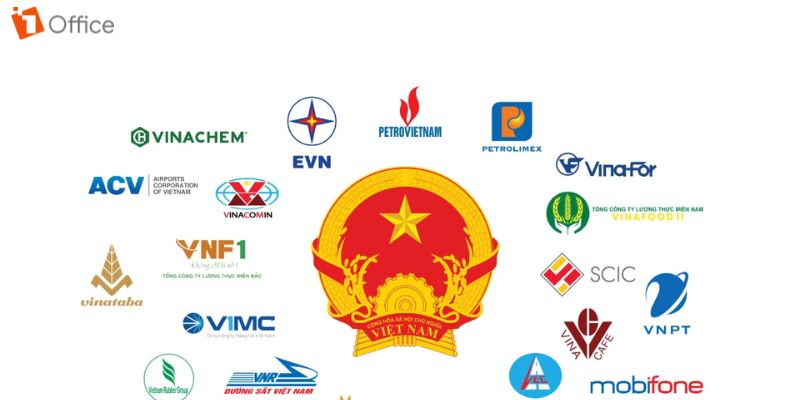
- Sectors of operation: They often focus on key, essential, natural monopoly sectors, or those closely related to national defense and security (e.g., electricity, oil and gas, military telecommunications…).
- Legal liability: SOEs have limited liability within the scope of their charter capital.
- Capital source: The primary operating capital is publicly owned, managed by the State as a representative.
- Stability level: They generally have a higher level of safety and stability due to policy and resource support from the Government.
- Supervision mechanism: They are subject to strict inspection and examination by multiple state management agencies to ensure transparency and the effective use of public capital.

3. Classification of state-owned enterprises under current regulations
Based on Article 88 of the 2020 Law on Enterprises, we can classify SOEs according to two main criteria:
3.1. Based on charter capital ratio:
- Group 1 (100% State capital): These are typically parent companies of economic groups, state-owned general corporations, or independent companies operating in public utility, national defense, and security sectors.
- Group 2 (Over 50% State capital): This includes subsidiaries and affiliated companies where the State holds a controlling interest through its capital contribution ratio.

3.2. Based on legal form:
- Single-member limited liability company: Applicable to enterprises where the State holds 100% of the capital.
- Multi-member limited liability company: Applicable when other parties contribute capital, but the State still holds over 50%.
- Joint-stock company: A common form when equitizing SOEs, where the State still retains a controlling interest.
4. Organizational and operational structure in SOEs
<span style="font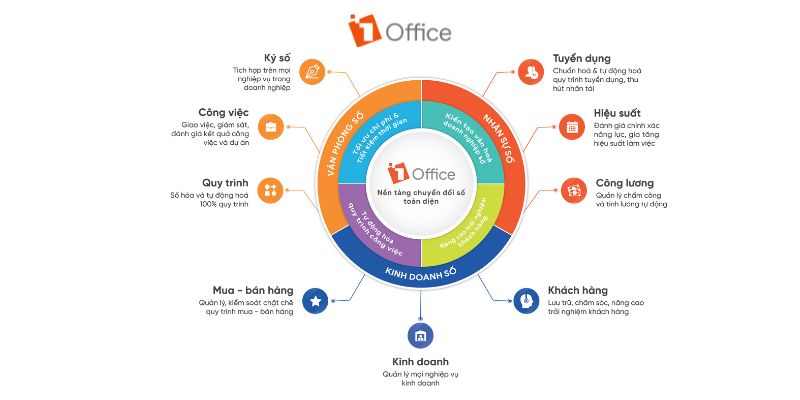
7. Conclusion
We hope this article has helped you answer the question of what a state-owned enterprise is and better understand the role and challenges of this type of enterprise in the modern economy. To improve management efficiency, ensure process transparency, and optimize resources in the digital era, applying technology solutions is an essential step. 1Office is ready to accompany state-owned enterprises on their comprehensive digital transformation journey.
Don’t let management barriers hinder your organization’s development. Contact 1Office today for a consultation on the best management solution!
















