Shopee’s Canvas Model: The Secret to Success in the E-commerce Industry


Shopee – a familiar name in the e-commerce world – has risen to become one of the leading online shopping platforms in Southeast Asia, including Vietnam. Behind this impressive success is a well-crafted business strategy, and Shopee’s Canvas model is the key to unlocking it. So, what is the Canvas model, and how has Shopee applied it to win over millions of users? Let’s explore the details in this article!
Mục lục
The Intrigue of Understanding Shopee’s Canvas Model
The Canvas model is not just a strategic analysis tool; it’s also a crucial mind map that helps business leaders create and develop a comprehensive business model. By studying Shopee’s Canvas model, CEOs and business owners can draw invaluable lessons on building a flexible and effective business ecosystem.
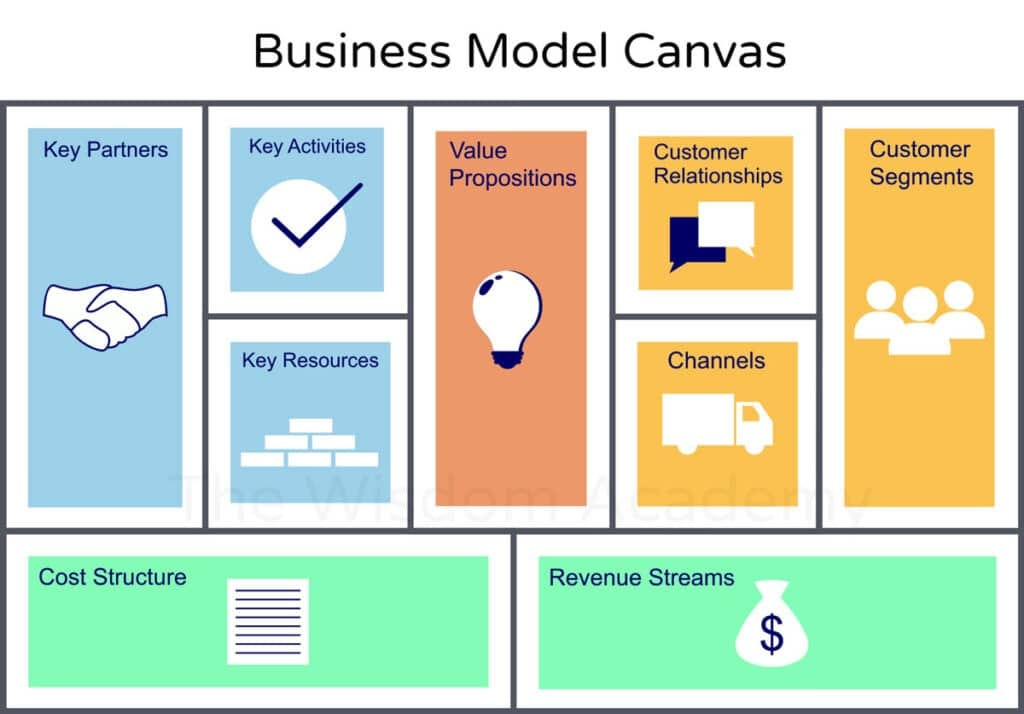
What’s noteworthy is its multi-dimensional integration capability and flexibility in connecting business elements. The Canvas model helps managers view the business as a holistic system rather than separate parts. From Shopee’s experience, businesses can learn how to build a flexible business model capable of adapting quickly to market changes, especially in today’s digital era.
Furthermore, a detailed analysis of each element in the Canvas model helps leaders objectively assess their company’s resources, relationships, and core values. This is a crucial strategic tool for continuously improving and optimizing the business model, thereby enhancing the company’s competitiveness and growth potential.
Decoding the 9 Core Elements of Shopee’s Canvas Model
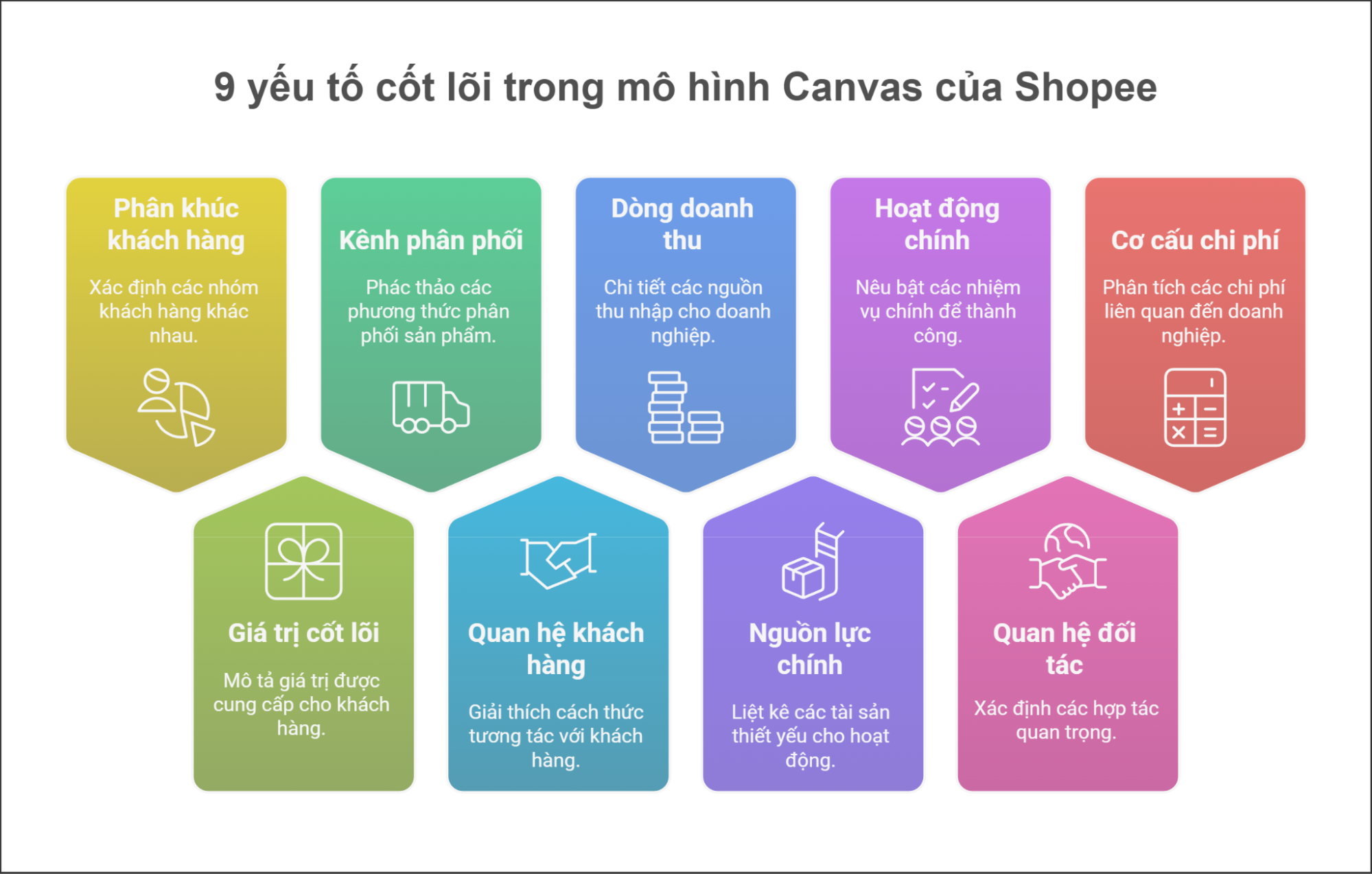
1. Customer Segments
Shopee has excelled at identifying and analyzing its target customer audience. The platform focuses on a primary customer group: young people, especially Millennials and Gen Z, who are tech-savvy, enjoy online shopping, and tend to look for good deals.
Shopee’s customer segmentation strategy includes:
- Customers by age: 18-35 years old
- Customers by region: Concentrated in large cities and urban areas
- Customers by need: Those who prefer convenient shopping and competitive prices
- Customers by category: Fashion, electronics, cosmetics, home appliances
2. Value Propositions
Shopee’s core value propositions:
- Digital shopping experience
- Promotional system
- Shipping policy
- Buyer protection
- Integrated entertainment
In the fiercely competitive e-commerce landscape, Shopee has successfully built a core value that is not just a buying and selling platform, but a high-class digital experience for users.
This strategy is demonstrated through continuous innovation and upgrading of the user experience. Instead of overlooking the interface, Shopee invests seriously in consumer behavior research, thereby creating an intuitive and easy-to-navigate shopping space.
Shopee’s strength lies in its ability to subtly combine technology and marketing. Promotional programs are not just regular discounts but are also elaborately constructed events that create a viral effect within the user community. The integration of entertainment elements like livestreams and mini-games has made the shopping experience more engaging and cohesive than ever before.
3. Channels
Main distribution channels:
- Mobile application
- Website
- Social media
- Online advertising
- Logistics partner network
Shopee’s distribution channels are built as a multi-dimensional, flexible, and intelligent ecosystem. Instead of merely providing a trading platform, Shopee has transformed its distribution channels into multi-experience touchpoints for users.
The mobile application is considered Shopee’s main “fortress,” developed not just as a shopping tool but also as a digital entertainment space. Intelligent algorithms effectively connect buyers and sellers, creating a complete shopping ecosystem.
The multi-platform marketing strategy has become a key highlight. By fully leveraging social media platforms like Facebook and TikTok, Shopee has built a dynamic community of users who are always connected and interacting.
4. Customer Relationships
Customer relationship methods:
- 24/7 customer care
- Multi-channel support system
- Membership incentive programs
- Seller rating system
- Direct interaction
Shopee’s customer relationships are built on a “customer-centric” philosophy. Beyond just providing support services, Shopee has transformed this relationship into an engaging and trustworthy experience.
The customer care system operates like a sophisticated machine, capable of providing fast and accurate support. The integration of artificial intelligence and chatbots has helped Shopee resolve customer issues efficiently and professionally.
5. Revenue Streams
Main revenue sources:
- Transaction commissions
- Seller service fees
- Advertising and promotions
- Shopee Pay
- Value-added services
Shopee’s revenue model is designed to be multi-dimensional and innovative. Instead of relying solely on transaction commissions, the platform has built a complex and flexible revenue ecosystem.
The integration of Shopee Pay is not just a simple payment solution but also a potential revenue source. Digital financial services are sophisticatedly developed, ranging from providing payment utilities to financial products for users.
6. Key Resources

Key resources:
- Technology team
- IT system
- Capital from Sea Group
- Partner network
- User data
Human resources are always a top priority for Shopee. Recruiting and developing a young, dynamic technology team has become a key competitive advantage for the platform.
The information technology system is heavily invested in, with advanced algorithms that help optimize the user experience. The application of artificial intelligence and big data analytics has helped Shopee quickly capture market trends and demands.
7. Key Activities
Key activities:
- Technology platform development
- Expanding the seller network
- Product research
- Advertising and marketing
- User experience management
Shopee’s key activities are always aimed at continuous innovation and upgrading. Continuously improving the technology platform has become the guiding principle of its development strategy.
The product research and development process is carried out in-depth, involving listening to and responding to feedback from the user community. Each new feature is carefully considered to deliver optimal value.
8. Key Partnerships

Strategic partners:
- Shipping carriers
- Banks
- Manufacturers
- Advertising platforms
- Technology companies
Shopee’s partner network is built as a tightly integrated ecosystem. Not just limited to simple business relationships, Shopee always seeks partners who add value to the entire system.
Collaborating with shipping carriers and banks has helped Shopee expand its service scope, creating a comprehensive and seamless shopping experience for users.
9. Cost Structure
Main expenses:
- Technology development
- Marketing and advertising
- Personnel costs
- Operations and logistics
- Research and development
Shopee’s cost structure is managed strategically and intelligently. Instead of mechanically cutting costs, Shopee focuses on optimizing each expense to deliver maximum value.
Investing in technology and people is always considered a top priority. Marketing expenses are calculated scientifically, with the goal of achieving the highest return on investment.
———————————-
Shopee’s Canvas model is not just a business management tool but also a strategic blueprint that helps this e-commerce platform continuously grow and dominate the market. By strategically optimizing each element, Shopee has built a dynamic, efficient, and user-engaging online shopping ecosystem.