


 12/05/2026
  394 views
The employee offboarding process is a management challenge that requires a high degree of professionalism and sensitivity. When an employee decides to leave, how you—as a senior manager or HR director—handle this process not only affects the company’s reputation but also directly impacts the corporate culture and the performance of the remaining team. Join 1Office in this article to explore the 9 essential steps in the employee offboarding process from a manager’s perspective.
Mục lục
- Why is establishing an offboarding process important for businesses?
- 9 steps for a professional and legally compliant offboarding process
- Step 1: Receive the resignation letter
- Step 2: Analyze the reasons for resignation
- Step 3: Conduct an exit interview
- Step 4: Send the employment contract termination decision to the employee
- Step 5: Submit for leadership approval
- Step 6: Announce the resignation internally
- Step 7: Hand over work and company assets
- Step 8: Complete administrative offboarding procedures
- Step 9: Settle benefits and return personal documents
- Automate the Offboarding Process with 1Office
Why is establishing an offboarding process important for businesses?
An offboarding process is important for businesses because it directly affects human resource management, company assets, and stability. A standardized offboarding process helps ensure the following:
- Maintain professionalism and reputation: An offboarding process helps the company maintain a professional image, avoid negative impressions, and preserve good relationships with former employees.
- Protect the interests of the company and employees: A clear process protects the interests of both parties, ensuring full payment and the return of company assets.
- Avoid work disruptions: It facilitates an effective handover and ensures work is not disrupted when an employee leaves.
- Gather feedback for improvement: Exit interviews help the company receive valuable feedback to improve the work environment.
- Ensure legal compliance: An offboarding process helps the company comply with legal regulations regarding employee rights and obligations.
9 steps for a professional and legally compliant offboarding process
Step 1: Receive the resignation letter
When receiving a resignation letter, it is a crucial moment for managers to demonstrate professionalism and respect for the employee’s decision.
Ensure the resignation letter is a formal written document containing all necessary information, such as the reason for leaving, the intended last day, and compliance with the notice period stipulated by the Labor Code and company policy.

For senior management positions, establishing a clear process for receiving resignation letters not only ensures legal compliance but also helps you detect early signs of irregularities within the organization.
Periodically analyzing resignation data, categorized by department and reason, is a powerful tool that helps leadership identify potential issues with company culture, HR policies, or management styles that need improvement.
Step 2: Analyze the reasons for resignation
As a senior manager, thoroughly analyzing an employee’s reasons for leaving is not just an administrative procedure but also a valuable opportunity to gain deep insights into the health of the organization.
Consider the resignation letter in a broader context:
- Is this a trend within the department?
- Is it related to recent changes in company policy?
- Or could it be a sign of a middle management issue?
This analysis requires objectivity and strategic thinking. For valuable talent, consider retention measures such as salary adjustments, new development opportunities, or changes to the work environment.
However, remember that not every resignation needs to be prevented—sometimes, letting an unsuitable employee go is the right decision for both parties.
Most importantly, treat each resignation letter as a data point for your company’s long-term HR strategy.
Step 3: Conduct an exit interview
The exit interview is an incredibly valuable strategic tool that many senior managers often overlook. It is not merely a friendly chat but an opportunity to gather honest information about the work experience at the company.
As a leader, you should personally participate in exit interviews for senior staff or key positions, while establishing a standard process for HR to handle other roles.

To ensure the interview yields real value, create a safe space for the employee to share honest feedback. Use a set of standardized questions combined with open-ended questions to ensure valuable information is collected.
In particular, CEOs and senior managers should pay close attention to feedback on company culture, leadership style, and development opportunities—these are often the decisive factors in talent retention.
Most importantly, commit to acting on valuable feedback rather than just acknowledging it and moving on.
Step 4: Send the employment contract termination decision to the employee
The official decision to terminate an employment contract is not just an administrative procedure but also a crucial step that reflects the organization’s professionalism.
As a representative of the business, you need to ensure this decision strictly complies with the current Labor Code, clearly stating the termination date, entitled benefits, and related legal obligations.
Errors at this stage can lead to serious legal consequences, especially for large-scale enterprises.
A carefully drafted termination decision not only protects the company from potential legal disputes but also shows respect for the employee.
Personalize this document with a sincere thank you for their contributions instead of using a generic decision template.
Step 5: Submit for leadership approval
This step demonstrates the legitimacy and final responsibility of the leadership regarding a significant personnel decision. As a CEO or Executive Director, approving a resignation decision should not be merely a formality.
Before signing, take the time to review the entire file, including the reason for resignation, exit interview results, and an assessment of the impact on business operations.
Senior leaders should use this step as an opportunity to understand personnel fluctuation trends within the organization. Establishing a summary report process to accompany each resignation decision (including the employee’s tenure, position, department, and primary reason) will help leadership get a comprehensive overview of the personnel situation.
In particular, pay attention to the resignations of top talent or long-serving employees—these can be warning signs that need serious consideration for timely strategic adjustments.
Step 6: Announce the resignation internally
Announcing a resignation internally requires subtlety and strategy from the leadership. This message is not just administrative information; it also helps shape the company culture and affects the morale of the remaining team.
For senior positions or highly influential employees, the CEO should personally draft the announcement, emphasizing their positive contributions and expressing goodwill for their departure.
The timing and method of communication also need careful consideration. For management or key personnel positions, inform the team directly before sending a company-wide email to avoid unnecessary confusion.
The announcement should include clear information about the work transition plan and the person temporarily responsible, while also opening up opportunities for other employees to develop or take on new responsibilities.
Finally, remember that how you treat the departing employee sends a powerful message to those who remain about the organization’s core values and true culture.
Step 7: Hand over work and company assets
The handover process is a decisive factor in helping the business maintain operational continuity when an employee resigns. For senior management, establishing a standardized handover process not only ensures risk control but also reflects the organization’s professional work culture.
Create a comprehensive handover checklist that includes items such as: ongoing projects, important documents, client/partner relationships, system accounts, and company assets.

Especially for key positions or senior management, the handover needs to be planned early and conducted over a sufficiently long period (ideally 2-4 weeks) to ensure the transfer of tacit knowledge—which cannot be fully documented.
CEOs and directors should consider participating directly in important handover meetings or requesting summary reports on the process. An effective strategy is to create an opportunity for the departing employee to “train” their successor, not just on skills but also on relationships and a deep understanding of the job, thereby minimizing business disruption.
Step 8: Complete administrative offboarding procedures
Completing administrative offboarding procedures is a step that ensures legal compliance and protects the rights of both the business and the employee.
You need to ensure the HR department strictly adheres to current labor laws, completing procedures such as:
- Updating social insurance records (reporting the reduction),
- Liquidating the employment contract
- Preparing other related documents
A task that CEOs should implement is to establish a cross-checking process between the HR and finance departments to ensure all financial obligations to the employee are calculated accurately.
At the same time, consider building an integrated electronic records management system to track the progress of offboarding procedures, avoiding omissions that could lead to legal risks.
Step 9: Settle benefits and return personal documents
Making full and timely payments of benefits to departing employees is not only a legal obligation but also a way to demonstrate the core values and reputation of the business. Payments must be calculated accurately, including: remaining salary, unused annual leave, bonuses (if any), severance pay, and other compensation as agreed.
Crucially, CEOs and executives should consider establishing a two-layer verification process to avoid errors in calculating payments, especially for employees with long tenure or complex salary structures.
Additionally, the full and timely return of personal documents such as social insurance books, health check-up records, and training certificates helps create a final positive impression on the employee.
Automate the Offboarding Process with 1Office
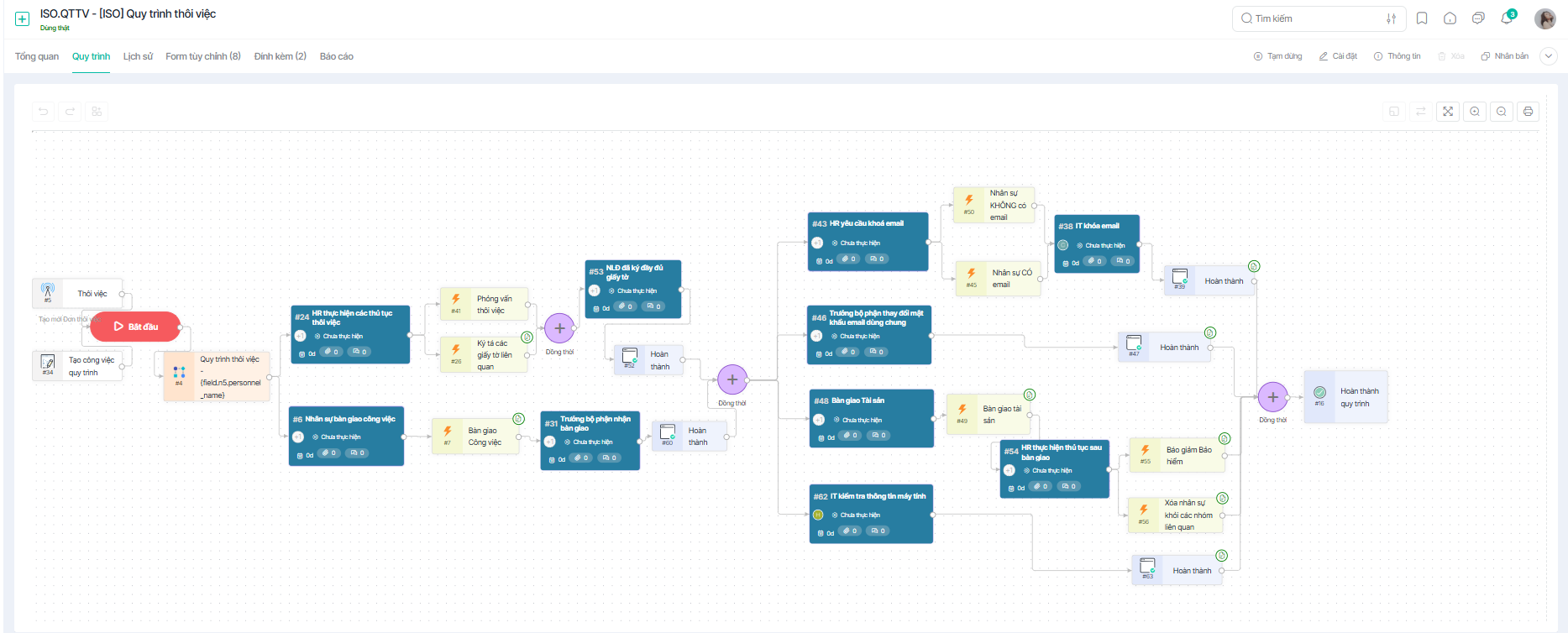
When the offboarding process is not handled effectively, businesses can face many issues such as information loss, work disruptions, or delays in administrative decisions.
Optimize Your Resignation Process with 1Office Now!
To resolve these bottlenecks, 1Office offers a complete solution to automate the offboarding process, from creating and submitting resignation forms, managing work handover progress, to storing personnel information smoothly and transparently:
- Digitize resignation forms, using online templates directly on the software
- Automatically forward steps to relevant departments and sync statuses in real-time, so employees know their responsibilities, who to coordinate with, and who to report to, avoiding missed or skipped steps.
- Allows leaders to sign and approve forms directly within the process, requiring only a mobile device to sign digitally anytime, anywhere
- Detailed reports to track the handover progress of work items, documents, assets, etc.
With 1Office, employees can easily submit resignation forms, and the system automatically approves and updates information quickly. The work and asset handover process is also tightly managed, helping to minimize risks and ensure transparency during offboarding.
——————————
Establishing a professional offboarding process not only minimizes legal risks but also creates an opportunity to gather valuable information to improve policies. In particular, with the Automate the Offboarding Process with 1Office feature, CEOs and HRDs can analyze trend data, optimize processes, and build effective talent retention strategies in a competitive market. Contact us now for a detailed consultation!
Optimize Your Resignation Process with 1Office Now!
Follow 1Office on our platforms to get the latest knowledge and news:
- Fanpage: www.facebook.com/1officevn/
- Zalo OA: zalo.me/nentang1office
- Youtube: www.youtube.com/@1office_toiuutunggiay
















