


 13/05/2026
  244 views
7 Small Business Management Tips from Successful Entrepreneurs
In Vietnam, over 90% of businesses are small businesses and medium-sized. However, managing an SME is not simple. This is because the manager is responsible for all business processes, from sales, marketing, and human resources to warehousing. You can easily become overwhelmed by your workload. Therefore, 1Office shares with you 7 small business management tips from successful entrepreneurs.
Here is a compilation of tips to help you simplify the management of your business.
Mục lục
Automate All Activities in Small Business Management
According to Ms. Melissa Swift – Global Leader, Senior Advisor for Digital Transformation at Korn Ferry:
“When starting the digital transformation journey for a business, think of the 4S’s – Simple, Sure, Small, Sustain.”
Many small and medium-sized enterprises always have a mindset of saving money. Therefore, they are often hesitant to spend on applications that help them automate work tasks. However, it is precisely this software that helps businesses save time and costs.
You can use automated timekeeping and payroll software to monitor the company’s operational status. From there, you can view reports and receive regular updates. This way, the business saves a lot on personnel costs while ensuring accuracy and transparency.

Empower Your Employees
Bill Gates once said: “As we look ahead into the next century, leaders will be those who empower others.”
Benefits of Empowering Employees
Empowering employees brings many benefits to a business. Let’s name a few benefits that employee empowerment provides:
- Empowerment is seen as recognition and trust from leadership towards employees. This, in turn, motivates effort and enhances employees’ sense of responsibility.
- Empowerment means encouraging employee creativity within a set framework.
- Business managers will have more time for their primary tasks, allowing them to focus on problem-solving and creating short- and long-term plans.
- However, empowerment also depends on the type of employees you have. If we classify them according to Douglas McGregor’s “Theory X” and “Theory Y,” empowerment is only effective when applied to Theory Y individuals. (Theory Y individuals are proactive, responsible in their work, have a progressive attitude, and do not rely on or blame others).
Set Clear Directions
Most small businesses tend to focus on small, daily tasks. Managers often have to handle many different tasks in a single day by themselves. As a result, they often get lost in the daily workload and lose sight of the company’s long-term direction.
The best way to solve this problem is to create a plan and set specific goals for the business. From there, monitor and regularly check on the work to ensure your business is heading in the right direction.

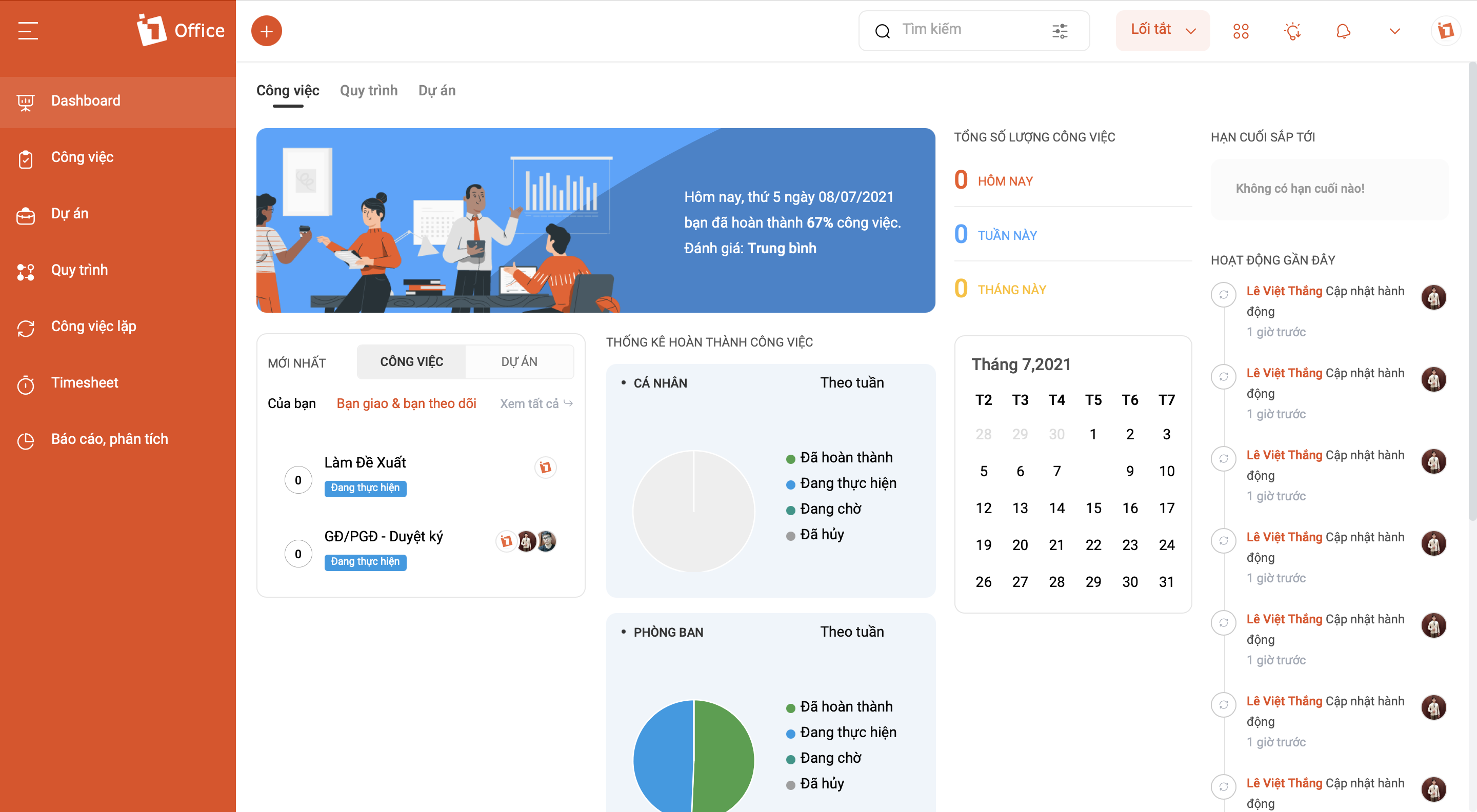
Managing a small or medium-sized business is a very tough challenge. Register now to receive a Free consultation from the experts at 1Office business management software
Tighten Financial Control
Finance is a core element for sustaining a business. Most businesses have 4 financial goals, including: profitability, liquidity, efficiency, and stability. A company’s finances must be regularly reviewed through financial analysis reports.
If a small business manager knows how to grasp and creatively implement financial distribution functions in line with principles, this will be the leverage that drives the company’s outstanding growth.
Listen to and Understand Customers
Your most unhappy customers are your greatest source of learning. – Bill Gates
Customers play an extremely important role in the development of your business. Through communication channels like social media, you will understand customer needs. To build customer relationships, you need to resolve their issues.
Listen to and understand your customer base. From there, make appropriate changes to retain and attract new customers.
Applying the 80/20 Method (Pareto) to Management and Production
The 80/20 method is quite commonly applied. The Pareto principle helps businesses create the motivation to focus their efforts on the 20% of critical factors. This helps create the company’s differentiation, instead of spreading efforts across the other 80% without achieving significant results.
The 80/20 ratio of the Pareto Principle is the golden key that helps managers build a core strategy for the business. Start with the most important 20% of inputs, and 80% of the output will be in your hands!
1Office hopes the information above will be useful for your business. These insights are not only suitable for those currently managing a business but are also very suitable for young people who are planning to start a business.
Register now to receive more offers from the 1Office business management software
















