


 09/05/2026
  84 views
Mục lục
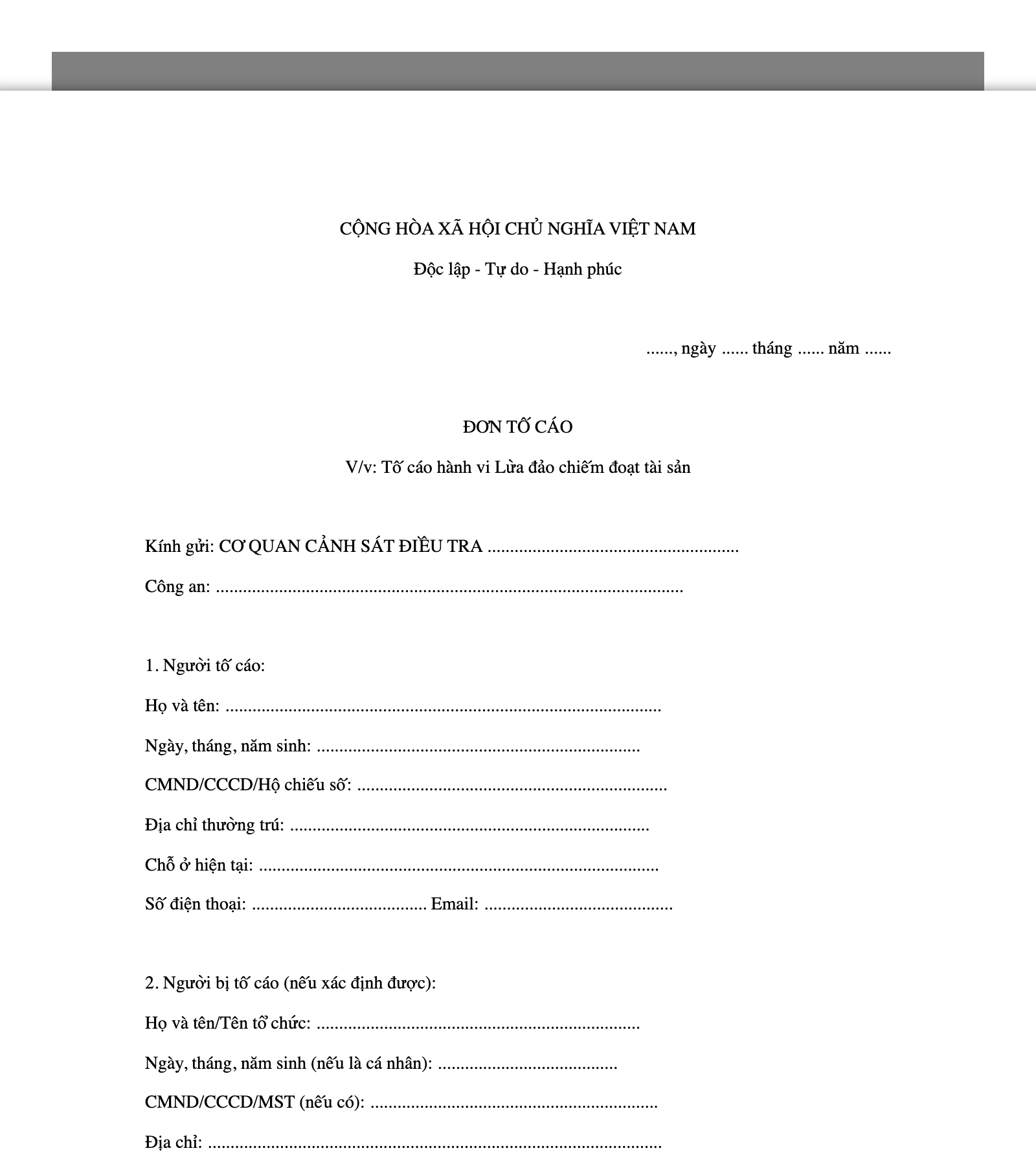
I. Latest Denunciation Form for Fraudulent Appropriation of Property (Updated 2026)
II. Required Documents
In cases with signs of fraudulent appropriation of property, preparing a complete file and collecting sufficient evidence is a key factor for the investigating agency to have grounds for processing according to the provisions of the 2015 Criminal Procedure Code. Evidence must be real documents and data collected legally. The more complete, clear, and systematic the provided evidence, the higher the chance of a swift resolution.
1. Types of Necessary Evidence
In practice, evidence in fraud cases often exists in various forms. The victim should proactively collect and retain the following documents:
-
Text messages exchanged via SMS, Zalo, Facebook, Telegram, etc.
-
Transaction emails, agreement confirmations
-
Images, videos related to the transaction
-
Call recording files
-
Contracts, contract addendums
-
Invoices, receipts of payment
-
Bank statements
-
Transfer history, e-wallet or online platform transactions
Especially in online fraud cases, electronic transaction history and cash flow are crucial evidence to prove the act of appropriation.
2. Guide to Effectively Collecting and Preserving Evidence
Evidence collection must be done carefully to ensure its authenticity and legal validity.
For electronic evidence:
-
Take full screenshots of the exchange, clearly showing the time and accounts
-
Store the original messages/emails without editing the content
-
Back up data to multiple devices or cloud storage
-
Keep the original call recording files, avoid cutting or splicing
If necessary, the investigating agency may request a forensic examination of electronic data to verify its authenticity.
For physical evidence:
-
Preserve original contracts, receipts, and documents
-
Do not erase or edit documents
-
Photocopy or scan to keep backup copies
-
Arrange documents in chronological order
Proper preservation helps avoid disputes over the validity of the evidence.
3. Personal Documents to Prepare
When submitting the denunciation, in addition to evidence related to the fraudulent act, the denouncer needs to prepare:
-
Copy of Citizen ID Card/ID Card
-
Copy of family registration book (if residence verification is needed)
-
Valid power of attorney (if a representative is submitting on your behalf)
Preparing a complete set of personal documents and evidence from the beginning not only helps the investigating agency process the case quickly but also increases the ability to protect the victim’s legitimate rights and interests during the case handling process.
III. Process for Submitting and Resolving a Denunciation of Fraudulent Appropriation of Property
IV. Frequently Asked Questions (FAQs)
Below are common questions when reporting fraudulent appropriation of assets according to the provisions of the 2015 Criminal Procedure Code and the 2015 Penal Code.
Do I need a lawyer when filing an accusation?
The law does not require a lawyer when filing an accusation. The victim can file the report and provide evidence to the investigating agency on their own. However, in complex cases involving large assets or multiple parties, having a lawyer’s assistance will help in preparing a more robust case file, advising on evidence collection strategies, and protecting your rights throughout the investigation, prosecution, and trial process.
How long does it typically take to resolve a fraud case?
After receiving the accusation, the investigating agency will conduct a verification within the statutory time limit. This period may be extended if the case is complex or requires forensic examination and verification from multiple evidence sources. If the case is prosecuted, the investigation, prosecution, and trial period can last from several months to over a year, depending on the nature and severity of the case.
Can I file a report if I don’t have precise information about the suspect?
Yes. The victim can still file an accusation even without complete information about the offender. In the report, you should provide all the information you have, such as phone numbers, bank accounts, social media accounts, conversation content, and related evidence. The investigating agency has the authority to verify and track down the suspect through professional measures.
Can I claim compensation for damages during the accusation process?
Yes. When the case is prosecuted and resolved under criminal procedure, the victim has the right to claim compensation for damages within the same criminal case. The court will consider both criminal liability and civil liability (compensation) in its judgment. The victim needs to provide evidence proving the actual damages to protect their rights.
What should I do if the police refuse to accept my report?
According to legal regulations, the competent authority must accept accusations and reports of crime. If your report is refused without grounds, you have the right to file a complaint with the head of the investigating agency or the Procuracy at the same level to have the matter reviewed and resolved according to regulations.
Is the information in a fraud accusation kept confidential?
The law provides for the protection of crime reporters upon request and when deemed necessary. The accuser’s personal information can be kept confidential to ensure their safety. In cases where there is a risk of threats or retaliation, the accuser can request that authorities apply protective measures as stipulated by law.
What are the consequences of filing a false accusation?
The accuser is responsible for the truthfulness of the accusation’s content. If one intentionally makes a false accusation to slander or harm others, they may face administrative penalties or criminal prosecution, depending on the severity of the violation. Therefore, before filing a report, ensure that the information provided is accurate and supported by evidence.
















