09/05/2026
  90 views
In civil, administrative, or commercial business disputes, a statement of claim is the first and most crucial step for the Court to accept and resolve the case. However, not everyone fully understands what a statement of claim is, its legal validity, or the regulations governing it. The following article will provide a comprehensive understanding, updated according to the latest legal regulations of 2026.
Mục lục
- I. What is a Statement of Claim?
- II. Current Legal Basis (Updated 2026)
- III. Detailed Guide on How to Write a Statement of Claim
- 1. Correctly Determine the Court’s Jurisdiction
- 2. Write the Opening Section of the Statement
- 3. Provide Information about the Plaintiff
- 4. Provide Information about the Defendant
- 5. Present the Details of the Case
- 6. Clearly State the Claims
- 7. List Attached Documents and Evidence
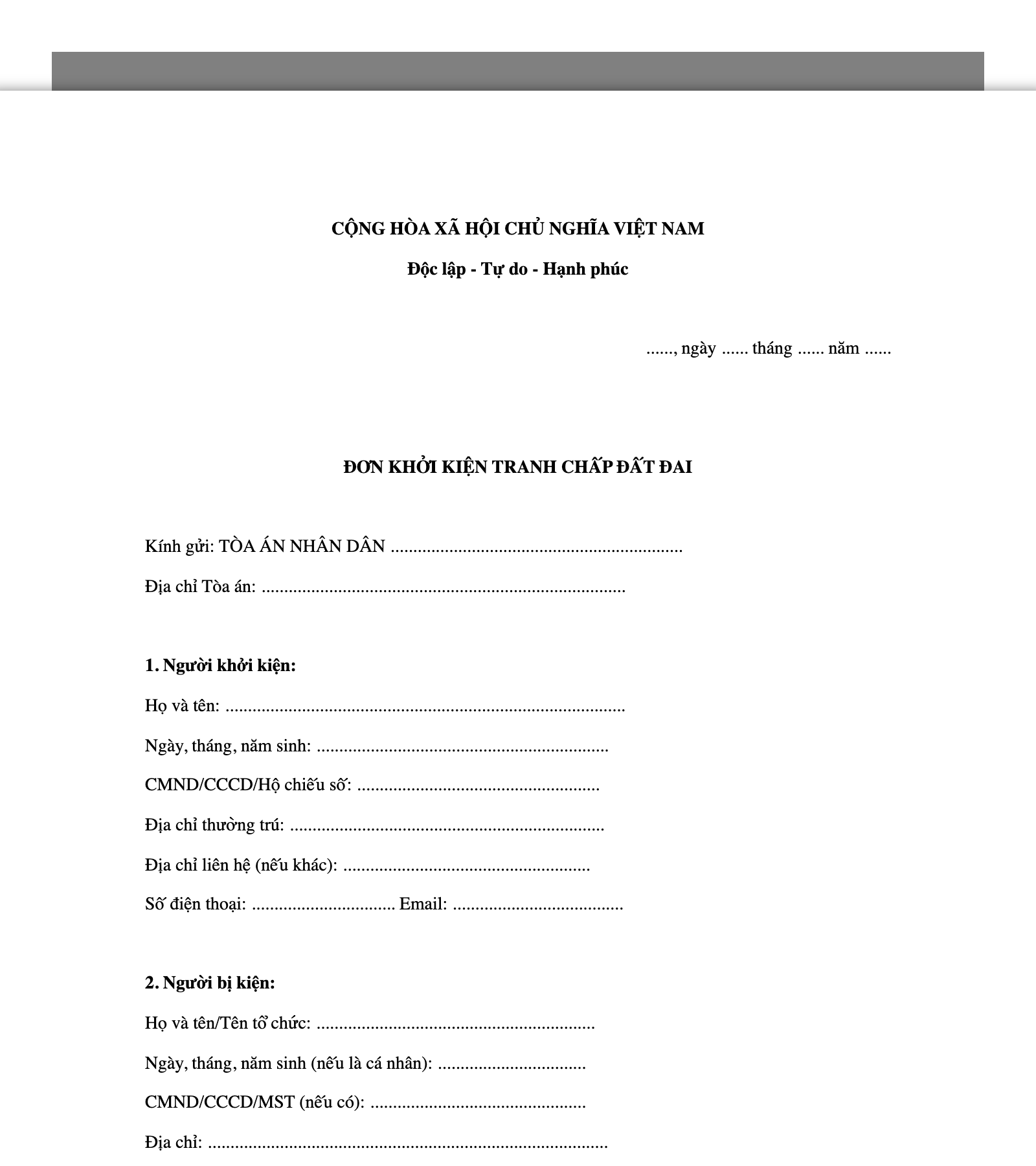
- 2. Land Dispute Lawsuit Petition Form (Free 2026)
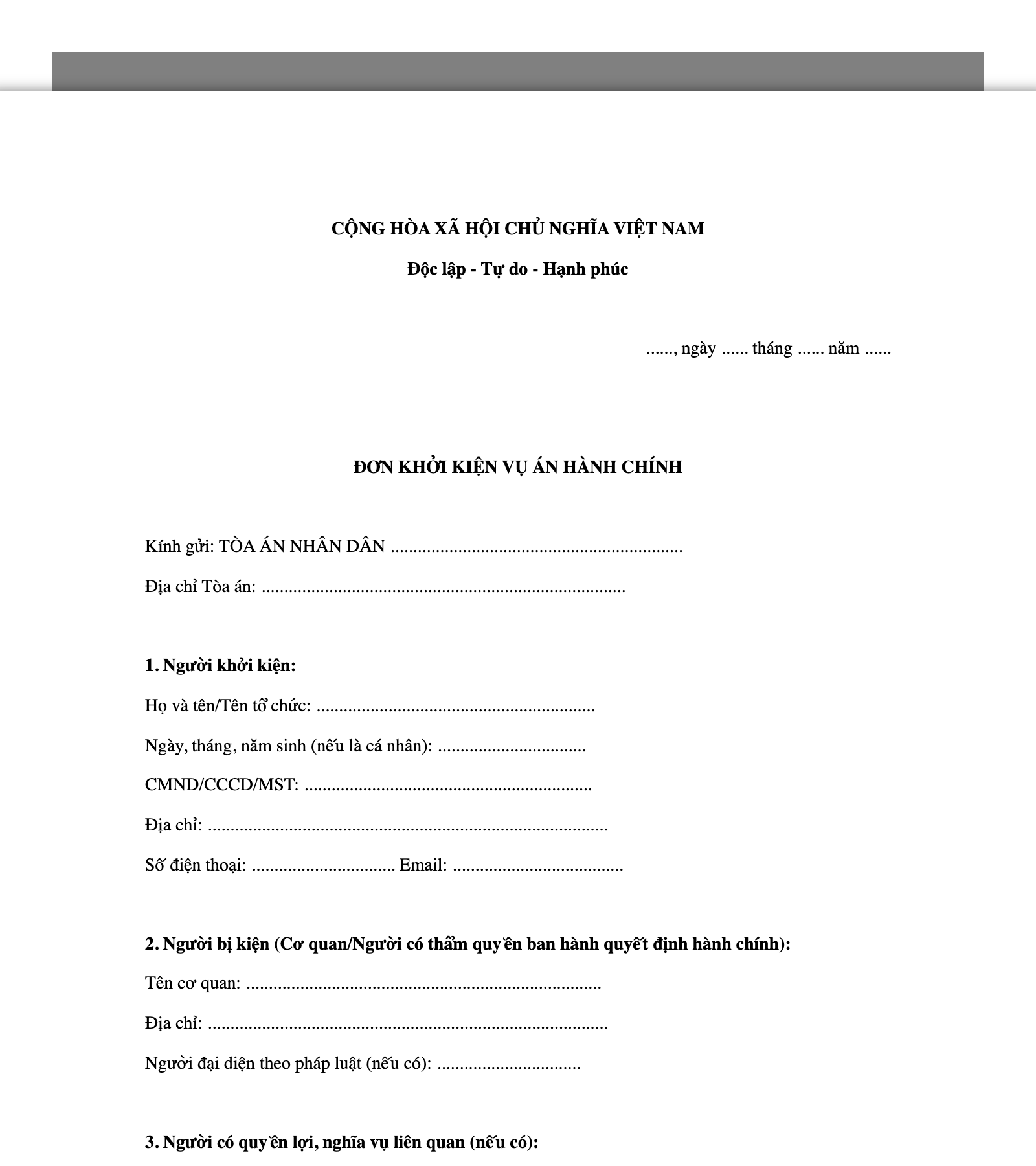
- 3. Administrative Case Lawsuit Petition Form (Free 2026)
I. What is a Statement of Claim?
II. Current Legal Basis (Updated 2026)
The legal basis governing the preparation and submission of a statement of claim is currently stipulated in various legal documents, depending on the nature of the case.
According to the 2015 Civil Procedure Code
This is a key legal document governing civil, marriage and family, commercial business, and labor cases. The Code clearly defines the right to sue for individuals, agencies, and organizations; the conditions for filing a lawsuit; the statute of limitations; as well as the mandatory content required in a statement of claim. According to regulations, the statement must include complete information about the competent Court, the parties involved, the content of the dispute, specific requests, and a list of attached documents and evidence. Failure to meet these requirements may result in the statement of claim not being accepted.
According to the 2015 Law on Administrative Procedures
For administrative cases, including lawsuits against administrative decisions or actions by state agencies, the filing process is governed by the Law on Administrative Procedures. This law specifies the conditions for filing, the statute of limitations, and the submission procedure. Compared to civil procedures, administrative procedures have unique characteristics, particularly in identifying the defendant and the jurisdiction for resolution.
According to the 2019 Labor Code
In the labor sector, in addition to general procedural laws, the plaintiff must also refer to the Labor Code to determine the conditions for filing a lawsuit. Some labor disputes require mandatory mediation before a statement of claim can be filed with the Court, except in cases where the law permits direct filing. Failure to follow the correct pre-litigation procedures can result in the statement of claim being returned.
According to the 2024 Land Law
For land disputes, especially those concerning land use rights, the 2024 Land Law clearly stipulates a mandatory mediation procedure at the commune-level People’s Committee before a lawsuit can be filed with the Court in certain cases. The law also clarifies the jurisdiction for resolution between administrative agencies and judicial bodies. Correctly identifying the procedure and the competent authority is a crucial factor in ensuring the statement of claim is accepted in accordance with regulations.