09/05/2026
  166 views
Biên bản làm việc giữa 2 bên là văn bản quan trọng giúp ghi nhận nội dung trao đổi, thống nhất ý kiến và làm căn cứ theo dõi, thực hiện công việc trong nhiều lĩnh vực như doanh nghiệp, lao động, dân sự và hành chính. Tuy nhiên, nếu sử dụng sai mẫu hoặc soạn thảo không đầy đủ, biên bản làm việc có thể mất giá trị sử dụng và tiềm ẩn rủi ro pháp lý.
Trong bài viết này, chúng tôi tổng hợp 6+ mẫu biên bản làm việc giữa 2 bên phổ biến, áp dụng cho nhiều tình huống thực tế như làm việc chung, giải quyết khiếu nại – tranh chấp, thay đổi/bổ sung hợp đồng, bàn giao công việc – tài sản và làm việc với đối tác nước ngoài. Tất cả mẫu đều kèm file Word miễn phí, được trình bày chuẩn, dễ chỉnh sửa và sử dụng ngay.
Mục lục
- I. Biên Bản Làm Việc Giữa 2 Bên Là Gì? Định Nghĩa và Bản Chất Pháp Lý
- II. Các Trường Hợp Thường Gặp Cần Lập Biên Bản Làm Việc Giữa 2 Bên
- III. Detailed Guide on How to Professionally Draft Meeting Minutes Between Two Parties
- V. [FREE WORD FILE DOWNLOAD] The Most Common Two-Party Meeting Minutes Templates
- Template 1: General Meeting Minutes (for multiple purposes)
- Template 2: Meeting Minutes for Complaint/Dispute Resolution
- Template 3: Meeting Minutes for Contract Amendment/Addendum
- 1. Is a company stamp required for meeting minutes?
- 2. How long should meeting minutes be stored?
- 3. What should be done if a party refuses to sign the meeting minutes?
- 4. Are meeting minutes a contract? Differentiating them from MOUs and agreements
I. Biên Bản Làm Việc Giữa 2 Bên Là Gì? Định Nghĩa và Bản Chất Pháp Lý
Trong hoạt động kinh doanh, hành chính, xây dựng, lao động hay hợp tác dân sự, biên bản làm việc giữa hai bên là một trong những văn bản được sử dụng phổ biến. Tuy nhiên, không ít trường hợp vẫn nhầm lẫn về vai trò, giá trị pháp lý và phạm vi hiệu lực của loại biên bản này.
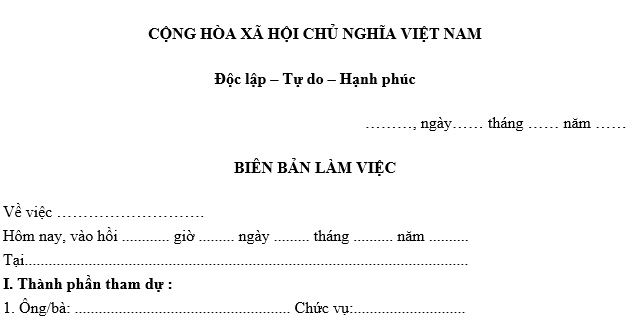
1. Định nghĩa biên bản làm việc giữa 2 bên
Biên bản làm việc giữa 2 bên là văn bản ghi nhận lại toàn bộ hoặc một phần nội dung trao đổi, làm việc, thống nhất ý kiến giữa hai chủ thể tham gia làm việc tại một thời điểm cụ thể. Biên bản thường được lập ngay trong hoặc ngay sau buổi làm việc, có sự xác nhận của các bên liên quan.
Về bản chất, biên bản làm việc không phải là hợp đồng, mà là tài liệu ghi nhận diễn biến thực tế của quá trình trao đổi, làm việc. Tuy nhiên, trong nhiều trường hợp, biên bản làm việc lại đóng vai trò trung gian quan trọng giữa trao đổi miệng và văn bản pháp lý có giá trị ràng buộc cao hơn.
Thông thường, biên bản làm việc giữa 2 bên được sử dụng trong các tình huống như:
-
Làm việc giữa doanh nghiệp với đối tác
-
Làm việc giữa chủ đầu tư và nhà thầu
-
Làm việc giữa người lao động và người sử dụng lao động
-
Làm việc với cơ quan, tổ chức, cá nhân liên quan
2. Mục đích cốt lõi của biên bản làm việc
Biên bản làm việc không chỉ nhằm “ghi cho có”, mà phục vụ nhiều mục đích quản lý và pháp lý quan trọng. Việc lập biên bản giúp các bên tránh hiểu sai, quên nội dung đã trao đổi hoặc phát sinh tranh chấp về sau.
Các mục đích cốt lõi của biên bản làm việc giữa 2 bên bao gồm:
-
Ghi nhận đầy đủ diễn biến buổi làm việc, nội dung trao đổi và ý kiến của các bên
-
Lưu trữ thông tin làm căn cứ đối chiếu trong quá trình thực hiện công việc
-
Xác nhận các cam kết, thỏa thuận hoặc định hướng xử lý tiếp theo
-
Làm bằng chứng xác thực khi phát sinh tranh chấp, khiếu nại
-
Hỗ trợ công tác quản lý, theo dõi và kiểm soát tiến độ thực hiện
Trong nhiều trường hợp, biên bản làm việc chính là tài liệu chuyên biệt ghi nhận nội dung trao đổi giữa các bên, đặc biệt khi chưa ký hợp đồng hoặc chưa ban hành quyết định chính thức.
3. Giá trị pháp lý của biên bản làm việc giữa 2 bên
Giá trị pháp lý của biên bản làm việc là vấn đề được quan tâm nhiều nhất và cũng dễ gây hiểu nhầm nhất. Trên thực tế, không phải mọi biên bản làm việc đều phát sinh ràng buộc pháp lý, nhưng cũng không thể xem biên bản chỉ là tài liệu tham khảo đơn thuần.
Khi nào biên bản làm việc chỉ mang tính ghi nhận?
Trong trường hợp biên bản chỉ phản ánh nội dung trao đổi, ý kiến, quan điểm của các bên mà không có điều khoản cam kết thực hiện cụ thể, biên bản thường mang tính chất:
-
Ghi nhận thông tin
-
Làm cơ sở tham khảo
-
Phục vụ quản lý nội bộ hoặc theo dõi công việc
Ở trường hợp này, biên bản không làm phát sinh quyền và nghĩa vụ pháp lý mới, nhưng vẫn có giá trị làm chứng cứ nếu xảy ra tranh chấp về mặt sự kiện, thời điểm hoặc nội dung đã trao đổi.
Khi nào biên bản làm việc có thể phát sinh ràng buộc pháp lý?
Biên bản làm việc có thể phát sinh giá trị ràng buộc khi đáp ứng một hoặc nhiều điều kiện sau:
-
Nội dung biên bản thể hiện rõ sự thống nhất, cam kết thực hiện của các bên
-
Biên bản được coi là phụ lục của hợp đồng hoặc dẫn chiếu trực tiếp hợp đồng gốc
-
Các bên ký tên với tư cách đại diện hợp pháp
-
Nội dung không trái quy định pháp luật
Trong các trường hợp này, biên bản làm việc có thể được xem là chứng cứ thể hiện thỏa thuận, thậm chí là căn cứ xác định nghĩa vụ khi giải quyết tranh chấp tại tòa án hoặc trọng tài.
4. So sánh các quan điểm về hiệu lực pháp lý của biên bản làm việc
Trong thực tiễn áp dụng, có sự khác nhau trong cách nhìn nhận hiệu lực pháp lý của biên bản làm việc, tùy thuộc vào bối cảnh và nội dung cụ thể:
-
Quan điểm quản lý: biên bản là công cụ ghi nhận và theo dõi công việc
-
Quan điểm pháp lý: biên bản có thể là chứng cứ hoặc thỏa thuận nếu đủ điều kiện
-
Quan điểm thực tiễn tranh chấp: biên bản thường được sử dụng để chứng minh ý chí và hành vi của các bên
Sự khác biệt này xuất phát từ việc giá trị pháp lý của biên bản không nằm ở tên gọi, mà nằm ở nội dung, hình thức và ý chí thể hiện trong văn bản.
II. Các Trường Hợp Thường Gặp Cần Lập Biên Bản Làm Việc Giữa 2 Bên
Trong thực tế, biên bản làm việc giữa hai bên được sử dụng trong rất nhiều bối cảnh khác nhau, từ quan hệ thương mại, lao động cho đến quan hệ dân sự và hành chính. Việc lập biên bản đúng thời điểm giúp các bên ghi nhận rõ nội dung đã trao đổi, hạn chế rủi ro hiểu sai và tạo căn cứ xử lý về sau.
1. Trong quan hệ Doanh nghiệp – Doanh nghiệp
Đối với các doanh nghiệp, biên bản làm việc là công cụ quan trọng để ghi nhận quá trình trao đổi trước, trong và sau khi ký kết hợp đồng. Nhiều vấn đề quan trọng không thể chỉ trao đổi bằng email hoặc lời nói mà cần được lập thành văn bản để thống nhất cách hiểu.
Các trường hợp thường gặp bao gồm:
-
Biên bản làm việc về hợp tác dự án mới
Ghi nhận nội dung trao đổi ban đầu, định hướng hợp tác, phạm vi công việc dự kiến, trách nhiệm của mỗi bên trước khi ký hợp đồng chính thức. -
Biên bản làm việc giải quyết tranh chấp hợp đồng
Ghi nhận quan điểm của từng bên, các nội dung đang vướng mắc, phương án xử lý tạm thời hoặc lộ trình giải quyết tranh chấp. -
Biên bản làm việc về việc thay đổi điều khoản thỏa thuận
Áp dụng khi các bên thống nhất điều chỉnh tiến độ, phạm vi công việc, giá trị hợp đồng hoặc các điều khoản khác nhưng chưa ký phụ lục hợp đồng ngay.
2. Trong quan hệ Doanh nghiệp – Cá nhân / Người lao động
Trong quản trị nhân sự và quan hệ lao động, biên bản làm việc là căn cứ quan trọng để đảm bảo tính minh bạch, đúng trình tự và hạn chế tranh chấp lao động phát sinh.
Các trường hợp phổ biến gồm:
-
Biên bản làm việc về xử lý vi phạm kỷ luật lao động
Ghi nhận hành vi vi phạm, ý kiến giải trình của người lao động và quan điểm của người sử dụng lao động theo đúng quy trình. -
Biên bản làm việc về giải quyết khiếu nại, tố cáo
Ghi nhận nội dung khiếu nại, yêu cầu của người lao động và hướng xử lý, trả lời của doanh nghiệp. -
Biên bản làm việc về thay đổi điều kiện làm việc
Áp dụng khi điều chỉnh vị trí công tác, thời gian làm việc, mức lương, chế độ hoặc các điều kiện lao động khác. -
Biên bản làm việc bàn giao công việc, tài sản
Thường sử dụng khi người lao động nghỉ việc, chuyển vị trí hoặc tạm ngừng công tác, nhằm xác nhận rõ trách nhiệm và hiện trạng bàn giao.
3. Trong quan hệ Cá nhân – Cá nhân
Không chỉ trong môi trường doanh nghiệp, biên bản làm việc còn được sử dụng rộng rãi trong các quan hệ dân sự giữa cá nhân với cá nhân, đặc biệt khi có yếu tố thỏa thuận hoặc cần ghi nhận sự thống nhất để tránh tranh chấp.
Some typical cases:
-
Meeting minutes on civil agreements
Recording loans, borrowing of assets, repayment agreements, or commitments between individuals. -
Meeting minutes for resolving conflicts and disputes
Recording the meeting’s content, the parties’ opinions, and the agreed-upon or considered resolution plan.
In many cases, meeting minutes serve as crucial evidence if the parties later need to resort to mediation, arbitration, or court.
4. In the relationship between State Agencies and Organizations/Individuals
Meeting minutes are a very common form of document in state management activities, especially during verification, inspection, or administrative procedure resolution.
Common cases include:
-
Meeting minutes for information verification
Recording the working content between a state agency and an organization or individual regarding a specific file, case, or report. -
Meeting minutes for resolving administrative procedures
Recording the process of exchange, guidance, requests for additional documents, or the working results between the agency and citizens or businesses.
In this group, meeting minutes often have the value of administrative evidence and serve as a basis for continuing or concluding a specific handling process.
III. Detailed Guide on How to Professionally Draft Meeting Minutes Between Two Parties
A properly drafted meeting minute not only helps to fully record the content of the meeting but also serves as an important basis for monitoring, implementing commitments, and resolving future disputes. In reality, many minutes lose their value simply because of a weak structure, vague content, or failure to accurately reflect the parties’ intentions.
To avoid these mistakes, meeting minutes between two parties should be structured clearly, logically, and consistently.
1. Structure of a standard meeting minute
Opening Section
The opening section serves to define the nature, scope, and legal context of the meeting. It provides the basis for identifying the circumstances under which the minutes were created and the parties involved.
The opening section should include the following:
-
National Emblem and Motto
Applicable to administrative minutes, minutes of meetings with agencies, organizations, or for use within businesses following administrative document formats. -
Title of the minutes
Usually written as: MEETING MINUTES, in all caps, centered, and easily identifiable. -
Specific title about the working matter
Clearly state the main content of the meeting, for example:
“Regarding the resolution of a complaint related to Contract No. …”
or
“Regarding the handover of work and assets”. -
Time and place of the meeting
Clearly record the date, start time, and location of the meeting to establish a legal timeline. -
Attendees
Record the full information of each party’s representative, including full name, position, department, or capacity in which they are attending the meeting.
Main Content Section
This is the most important part of the meeting minutes, reflecting the entire proceedings and outcomes of the meeting. The content must be presented clearly, neutrally, and accurately according to the actual events, avoiding speculation or the personal opinions of the minute-taker.
The main content should include:
-
Meeting proceedings
Present the events and key statements from each party in chronological order, avoiding generalities or omitting important milestones. -
Content of exchange and discussion
Record the issues that were discussed, as well as the contributions, analyses, and proposed solutions from the participating parties. -
Agreements, commitments, or decisions that have been reached
Specifically record each agreed-upon item, including:-
Scope of work
-
Deadline for implementation
-
Responsibilities of each party
-
Method of coordination and follow-up
-
-
Reservations (if any)
If a party does not agree with all or part of the content, their reservations and the accompanying reasons must be clearly recorded to avoid future misunderstandings.
Closing Section
The closing section aims to confirm the completeness of and agreement on the content of the minutes. This is the basis for the minutes to be valid and serve as a foundation for implementation.
The closing section should include:
-
Before signing the minutes, you should:
-
Reread the entire content of the minutes
-
Immediately edit or add information if there are any points of disagreement
-
Request all parties to sign for full confirmation
5. Maintaining Confidentiality in Meeting Minutes
Many meeting minutes contain sensitive information such as business data, personal information, dispute details, or internal strategies. Maintaining confidentiality is essential to avoid legal risks and protect the interests of all parties.
Some notes on confidentiality:
-
Only provide the minutes to relevant parties
-
Restrict unauthorized copying and distribution
-
Apply internal confidentiality regulations or non-disclosure agreements (if any)
6. Storing Meeting Minutes Systematically
Meeting minutes are only valuable if they are stored properly and are easy to retrieve when needed. Systematic storage saves time and ensures the integrity of the records.
Minutes should be stored according to the following principles:
-
Store both paper and electronic copies (scans or original files)
-
Organize by date, case, or subject of the meeting
-
Clearly label the minutes’ title and date for easy searching
-
Keep the original copy with the responsible department
V. [FREE WORD FILE DOWNLOAD] The Most Common Two-Party Meeting Minutes Templates
Depending on the purpose of the meeting and the relationship between the parties, the meeting minutes should be structured with appropriate content. Using the right template helps to fully record the discussion, minimize omissions, and enhance the practical value of the minutes.
Below are the 6 most commonly used two-party meeting minutes templates, which have been standardized in format, are easy to edit, and can be applied to various situations.
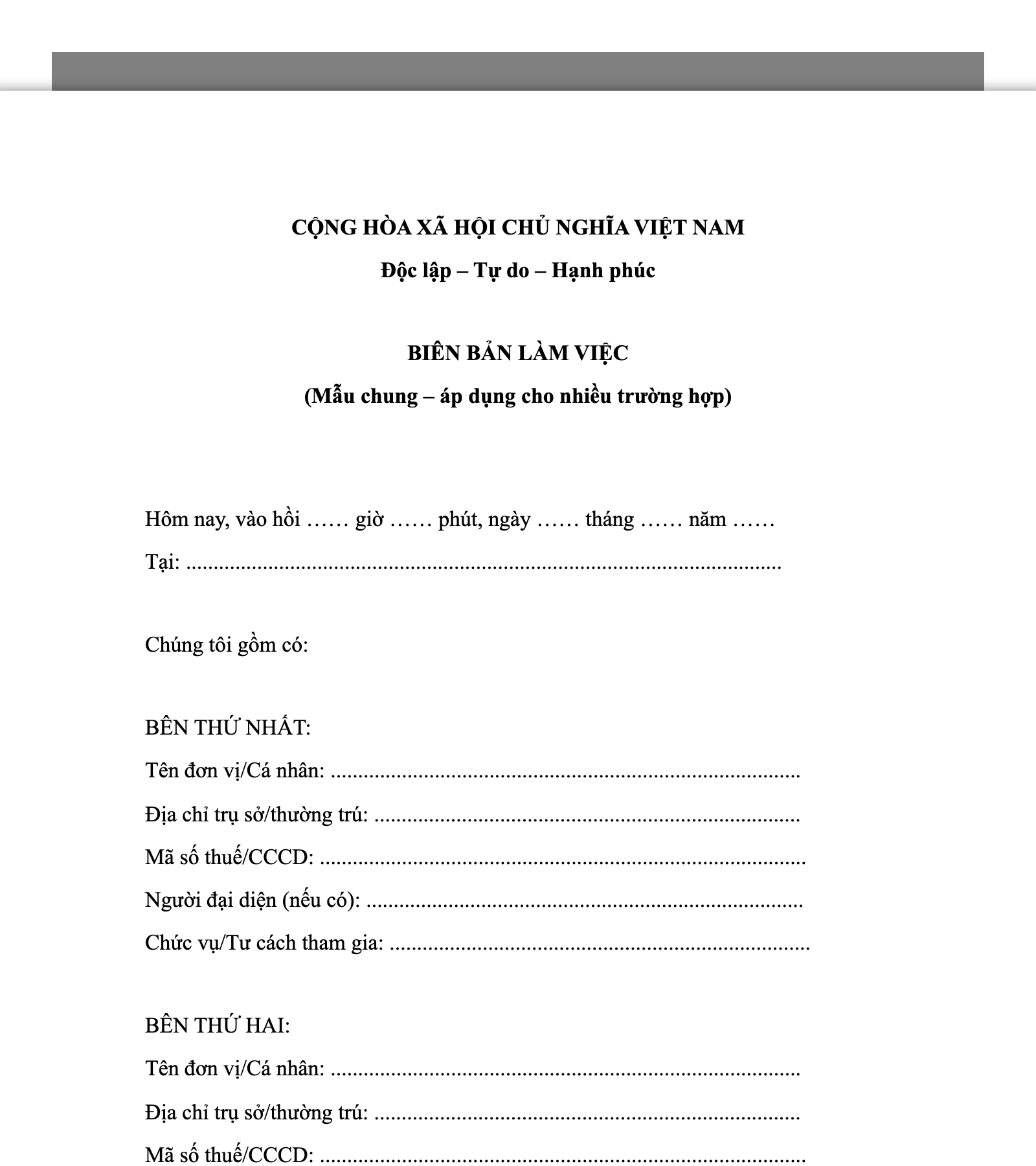
Template 1: General Meeting Minutes (for multiple purposes)

General Meeting Minutes (for multiple purposes) This is a basic minutes template that can be applied to most regular meetings between two parties, where the main objective is to record the discussion and agree on a course of action.
Suitable for use in the following cases:
-
Meetings to exchange information and agree on a plan
-
Preliminary meetings before signing a contract
-
Regular meetings between parties
[Word File] Download General Meeting Minutes Template (for multiple purposes)
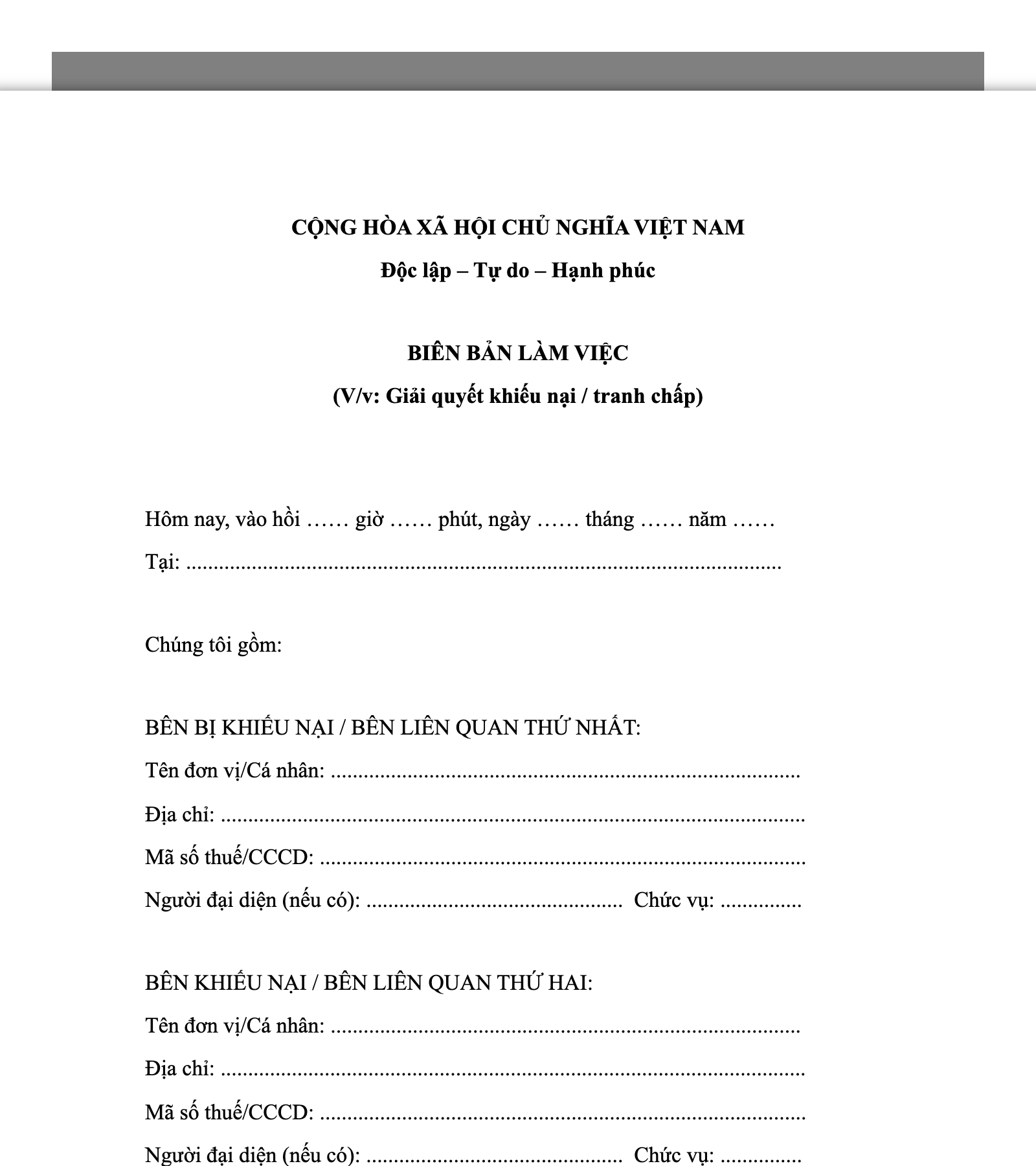
Template 2: Meeting Minutes for Complaint/Dispute Resolution
Meeting Minutes for Complaint/Dispute Resolution This template is designed to record the detailed opinions of the parties during the resolution of complaints or disputes arising from a contract or working relationship.
Key features of the template:
-
Includes a section to record each party’s opinion
-
Clarifies the content of the complaint, requests, and responses
-
Records the proposed solution or resolution roadmap
[Word File] Download Meeting Minutes Template for Complaint/Dispute Resolution
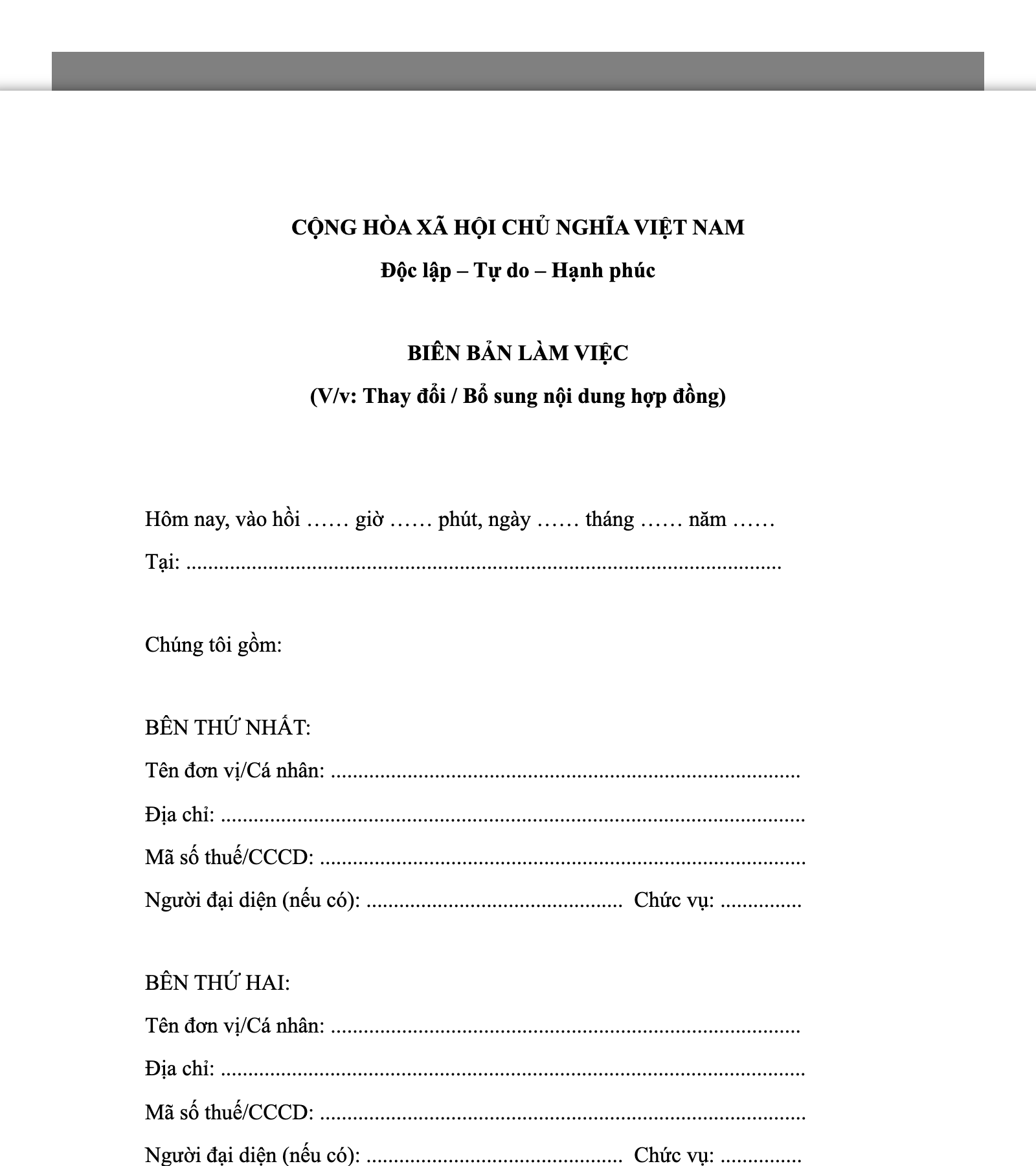
Template 3: Meeting Minutes for Contract Amendment/Addendum
Meeting Minutes for Contract Amendment/Addendum This minutes template is used when parties agree to adjust one or more terms of a signed contract but have not yet created a formal contract addendum.
Commonly used when:
-
Changing the implementation schedule
-
Adjusting the scope of work
-
<p data-start="204
1. Is a company stamp required for meeting minutes?
Current law does not require meeting minutes to be stamped to be valid. The value of the minutes primarily depends on the content, signatures, and authority of the signatories.
However, in practice:
-
If they are minutes of a meeting between businesses, stamping helps increase authenticity and makes them more readily accepted for record-keeping
-
For internal minutes or minutes that are purely for recording purposes, the signature of an authorized person is usually sufficient
-
In cases where the minutes contain important commitments or agreements, stamping is recommended to prevent disputes
Therefore, stamping is not mandatory but is recommended in many practical situations.
2. How long should meeting minutes be stored?
The storage period for meeting minutes is not fixed for all cases; it depends on the nature and purpose of the minutes.
Typically:
-
Internal meeting minutes: stored according to the company’s record-keeping policies
-
Minutes related to contracts, disputes, or complaints: should be kept for at least the duration of the contract’s validity and the statute of limitations for legal action
-
Minutes for audits, inspections, or settlements: stored according to the retention periods for related accounting and legal records
In practice, many businesses choose to store meeting minutes for a minimum of 5–10 years to ensure legal security.
3. What should be done if a party refuses to sign the meeting minutes?
A party refusing to sign the meeting minutes is a fairly common situation, especially in meetings involving disputes or where content has not been agreed upon.
When this occurs, you can handle it in the following ways:
-
Clearly state in the minutes: “[Party’s name] refuses to sign/does not agree with the content of the minutes”
-
Create a unilateral record of the meeting to document the proceedings
-
Have a witness or a third party sign to confirm (if appropriate)
-
Send the minutes to the other party via letter/email as proof of notification
Even without the signatures of all parties, the minutes can still be considered evidence of the event, reflecting that the meeting took place and the content was discussed.
4. Are meeting minutes a contract? Differentiating them from MOUs and agreements
This is a question that often causes confusion in practice. Essentially, meeting minutes are not a contract, unless their content and form fully meet the legal requirements of a contract.
Here is a brief distinction:
-
Meeting Minutes:
Primarily record the content of discussions, proceedings, opinions, and work results. They may contain commitments, but are usually for recording and directional purposes. -
Memorandum of Understanding (MOU):
Records a preliminary agreement on the direction of cooperation, is not strongly legally binding, and is often used before signing a formal contract. -
Agreement:
Records specific items that have been agreed upon by the parties; it can create legal obligations if it meets the conditions regarding subject, content, and form.
The key point to remember is: the title of the document does not determine its legal value; rather, the content of the commitments and the expressed will of the parties are the decisive factors.
-
-