


 10/05/2026
  156 views
We cannot deny the ever-growing presence of the restaurant service industry. However, not everyone clearly understands what a restaurant manager’s job entails. Join 1Office to explore the tasks of a manager in this industry!

Mục lục
1. What is a Restaurant Manager?
A restaurant manager is the person responsible for overseeing all of a restaurant’s operations—from managing personnel, finances, and customer service to controlling food quality and the diner experience. This is a central role that helps ensure all processes within the restaurant run smoothly, efficiently, and generate sustainable profit for the business.
A professional restaurant manager is not just someone who supervises staff, but also a strategic planner, resource coordinator, cost controller, and maintainer of service standards to deliver the best possible customer experience.
2. Restaurant Manager’s Job Checklist
As 1Office mentioned above, developing a restaurant business is not simple at all. First, to understand why this process needs to be managed, let’s look at the tasks that need to be managed in the restaurant industry.
Personnel Management
The tasks a personnel manager needs to perform in restaurant management include:
- Creating work schedules for employees, and dispatching and arranging staff according to the schedule.
- Tracking attendance for each department
- Periodically evaluating employee performance
- Supervising and reminding employees to comply with restaurant regulations
- Ensuring the rights and well-being of employees at work
- Reporting employee feedback to superiors
- Proposing recruitment for service positions in the restaurant
- Participating in the selection and training of new employees to meet the restaurant’s standards
- Organizing evaluations of professional training and probation results for new employees
- Proposing commendations, disciplinary actions, and job transfers
- Making termination decisions for employees
Service Quality Management
For a restaurant to easily manage its service quality, the following tasks need to be performed:
- Supervising restaurant operations according to established standards
- Ensuring the menu for each day is available
- Maintaining food safety and hygiene
- Proposing solutions to improve the restaurant’s service quality
- Summarizing and reporting daily events to upper management
Financial Management
Finance is a very important factor for any business. However, for a restaurant, financial management is not simple. The tasks a financial manager for a restaurant unit needs to do are:
- Clearly understanding the quantity of food purchased and daily revenue for reporting purposes
- Planning and organizing implementation to achieve set sales targets
- Proposing solutions to save costs and boost the restaurant’s revenue
- Negotiating restaurant contracts
- Preparing statistical financial reports
Facilities Management
The tasks of a facilities manager at a restaurant include:
- Checking and monitoring the quantity of the restaurant’s supplies and equipment, such as bowls, plates, cutlery, etc.
- Conducting inventory checks and replenishing necessary supplies and tools for the restaurant
- Signing off on food and asset transfer slips for the restaurant and monitoring inventory levels to minimize stock.
- Explaining the quantity of damaged or lost items to superiors
- Planning for the maintenance, repair, and replacement of machinery and facilities for the restaurant
Managing business and marketing processes
- Finding customer sources to use the restaurant’s services.
- Implementing and monitoring the use of the restaurant’s brand identity system
- Coordinating with the sales department to build marketing and sales campaigns
- Tracking VIP and loyal customers of the restaurant, and implementing customer care activities
- Organizing promotional activities according to the approved plan
Managing and resolving customer incidents and complaints
Issues such as incidents and customer complaints greatly affect the restaurant’s reputation and revenue.
- Resolving customer complaints when employees are unable to
- Organizing the tracking and evaluation of customer satisfaction with the restaurant
- Building and maintaining relationships with regular customers, creating a good impression in their eyes.
As you can see, managing processes in the restaurant industry is a combination of many different and extremely complex factors. These tasks require managers to have deep skills and expertise in the industry. So, what are the best tips for managing restaurant industry processes? Follow along with this article from 1Office!
3. Applying technology to restaurant management
Applying technology to restaurant management
We can see that the management process in the restaurant industry is very complex with many sub-tasks to handle. It is not simple for a manager to grasp all the issues that are occurring. Therefore, using technology applications in the management stage is a smart choice.
Restaurant management software helps managers get a clear grasp of the work. It updates the real-time situation quickly to provide appropriate solutions. Moreover, for managers, restaurant management software helps them save costs, time, and personnel.
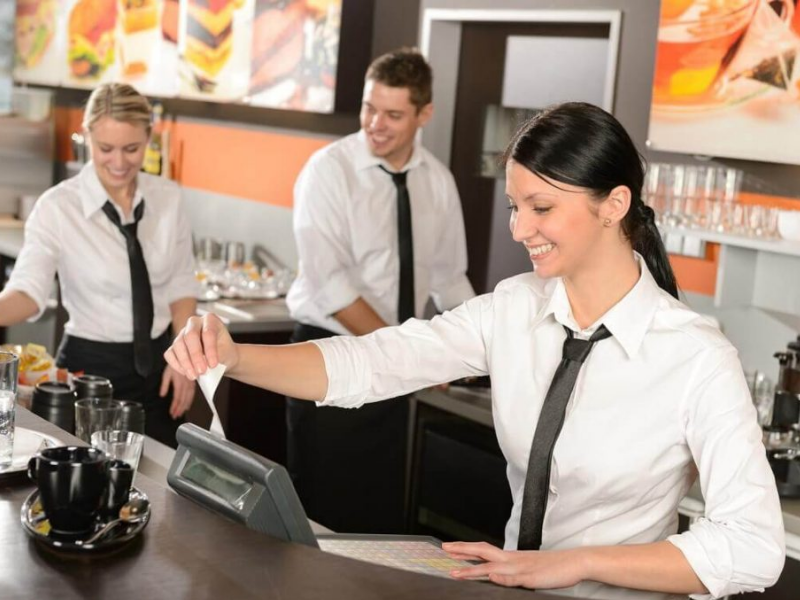
Currently, there are many management software options on the market. However, you can consider the 1Office restaurant industry process management software. This is a comprehensive and optimal solution for your business.
Choosing a suitable location
For service-based businesses, the most important point is the location. Restaurants need to be mindful and choose a suitable location for themselves. Considerations when choosing a location for the restaurant include:
- Is the foot traffic at that location truly convenient for customers to stop by: parking availability, restaurant view, ease of finding the location, etc.
- Do the residents of that area fall into your target customer group?
- Will surrounding restaurants affect your restaurant?
- Research local planning policies related to that location
The menu is the core element of a restaurant service business. Therefore, having an attractive menu is something every restaurant should do. Try to present and arrange your menu in the most appealing way, bringing the best dining experience to your customers.
Improving service quality
The quality of your restaurant’s service is the key to bringing customers back. Therefore, improving your service quality is something your business should do. Factors affecting restaurant service quality include: staff’s service attitude, layout, food presentation, product quality… These are things that businesses in the restaurant service industry need to pay attention to.
Suitable Marketing and Advertising Campaigns
Advertising helps restaurants boost revenue. Clearly identifying the specific target audience, staying updated with general market development trends, and creating suitable advertising campaigns, marketing strategies, special offers, discounts, and promotions will bring long-term profits to the restaurant. Currently, the main communication and advertising channels that are popular and known to many customer groups include: YouTube, social networks (Facebook, Zalo, Instagram, etc.), newspapers, television, etc.
4. Essential skills for a professional restaurant manager
For a restaurant to operate effectively and maintain stable performance in a fiercely competitive environment, a manager not only needs experience but must also possess a comprehensive skill set — from leading people and managing finances to handling crises. Below are 4 core skill groups that every restaurant manager needs to develop:
4.1. Leadership, Communication, and Motivation Skills
For a restaurant to run well, the staff must be united and work in harmony — and that depends heavily on the manager.
-
Leadership ability: Helps set goals, inspire, and maintain discipline at work.
-
Communication skills: Allows the manager to convey information clearly, handle situations quickly, and effectively connect different departments (kitchen, service, cashier…).
-
Motivation: Knowing how to recognize achievements and encourage employee development helps them stay long-term and improve service quality.
For example: A good manager knows when to reward, delegate tasks to the right people, and spread positive energy to the entire team, especially during peak hours.
4.2. Time Management and Work Organization Skills
A restaurant manager must oversee dozens of tasks every day: shifts, inventory, revenue, customers, service quality… Therefore, organizational and time management skills are vital.
-
Prioritizing tasks: Knowing how to identify what is important versus what is urgent to handle them in the correct order.
-
Proper delegation: Assigning tasks according to each employee’s abilities to avoid overload or overlapping work.
-
Scientific operational scheduling: Arranging shifts, inventory delivery schedules, equipment maintenance schedules… to ensure all operations run smoothly without interruption.
For example: When a large group books a table, the manager must know how to arrange staff, the kitchen, and the service area appropriately so as not to affect other customers.
4.3. Financial and Data Analysis Skills
A professional restaurant manager is not just an “operator” but must also be a “financial administrator”.
-
Tracking revenue and expenses: Tightly controlling expenses (ingredients, labor, utilities, marketing…).
-
Analyzing business performance: Using sales data to evaluate which dishes are most profitable, which sell slowly, which hours are busiest…
-
Creating regular reports: From financial data, propose solutions to reduce costs and increase profits.
Currently, many restaurants use POS or ERP software to support automated analysis and reporting, helping managers make more accurate and faster decisions.
4.4. Crisis Management and Customer Care Skills
In the F&B industry, a small mistake can lead to a major crisis – for example, a customer complaining about a dish, a server not following procedures, or a payment issue.
The manager must have:
-
A calm mindset and quick reactions: Handle incidents skillfully, not letting tension escalate.
-
Psychological communication skills: Knowing how to listen, apologize at the right time, and offer suitable solutions to make customers feel respected.
-
Risk prevention skills: After each incident, it’s necessary to evaluate the cause and build a prevention process for the future.
For example: When a customer complains that a dish is not up to standard, the manager should personally apologize, offer a replacement dish or a discount — while also adjusting the kitchen process to prevent recurrence.
A professional restaurant manager is someone who can balance “people – processes – finances,” has a strategic vision but is also flexible in every operational detail. Continuously honing the skills above not only helps the restaurant operate effectively but also builds a high-quality service culture, creating a sustainable competitive advantage.
















