


 10/05/2026
  144 views
Customer analysis has become a core process, playing a decisive role in every business strategy. However, implementing a standard and effective customer analysis process is not easy. In this article, let’s join 1Office to explore how to build an accurate and systematic 5-step customer analysis process.
Mục lục
- 1. What is customer analysis?
- 2. Why do businesses need to analyze customers?
- 3. Common customer analysis criteria
- 4. Ways to collect customer information
- 5. The 5-Step Process for Analyzing Target Customers
- 6. Some notes on customer analysis
- 7. Applying customer analysis results in the business
- 8. Customer Information Management Solution – 1Office CRM
- Frequently Asked Questions about the Customer Analysis Process
1. What is customer analysis?
Customer analysis is the process of collecting, processing, and understanding information related to a business’s or organization’s customers. The main goal of customer analysis is to understand aspects of customer behavior, needs, desires, and characteristics to form the necessary information and data to optimize business strategy and customer interactions.

Customer analysis not only helps businesses understand their target audience more deeply but also helps them adjust and optimize their business strategies to best meet customer needs and create real value for them.
2. Why do businesses need to analyze customers?
Customer analysis is a guiding principle that helps businesses deeply understand actual behavior and needs, thereby optimizing all resources to create distinct value, enhance competitiveness, and build lasting loyalty.
- Clearly understand your target customers: This includes their needs, desires, preferences, and shopping behavior, which helps in creating products, services, and marketing strategies that are suitable for them.
- Optimize business strategy: Such as shaping products, pricing, distribution points, and advertising campaigns to create the best value for customers and maximize profits.
- Develop customized products and services: Customer analysis helps identify the key factors customers are looking for, thereby creating customized products and services that best meet the specific needs of each customer.
- Enhance customer experience: Providing better service, resolving issues effectively, and creating a friendly environment will help build engagement and loyalty from customers.
- Predict and forecast future trends: Data from customer analysis can help businesses prepare for changes and opportunities in the market.
3. Common customer analysis criteria
3.1 Demographic analysis
Demographic analysis includes information about age, gender, income, occupation, geographic location, education, and marital status. Analyzing this factor helps identify the business’s target audience and create marketing strategies suitable for each customer group.
For example: A fashion business is creating an advertising strategy for a new collection. They use demographic analysis to determine that their main target audience is young women (18-30 years old) with an average income, living in large cities.
3.2 Customer behavior analysis
Customer behavior relates to the activities, shopping habits, and interactions of customers with a product or service. Specifically, this includes purchase decisions, shopping frequency, and other factors that influence customer behavior.
For example: An online store is tracking customer behavior on its website. They discover that many customers often browse products in the sports shoe category but only actually purchase running shoes. This helps the store optimize its website and advertising programs to increase sales.
3.3 Psychographic analysis
This criterion focuses on the psychological, emotional, and cognitive factors of customers during a purchase, their interaction with the brand, and how their psychology impacts purchasing decisions.
For example: A company producing organic food would study the psychology of consumers who are concerned about food quality and origin. They can use this analysis to design a marketing campaign focused on the value of “health” and creating an emotional connection with customers.
3.4 Motivation & barrier analysis
This criterion focuses on identifying the motivational factors that drive customers to buy a product or service, as well as the barriers that prevent them from making a purchase. Analyzing motivations and barriers helps businesses create strategies to encourage motivation and overcome these barriers.
For example: A language learning app discovers that some users stop using the app after the first few lessons. Barrier analysis reveals that they have difficulty maintaining a daily learning habit. The app can respond by adding reminder features and learning goals to motivate users.
4. Ways to collect customer information
There are many different ways to collect customer information. Here are some common methods that businesses should apply:
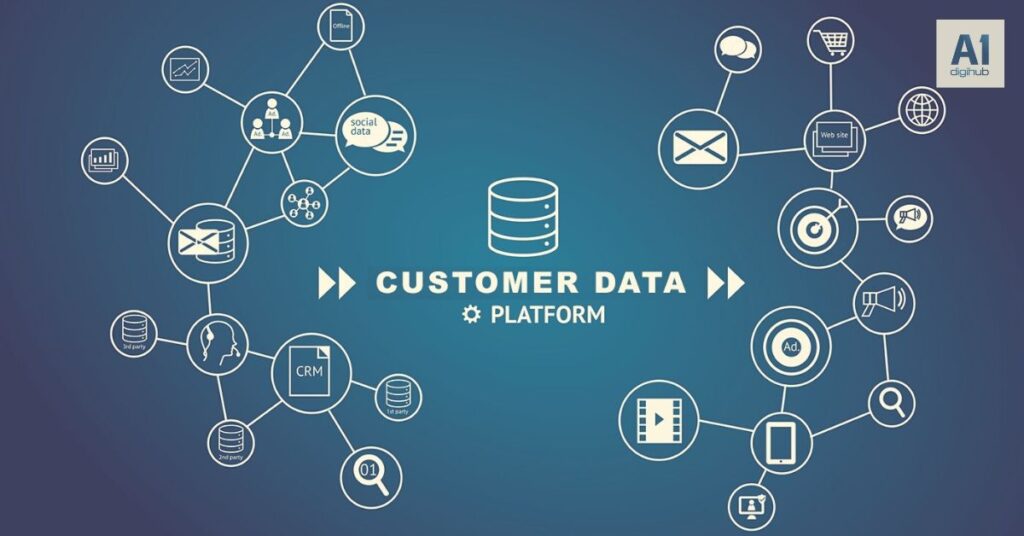
Customer Surveys: Create online or paper surveys to ask for customer opinions on products, services, needs, and desires. These surveys can be distributed via email, website, social media, or directly in-store.
Personal Interviews: Approach customers individually to talk about their experiences, opinions, and what they want from your product or service. Interviews can be conducted via phone calls, in-person meetings, or video calls.
Track Online Behavior: Use analytics tools to track customers’ online behavior on your website, mobile app, and social media. This helps you better understand how they interact with your content and products.
Analyze Purchase Data: Track customers’ purchase history to better understand the products they buy, the frequency, and the transaction value. This can help you identify their trends and preferences.
Monitor Social Media: Monitor customer activity on social media to know what they are interested in and discussing. This provides information about their mood, opinions, and expectations.
Receive Feedback: Allow customers to send feedback via email, your website, or other channels. This feedback can be opinions, suggestions, or comments about your products and services.
Use External Data: Use data from external sources such as market reports, industry research, and analytical reports to better understand industry and market trends.
Direct Interaction: Participate in events, seminars, exhibitions, or customer meetings to interact directly and gather information through conversation.
Combining various information collection methods will help businesses analyze customers accurately and comprehensively, thereby better understanding their needs, expectations, and behaviors.
5. The 5-Step Process for Analyzing Target Customers
Step 1: Create a Customer Persona
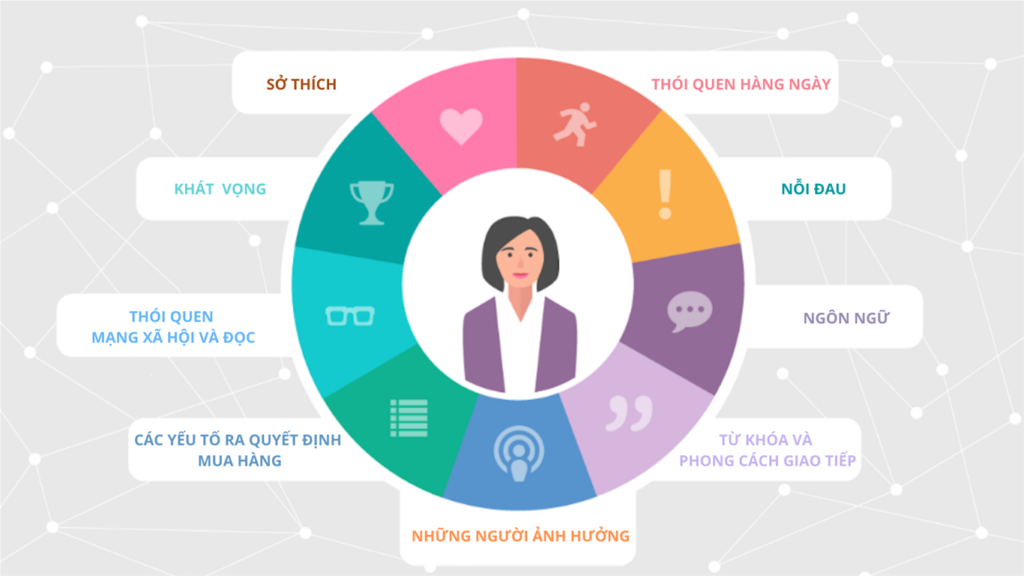
To clearly understand the target customer group, the first step for a business is to sketch out a customer persona. A customer persona is a representation of the target customer. For this persona, the business needs to collect detailed information about age, gender, interests, education, monthly income, and other information. The more detailed the information, the clearer the target customer persona will be, which helps the business easily implement its business strategy.
Businesses need to collect information through their internal channels, as well as from people who have had contact with customers. Information can come from direct surveys to understand customer perspectives, feedback from them via email, website, or social media, as well as information from transaction data and online behavior.
Step 2: Map the Customer Journey
The customer journey is a diagram that describes the entire path a potential or current customer takes when interacting with a business’s product or service. The 7-step customer journey process includes: discovery, consideration, evaluation, selection, purchase, use, and advocacy.
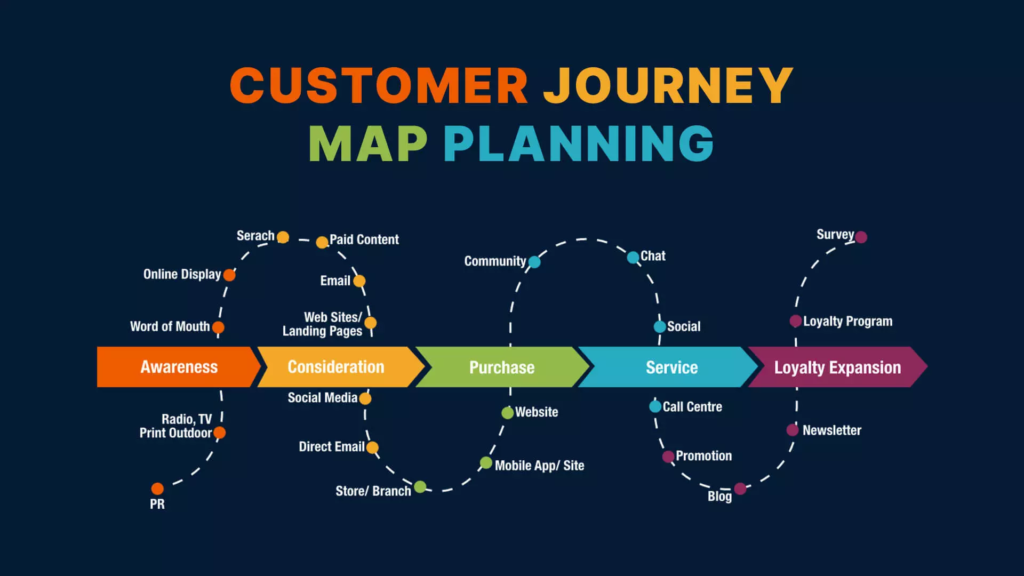
Identify and list all the points where customers can come into contact with your business, including both online and offline touchpoints such as the website, store, social media, advertisements, marketing emails, and more. Start from the first point of contact, through various interaction steps, until the customer uses the product and completes the transaction. By mapping this journey, the business gains a comprehensive view of how customers interact with and experience the product or service.
Step 3: Analyze Customer Insight
This is an extremely important aspect of building a marketing strategy. Customer Insight is a deep understanding of customers, describing the beliefs, values, needs, expectations, or emotions that they do not explicitly express and that the business must discover for itself.
To gain Customer Insight, businesses need to collect information from various sources such as surveys, customer feedback, behavioral observation, and even market research. The goal is to find information that is not obvious on the surface but has a significant impact on customer decisions and behavior. In marketing, by analyzing these underlying truths, you can create more accurate messages, content, and marketing campaigns that truly reflect their values and desires.
>> See more: What is Customer Insight? How to identify customer insights effectively and accurately
Step 4: Analyze target customer behavior (Consumer Behaviour)
To better understand customer behavior, you need to study how they shop, make purchasing decisions, and interact with products or services. This includes tracking online and offline behavior, identifying factors that influence purchasing decisions, and even creating interaction simulations.
Analyzing the factors that influence customer behavior includes personal factors (such as needs, personal values), social factors (such as influence from family, friends), and cultural factors (such as influence from social values, customs).
Based on the analysis of customer behavior, businesses can predict subsequent behaviors and create appropriate engagement campaigns, such as suggesting related products, providing useful information, or creating noteworthy promotions.
Step 5: Consolidate customer information and formulate a business strategy
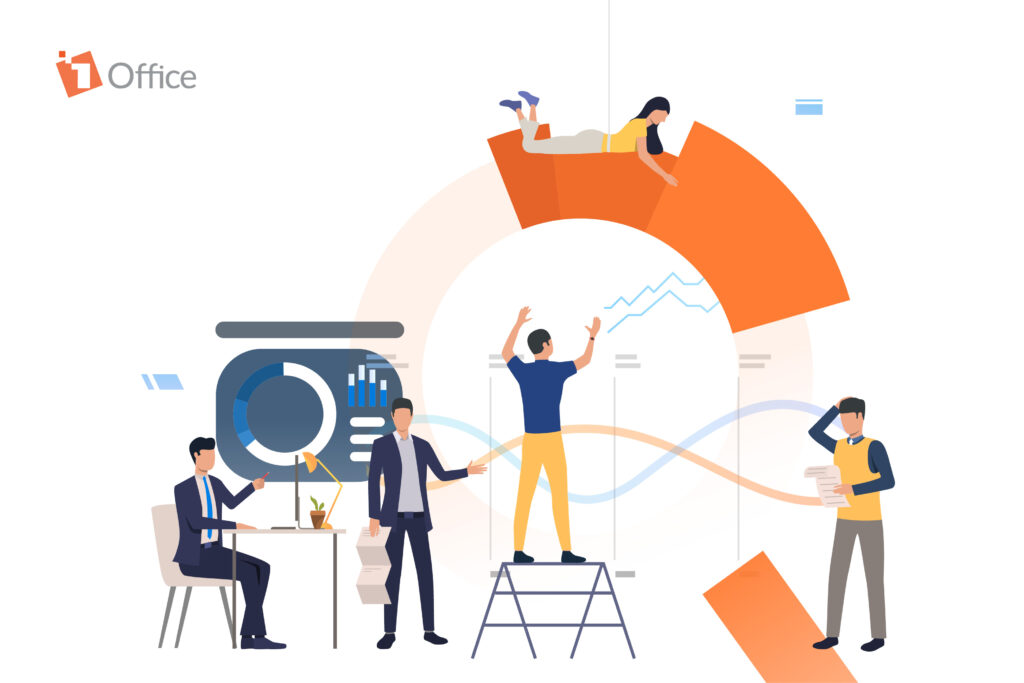
The final step in the 5-step process is to consolidate the customer information collected from the previous steps and use it to build a business strategy. This is a crucial step to ensure that the business has a clear direction that aligns with its target customers.
- Identify opportunities and challenges that the business can leverage to attract and retain customers. At the same time, identify the barriers that need to be overcome to achieve goals.
- Propose a business strategy that includes defining objectives, customer approach methods, messages and content to be conveyed, as well as measures to address challenges.
- Develop a specific action plan for implementation, such as creating a schedule, assigning responsibilities, identifying necessary resources, and outlining concrete steps to execute the strategy.
6. Some notes on customer analysis
Target customer segmentation: Businesses should divide the target market into smaller groups based on common characteristics such as age, gender, interests, purchasing behavior, geographic location, income, and many other factors. Each segment typically has its own needs and expectations, allowing for customized marketing and product strategies to serve each target group more effectively.
Identify the most important aspects: Understand the decisive factors when customers purchase your product or service. This could be price, product quality, customer service, brand, or the specific benefits the product offers.
Use customer care support software: Use CRM software to track customer information, transactions, contact history, and important interactions. This helps businesses build better customer relationships, provide better service, and adjust their business strategy accordingly.
7. Applying customer analysis results in the business
This section serves as a bridge from theory to practice, helping readers understand how businesses can leverage customer analysis data for real growth – from marketing and sales to product development.
7.1. Building a personalized marketing strategy
Customer analysis results help businesses clearly understand each customer group in terms of age, behavior, needs, and interests.
From there, businesses can:
-
Build personalized marketing campaigns for each customer group (e.g., young people prefer quick deals – middle-aged people prioritize long-term value).
-
Design content appropriate for the Customer Journey: awareness – consideration – decision.
-
Optimize the advertising budget, focusing only on the customer groups with the highest conversion potential.
Example: A fashion business can send a special email to a group of customers who spend over 2 million/month with a “VIP Member” offer, while first-time buyers receive a 10% discount code.
7.2. Optimizing the sales process and customer care
Analyzing customer data helps businesses identify bottlenecks in the sales process – for example, whether customers drop off at the consultation stage or the payment stage.
From there, businesses can:
-
Optimize the sales process: shorten the deal-closing time, assign the right employees to handle appropriate customer groups.
-
Set up an automated post-sales care system: send messages, care emails based on purchasing behavior or interaction history.
-
Classify customers by value (A/B/C) to prioritize resources for care and effective upselling.
For example: 1Office CRM can alert you to customer groups with expiring contracts or those who have had little interaction in 30 days – helping the Customer Service department to proactively contact them and prevent churn.
7.3. Forecast consumer trends and adjust products
By analyzing data over time, businesses will recognize changing trends in purchasing behavior: which seasons have high sales, which customer groups are growing rapidly, and which products are about to become “saturated”.
Practical applications:
-
Forecast market demand to prepare inventory, advertising campaigns, or launch new products at the right time.
-
Optimize the product/service portfolio – eliminate underperforming products and focus on high-profit ones.
-
Customize pricing strategies and promotions for each customer segment or season.
For example: An F&B business notices that office worker customer groups place more orders at the beginning of the week → they adjust the “Combo Lunch” menu and promotional hours to increase orders.
7.4. Evaluate effectiveness and periodically adjust strategies
Customer data is not just for a “quick look”; it is the foundation for continuously evaluating business performance.
Businesses should:
-
Track important KPIs such as conversion rate, average order value (AOV), and customer retention rate.
-
Compare data periodically (monthly – quarterly – annually) to detect trends or issues.
-
Adjust marketing, sales, and customer care strategies based on actual analysis, not intuition.
8. Customer Information Management Solution – 1Office CRM
1Office CRM is a powerful and flexible customer management software that helps businesses store all customer information, optimize marketing strategies, and provide better customer care services.
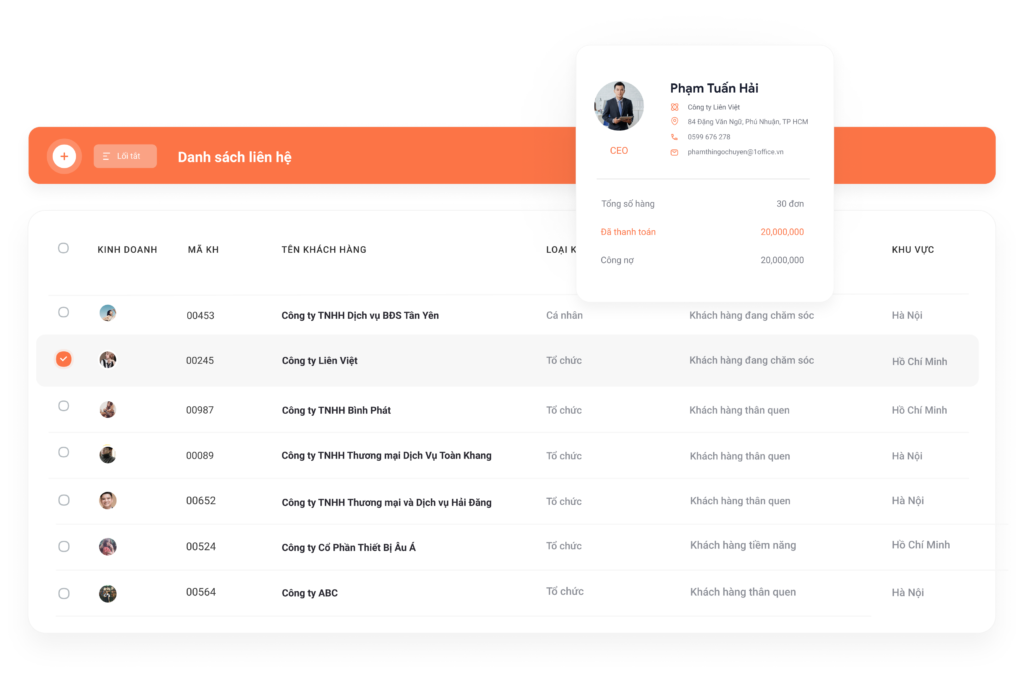
The features of 1Office CRM customer management software help businesses automatically collect and store customer information from various sales channels into the management system. This allows managers to easily manage and segment customers based on different criteria to facilitate customer care and execute effective Remarketing campaigns.
- Contacts: Manage potential customer lists, track sources and statuses to help evaluate conversion rates.
- Care: Assign responsible personnel, track care history, and evaluate employee care KPIs.
- Opportunities: Build sales processes, manage opportunities, and track revenue forecasts.
In summary, 1Office CRM is an effective solution for managing customer information and analysis. If your business needs a consultation on the software’s features, please contact the 1Office team via:
- Hotline: 083 483 8888
- Facebook: https://www.facebook.com/1officevn/
- Youtube: https://www.youtube.com/@1office-chuyendoisodn
Frequently Asked Questions about the Customer Analysis Process
How often should customer analysis be performed?
At least once every 6 months, or immediately when there are significant market fluctuations, to promptly update changes in customer behavior and needs.
How can we analyze customers when the business doesn’t have much data?
Start by analyzing direct competitors and using secondary market research tools to predict the characteristics of the target customer group.
What is the core difference between a customer persona and customer segmentation?
Customer segmentation divides the market into large groups (quantitative), while a customer persona portrays a specific individual representing that group (qualitative).
How can you verify the accuracy of customer insights?
Conduct A/B testing on small marketing campaigns to measure customer response before implementing on a larger scale.
Why is using Excel spreadsheets to manage customer data a waste of time?
Excel lacks automation and real-time connectivity, making data prone to fragmentation and inaccuracies, and making it difficult to extract in-depth behavioral analysis reports. For optimal results, businesses should switch to using 1Office CRM to centralize data and automate the analysis process.
















