11/05/2026
  878 views
Pros and Cons is a method for evaluating the advantages and disadvantages of an issue before making a decision. In business, analyzing Pros and Cons helps managers view issues comprehensively and choose the optimal solution. In this article, 1Office will help you clearly understand the concept, significance, and how to effectively apply Pros and Cons with practical examples.
Mục lục
- 1. What are Pros and Cons?
- 2. Why are Pros and Cons important for businesses?
- 3. How to apply Pros and Cons in business?
- 4. Pros and Cons and long-term strategic decision-making
- 5. What are the common mistakes when applying Pros and Cons in a business?
- 6. Example of the phrase “Pros and Cons” in the business field
- 7. Notes on Using Pros and Cons to Avoid Mistakes in Decision-Making
- 8. Frequently Asked Questions
1. What are Pros and Cons?
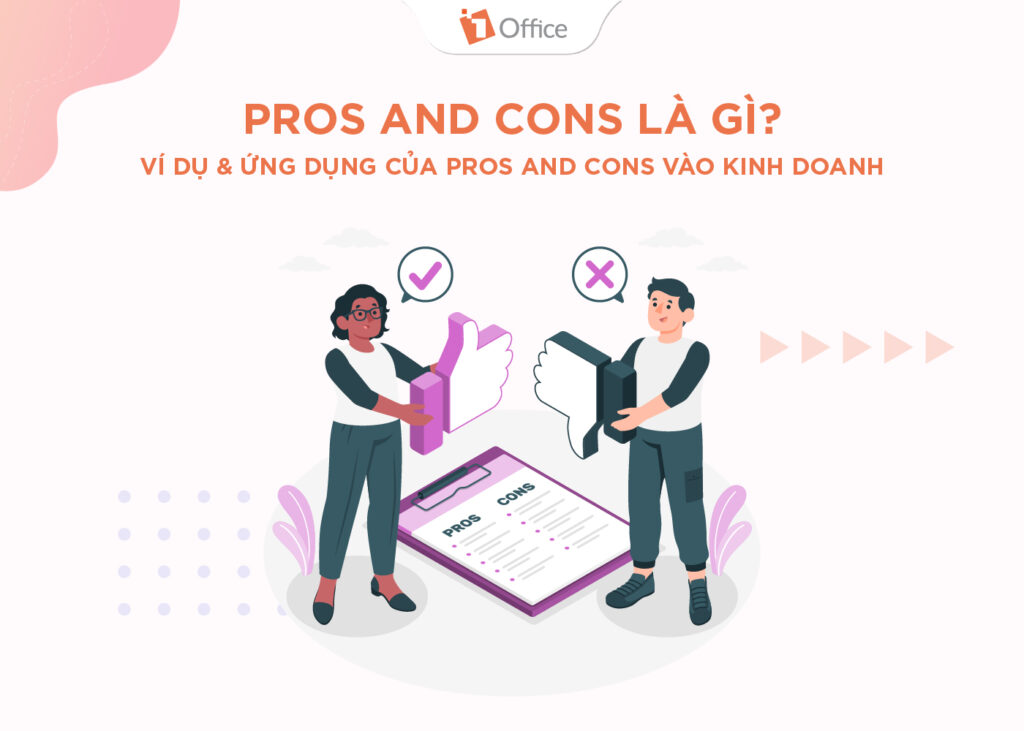
Pros and Cons, also understood as the Advantages and Disadvantages of Something, is an English term used when discussing the favorable and unfavorable aspects of a particular issue.
1.1 What are Pros?
“Pros” is short for “Prospects” and has a similar meaning to “Advantages” and “Benefits.” Pros are used to refer to the benefits, possibilities, and positive points related to an issue, situation, or decision. When evaluating a choice or situation, identifying the “pros” helps clarify the strengths and what can be achieved.
For example: In business, when considering the launch of a new laptop line, identifying the “pros” might include an ultra-thin and light design, a 4K screen, long battery life, fast charging, and a superior cooling system.
1.2 What are Cons?
“Cons” is synonymous with “Disadvantage” or “Drawback,” meaning weaknesses or unfavorable points. In a business environment, Cons are often used to refer to the negative aspects, weaknesses, and limitations of a situation, product, or decision. Identifying the “cons” helps managers get a complete view of the potential risks and limitations, enabling them to make accurate decisions based on comprehensive consideration.
For example: When considering the launch of a new laptop product line, identifying the “cons” might include a higher price point compared to other products on the market, and limited repair and upgrade capabilities.
1.3 The Concept of Pros and Cons
Pros and Cons is an English term abbreviated from the phrase Prospects and Consequences and is synonymous with Advantages and Disadvantages. Pros and Cons are used to refer to the advantages and disadvantages, the favorable and unfavorable aspects of an issue, situation, decision, or choice. In business, this phrase is often used for analysis and consideration before making an important decision.

This is a common phrase typically used in the plural form. Examining the “pros and cons” helps a business gain a more comprehensive view of the situation, thereby making wise decisions based on full consideration of both benefits and risks.
When using “Pros and Cons,” the decision-maker or decision-making team will list and carefully evaluate all the strengths and weaknesses related to the situation or decision they are facing. The goal is to ensure that all important factors have been considered, which helps the business make more objective and accurate decisions.
2. Why are Pros and Cons important for businesses?
Considering Pros and Cons is a crucial part of the decision-making process in a business. Here are some reasons why Pros and Cons are important for businesses:
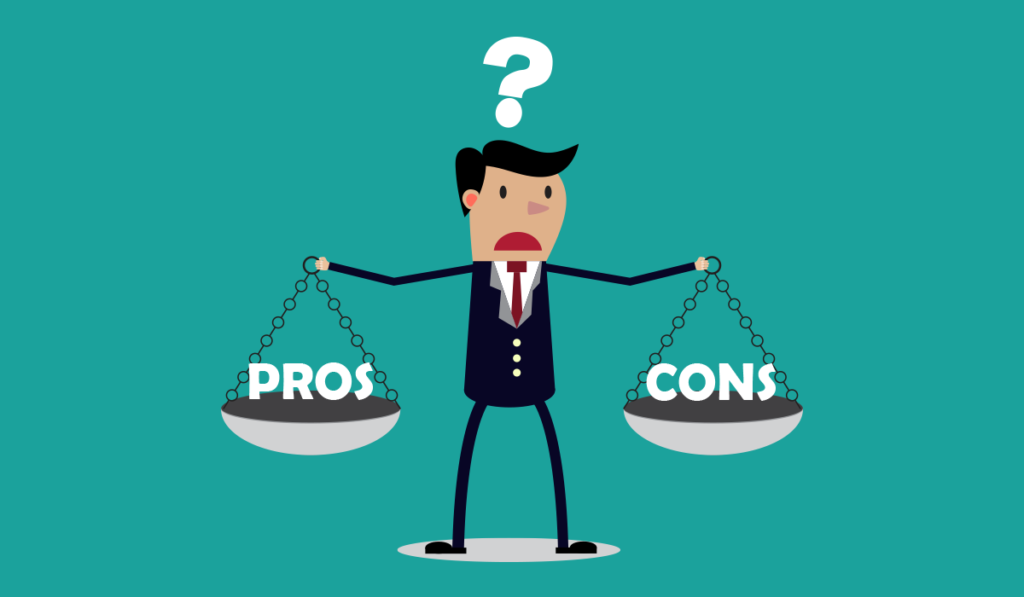
Support strategic decision-making: When a business faces important decisions such as expansion, new investments, product development, or changing the business model, considering both Pros and Cons helps to better shape the strategy. This helps avoid ill-considered or overly emotional decisions.
Adjust business plans: The market and business environment are always changing. By evaluating Pros and Cons, a business can grasp these changes and make necessary adjustments to its business plan to optimize performance.
Risk management: Every decision comes with a degree of risk. Clearly identifying the Pros and Cons helps a business evaluate and manage risks more effectively. This includes ensuring that protective measures and contingency plans have been considered.
Understand the market and customers: Evaluating both the positive and negative aspects of a product or service helps a business better understand how the market and customers might react. This, in turn, supports the business in optimizing its marketing strategy and product development.
Financial management: Applying the evaluation of Pros and Cons to financial decisions, such as investments or loans, helps a business ensure that it is using its finances effectively and can face potential financial challenges.
3. How to apply Pros and Cons in business?
Pros and Cons is a method commonly used in businesses. It helps create consideration, comprehensiveness, and objectivity in decision-making, thereby increasing the chances of success and optimizing business operations. Below are the steps to apply Pros and Cons to different aspects of business:
3.1. Forecasting the situation and planning

First, the manager needs to identify the goal or decision to be made, which could be a new project, an expansion plan, or a strategy reshape. At the same time, list the Pros and Cons, including benefits, potential, limitations, and potential risks during implementation.
By answering the question, “If this plan is implemented, what positive and negative outcomes could occur? List the benefits and limitations related to the goal or decision.” Evaluating the importance and impact of each benefit and limitation will help you better understand their effect on your business goals.
Based on the Pros and Cons assessment, the manager proceeds to build a specific plan on how to achieve the goal or implement the decision, including identifying necessary resources, timelines, and implementation steps.
>> Read more: 7 steps to effective financial planning exclusively for CFOs
Example: A newly established company analyzes the Pros and Cons of its product, competitors, financial situation, and ability to attract talent. Based on the analysis, they decide to invest in research and development to improve the product and focus on marketing to build a new brand.
3.2. Optimizing business advantages
The business needs to identify and evaluate its competitive advantages, including what it does better than its competitors. Based on the positive aspects of the business, management should focus on developing and expanding these areas to create a competitive edge. This could involve product expansion, focusing on a specific market segment, or improving customer service.
Example: A technology company realized it has a very skilled product development team. They focused on investing in developing new features for their product to maintain customer appeal and solidify their market position.
3.3. Minimizing disadvantages
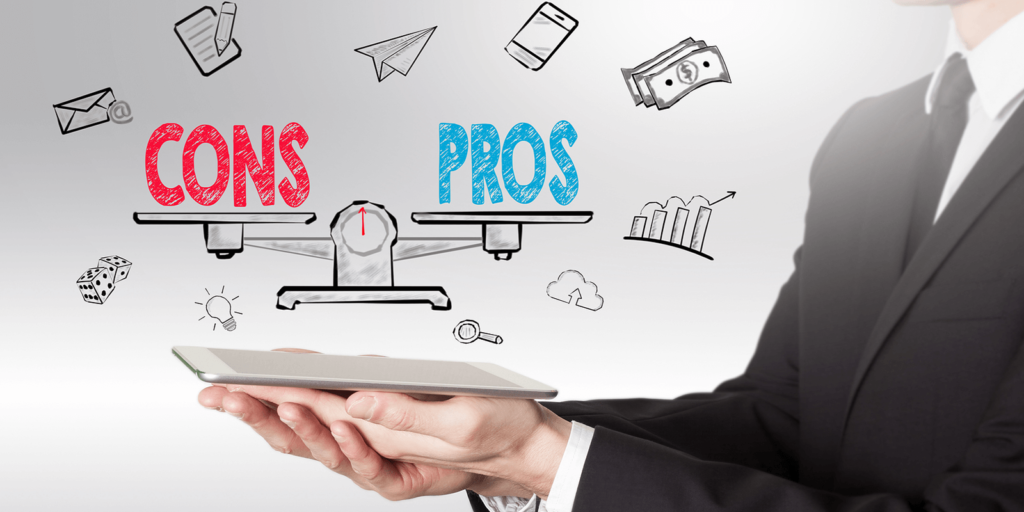
The business identifies weaknesses in its processes, products, or business operations. List the Pros and Cons of mitigating the disadvantage, asking the question: If we minimize this weakness, what positive and negative outcomes could occur? Consider all aspects and impacts of mitigating the disadvantage.
Based on this Pros and Cons list, the manager builds a specific plan to improve the weakness. This includes identifying the cause, planning a solution, and implementing improvement measures.
Example: A consumer goods manufacturing company realized it was too dependent on a single supplier. They began searching for other suppliers to minimize the risk if the main supplier encountered problems.
3.4. Proposing optimal solutions and changes
When facing change or needing to improve performance, the business should consider the Pros and Cons of different options. Based on this evaluation, management should propose changes or improvements to achieve business goals. These proposals must specify the steps for change and establish an implementation plan. From there, compare the options based on the Pros and Cons list and select the most optimal one.

Example: A retail store regularly evaluates performance by comparing the benefits of opening early (Pros: generating additional revenue) and the drawbacks (Cons: increased staff costs). Based on this, they decide to conduct a trial of opening early to see if the benefits outweigh the disadvantages.
In all cases, applying “Pros and Cons” requires meticulous and creative analysis. The key is not just to focus on the positive or negative factors in a basic way, but also to consider the correlation between them and how they interact within the business context.
4. Pros and Cons and long-term strategic decision-making
In business administration, long-term strategic decisions such as scaling up, investing in technology, restructuring, or developing new products are vital. Analyzing Pros and Cons helps leadership view the issue from multiple perspectives, balancing opportunities and risks before committing significant resources.
Vai trò của Pros and Cons trong chiến lược dài hạn:
- Shape a realistic vision: Not just looking at opportunities, but also identifying barriers and limitations.
- Reduce the risk of mistakes: Analyzing disadvantages helps businesses prepare contingency plans.
- Optimize resources: Focus on strategies with outstanding advantages instead of spreading resources thin.
- Increase transparency: Management can easily communicate the reasons for decisions to shareholders and employees.
Pros – The strengths of using Pros and Cons:
- Simple and easy to apply: No complex models needed, suitable for all types of businesses.
- Supports collective decision-making: Departments can contribute ideas, creating diverse perspectives.
- Flexible: Applicable to many fields: marketing, investment, finance, human resources.
Cons – Limitations when applied to long-term strategy:
- Lacks precise quantification: Can easily become subjective without supporting data.
- Risk of overlooking external factors: Focuses only on the immediate, ignoring macro trends.
- Requires in-depth expert analysis: Especially for decisions related to finance, technology, or internationalization.
Real-world examples:
- When Apple decided to invest in the iPhone: The pros were the potential of the smartphone market, while the cons were the risks of immature technology and high R&D costs. Thanks to a thorough analysis of the pros and cons, Apple dared to take calculated risks and created a product that changed the entire industry.
- A manufacturing company in Vietnam wants to switch to green energy: The pros are the sustainability trend and attracting investment capital; the cons are the high initial investment cost and long payback period.
Practical applications for businesses:
- Combine Pros and Cons with quantitative data (ROI, NPV, cost-benefit analysis).
- Use in high-level strategy meetings to help leadership have a common language when discussing projects.
- Link Pros and Cons with scenario planning to prepare for fluctuations.
Pros and Cons is not just a simple linguistic tool, but also a foundation for strategic thinking that helps businesses make sober long-term decisions. When combined with data and in-depth analysis, Pros and Cons becomes a lever for businesses to choose a sustainable path, limit risks, and seize development opportunities.
5. What are the common mistakes when applying Pros and Cons in a business?
Analyzing Pros and Cons (advantages and disadvantages) is a familiar tool that helps businesses make business decisions. However, if not applied correctly, businesses can fall into serious mistakes that make the analysis results inaccurate, leading to wrong strategic choices.
Many businesses list Pros and Cons based only on personal experience or subjective feelings. This approach can easily lead to bias and overlooking important factors. For example: When choosing HR management software, a company might focus only on a beautiful interface while ignoring system integration, leading to costly modifications later on.
A common mistake is to treat all pros and cons as having “equal value.” In reality, some small factors can have a major impact on profit or operations. The solution: Businesses should score and assign weights based on the level of impact to get a more objective view.
Pros and Cons are often overused to solve immediate problems. If the focus is only on short-term benefits, a business may miss long-term impacts. For example: Reducing staff helps save costs immediately, but in the long run, it reduces productivity and team morale.
Businesses often use a single Pros and Cons template for all decisions. This makes the analysis table fail to reflect the specific characteristics of each department or industry. Advice: Design separate Pros and Cons tables for each area, such as marketing, finance, HR, and investment.
Another mistake is to have only senior leadership analyze the Pros and Cons, ignoring feedback from the operations team or customers. The consequence: Decisions are unrealistic and difficult to implement. Businesses should organize internal workshops or surveys to gather comprehensive data.
Pros and Cons is a simple analysis tool, but if used incorrectly, it can lead to flawed strategies and wasted resources. Businesses need to combine quantitative data, weighted pros and cons, and diverse perspectives to turn Pros and Cons into an effective decision-making support tool.
6. Example of the phrase “Pros and Cons” in the business field
An example of applying Pros and Cons in the business field involves the process of considering expansion into a new market: A company that manufactures and sells sports products has a strong presence in the domestic market. The management department is considering the possibility of expanding into the international market to increase sales and create new growth opportunities, by identifying:
| Pros | Cons |
| – Increased sales: Expanding into international markets can generate higher sales revenue through new customer reach.
– Diversification: Expansion helps the company diversify its business and reduces the risk of relying solely on the domestic market. – Global brand building: An international presence can establish a strong brand and build customer trust. |
– Financial risk: International expansion requires significant financial investment in market research, marketing, and infrastructure.
– Market knowledge: A deep understanding of international markets, cultures, and regulations is required. – Intense competition: International markets can be highly competitive, with challenges from both global rivals and local products. |
Based on the “Pros and Cons” assessment, the company will decide whether expanding into the international market is a reasonable decision that aligns with their business strategy.
7. Notes on Using Pros and Cons to Avoid Mistakes in Decision-Making

7.1 Consider the Weight of Factors in Pros and Cons
A common weakness occurs when a decision is based on one side (Pros or Cons) while ignoring the other. This can lead to inaccurate decisions and affect the entire business project.
- Failing to weigh each factor in the Pros and Cons list can lead to overlooking more critical elements.
- Not gathering enough information and relying solely on personal knowledge and experience can cause some important factors to be missed. This is especially true when the decision involves new or complex fields.
- Difficulty in determining impact: Some impacts may be hard to quantify or predict accurately, leading to an incorrect assessment of both Pros and Cons.
To avoid these mistakes, leaders need to assess the importance of each factor and consider their impact on specific business goals. Use a scoring or weighting system to reflect the significance of each element.
7.2 Leveraging Technology for More Effective Pros and Cons Analysis
Apply technology to gather information as comprehensively and objectively as possible. Through data analysis or predictive techniques, software can help you accurately identify important factors and the impact of both Pros and Cons in decision-making. Tools such as information management systems, data analytics, or automated reporting can support this process.
8. Frequently Asked Questions
How are pros and cons different from SWOT?
Pros and cons is a quick way to list the advantages and disadvantages of a specific option. SWOT analysis is more in-depth, including internal strengths and weaknesses, as well as external opportunities and threats.
Can pros and cons help reduce investment risk?
Yes, on a basic level. This method helps clarify the advantages and disadvantages before making a decision, but for large investments, businesses should also incorporate financial data and more detailed risk analysis.
Is the pros and cons method suitable for choosing business software?
Yes. It’s a simple way for businesses to quickly compare options based on criteria like features, cost, scalability, suitability for their needs, and support services. However, for important decisions, businesses should also use a scorecard or an evaluation matrix for a more accurate selection.
Is a pros and cons analysis suitable for choosing a supplier?
Yes. This is a simple way for businesses to quickly compare suppliers based on criteria such as price, quality, implementation time, support services, and suitability for actual needs.
——————————————
This article from 1Office has shared insights on what Pros and Cons are, along with their meaning and the steps to apply them to business decision-making. We hope your business can accurately apply and analyze Pros and Cons to comprehensively assess advantages and disadvantages, gain a general overview of the situation, and determine a new development direction for your company. We wish your business success!