


 11/05/2026
  259 views
In today’s competitive business environment, competitor research is a key factor that helps businesses not only understand their position in the market but also identify potential opportunities and threats. This article will guide you on how to conduct effective competitor research, from identifying key competitors, collecting and analyzing information, to applying the research findings to build a solid competitive strategy.
Whether you are a new startup or an established brand in the market, understanding your competitors will help you make more accurate strategic decisions. Let’s explore with 1Office the simple yet highly effective steps to research competitors and enhance your business’s competitive edge!
Mục lục
- 1. What is Competitor Research?
- 2. The Importance of Competitor Research
- 3. Competitor Research Methods
- 3.1. SWOT Analysis (Strengths, Weaknesses, Opportunities, Threats)
- 3.2. 4Ps Analysis (Product, Price, Place, Promotion)
- 3.3. Customer Behavior Research
- 3.4. Social Media and Online Feedback Analysis
- 3.5. Using Web Analytics Tools (SEMrush, Ahrefs, SimilarWeb)
- 3.6. Customer Surveys and Interviews
- 3.7. Researching Market Reports and Data
- 4. The Competitor Research Process
- 5. Popular Tools for Competitor Research
- 6. Practical Examples of Competitor Research
- 7. Common Mistakes in Competitor Research and How to Avoid Them
- 8. The Future of Competitor Research
- 9. 1Office – AI-Integrated All-in-One Business Management Software
- 10. Conclusion
1. What is Competitor Research?

Competitor research is the process of collecting, analyzing, and evaluating information about businesses or organizations operating in the same field or industry with the goal of understanding one’s own market position, thereby identifying potential opportunities and threats. Competitor research helps businesses gain deep insights into the strategies, products, pricing, and other operational factors of their competitors.
Through this research, businesses can discover new trends, competitors’ strengths and weaknesses, as well as market gaps they can exploit. Competitor research not only helps improve the effectiveness of marketing strategies but also plays a crucial role in shaping product and service development decisions, optimizing sales processes, and increasing competitive advantage.
2. The Importance of Competitor Research
2.1. Understand Your Business’s Position in the Market
- Identify strengths and weaknesses: Competitor research helps businesses assess their position in the industry, identify strengths to leverage, and weaknesses to improve.
- Shape development strategy: By comparing with competitors, businesses can formulate clearer and more suitable development strategies.
2.2. Discover Potential Opportunities and Threats
- Discover new opportunities: Competitor research helps businesses identify untapped opportunities, thereby expanding their market or developing new products/services.
- Anticipate potential threats: By analyzing competitors, businesses can predict changes in their strategies and identify industry trends to prepare a timely response.
2.3. Enhance Marketing and Sales Strategies
- Optimize marketing strategy: Analyzing competitors’ marketing campaigns helps businesses improve their communication strategies and reach customers more effectively.
- Identify effective distribution channels: Competitor research allows businesses to discover distribution channels that are effective for competitors and apply them to their own strategy.
2.4. Optimize Product Development
- Identify gaps in products/services: Research helps businesses recognize market gaps that competitors have not exploited, thereby developing products that meet consumer needs.
- Improve existing products: By analyzing competitors’ products, businesses can improve features and product quality to enhance customer satisfaction.
2.5. Create a Sustainable Competitive Advantage
- Identify differentiating factors: Competitor research helps businesses find unique factors that competitors lack, thereby building an effective competitive strategy.
- Maintain and expand market share: With information gathered from competitors, businesses can develop sustainable strategies to maintain and expand their market share in a competitive market.
3. Competitor Research Methods
Competitor research doesn’t just stop at collecting information; it also requires effective analysis and application methods to optimize business strategy. Below are the competitor research methods that businesses should know and apply:

3.1. SWOT Analysis (Strengths, Weaknesses, Opportunities, Threats)
The SWOT analysis method is a simple yet extremely effective tool for evaluating a competitor’s internal and external factors.
- Strengths: Identify the competitor’s advantages, such as brand reputation, high-quality products, or a strong marketing strategy.
- Weaknesses: Analyze the competitor’s weaknesses, such as poor customer service, lack of product innovation, or an uncompetitive pricing strategy.
- Opportunities: Look for opportunities that the competitor has not yet capitalized on, such as untapped niche markets or new industry trends.
- Threats: Identify external factors beyond their control that could affect the competitor, such as legal changes or intense competition from new entrants.
Benefits: Helps businesses gain a comprehensive view of their competitors, enabling them to develop superior strategies.
3.2. 4Ps Analysis (Product, Price, Place, Promotion)
The 4Ps analysis is a fundamental method that helps businesses evaluate a competitor’s marketing strategy, including:
- Product: Evaluate the quality, features, design, and innovation of the products offered by the competitor.
- Price: Compare the competitor’s pricing strategy with your own to identify strengths and weaknesses in their pricing structure.
- Place: Research the distribution channels the competitor uses, from online stores and dealerships to retail channels.
- Promotion: Analyze the competitor’s promotional strategies, advertising, and marketing programs to understand how they attract customers.
Benefits: Helps businesses better understand the components of a competitor’s marketing strategy, allowing them to adjust their own strategy accordingly.
>>> Read more: The 4Ps in Marketing and How to Analyze Them Effectively
3.3. Customer Behavior Research
This method focuses on analyzing how competitors approach and serve their customers.
- Target Customers: Identify the customer segments the competitor is targeting (age, income, interests, etc.).
- Purchasing Behavior: Analyze the purchasing behavior of the competitor’s customers, including how they choose products, purchase frequency, and the deciding factors in their buying decisions.
- Customer Experience Evaluation: Review feedback and ratings from the competitor’s customers on platforms like social media, websites, and product review sites.
Benefits: Helps businesses better understand customer needs and wants, enabling them to improve their products and services accordingly.
This method uses tools to monitor and analyze competitor activities on social media platforms and review websites.
- Social Media: Analyze the social media channels the competitor uses (Facebook, Instagram, Twitter, LinkedIn, etc.), the content they share, and customer engagement levels.
- Online Feedback: Monitor customer reviews on websites like Google Reviews, Trustpilot, or e-commerce platforms.
Benefits: Helps businesses identify new trends and understand how competitors communicate and maintain relationships with their customers.
3.5. Using Web Analytics Tools (SEMrush, Ahrefs, SimilarWeb)
Web analytics tools help businesses research a competitor’s SEO strategies, traffic, and advertising campaigns.
- SEMrush/Ahrefs: Helps analyze the keywords a competitor is ranking for, their search engine traffic, and their link-building strategy.
- SimilarWeb: Provides information on a competitor’s website traffic, visitor sources, and how they attract users.
Benefits: Provides detailed information on the effectiveness of a competitor’s online campaigns, helping to improve your own SEO and advertising strategies.
3.6. Customer Surveys and Interviews
Conduct surveys or direct interviews with a competitor’s customers to gather information about their experiences and satisfaction.
- Online Surveys: Create questionnaires to survey customer perceptions of the competitor’s products/services.
- Direct Interviews: Conduct interviews with customers to better understand why they chose the competitor over your own products.
Benefits: Helps businesses gather direct information from customers to learn about the strengths and weaknesses of a competitor’s products.
3.7. Researching Market Reports and Data
Industry reports and market data are valuable resources for understanding competitor activities and industry trends.
- Industry reports: Read market reports from market research firms (e.g., Nielsen, Statista) to understand industry developments and changes.
- Financial data: Analyze competitors’ financial reports (if publicly available) to understand their financial situation and growth strategies.
Benefits: Provides an overview of the market and the strategies major industry competitors are implementing.
4. The Competitor Research Process
4.1. Identify Competitors
The first step in the research process is to clearly identify your business’s competitors. This includes classifying competitors as direct and indirect.
- Direct competitors: Businesses with similar products/services that serve the same target customer group.
- Indirect competitors: Businesses that offer substitute products/services or can influence the needs of the target customers.
Information to research:
- A list of competitors in the same industry or field.
- Factors that differentiate between direct and indirect competitors.
Tasks to perform:
- Identify competitors through information sources such as the press, search engines, social media, and industry-specific websites.
- Evaluate the scale and scope of competitors’ operations to get an accurate view of the market.
4.2. Collect Data on Competitors
After identifying competitors, the next step is to gather detailed information about them. The data to be collected is diverse, including information on products/services, marketing strategies, and other factors.
- Product/service information: Characteristics, core value, quality, and features of the products/services offered by competitors.
- Marketing strategy: Competitors’ advertising campaigns, distribution channels, communication strategies, and promotional activities.
- Financial situation: If available, analyze financial reports to better understand the competitor’s financial status.
- Market position: Where are competitors dominating the market, and why are they successful in certain areas.
Tasks to perform:
- Use web analytics tools (SEMrush, Ahrefs, Google Analytics) to collect data on traffic volume, keywords, and SEO strategies.
- Research reports, customer surveys, and feedback from social media platforms.
- Use customer survey tools to gather opinions on competitors’ products/services.
4.3. Analyze the Collected Data
After collecting sufficient data, the next step is to analyze the information to assess the strengths, weaknesses, opportunities, and threats from competitors.
SWOT Analysis: Use the SWOT model to analyze competitors:
- Strengths: Factors where the competitor performs better than your business (product quality, advertising strategy, distribution network).
- Weaknesses: Shortcomings or weaknesses in the competitor’s operations (poor customer service, lack of product innovation).
- Opportunities: Trends or markets that the competitor has not yet exploited.
- Threats: Factors that could threaten the competitor’s growth (market fluctuations, policy changes).
Tasks to perform:
- Organize and analyze the collected data according to each SWOT element.
- Identify competitors’ strategies and compare them with your own to recognize strengths and weaknesses.
4.4. Evaluate Competitors’ Competitive Strategies
The next step is to evaluate the competitive strategies that competitors are applying. This helps the business better understand how competitors approach the market, attract customers, and maintain a competitive advantage.
- Pricing strategy: Does the competitor use a low-price strategy, a high-price strategy, or a value-added strategy? Analyze the impact of their pricing strategy on the market.
- Distribution strategy: Through which channels do competitors distribute their products? Do they have any unique distribution channels you can learn from?
- Communication strategy: Does the competitor have any particularly effective communication strategies? What channels do they use to promote their products and services?
Tasks to perform:
- Analyze competitors’ marketing strategies, pricing strategies, and how they communicate with customers.
- Identify the promotional strategies and distribution channels that competitors are using to build a suitable strategy for your own business.
4.5. Develop a Response Strategy
Based on the research and competitor analysis results, the final step is to build response strategies to help the business compete more effectively.
- Adjust marketing strategy: Improve the marketing strategy based on the analysis results, which may involve changing advertising messages, distribution channels, or customer outreach methods.
- Improve products/services: Based on competitors’ weaknesses, the business can improve its products or services to better meet customer needs.
- Innovate pricing strategy: Adjust the pricing strategy to compete more effectively, applying attractive promotions or discounts if necessary.
Tasks to be done:
- Develop a clear and specific competitive strategy based on the competitor analysis results.
- Implement new strategies effectively to increase competitive advantage and improve business results.
5. Popular Tools for Competitor Research
5.1. SEMrush
SEMrush is one of the most powerful SEO tools, helping you research competitors by analyzing keywords, backlinks, and web traffic. SEMrush provides detailed information about your competitors’ SEO strategies, helping you optimize your marketing strategy and improve your search engine rankings.
Key features:
- Keyword analysis: See which keywords competitors are ranking for and their search volume.
- Backlink analysis: Check competitors’ backlink sources to understand their link-building methods.
- Traffic analysis: Monitor changes in traffic to competitors’ websites.
SEMrush helps you understand your competitors’ SEO strategies and find opportunities to improve your own rankings.
5.2. Ahrefs
Ahrefs is a powerful SEO analysis tool, especially for backlink research and analyzing competitors’ presence on search engines. Ahrefs helps you identify untapped keyword opportunities, analyze competitors’ content strategies, and improve your business’s SEO.
Key features:
- Backlink analysis: Examine the backlinks your competitors have to understand how they build their link profile.
- Keyword analysis: Provides detailed data on competitors’ keywords and how they use them to achieve high rankings.
- Competitor tracking: Helps monitor changes in competitors’ SEO strategies.
Ahrefs provides detailed information on SEO strategies, helping you understand your competitors and improve your own strategy.
5.3. SimilarWeb
SimilarWeb is a tool that helps analyze website traffic, user behavior, and the marketing channels your competitors are using. This tool provides an overview of how competitors attract customers from various sources.
Key features:
- Traffic analysis: Analyze competitors’ traffic sources (from search engines, social media, direct, etc.).
- Marketing channels: Identify the channels competitors are using to attract customers (SEO, PPC, social, etc.).
- User behavior: Track user behavior on competitors’ websites to understand trends and changes in their strategies.
SimilarWeb helps you understand how competitors build and maintain traffic, allowing you to optimize your strategy.
5.4. BuzzSumo
BuzzSumo is a tool that helps analyze the content competitors are sharing and track the success of their posts on social media platforms. It is an ideal tool for researching content strategies and building effective marketing strategies.
Key features:
- Content analysis: See which of your competitors’ articles, videos, or information attracts the most user attention.
- Trend analysis: Track trending topics and keywords in your industry.
- Competitor tracking: Research competitors’ content strategies to develop a stronger content strategy of your own.
BuzzSumo provides detailed information on content trends and strategies, helping you create more engaging articles or marketing campaigns.
5.5. Google Trends
Google Trends is a free tool from Google that helps track and analyze search trends globally. This tool is very useful for identifying hot trends in your industry and researching competitors’ search behavior.
Key features:
- Search trend analysis: See which keywords or topics are most searched for over time.
- Keyword comparison: Compare the popularity of various keywords to find SEO opportunities.
- User behavior tracking: Analyze how and how often users search for keywords related to your competitors’ products/services.
Google Trends helps you track search trends, thereby creating content and SEO strategies that align with market demand.
Social Mention is a social media analysis tool that helps track and analyze conversations about competitors on platforms like Facebook, Twitter, Instagram, and forums.
Key features:
- Sentiment analysis: Assess user sentiment (positive, negative, neutral) towards a competitor’s brand or product.
- Conversation tracking: See how competitors are being mentioned on social platforms.
- Keyword analysis: Learn about keywords related to competitors and what customers are saying about them.
Social Mention helps you better understand customer perception of competitors and the factors affecting their brand.
6. Practical Examples of Competitor Research

Competitor research is not just theoretical; it can be applied in many different real-world situations. Below are some practical examples of competitor research in various fields, helping businesses better understand the methods and effectiveness of this process.
6.1. Example 1: Competitor Research in the E-commerce Industry
Scenario description: A new e-commerce company entering the market wants to develop an effective competitive strategy. The company researches major competitors like Tiki, Lazada, and Shopee.
Research process:
- Identify competitors: Direct competitors in the e-commerce industry such as Shopee and Lazada.
- Data collection: Use tools like SEMrush and Ahrefs to research keywords competitors are ranking for, and the SEO and advertising strategies they are applying.
- Data analysis: Analyze competitors’ marketing strategies, such as promotional strategies, discount programs, and how they build their brand.
- Evaluate and adjust strategy: Based on the collected information, the company develops a promotional strategy and optimizes SEO to enhance sales performance on its platform.
6.2. Example 2: Competitor Research in the Manufacturing Industry
Scenario description: An electronics manufacturing company wants to expand its market share and needs to research major competitors like Samsung, LG, and Sony.
Research process:
- Identify competitors: Key competitors in the electronics industry such as Samsung, LG, and Sony.
- Data collection: Research competitors’ products, pricing strategies, and the features and technologies they use in their products.
- Data analysis: Use SimilarWeb and SEMrush to research competitors’ marketing and advertising strategies, including media campaigns and online advertising.
- Evaluate and adjust strategy: Based on the research findings, the company developed a product strategy with unique features and a reasonable pricing strategy to compete.
7. Common Mistakes in Competitor Research and How to Avoid Them
7.1. Not Clearly Identifying Competitors
One of the most common mistakes in competitor research is failing to correctly identify competitors. Many businesses focus only on large competitors while overlooking smaller ones that may have a greater impact in specific market segments.
Cause: Businesses often focus only on large-scale direct competitors and fail to recognize that smaller competitors or new businesses can pose a stronger challenge in niche markets.
How to avoid:
- Clearly identify direct and indirect competitors: You need to clearly distinguish between direct competitors (competing directly on products/services) and indirect competitors (providing substitute products or serving the same customer segment).
- Broaden the scope of research: Don’t just study the big names; look at small and medium-sized enterprises that have strong competitive strategies or influence in specific segments.
7.2. Collecting Incomplete or Inaccurate Data
Another common mistake is collecting incomplete or inaccurate information. Often, businesses rely on limited information sources or fail to verify the accuracy of the data collected.
Cause: Over-reliance on information from the press, social media, or unverified reports can lead to the collection of inaccurate or incomplete data.
How to avoid:
- Use multiple data sources: To get an accurate and comprehensive view, you should use reputable data analysis tools like SEMrush, Ahrefs, SimilarWeb, or Google Analytics. Combine information from industry reports, direct surveys, and online data.
- Check and verify information: Before drawing any conclusions, ensure that the collected data is accurate and has been verified from reliable sources.
7.3. Not Analyzing Data In-Depth
Some businesses only collect information without truly analyzing the collected data in-depth. This lack of deep analysis causes them to miss important opportunities or fail to identify potential threats.
Reason: Due to a lack of experience or the absence of analytical tools and skills, businesses only collect data without extracting its real value.
How to avoid it:
- Use professional analysis tools: Utilize data analysis tools like Google Analytics, SEMrush, Ahrefs, and BuzzSumo to get a detailed view of competitor behavior, keywords, and their SEO strategies.
- Conduct a SWOT analysis: Deeply analyze the strengths, weaknesses, opportunities, and threats from competitors to develop suitable strategies that give your business a competitive edge.
7.4. Ignoring Market Information and Trends
A serious mistake is focusing solely on competitor research without paying attention to broader market factors, such as consumer trends, changes in consumer behavior, or industry shifts.
Reason: Many businesses only focus on direct competitors, ignoring the bigger picture of the market and new trends.
How to avoid it:
- Monitor industry trends: Don’t just focus on competitors; pay attention to market trend reports, consumer research, and industry changes to get a more comprehensive view.
- Use trend analysis tools: Google Trends, SimilarWeb, and BuzzSumo are excellent tools to help you track trends and changes in consumer demand.
7.5. Not Updating Information Regularly
Some businesses complete a round of competitor research but fail to maintain regular updates. This leads to them not recognizing changes in their competitors’ strategies or products.
Reason: Not continuously monitoring competitors can cause a business to miss important changes in their rivals’ strategies.
How to avoid it:
- Update information frequently: Conduct competitor research periodically to track changes in competitors’ strategies and adjust your own strategy in a timely manner.
- Use automated tracking tools: Tools like SEMrush or Google Alerts help automatically monitor changes related to competitors, helping you maintain continuously updated information.
To conduct effective competitor research, businesses need to avoid common mistakes such as:
- Not clearly identifying competitors
- Collecting inaccurate data
- Not analyzing data in-depth
- Ignoring market trends
- Not updating information regularly.
Applying the right research methods and using appropriate tools will help businesses not only understand their competitors but also formulate strong and effective business strategies.
8. The Future of Competitor Research

With the rapid development of technology and continuous changes in market trends, the future of competitor research is gradually changing and becoming more complex. New tools, big data, and AI will play a crucial role in improving the quality and accuracy of competitor research. Below are some trends and predictions about the future of competitor research.
8.1. Application of AI Technology and Big Data
In the future, AI and Big Data will play a significant role in collecting and analyzing competitor information. AI tools will help automate the data analysis process and predict competitor behavior as well as market trends.
- AI Application: AI will be able to automatically analyze large volumes of data from various sources such as social media, financial reports, and user behavior to generate forecasts about competitor strategies.
- Big Data: Processing and analyzing large datasets from online channels and other data sources will provide deep and detailed insights into competitor behavior, helping businesses make more accurate strategic decisions.
The development of AI and Big Data will help businesses identify potential opportunities and threats more quickly and effectively, optimizing their competitive strategies in a constantly changing environment.
Social media will continue to be a crucial resource in competitor research. Social media analysis tools will provide detailed information about customer sentiment, trends, and feedback regarding competitors.
- Sentiment Analysis: Sentiment analysis technology will allow businesses to assess customer attitudes towards competitors, thereby building appropriate marketing and product development strategies.
- Monitoring online conversations: Tracking and analyzing online conversations, such as on Twitter, Facebook, or forums, will help businesses better understand customer needs and desires regarding competitors.
Social media analysis helps businesses not only understand competitors but also capture direct feedback from customers, thereby improving products/services and marketing strategies.
8.3. Competitor Research Using Simulation and Virtual Reality (VR)
Simulation and virtual reality (VR) can become useful tools in competitor research, especially in simulating strategies and competitive scenarios to examine potential outcomes.
- Strategy simulation: Companies will be able to simulate business strategies and competitor responses in a virtual environment, helping them test options and evaluate results before real-world implementation.
- Using VR to study customer experience: VR technology can help businesses study the customer experience of competitors in a virtual environment, creating realistic scenarios to assess consumer behavior.
Simulation and VR will open a new era in testing and evaluating strategies without direct implementation, helping to minimize risks and enhance competitiveness.
8.4. Automating the Competitor Research Process
With the development of analytical tools and software, competitor research in the future will become more automated. Data collection and analysis processes will be fully automated, saving time and increasing accuracy.
- Automated analysis tools: Tools like SEMrush, Ahrefs, and BuzzSumo will develop features for automatic data collection and real-time analytical reporting.
- Automatic information updates: Automated software will monitor competitors and update information on their new strategies and activities without manual intervention.
Automating the research process helps businesses save time and increase work efficiency, while providing timely information for quick decision-making.
8.5. Enhancing Accuracy and Forecasting Market Trends
New technologies will help improve the ability to predict market trends and competitor actions. Using advanced analytical tools and AI will help businesses predict competitor strategies based on past data and market models.
- Trend forecasting: Analytical tools will be able to forecast industry trends and competitor actions, thereby helping businesses better prepare for market changes.
- Modeling competitor behavior: AI will analyze competitor behavior and help predict their future strategies based on data models.
Trend forecasting will help businesses be proactive in building competitive strategies, preparing for changes in advance, and seizing new opportunities.
9. 1Office – AI-Integrated All-in-One Business Management Software
1Office’s AI-integrated all-in-one business management software is a comprehensive solution that helps businesses automate workflows, optimize operations, and enhance work performance. Features like automated reporting, data retrieval and analysis, along with the Q&A capability with 1Assistant, bring great convenience and efficiency to organizations during the research and data analysis process:
9.1. Reporting and Data Retrieval Features
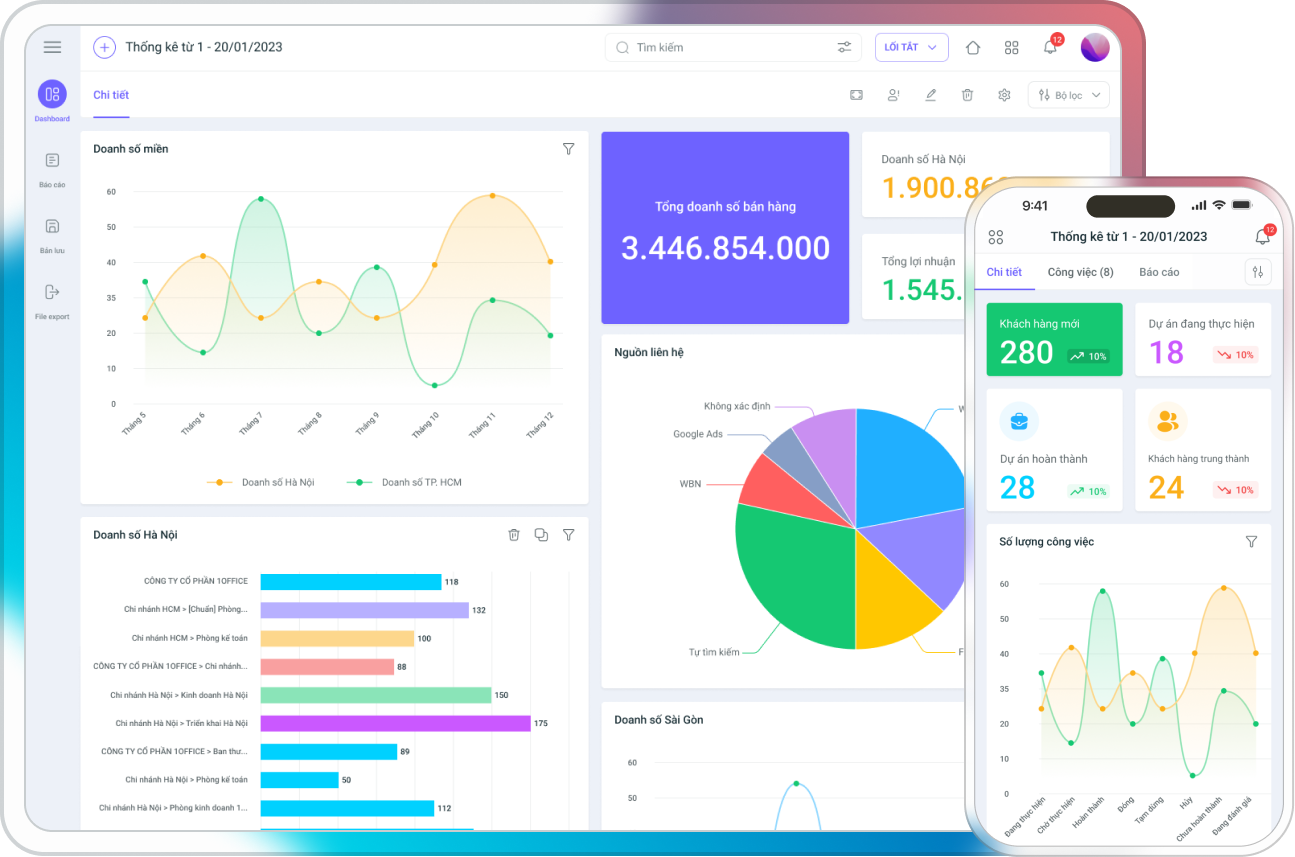
Automated reporting: 1Office allows for the creation and automation of on-demand reports. Users can build reports based on data collected from the system, including data from different departments or specific business metrics. This helps save time and minimize errors in data compilation.
Integrated data analysis: The AI-integrated software supports trend analysis and forecasting, helping managers make more accurate decisions. AI will provide suggestions based on historical data and current trends.
9.2. Data Analysis Features
Smart data analysis: 1Office integrates powerful data analysis tools that help businesses capture trends and data patterns to make smart business decisions. These tools use AI and Machine Learning to analyze customer behavior, forecast market trends, and detect potential threats.
Data forecasting: The forecasting feature, based on analytical models, will provide predictive information about future revenue, costs, or cash flow. This helps businesses prepare business and financial plans in a timely manner.
9.3. Q&A with 1Assistant
Register for a free feature demo!
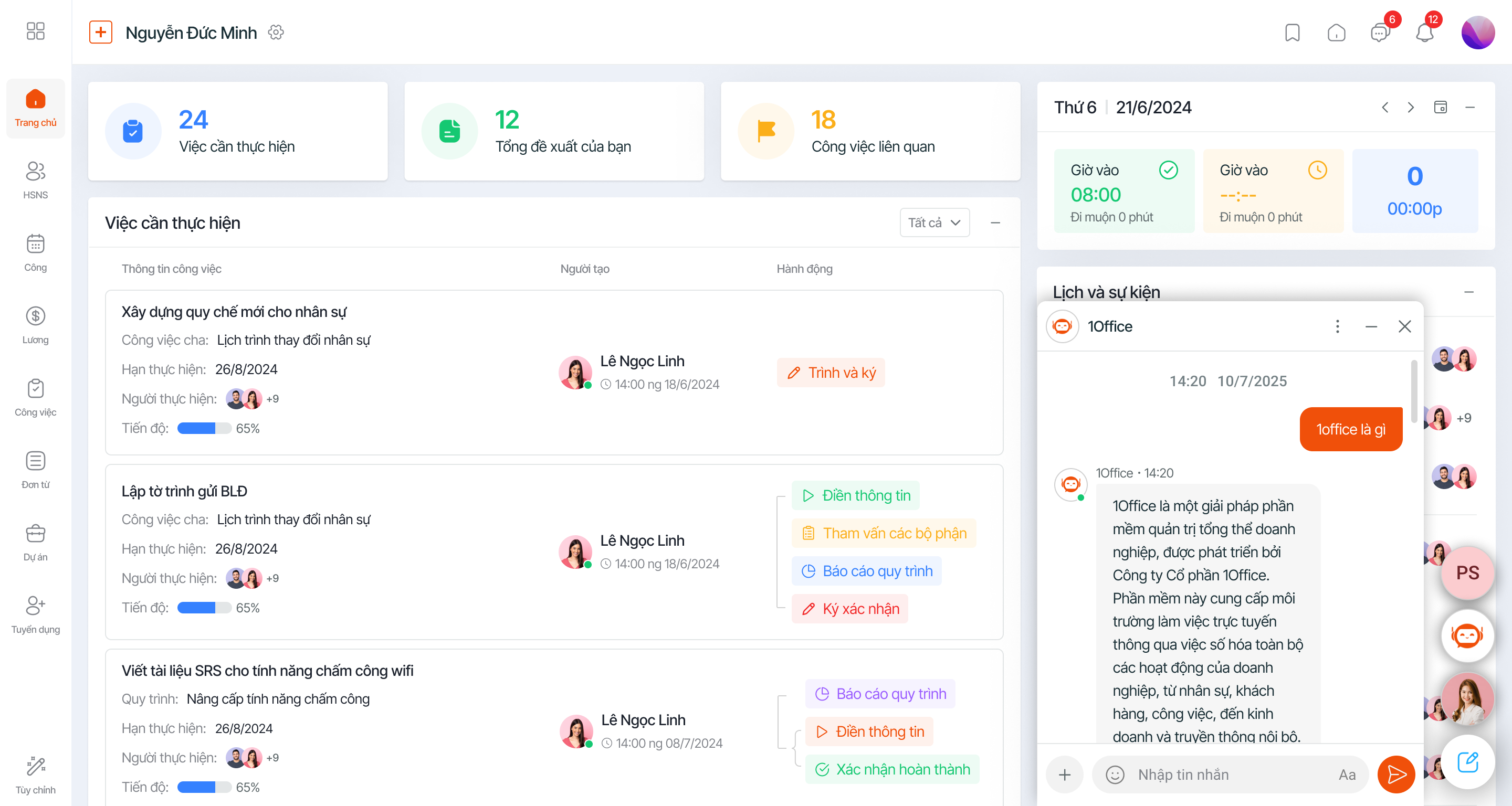
1Assistant – Smart Virtual Assistant: With this feature, users can interact directly with 1Assistant to ask questions and receive intelligent answers based on the company’s data. The AI integration enables the virtual assistant to provide quick and accurate responses, offering maximum support for decision-making.
Data querying with natural language: Users can ask about any data in the system, such as revenue figures, cost analysis, inventory levels, etc. 1Assistant will use Natural Language Processing (NLP) technology to understand and respond to questions in an intuitive and easy-to-understand manner.
Problem-solving and work optimization: 1Assistant not only answers questions but can also analyze data and provide suggestions to help optimize workflows and improve operational efficiency.
10. Conclusion
Competitor research is an indispensable step in the development strategy of any business. Clearly understanding your market position, analyzing competitors’ strengths and weaknesses, and identifying opportunities or threats will help businesses build more effective business strategies. Research methods, from SWOT and 4Ps analysis to the use of specialized tools, will provide businesses with crucial data and information for accurate decision-making.
The future of competitor research will be increasingly enhanced by the integration of AI and Big Data technology, offering powerful data analysis capabilities and accurate industry trend forecasting. Tools like 1Office, with its ability to automate reporting processes, analyze data, and interact via the virtual assistant 1Assistant, not only help businesses save time but also improve work efficiency. Therefore, applying advanced technologies in competitor research will help businesses maintain a competitive edge and achieve sustainable growth in an increasingly fierce business environment.
















