


 12/05/2026
  219 views
Running a coffee shop is not just a passion but also a strategic battle in a competitive market. A delicious cup of coffee or a beautiful space is not enough – you need a clear plan to stand out and be profitable. That’s why the coffee shop Canvas model has become a “secret weapon” for business owners, from small, cozy shops to large chains like Highlands. In this article, 1Office will provide a detailed, step-by-step guide to building a Canvas model for your coffee shop, complete with practical examples for easy application.
Mục lục
What is the Canvas Model?
The Canvas Model (Business Model Canvas) is a business analysis framework developed by Alexander Osterwalder in 2005. It is a strategic management tool that helps businesses, especially startups and SMEs, describe, design, and optimize their business model visually on a single page.
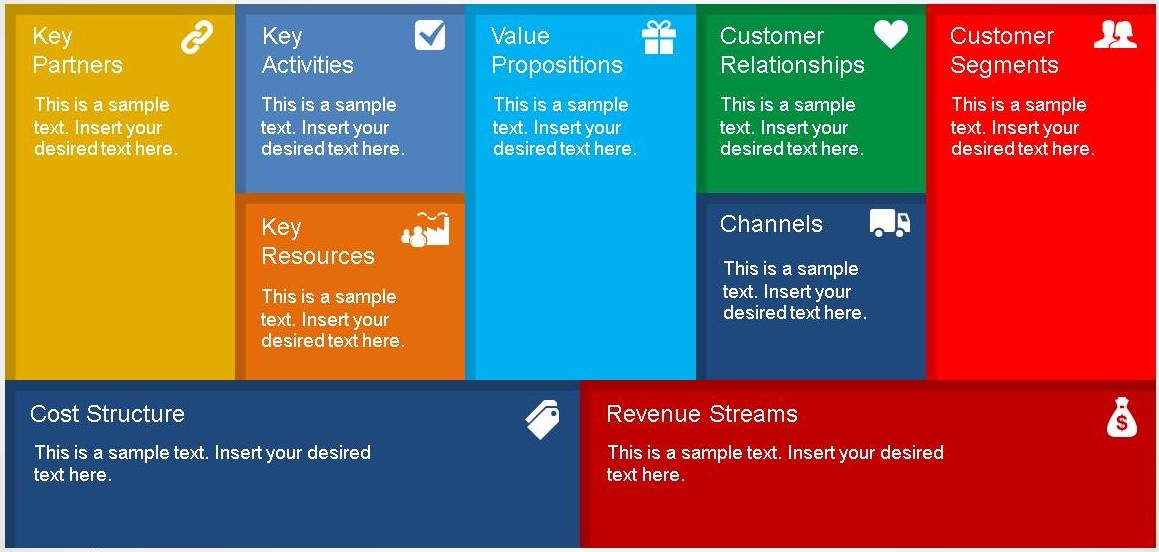
The Canvas Model consists of 9 basic building blocks that interact to create a comprehensive picture of how a business creates, delivers, and captures value:
- Customer Segments: The target customer groups of the business
- Value Propositions: The unique value the business delivers to customers
- Channels: How the business reaches and serves its customers
- Customer Relationships: The methods for building and maintaining relationships with customers
- Revenue Streams: The income sources of the business
- Key Resources: The essential assets to operate the business model
- Key Activities: The crucial activities for the model to work effectively
- Key Partners: The network of partners and suppliers
- Cost Structure: The costs incurred during operation
For the F&B industry in general and the coffee shop business in particular, the Canvas model helps business owners:
- Gain a comprehensive and visual overview of the business model
- Clearly identify the relationships between business elements
- Discover weaknesses and opportunities for improvement
- Easily communicate the business strategy to the team and partners
- Compare with competitors and adjust the model in a timely manner
Guide to Building a Canvas Model for a Coffee Shop
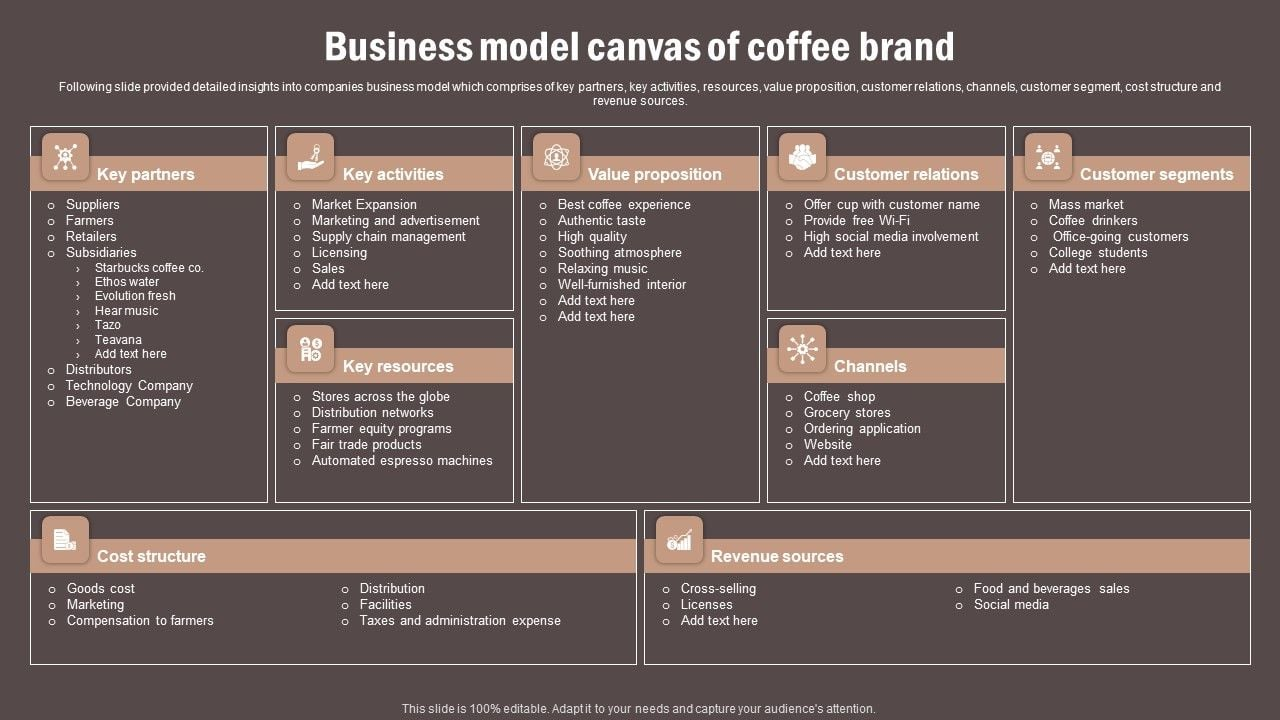
To apply the coffee shop Canvas model, you need to clearly define the following 9 elements.
Customer Segments
Accurately identifying the target customer audience is the first and most crucial step when creating a Canvas model for a coffee shop. For a coffee shop, potential customer segments may include:
- Students: Often looking for a study space, affordable prices, and stable Wi-Fi
- Office workers: Need a space for meetings, working after hours, or taking a break
- Coffee lovers: Focus on the quality and distinctive flavor of the coffee
- Groups of friends/families: Looking for a comfortable space to meet and chat
- Entrepreneurs/freelancers: Need a professional and quiet workspace
When defining customer segments, you need to analyze:
- Demographic characteristics (age, income, occupation)
- The needs and expectations of each group
- Consumer behavior and frequency of service use
- Spending power and price sensitivity
Instead of trying to serve everyone, focus on 2-3 key segments to optimize the customer experience and the shop’s resources. For example, a coffee shop near a university can focus on students and lecturers with a study-friendly space, affordable prices, and opening hours that align with class schedules.
Core Values
Core values are the unique benefits your coffee shop offers to customers, solving their problems or meeting their needs. This is the key factor that makes customers choose your shop over competitors.
Potential core values for a coffee shop include:
- Superior product quality: Specialty coffee beans, unique brewing methods
- Distinctive space/experience: Interior design, music, atmosphere
- Convenient location: Easy to access, near schools/offices
- Excellent service: Friendly staff, knowledgeable about coffee
- Cultural/community value: Sustainable coffee, supporting farmers, community space
- Additional amenities: High-speed Wi-Fi, power outlets, co-working space
When defining core values, ensure they are:
- Aligned with the needs of the target customer segment
- Difficult for competitors to imitate
- Sustainable and can be developed over time
- Creating a sustainable competitive advantage
Build core values based on a deep understanding of your target customers. For example, if the main customer group is coffee lovers, focus on bean quality, the roasting and grinding process, and the barista’s expertise. If the customer group is office workers, prioritize a comfortable workspace, strong Wi-Fi, and fast service.
Distribution Channels
Distribution channels are the ways a coffee shop reaches, communicates with, and serves its customers. Building an effective distribution channel system helps a coffee shop expand its reach, increase revenue, and improve the customer experience.

Common distribution channels for a coffee shop include:
Physical Channels:
- Direct store (location-based)
- Take-away/drive-thru counter
- Mobile coffee cart
- Branch system
Digital Channels:
- Online ordering website
- Dedicated mobile app
- Delivery partners (Grab, GoJek, Baemin…)
- Online reservation platforms
Communication Channels:
- Social media (Facebook, Instagram, TikTok)
- Email marketing
- Loyalty programs
- Community events
In the digital age, a coffee shop should combine both traditional and digital channels. For example, besides a physical store, the shop can develop a delivery service through an app or sell packaged products (coffee beans, ground coffee) via its website. When building a distribution channel strategy, it’s important to note:
- Alignment with the consumer behavior of the target customers
- Ensuring a consistent experience across all channels
- Balancing the cost and effectiveness of each channel
- Having an integrated omnichannel strategy
Customer Relationships
Customer relationships describe how a coffee shop builds and maintains relationships with its customer segments, from attracting new customers to retaining old ones and increasing revenue from existing customers.
Types of customer relationships suitable for a coffee shop:
- Personalized service: Remembering regulars’ names and favorite drinks
- Self-service: A model where customers order at the counter themselves
- Membership programs: Loyalty cards, special offers for frequent customers
- Community: Creating spaces and events to connect people with similar interests
- Co-creation: Allowing customers to participate in developing new products
- Automation: Chatbots to assist with orders and answer questions
When building a customer relationship strategy, consider:
- The level of personalized interaction appropriate for each customer segment
- Balancing operational efficiency with customer experience
- The cost of maintaining each type of relationship
- Consistency with the brand’s values and positioning
Advice for coffee shops: Build a multi-layered customer relationship strategy. For example, create a membership program with multiple tiers (silver, gold, platinum) corresponding to different privileges, combined with personalized in-store experiences and regular interaction on digital channels.
Revenue Streams
Revenue streams identify the sources of income a coffee shop generates from each customer segment. Diversifying revenue sources helps the coffee shop increase profits and minimize business risks.
Potential revenue sources for a coffee shop:
Revenue from core products:
- Hot beverages (coffee, tea, cocoa…)
- Cold beverages (iced coffee, smoothies, juices…)
- Food (pastries, sandwiches, snacks…)
Additional revenue:
- Selling coffee beans, ground coffee, and brewing equipment
- Branded merchandise (mugs, tumblers…)
- Space rental (for events, meetings…)
- Delivery services
- Coffee brewing workshops
- Membership fees
When defining the revenue stream strategy, it’s necessary to analyze:
- Pricing structure and policies (fixed, dynamic, segment-based…)
- Payment mechanisms (one-time payment, subscription, usage fee…)
- The profit margin of each revenue stream
- The scalability and sustainability of the revenue source
In addition to the main revenue from beverages, develop supplementary income sources that align with the brand’s values. For example, a coffee shop specializing in specialty beans can sell packaged coffee beans and organize cupping classes (coffee tasting).
Key Resources
Key resources are the most important assets required for the coffee shop’s business model to operate effectively. These are the crucial elements that help the coffee shop create and deliver its core value, reach the market, maintain customer relationships, and generate revenue.

The key resources of a coffee shop typically include:
Physical Resources:
- Business location (prime location)
- Brewing equipment (espresso machine, grinder, refrigerators…)
- Furniture and space
- Technological infrastructure (POS, Wi-Fi, ordering system…)
Intellectual Resources:
- Brand and brand identity
- Special recipes and brewing secrets
- Customer database
- Patents, trademarks (if any)
Human Resources:
- Skilled and experienced baristas
- Professional service staff
- Management team
- Coffee industry experts (Q-graders, roasters…)
Financial Resources:
- Initial investment capital
- Stable cash flow
- Access to capital
When identifying key resources, it’s necessary to evaluate:
- Importance to the coffee shop’s core value
- Accessibility and cost of ownership/maintenance
- Uniqueness and difficulty to imitate
- Scalability with business growth
Focus on investing in resources that differentiate the brand. For example, if the coffee shop’s strength is the quality of its coffee, invest in high-quality roasting machines and professional baristas. If its strength is the ambiance, focus on interior design and a prime location.
Key Activities
Key activities are the most important tasks a coffee shop must perform to operate its business model effectively. These are the crucial activities that help create and deliver core value, reach the market, build customer relationships, and generate revenue.
The key activities of a coffee shop typically include:
Production Activities:
- Selecting, roasting, grinding, and brewing coffee
- Preparing food and beverages
- Developing new recipes and products
Operational Activities:
- Serving customers in-store
- Managing online orders and delivery
- Managing inventory and supply chain
- Cleaning and maintaining equipment and space
Marketing Activities:
- Brand building and communications
- Social media management and customer interaction
- Organizing events and promotional programs
- Market research and competitor analysis
Management Activities:
- Employee training and development
- Financial management and cost control
- Ensuring quality and consistency
- Developing Standard Operating Procedures (SOPs)
When identifying key activities, consider:
- Contribution to creating core value
- Resource and expertise requirements
- Potential for optimization and standardization
- Balance between in-house and outsourced activities
Establish Standard Operating Procedures (SOPs) for each key activity to ensure consistent quality and operational efficiency. For example, brewing procedures for each type of drink, customer service processes, end-of-day cleaning routines, etc.
Key Partnerships
Key partnerships describe the network of suppliers and partners that help the coffee shop’s business model operate effectively. Building a strategic partner network helps optimize resources, reduce risks, and expand competitive capabilities.
Potential partners for a coffee shop include:
Supply Partners:
- Coffee bean suppliers (farms, distributors, roasters…)
- Brewing equipment suppliers
- Food and ingredient suppliers
- Furniture and supplies vendors…
Strategic Partners:
- Delivery platforms (Grab, Baemin…)
- Electronic payment platforms
- Real estate/leasing partners
- Investors/sponsors
Marketing Partners:
- Influencers/KOLs
- Nearby businesses (cross-promotion)
- Schools, offices (providing coffee for events)
- Local communities
Operational Partners:
- Cleaning service providers
- Equipment maintenance units
- Human resource management units
- Consulting/training units
When building partnerships, consider:
- The objectives of the partnership (optimization, risk reduction, access to resources…)
- Mutual benefits and value alignment
- Level of dependency and potential risks
- Collaboration mechanisms and performance evaluation
Build sustainable partnerships based on mutual benefits. Especially with coffee bean suppliers, develop long-term relationships to ensure quality and a stable supply. At the same time, diversify suppliers to reduce dependency risks.
Cost Structure
The cost structure describes all the necessary expenses to operate the coffee shop business model. A clear understanding and effective management of the cost structure help optimize profits and ensure the sustainability of the business model.

The main costs of a coffee shop typically include:
Fixed Costs:
- Rent
- Basic employee salaries
- Insurance, license fees
- Equipment depreciation
- Utility costs (electricity, water, internet…)
Variable Costs:
- Raw materials (coffee beans, milk, sugar…)
- Packaging, disposable items
- Shipping, delivery costs
- Sales commissions, discounts
Startup Costs:
- Renovation, decoration costs
- Initial equipment purchase
- Employee training costs
- Launch marketing costs
Marketing and Development Costs:
- Advertising, promotion costs
- New product development costs
- Market research costs
- Investment in digital platforms
When analyzing the cost structure, it is necessary to evaluate:
- The ratio of fixed and variable costs
- The cost/revenue ratio for each item
- Break-even point and profit margin
- Opportunities for cost savings and optimization
Establish a detailed cost tracking and analysis system. Pay special attention to raw material costs (food cost) and labor costs, as these two factors often account for the largest proportion of a coffee shop’s cost structure. It is necessary to have a plan to control inventory and optimize employee work schedules to reduce waste.
Real-world example of a coffee shop Canvas model: The Coffee House
The Coffee House stands out by focusing on the “Vietnamese” experience and technology (app), catering to young and dynamic customers. Below is an example of how The Coffee House applies the Canvas model, presented concisely in a table format for easy following:
| Customer Segments | Value Proposition | Channels | Customer Relationships | Revenue Streams | Key Resources | Key Activities | Key Partnerships | Cost Structure |
| Young people, office workers, domestic customers | Quality Vietnamese coffee, friendly atmosphere | Stores, ordering app, delivery | Loyalty points via app, regular promotions | Coffee, tea, pastries, merchandise (cups, bags) | Staff, management system | Beverage preparation, marketing, synchronized operations | Coffee suppliers, ShopeeFood | Premises, ingredients, advertising |
>>> Read more: Decoding the 9 elements of Vinamilk’s Canvas model and practical lessons
Common mistakes when applying the Canvas model
Mistake 1: Choosing the wrong customer segment
One of the most common mistakes occurs right from the initial stage when defining the “Customer Segments” in the Canvas model. Many new shop owners try to target everyone – from students and office workers to tourists – without focusing on a specific group. This leads to a diluted strategy that doesn’t effectively meet anyone’s needs, ultimately wasting resources. For example, if you open a shop near a university but position it as a high-end brand like Starbucks, students won’t be able to afford it. To avoid this, conduct thorough market research, select 1-2 core groups, and tailor your products to suit them.
Mistake 2: Over-investing in unnecessary resources
This mistake often appears in the “Key Resources” element, especially during the pre-opening phase. Many people pour money into expensive coffee machines or luxurious locations without considering the actual needs of their customers. For instance, if your target customers just need a workspace with strong Wi-Fi, buying a 100-million VND coffee machine is excessive. The consequence is high costs and difficulty in recouping the investment. The way to prevent this is to prioritize resources linked to your core value – if you’re not selling specialty coffee, don’t over-invest in extravagant equipment.
Mistake 3: Skipping market research
This mistake relates to the “Value Proposition” and often occurs in the initial planning stage. Some shop owners define their value based on personal feelings – like “I like a vintage atmosphere, so customers will too” – without conducting actual research. As a result, the shop fails to attract customers, leading to early failure. For example, if you open a shop in an industrial park but focus on live music instead of fast delivery, you have missed the actual demand. To avoid this, survey potential customers, run small tests, and make adjustments before making a large investment.
———————————-
The Coffee Shop Canvas Model is the key to helping you build an effective business strategy. Above is a detailed guide on how to apply the 9 elements, from identifying customers to managing costs, using The Coffee House as an example and pointing out common mistakes to avoid. Start applying it now to map out a clear path for your coffee shop business project. We wish you success!
















