


Applying AI in Business Management: Optimizing Efficiency and Productivity


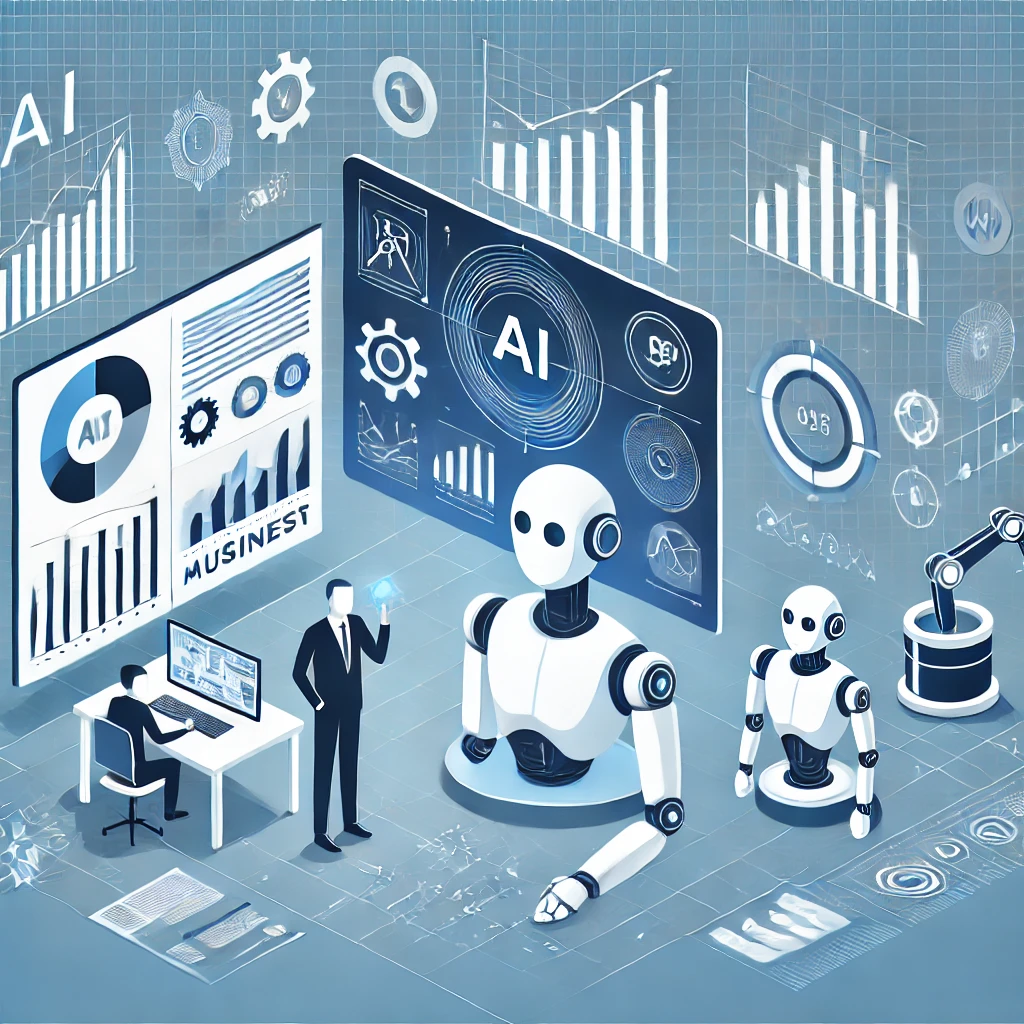
In the digital age, artificial intelligence (AI) is becoming a core technology that helps businesses optimize processes, reduce costs, and improve efficiency. From human resource and financial management to customer care, AI plays a crucial role in helping businesses compete and achieve sustainable growth in the market.
Imagine automating critical processes, minimizing errors, and saving operational costs – all achievable with a single intelligent AI system.
Join 1Office to explore the current benefits and applications of AI, helping you understand the importance and competitive advantages of adopting this trend for your business.
Mục lục
- 1. AI Applications in Business Management Fields
- 2. Benefits of AI in Business Management
- 1. Increase Productivity – Reduce Time, Increase Work Value
- 2. Cost Savings – Cut Waste, Optimize Operations
- 3. Improve Accuracy – Reduce Errors, Increase Reliability
- 4. Enhance Customer Experience – Increase Revenue
- 5. Make Better Strategic Decisions – Make More Accurate Choices
- Summary of AI Benefits for Businesses
- 3. Major Brands Are Applying AI
- 1. Google – AI for Optimizing Ads and Search
- Key Applications:
- 2. Amazon – Personalizing the Shopping Experience and Optimizing the Supply Chain
- Key Applications:
- 3. Microsoft – AI in Office 365 and Azure AI
- Key Applications:
- 4. IBM – Watson AI and Enterprise Data Analytics
- Key Applications:
- 5. Salesforce – AI in Customer Relationship Management (CRM)
- Key Applications:
- 4. Frequently Asked Questions
- 6. Conclusion
1. AI Applications in Business Management Fields
1.1 Business Process Automation
Automated Data Entry and Document Processing
AI helps automate data entry and process invoices, contracts, and business documents using optical character recognition (OCR) technology. This not only saves time but also minimizes errors.
Automated Approval Workflows
AI can establish rules to automatically approve orders, financial requests, or internal documents, speeding up processing and reducing human dependency.
Supply Chain Management
AI helps forecast demand, optimize the supply chain, and intelligently manage inventory, which helps minimize waste and improve operational efficiency.
Risk Management
AI can analyze data to predict business risks, helping companies develop timely prevention plans.
1.2. Human Resource Management
Smart Recruitment
AI helps analyze and screen candidate profiles and assess capabilities based on data, making recruitment faster and more accurate.
Employee Training and Development
AI systems can recommend suitable training programs based on the needs and performance of each employee.
Employee Performance Evaluation
AI can analyze employee work data, evaluate performance, and suggest ways to improve productivity.
Work Schedule Optimization
AI can automatically arrange work schedules to optimize human resources, reduce scheduling conflicts, and enhance work efficiency.
1.3. Customer Care
Chatbots and Virtual Assistants
AI helps businesses provide 24/7 customer service through chatbots, reducing the workload on support teams and enhancing the customer experience.
Customer Behavior Analysis
AI collects and analyzes customer data to personalize the shopping experience and optimize marketing strategies.
Predicting Customer Needs
AI can predict consumer trends based on customer behavior data, helping businesses offer more suitable products and services.
Customer Feedback Management
AI can automatically classify, process, and respond to customer complaints, helping businesses maintain better customer relationships.
Read more: What is Customer Care? Roles, Tasks, and Processes
1.4. Financial and Accounting Management
Financial Analysis and Forecasting
AI uses historical data to predict financial trends, helping businesses make more accurate strategic decisions.
Financial Fraud Detection
AI systems can detect unusual transactions and issue fraud alerts, helping businesses minimize financial risks.
Cost Optimization
AI can analyze cash flow, suggest ways to cut unnecessary costs, and optimize the company’s operating budget.
2. Benefits of AI in Business Management
For business owners, applying AI is not just a technological trend but also a strategic tool to increase profits, optimize costs, and enhance operational efficiency. Here’s how AI delivers direct benefits in terms of profit, performance, and cost, along with real-world examples.
1. Increase Productivity – Reduce Time, Increase Work Value
AI helps businesses automate manual tasks, reduce processing time, and focus on value-creating activities.
Specific AI Applications
- Process Automation (RPA – Robotic Process Automation):
- AI handles tasks like data entry, invoice approval, and inventory management, allowing employees to focus on more strategic duties.
- Example: UiPath’s AI platform helps businesses reduce document processing time by 50%.
- AI in Manufacturing and Logistics:
- AI optimizes machine work schedules, reducing downtime.
- Tesla uses AI to automatically inspect for production defects, reducing errors by up to 30%.
Real-World Benefits
- Businesses can accomplish more work with the same number of staff.
- Increased operational speed helps meet market demands faster.
- Improved product/service quality and reduced errors.
2. Cost Savings – Cut Waste, Optimize Operations
One of the most important reasons for businesses to adopt AI is to reduce costs without compromising service quality.
Specific AI Applications
- Reduce personnel costs through automation
- AI replaces time-consuming tasks such as customer care, document processing, and accounting.
- Example: Sephora’s AI chatbot helps reduce customer service personnel costs by 20%.
- Optimize operational costs
- AI analyzes cash flow and suggests cutting unnecessary expenses.
- UPS uses AI to optimize delivery routes, saving over $400 million per year.
- Reduce marketing and advertising costs
- AI optimizes ads based on user behavior, increasing ROI.
- Facebook Ads AI helps businesses reduce advertising costs by 30-50% by optimizing ad delivery.
Real-world Benefits
- Reduce personnel costs while maintaining performance.
- Cut waste in operations and logistics.
- Reduce marketing costs, increase customer outreach effectiveness.
3. Improve Accuracy – Reduce Errors, Increase Reliability
AI helps businesses analyze and process data more accurately than humans, minimizing errors that can cause significant losses.
Specific AI Applications
- AI in finance & accounting
- AI analyzes millions of transactions to detect anomalies and fraud.
- Example: JPMorgan Chase’s AI helps detect credit card fraud 10 times faster than humans.
- AI in product quality control
- AI detects defects on production lines with over 95% accuracy, higher than humans.
- BMW uses AI to inspect assembly errors, helping reduce mistakes by 50%.
Real-world Benefits
- Reduce financial risks from errors or fraud.
- Enhance the reliability of data and business decisions.
- Improve product quality, reduce defect rates.
4. Enhance Customer Experience – Increase Revenue
AI helps businesses understand customers better, provide a superior experience, and create more revenue opportunities.
Specific AI Applications
- Chatbots & virtual assistants
- Provide 24/7 customer support without live agents.
- Example: H&M’s AI Chatbot helps customers find products faster, increasing sales by 20%.
- Personalize the customer experience
- AI analyzes customer preferences to recommend suitable products.
- Netflix uses AI to suggest content, helping increase customer retention rates to 80%.
- AI in customer care
- AI helps analyze customer feedback and automatically handle complaints.
- Amazon uses AI to personalize the experience, helping increase conversion rates by 35%.
Real-world Benefits
- Increase revenue through more precise marketing.
- Retain customers longer, reduce churn rates.
- Increase customer service efficiency without expanding staff.
5. Make Better Strategic Decisions – Make More Accurate Choices
AI helps businesses make data-driven decisions instead of relying on intuition, increasing the likelihood of success.
Specific AI Applications
- AI for market & competitor data analysis
- AI aggregates data from millions of sources to assess trends.
- Coca-Cola uses AI to predict demand and optimize production.
- Financial forecasting & business risk
- AI helps businesses identify potential risks before they occur.
- Goldman Sachs’ AI predicts financial trends with 85% accuracy.
Real-world Benefits
- Make more accurate decisions, reduce business risks.
- Identify investment opportunities & potential markets faster.
- Improve financial strategy, increase profits.
Summary of AI Benefits for Businesses
| Benefits | Specific AI Applications | Real-world Impact |
| Increased Productivity | Process automation, inventory management | Get more done, faster |
| Cost Savings | Optimize personnel, reduce waste | Cut operational and personnel costs |
| Improved Accuracy | AI for financial control, product defect checking | Reduce errors, increase reliability |
| Increased Revenue | Personalize customer experiences | Increase purchase rates, retain customers |
| Better Decision-making | AI for data analysis, financial forecasting | Reduce risk, optimize strategy |
Conclusion: AI is not just a technological tool but also a crucial strategy for sustainable business development. Businesses that adopt AI early will have a stronger competitive advantage over their rivals!
3. Major Brands Are Applying AI
AI has become an indispensable part of the operations of many large corporations worldwide. Here’s how Google, Amazon, Microsoft, IBM, and Salesforce are leveraging AI to optimize processes and enhance user experience.
1. Google – AI for Optimizing Ads and Search
Google is one of the pioneering companies in applying AI, especially in areas like search, advertising, and natural language processing.
Key Applications:
- Search Engine Optimization (Google Search & Google Assistant)
- AI helps Google understand user search intent through algorithms like RankBrain and BERT.
- The ability to understand context, synonyms, and long-tail queries helps improve the search experience.
- Google Ads – Intelligent Advertising System
- AI helps optimize ad displays based on user behavior.
- Machine Learning algorithms help predict ad performance and automate effective bidding.
- AI in Google Photos, Gmail, and Cloud Services (Google Cloud AI)
- Google Photos: Facial recognition, automatic image classification.
- Gmail: Supports Smart Reply and Smart Compose features, helping users reply to emails faster.
- Google Cloud AI: Provides AI services for businesses, including natural language processing (NLP) and data analysis.
2. Amazon – Personalizing the Shopping Experience and Optimizing the Supply Chain
Amazon, the world’s largest e-commerce company, uses AI to improve logistics, optimize warehousing, and enhance the customer experience.
Key Applications:
- Personalizing the Shopping Experience (Recommendation System)
- AI analyzes browsing data, purchases, and customer reviews to recommend suitable products.
- This system accounts for over 35% of Amazon’s revenue.
- AI in Warehouse Management and Logistics
- Amazon Robotics uses AI robots to automatically pick, pack, and ship items.
- AI predicts shopping trends, helping to optimize inventory for peak seasons.
- Alexa Voice Assistant
- The AI in Alexa helps users control smart homes, search for information, and perform automated tasks.
- AWS (Amazon Web Services) AI
- Amazon provides an AI-as-a-Service platform, making it easy for businesses to deploy AI.
3. Microsoft – AI in Office 365 and Azure AI
Microsoft has integrated AI into its product ecosystem, especially Office 365, Windows, and the Azure cloud platform.
Key Applications:
- Office 365 and AI-Powered Work Support
- Excel, Word, and Outlook integrate AI for text prediction, data analysis, and task automation.
- Microsoft Teams uses AI to generate captions and provide real-time language translation.
- Azure AI – Providing AI Services for Businesses
- Cloud-based AI tools that help businesses implement machine learning, chatbots, and image recognition.
- AI in Security: Predicts and prevents cyberattacks through data analysis.
- Copilot – AI-Powered Programming Assistant
- Integrated with GitHub, Copilot helps developers write code faster, detect errors, and suggest algorithms.
4. IBM – Watson AI and Enterprise Data Analytics
IBM focuses on AI in data analytics, healthcare, and financial services.
Key Applications:
- IBM Watson – Powerful AI for Enterprises
- Big Data Analysis Support: Watson can process millions of data points to make decisions.
- Customer Care Automation: Watson AI is used to answer questions and analyze customer sentiment.
- AI in the Healthcare Sector
- IBM Watson Health analyzes patient records to help doctors make more accurate diagnoses.
- AI helps in the early detection of cancer by analyzing medical data.
- AI in Finance
- Helps banks and financial institutions predict market trends and manage fraud risks.
5. Salesforce – AI in Customer Relationship Management (CRM)
Salesforce is a leader in CRM (Customer Relationship Management) and has integrated AI to optimize the customer experience.
Key Applications:
- Einstein AI – The Smart Assistant for CRM
- Predicts customer behavior based on previous data.
- Personalizes marketing content to help increase conversion rates.
- Automate customer care
- AI chatbots help support customers 24/7, resolving issues faster.
- Analyze data to help businesses create more effective marketing campaigns.
- Integration with other platforms
- Salesforce Einstein can connect with Slack, Teams, Google Cloud, and Microsoft Azure, helping businesses easily deploy AI
Conclusion: Major companies like Google, Amazon, Microsoft, IBM, and Salesforce all apply AI in their own ways to improve processes, increase productivity, and enhance the customer experience.
- Google focuses on intelligent search and optimized advertising.
- Amazon uses AI to personalize the shopping experience and optimize logistics.
- Microsoft leverages AI in its software products and cloud platforms.
- IBM uses AI for data analysis, supporting healthcare and finance.
- Salesforce optimizes CRM, helping businesses manage customers more intelligently.
AI not only helps businesses increase operational efficiency but also opens up new business opportunities in the digital age.
4. Frequently Asked Questions
Can AI completely replace humans in business management?
AI helps automate many tasks but still requires human supervision to ensure flexibility and creativity in business.
Can small businesses apply AI?
Absolutely. Many AI solutions today are reasonably priced, suitable for small and medium-sized enterprises.
Can AI help improve a business’s marketing?
Yes. AI helps analyze customer data, optimize advertising, and personalize marketing strategies.
Are there any risks when applying AI?
Some risks include data security, high initial implementation costs, and over-reliance on technology.
6. Conclusion
AI is opening up great opportunities for businesses to manage and optimize their operational processes. Applying AI not only helps increase efficiency but also creates a competitive advantage in the digital era.
As Bill Gates once said: “We always overestimate the change that will occur in the next two years and underestimate the change that will occur in the next ten. Don’t let yourself be lulled into inaction.”




