


 12/05/2026
  216 views
In today’s volatile business landscape, the role of an administrator is increasingly crucial for the sustainable development of a company. An excellent administrator not only manages daily operations but also guides and leads the organization through the challenges of the digital age.
In this article, 1Office will explore the roles of an administrator within a business, as well as the qualities needed to become an outstanding one!
Mục lục
I. What is an administrator?

An administrator is a person responsible for planning, organizing, directing, and monitoring activities within an organization or business to achieve its set goals and strategies.
They often hold a leadership role, making important decisions and overseeing the implementation of plans, while ensuring that resources, including human, financial, and material, are used effectively.
They need the ability to analyze situations, make sound decisions, and inspire employees to achieve optimal work results.
II. Differentiating between an administrator and a leader
While both roles are crucial to an organization’s success, there are fundamental differences between an administrator and a leader:
| Administrator | Leader | |
| Vision and Direction | Focuses on short and medium-term goals, ensuring stability | Sets long-term strategic direction, aiming for growth |
| Approach to work | Maintains and optimizes existing processes | Innovates, creates, and drives change |
| Decision-making method | Based on processes, data, and experience | Based on vision, intuition, and innovation |
| Resource management | Optimizes and allocates resources efficiently | Develops and creates new resources |
| Relationship with employees | Supervises, guides, and controls | Inspires, empowers, and develops |
| Risk management | Minimizes and prevents risks | Accepts calculated risks for innovation |
| Measure of success | Operational efficiency and KPIs | The growth of the organization and its people |
In reality, an excellent CEO needs to combine both roles. According to a 2023 McKinsey survey, 76% of successful businesses have managers who perform a dual role: ensuring efficient operations while also promoting innovation.
Especially in the technology sector, managers must quickly grasp new trends and be capable of leading digital transformation.
A prime example is Nguyen Hai Binh – CEO of MoMo, who has succeeded in building standardized operational processes (the administrator role) while continuously innovating products and expanding the market (the leader role).
III. Core Qualities of an Excellent Manager
To become an excellent manager in the digital age, the following qualities are necessary:
- Strategic Thinking and Adaptability A manager with sharp strategic thinking can see the big picture, predict market trends, and make timely decisions. This quality helps the business not only survive but also thrive in a competitive environment. The ability to adapt quickly to market changes helps the business maintain its competitive position and seize new business opportunities.
- Digital Leadership Competency In the digital era, this competency plays a decisive role in leading a successful digital transformation. A manager with digital leadership competency not only understands technology but also knows how to apply it to optimize operations, increase productivity, and create new value for the business.
- Communication and Team-Building Skills The ability to communicate vision and direction clearly and persuasively helps a manager build consensus and commitment from the team. Building a strong, cohesive team creates a solid foundation for the company’s sustainable development.
- Analytical Thinking and Data-Driven Decision-Making In the era of big data, the ability to analyze information and make decisions based on data helps managers make accurate and effective decisions. This quality helps minimize management risks and increases the success rate of strategic decisions.
- Conflict Management and Problem-Solving Skills An excellent manager needs the ability to identify and handle conflicts and solve complex problems within the organization. This quality helps maintain a positive work environment, ensures operational efficiency, and promotes the company’s growth.
IV. The Role of a Manager in an Organization

In the Vietnamese context, managers play a particularly important role through four main functions:
- Strategic Planning Managers play a key role in planning the company’s development strategy. They need the ability to analyze the market, forecast trends, and build appropriate strategies. Proper planning will guide all of the company’s activities, create a competitive advantage, and ensure sustainable development.
- Organizing and Operating This role is demonstrated through designing and operating an effective management system. Managers need to ensure all resources are allocated and used optimally, and that operational processes are standardized and continuously improved. This helps the business run smoothly and achieve its set goals.
- Leading and Developing the Team Managers not only direct but also must inspire and develop the team. They build the corporate culture, create a positive work environment, and develop high-quality human resources. This creates a foundation for the organization’s long-term development.
- Controlling and Evaluating By building an effective evaluation and risk management system, managers ensure the company stays on the right track and achieves its set goals. This role helps to detect problems early and take timely corrective measures.
V. Challenges for Managers in the Modern Era
Vietnamese managers are facing many new challenges:
- Pressure of Digital Transformation The Industry 4.0 revolution poses a major challenge in adjusting business strategy and operations. Managers must face the task of adopting new technologies, changing business models, and ensuring cybersecurity.
- Human Resource Management in the Digital Age The trend of remote work, generational diversity in the workplace, and the need for employees to develop new skills create new challenges in human resource management.
- Global Competition The global business environment requires managers to face fierce competition, adapt to international standards, and build a sustainable competitive advantage.
Faced with these challenges, managers need to seek a comprehensive technology solution to enhance management efficiency. 1Office – a comprehensive business management ecosystem – is the choice of many Vietnamese businesses on their digital transformation journey.
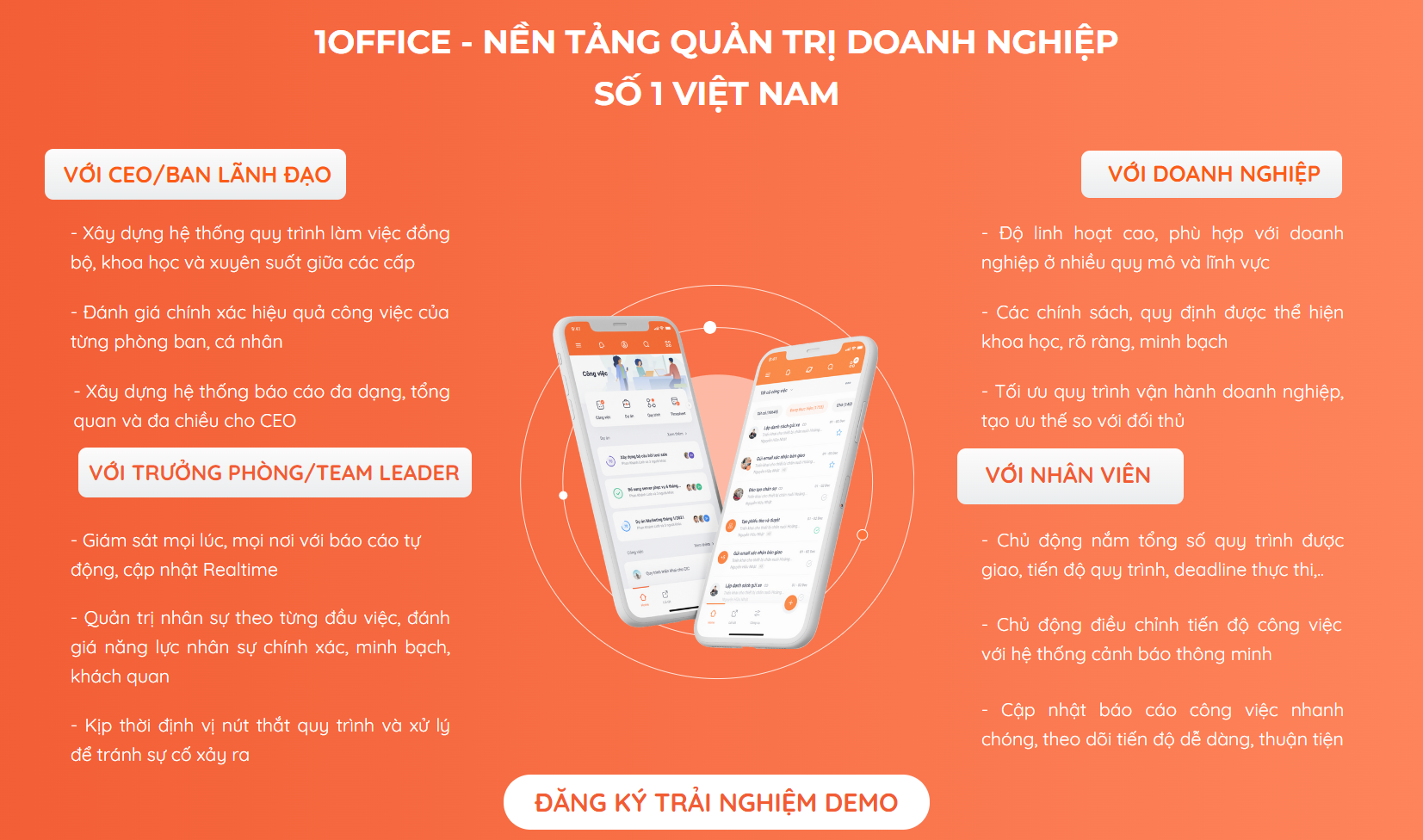
The outstanding value that sets 1Office apart lies in its “All-in-one” product development philosophy – a comprehensive business management platform that solves all business management problems on a single software with high flexibility, customization, and automation capabilities, making it easy to integrate, expand, and tightly link between operations.
With three main modules (1Work, 1HRM, 1CRM), 1Office provides a synchronized solution that helps:
- Digitize and optimize operational processes, helping managers easily operate and make decisions based on real-time data
- Manage human resources effectively through the 1HRM system, digitizing and optimizing the human resource management process in the business with outstanding features that support management tasks from personnel records, recruitment, payroll,… to training and employee evaluation.
- Enhance competitive capacity by optimizing processes, saving costs, and increasing work productivity
- Manage hundreds of processes; Standardize and automate 100% of workflows with 1BPA to help eliminate redundant tasks, ensure smooth operations, and tightly control the operational apparatus
- The CRM module solves the problem of effective and professional customer management and customer care, supporting businesses in optimizing sales processes, improving service quality, and enhancing the customer experience
VI. Examples of excellent managers in Vietnam and internationally
Examples of great managers in Vietnam
Truong Gia Binh – Chairman of FPT Corporation
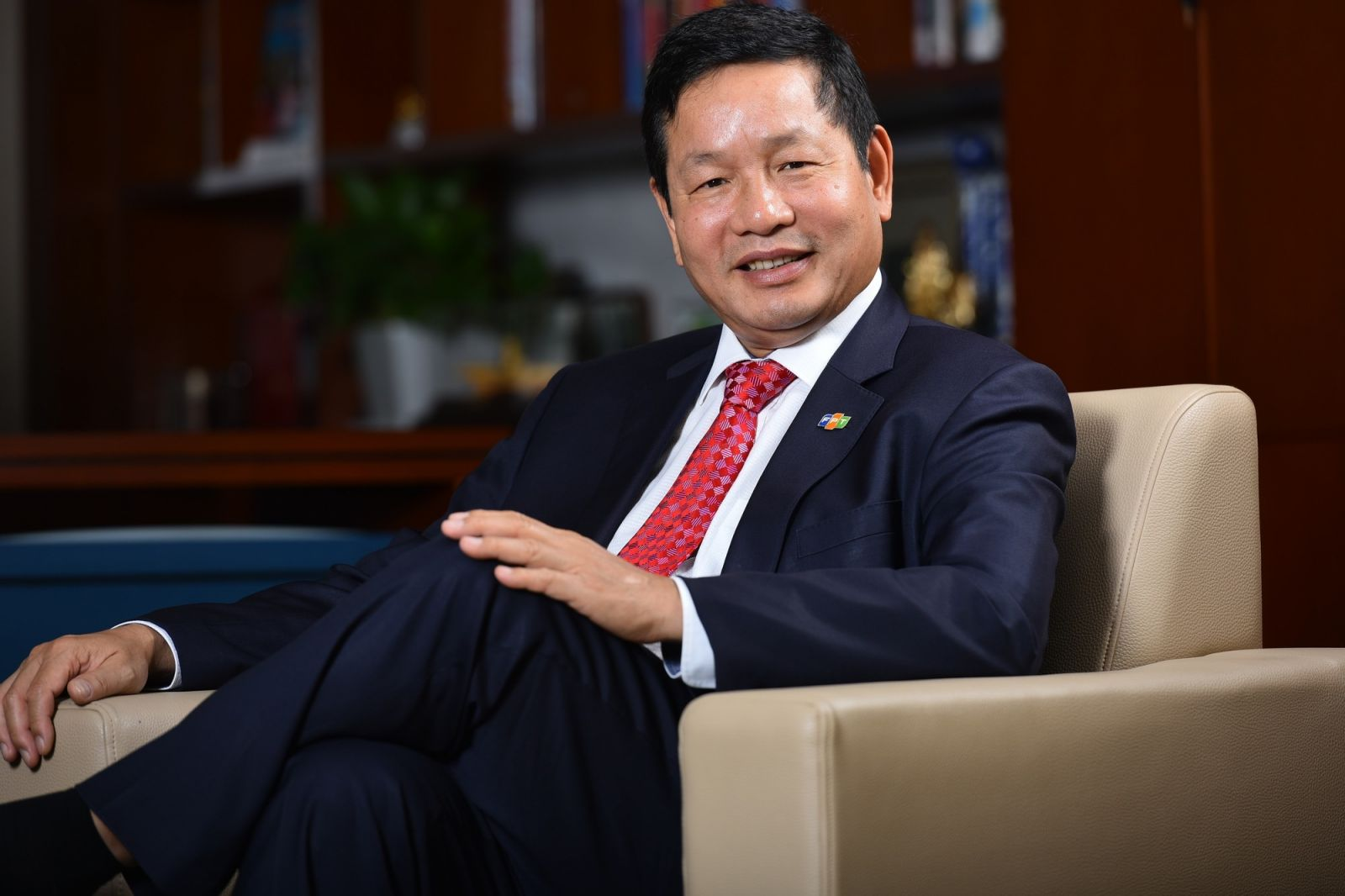
With over 30 years of experience in the technology industry, Mr. Binh has grown FPT from a 13-person company into a multinational technology corporation with over 37,000 employees. His success is demonstrated through:
- Strategic vision: Early recognition of the potential of the outsourcing and digital transformation industry, orienting FPT to become a technology partner for global corporations
- Building corporate culture: Creating a “dare to think, dare to do” environment, encouraging creativity and innovation
- Talent development: Establishing FPT University, creating a high-quality human resource pool
Young managers can learn from him how to build a sustainable organization, develop a succession team, and adapt to technology trends.
Nguyen Duc Tai – Chairman of The Gioi Di Dong
Under Mr. Tai’s leadership, The Gioi Di Dong has become the largest retail chain in Vietnam with revenues of over 5 billion USD. Notable successes include:
- Applying technology in management: Building a modern supply chain management system, real-time sales tracking
- Smart expansion strategy: Thorough market research before expanding, optimizing store locations
- Effective human resource management: Attractive compensation packages, professional training
Lessons for managers: The importance of data in decision-making, how to build a standard operating system, and a sustainable development strategy.
Pham Van Tam – Chairman of Asanzo

From a domestic electronics brand, Mr. Tam has built Asanzo into one of the most popular electronics and home appliance brands. Highlights of his management style include:
- Unique product positioning strategy: Focusing on the low-price but good-quality segment
- Effective supply chain management: Optimizing production and operating costs
- Building a sustainable brand: Investing heavily in R&D and customer service
Lessons learned: How to build a competitive advantage based on market understanding and effective cost management.
Outstanding Managers in the World
Satya Nadella – CEO of Microsoft
Under Nadella’s leadership since 2014, Microsoft’s market capitalization has grown from $300 billion to over $2 trillion. This success comes from:
- Transforming corporate culture: From “know-it-all” to “learn-it-all”
- Correct strategic direction: Promoting the development of cloud computing and AI
- Leading with empathy: Creating an inclusive and creative work environment
Lessons for managers: The importance of corporate culture, the necessity of continuous innovation, and leading with vision.
Jensen Huang – CEO of NVIDIA

From a graphics card manufacturing company, Huang has transformed NVIDIA into a technology company worth over $1 trillion. Notable achievements include:
- Breakthrough vision: Early recognition of the potential of AI and cloud computing
- Strong R&D investment: Continuously developing new technologies
- Building an ecosystem: Creating sustainable relationships with partners and customers
Lessons learned: How to identify and seize technology trends, bravely invest in new fields, and build a long-term competitive advantage.
———————————-
The role of a manager is becoming increasingly complex and multifaceted in the modern business environment. To succeed, Vietnamese managers need to continuously learn, update their knowledge, develop a digital mindset, and balance short-term efficiency with sustainable development. In the digital age, an outstanding manager is not just a good operator but also a leader of change, a driver of innovation, and a builder of a sustainable organization.
















