


 12/05/2026
  340 views
A human resource chart is an important tool in project management, helping managers get an overview of the personnel situation to make more accurate decisions during project execution. Using this chart not only helps track the performance of each individual but also supports the rational allocation of resources.
Mục lục
1. What is a human resource chart?
A human resource chart is a visual tool used to manage and track the allocation of human resources in a project. It helps manage projects more effectively by showing the number of employees needed, their working hours, and their capacity for each project phase.
The role of a human resource chart in project management is crucial, as it helps project managers easily allocate human resources in a balanced and effective manner, ensuring the project is completed on schedule and within budget.
2. Why are human resource charts important in project management?
2.1. Improve time management
Human resource charts help manage time more effectively by showing the number of employees needed and their working hours for each project phase. This helps ensure the project stays on schedule and avoids unnecessary downtime.
2.2. Allocate human resources in a balanced way
Human resource charts help allocate human resources in a balanced and effective manner, ensuring that each part of the project has enough personnel to be completed. This helps avoid situations of resource shortages or surpluses at any stage of the project.
2.3. Minimize project risks
Human resource charts help identify and mitigate risks related to personnel, such as staff shortages, work overload, or misaligned resource allocation. This helps the project run more smoothly and reduces the likelihood of encountering unforeseen problems.
2.4. Enhance understanding and communication
A human resource chart is a visual tool that helps project managers and employees better understand the project’s personnel situation. This enhances understanding and communication among stakeholders, ensuring everyone has a shared view of the project and its human resource requirements.
3. Common types of human resource charts
Each organization has different needs for managing human resources, so the types of human resource charts are also diverse and varied. Depending on the objectives and management style, each type of chart offers distinct benefits.
3.1. Tree chart
The tree chart is one of the most common types of human resource charts. It helps display the organizational structure in a tree-like format, with each branch corresponding to a specific department or team.
This type of chart is particularly useful for showing the relationships between departments and clearly indicating who manages each team. This not only helps employees know who their superiors are but also helps them better understand how to coordinate work with each other.
3.2. Network chart
A network chart is a more complex type of chart, often used in large and complex projects. This type of chart not only shows the organizational structure but also describes the relationships between individuals in the project.
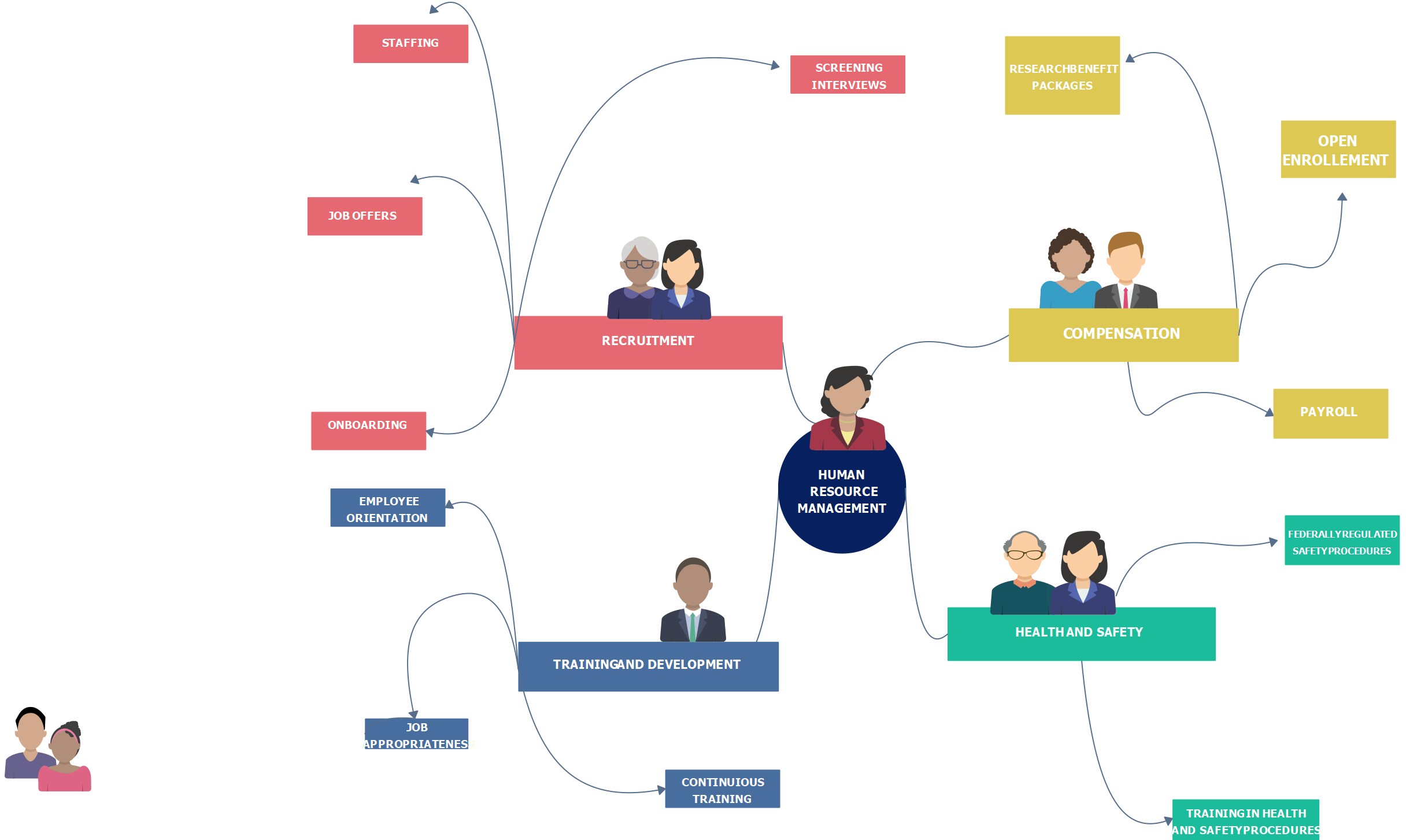
The strength of a network chart lies in its ability to show complex interaction relationships among team members. With this chart, managers can identify employees with strong networking skills, thereby optimizing workflows.
3.3. Resource allocation chart
A resource allocation chart helps managers track the distribution of work within the organization. This chart typically shows the work distribution ratio among members and departments, helping to identify positions that are overworked or understaffed.
With this type of chart, managers can quickly adjust workloads to ensure that everyone has the opportunity to contribute and utilize their abilities.
3.4. Gantt chart
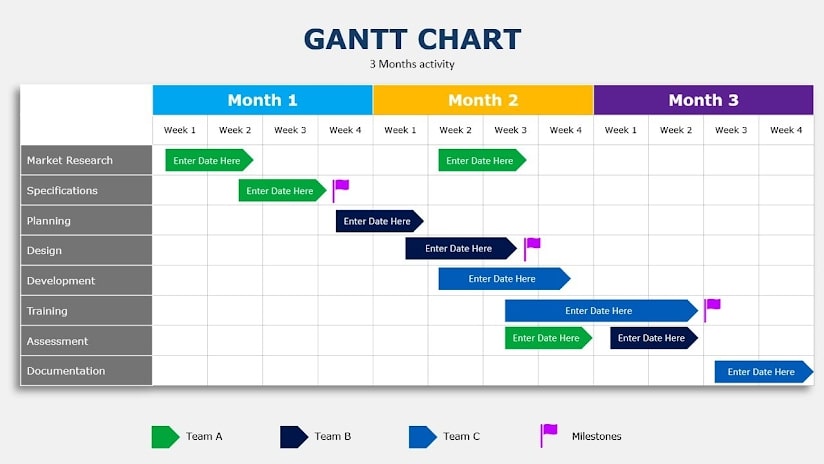
A Gantt chart is a prominent time management tool in projects, but it can also be applied to track human resources. It helps managers know the execution time for each task and who is responsible for it.
The standout feature of a Gantt chart is its ability to provide an overview of work progress. This helps managers easily identify potential issues and adjust the execution plan as needed.
4. Process for creating a project resource supply chart
Step 1: Determine human resource needs for each project phase
- Work analysis: List all project work items.
- Resource allocation: Determine the quantity and type of human resources needed for each item (e.g., engineers, construction workers, supervisors, general laborers).
- Time prioritization: Assign a specific schedule to each work group to determine personnel requirements over time.
Step 2: Collect data on existing human resources and additional recruitment capabilities
- Assess internal resources: Identify available personnel within the company, their skills, experience, and capabilities.
- Create a recruitment plan: Determine the additional personnel needed based on the gap between demand and current resources.
Step 3: Choose the appropriate chart type
- Bar Chart: Displays the number of personnel required for each project phase.
- Line Chart: Shows the trend of personnel increases and decreases throughout the project.
- Combination Chart: Combines bar and line charts to compare personnel demand and supply.
Step 4: Draw the human resource supply chart
- Prepare data: Compile data on the required number of personnel, existing resources, and the recruitment plan.
- Use support tools:
- Excel or Google Sheets: Create a data table and use the automatic charting feature.
- Specialized software: Software like Microsoft Project or Primavera for professional human resource planning.
- Visualize: Clearly mark key phases, peaks (highest), and troughs (lowest) in personnel demand.
Step 5: Evaluate and optimize the chart
- Check feasibility: Ensure the chart accurately reflects personnel needs and the ability to meet them.
- Consider risk factors: Assess factors such as leave, unforeseen incidents, and create contingency plans.
- Update periodically: Adjust the chart according to actual progress and project changes.
5. Common mistakes when creating a human resource chart
5.1. Inaccurate estimation of personnel needs
Determining the quantity and type of personnel that doesn’t match the actual workload is a common mistake. This can lead to personnel shortages or a waste of resources. To fix this, it’s necessary to thoroughly analyze each project phase and clearly define the specific requirements for each position.
5.2. Lack of data updates and flexibility
Many human resource charts are not adjusted in a timely manner when the project changes, making the plan outdated. Additionally, a lack of ability to adjust to risks such as labor fluctuations or schedule changes will cause management difficulties. Regular updates and flexible contingency planning will help the chart more accurately reflect reality.
5.3. Not considering personnel costs
Ignoring cost factors such as salaries, benefits, and recruitment expenses can cause the human resource plan to exceed the budget. This not only affects economic efficiency but also reduces long-term implementation feasibility. To avoid this mistake, it’s necessary to closely link the human resource plan with the project budget.
6. Conclusion
Building and using a human resource chart, when done scientifically and systematically, will bring significant benefits to the organization. We hope that through this article, you will gain a deeper insight into human resource charts and their application in project management and organizational development.
















