


 12/05/2026
  294 views
In today’s competitive business world, adhering to business principles is not only a guiding compass for sustainable development but also helps CEOs and leaders build a solid foundation for effective business operations. From customer-centricity and financial optimization to embracing technology, each principle offers significant value and meaning. Join 1Office to explore the top 8 business principles and effective methods for applying them in your business.
Mục lục
1. What are business principles?

Business principles are the fundamental rules or core guidelines that help a company operate effectively, sustain growth, and achieve its business goals. They serve as a guiding compass for making strategic decisions and building a suitable work culture.
These principles not only help businesses maintain a competitive edge but also support building trust with partners, customers, and employees.
2. Top 8 Business Principles Every Manager Should Know
2.1. Put customers at the center
Customers are the deciding factor in a business’s survival and growth. Therefore, listening to and understanding their needs and providing the best solutions not only helps retain existing customers but also attracts new ones. An excellent customer experience will build loyalty and enhance brand reputation.
- Market research: Gather customer needs and wants through surveys, feedback, and analysis of consumer behavior.
- Personalize the experience: Businesses can customize products and services to suit specific target groups. For example, using a chatbot for faster customer support.
- Build excellent after-sales service: Post-purchase support not only increases satisfaction but also creates effective upselling opportunities for the business.
2.2. Manage finances effectively
Stable cash flow is a crucial condition for any business to sustain its operations. Financial control will help you minimize risks and make sound investments.
- Create a tight budget: Develop detailed cost sheets and allocate finances appropriately for each department of the business.
- Track daily cash flow: Use financial software and tools to monitor revenue, expenses, and profits in real-time.
- Optimize operating costs: Businesses need to strive to find the best suppliers at reasonable prices, helping to minimize material waste.
>>> Download now: 6 Latest Business Financial Management Files
2.3. Continuously innovate and create
The business market is constantly changing, and only businesses that innovate and keep up with trends in a timely manner can survive. Creativity and innovation are not only the keys to improving products and optimizing operational and business efficiency but also to creating distinct value for the company.
- Encourage employees: Organize brainstorming sessions, programs, and reward policies to promote creativity within the organization.
- Invest in R&D: Continuously research the market and new technologies to improve current products and services.
- Test new ideas: Businesses can conduct tests (A/B Testing) to evaluate effectiveness before widespread implementation.
2.4. Adhere to business ethics
Honesty, transparency, and fairness in business not only help build reputation but also create a foundation for sustainable relationships with partners and customers. Furthermore, violating business ethics can expose a company to legal risks and a decline in credibility.
- Establish a code of conduct: There should be clear regulations on behavior and social responsibility within the organization.
- Ensure financial transparency: Publicly disclose clear and transparent financial reports to build trust with investors.
- Promote community activities: Participate in charity programs and environmental protection to enhance the brand’s image in the community’s eyes.
2.5. Build a strong workforce

Personnel are the most valuable asset of any business. A united and competent team will help the organization operate effectively and overcome any challenges.
- Hire the right people: Ensure candidates are a good fit in terms of both skills and company culture.
- Provide continuous training: Offer programs to enhance skills, expertise, and management and leadership abilities.
- Foster a positive work environment: Encourage creativity and have policies and systems in place to recognize achievements.
2.6. Always have a clear business strategy and plan
A well-structured, clear strategic plan will help businesses define their goals, the necessary steps, and the resources required to achieve these goals and expectations.
- SWOT Analysis: Clearly understand the strengths, weaknesses, opportunities, and necessary steps to achieve goals based on the company’s resources and advantages.
- Set specific goals: Use the SMART model (Specific, Measurable, Achievable, Relevant, Time-bound).
- Track progress: Use the necessary tools to ensure all activities are carried out effectively and on schedule.
2.7. Leverage modern technology

Today, technology has become an indispensable factor that helps businesses improve efficiency, save costs, and optimize the customer experience. Businesses that are slow to adopt technology will be left behind.
- Automation: Use software for customer management, sales, and more efficient operations.
- Data analysis: Apply AI and Big Data to understand customer behavior and market trends.
- Technology application, digital transformation: Integrate technologies and digital platforms into operations and business processes to optimize time and costs.
2.8. Focus on core values
Core values are understood as the identity and driving force that guides a business’s long-term development. Upholding these values helps a company build its unique brand and maintain trust with stakeholders.
- Build an organizational culture based on core values: Ensure all employees understand and practice these values daily.
- Product/service orientation: Focus on elements that align with the company’s values and long-term goals
- Ensure employees understand and implement these values in their daily work.
- Orient marketing activities to align with the values the business pursues.
3. Benefits of applying business principles
Adhering to and applying business principles not only helps a company operate more effectively but also creates a foundation for long-term development:
Clear development direction
Business principles help a company clearly define its vision, mission, and goals. When all activities are guided by a clear set of principles, every department will understand and act consistently to achieve common objectives.
- Easier to create long-term and short-term plans.
- Avoid losing direction during work implementation.
- Align departments within the business.
Improved operational efficiency
Principles of financial, human resources, and operational management help businesses optimize resources and minimize waste.
- Save costs through tight cash flow control.
- Automate workflows, reducing errors from repetitive manual tasks.
- Allocate resources appropriately, minimizing personnel surpluses or shortages.
Building trust with customers and partners

Adhering to business ethics and always putting the customer first helps a company build a long-lasting reputation in the market.
- Build customer trust in products/services.
- Attract strategic partners and expand collaborative relationships.
- Minimize risks from legal issues or disputes.
Improved employee satisfaction and engagement
Building a strong team and adhering to core values helps employees feel they are an important part of the organization.
- Increase employee work performance.
- Reduce turnover rates and new recruitment costs.
- Build a positive work environment that encourages creativity, innovation, and collaboration.
Foundation for sustainable business development
A business that adheres to business principles will maintain stable and long-term growth, overcoming major challenges.
- Achieve a balance between economic benefits and social responsibility.
- Increase brand value, recognized by customers and the community.
Improve adaptability to market fluctuations
In a constantly changing market, businesses with clear and flexible strategies will be able to adapt more easily.
- Easily adjust business plans when major changes occur.
- Quickly develop new products/services to meet customer needs.
- Minimize the negative impact of economic fluctuations.
4. Common Mistakes When Not Adhering to Business Principles
Failure to comply with business principles can have serious consequences for a company. Below are common mistakes that managers and entrepreneurs often make due to a lack of adherence to principles in business operations.
Loss of customer trust
When a business fails to be customer-centric or does not keep its commitments regarding product/service quality, it can easily lose customer trust.
- Not listening to customer feedback or responding slowly to issues that arise.
- False advertising or dishonest sales of poor-quality products.
- Poor customer service, making customers feel disrespected.
Consequences:
- Loss of potential customers, leading to a decline in revenue.
- Difficulty in rebuilding brand reputation.
Poor financial management
Non-transparent and unplanned financial management will make it easy for a business to fall into a state of difficulty in maintaining operations, and can even lead to bankruptcy.
- Not closely monitoring expenses and cash flow.
- Unreasonable spending and lack of proper budget allocation for departments.
- Not establishing a contingency fund to deal with financial risks.
Consequences:
- The business experiences a cash flow shortage, unable to cover basic expenses.
- Difficulty in investing in new opportunities or product development.
Failure to build a strong and suitable team
Personnel is a decisive factor in a business’s success. If a strong team is not built and talent is not developed, the business will face many operational difficulties.
- Not hiring employees with suitable skills or not creating career development opportunities for them.
- Lack of training and failure to motivate employees.
- Failure to retain talent and create a positive work environment.
Consequences:
- Employees lack motivation, resulting in low productivity.
- High turnover rate, leading to costly recruitment and retraining expenses.
- Lack of creativity and innovation in work processes.
Violation of business ethics
Violating business ethics, such as fraud, lack of transparency, or social irresponsibility, will make a business vulnerable to risks related to loss of reputation and legal issues.
- Deceiving customers, partners, or investors about product/service information.
- Tax evasion or non-compliance with legal regulations.
- Ignoring social responsibility, such as disregarding environmental protection or community welfare.
Consequences:
- Loss of customers and strategic partners.
- Lawsuits, fines, and significant financial damages.
- The business loses its reputation and cannot sustain long-term operations.
Vague and unclear strategy and planning
A vague or unclear strategy can leave a business without a development direction, leading to a lack of focus and fragmentation in daily activities.
- Lack of a long-term vision and specific goals.
- Implementing unrealistic strategies and lacking the ability to measure results.
- Overly focusing on short-term activities while neglecting long-term development.
Consequences:
- Lack of clear direction, causing all activities to become fragmented and inefficient.
- The business easily loses its way when the market changes.
Falling behind in technology adoption
Not applying technology in management and production will cause the business to fall behind and miss opportunities to optimize processes, reduce costs, and improve efficiency.
- Not investing in new technology or modern management software.
- Maintaining outdated manual methods, making work time-consuming and prone to errors.
- Not applying automation in sales, production, or customer care processes.
Consequences:
- Workflows become slow and costly.
- Inability to compete with businesses that apply advanced technology.
5. 1CRM – An Effective Business Management Support Tool
The customer and sales management module – 1CRM by 1Office is a comprehensive solution that helps businesses optimize their operational efficiency. With process automation capabilities and integrated smart management features, 1Office will be the key to helping you lead the competition:
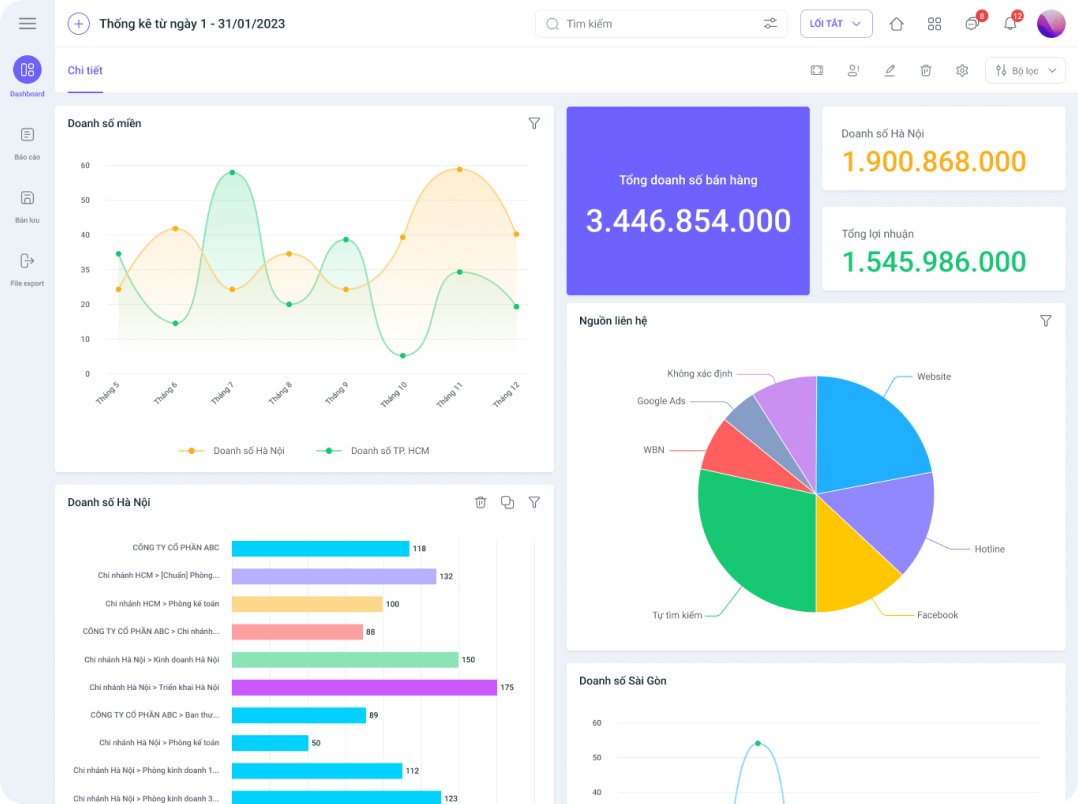
- Supports centralized management and storage of customer information
- Detailed customer segmentation, quick updates on transaction statuses and interaction history.
- Allows for the automation of stages in the sales process, from quoting to contract signing.
- Visual charts help managers easily evaluate the effectiveness of each sales stage.
- Minimizes errors in the process and increases order processing speed.
- Multi-dimensional data analysis to optimize business strategy.
- Visual charts make it easy to evaluate the effectiveness of each sales stage.
6. Conclusion
Whether you are a CEO, a manager, or a startup founder, understanding and correctly applying business principles will help you not only avoid common risks and mistakes but also seize opportunities to break through. Business is not just a journey, but also the art of balancing strategy and core values.
















