


 12/05/2026
  7040 views
In business, many opportunities come not just from advertising or direct sales, but also from properly built relationships. BNI is a networking model that helps entrepreneurs, business owners, and managers connect, refer business opportunities, and expand their partner networks. This article will help you understand what BNI is, how this organization works, the benefits of joining, and things to consider before becoming a member.
Mục lục
- What is BNI?
- What is a Chapter in BNI?
- How does BNI work?
- What are the benefits of joining BNI?
- How to become a BNI member
- How to find a BNI Chapter near you?
- How much is the BNI membership fee?
- Notes for Vietnamese entrepreneurs when joining BNI
- Risks & Limitations of Joining BNI
- Strategies to Maximize Benefits from BNI
- Frequently Asked Questions
What is BNI?
BNI (Business Network International) is a global business networking organization, founded in 1985 in California, USA. BNI provides an environment where businesses can build relationships, share information, and find business opportunities in a positive and supportive setting.
Notably, BNI has strict regulations regarding business categories, ensuring that only reputable and high-quality businesses are allowed to join. Therefore, joining BNI is not just about enhancing your business’s reputation, but also an opportunity to find trustworthy partners and associates.

As of June 2024, BNI has 11,135 Chapters with over 325,000 Members in more than 79 countries worldwide, 85% of whom are business owners. The remainder are senior corporate leaders with pricing authority.
In Vietnam alone, BNI has 9,112 Members in 218 Chapters across regions and 32 major provinces and cities, including Ho Chi Minh City, Hanoi, Hai Phong, Quang Ninh, Hai Duong, Da Nang, and more.
What is a Chapter in BNI?
A Chapter in BNI can be understood as a local branch. In each chapter, every member has exclusivity for their business category; no two members share the same profession, eliminating internal competition within the Chapter.
All participating members are business owners or individuals with the highest authority on the pricing of the products or services they provide. To join a Chapter, an applicant’s business category must not overlap with an existing one in that Chapter. If it does, they must find another Chapter with an open spot or a new Chapter that is in its formation stage.
The principle of non-overlapping professions now has some flexibility in cases where members, despite being in the same field, serve entirely different target customers. This is ultimately determined by each Chapter during the member vetting process to see if they meet the requirements.
How does BNI work?
BNI operates on a networking model where members share information about their products, services, and business opportunities with each other. Each BNI chapter has 20-50 members, representing different business sectors in the local area.
Each week, BNI members meet for 60-90 minutes to exchange information and share business opportunities. Members have a short time to introduce their business and learn about other members. Additionally, during each meeting, one member will have time to present on a business-related topic or provide useful knowledge to other members.
After each meeting, members can also exchange more information and get to know each other during a free networking period. Relationships and consensus among members are crucial elements of BNI’s operations. This helps create a positive and trustworthy environment for businesses.
Role of the Chapter President
Each Chapter has a President who is responsible for organizing and managing the Chapter’s activities. The President’s roles include:
- Managing and developing the Chapter: Ensuring the Chapter maintains a full membership and a diversity of business sectors. Additionally, the President must ensure that relationships among members remain positive and that trust is built.
- Supporting new members: The President will guide new members on the Chapter’s procedures and activities. They will also ensure new members can find business opportunities within the Chapter.
- Coordinating meetings: The President will plan and coordinate the Chapter’s meetings. They will also manage the time to ensure each member has an opportunity to introduce their business.
- Introducing topics: Each week, the President will introduce a new topic for the meetings. This helps enhance the business knowledge and skills of the members.
BNI Rules and Standards
BNI has very strict rules and standards to ensure the quality of the organization’s operations. BNI members must adhere to these rules, including:
- One representative per business category: Only one business representing each business category is allowed to join a Chapter. This helps ensure diversity and eliminates direct competition among members within the Chapter.
- Confidentiality: Each member is required not to disclose information about ongoing or upcoming business relationships within the Chapter. This helps protect privacy and respects the trust among members.
- Attendance policy: Members must comply with the attendance policy for meetings; excessive absences will result in removal from the Chapter. This rule helps ensure professionalism and the effectiveness of BNI’s activities.
What are the benefits of joining BNI?
Build relationships and expand your business network
BNI provides businesses with a platform to build relationships and expand their business network. Interacting and connecting with other businesses in the Chapter helps you gain new business opportunities and enhance customer trust.
Find reliable partners and associates

BNI is a curated business community, so you can find reliable partners and associates in various fields. This makes project and business development easier.
Promote and reach potential customers
Joining BNI also helps promote your brand and products to a large pool of potential customers. Therefore, if you want to expand your business operations, joining BNI is an opportunity not to be missed.
BNI is not only a place to build relationships and find business opportunities, but also a place to learn and share business knowledge. With the presence of successful entrepreneurs in the Chapter, you can learn valuable experience and knowledge for developing your business.
How to become a BNI member
To become a BNI member, you need to follow these steps:
- Attend a meeting at a local BNI Chapter: Before joining BNI, you need to attend at least two meetings of a local BNI Chapter to understand the activities and procedures of this organization.
- Apply to join a chapter: After choosing a Chapter that suits your business field, you need to fill out the application form and pay the application fee.
- Interview with the Chapter President: After applying, you will have an interview with the BNI Chapter President to introduce your business and ensure you are eligible to join this organization.
- Wait for the result and start participating: Once approved, you can officially become a BNI member and start participating in the Chapter’s meetings and activities.
How to find a BNI Chapter near you?
If you are interested in joining BNI, there are several ways to find and contact a local BNI Chapter:
- Method 1: Search on the BNI website
The official BNI website provides a list of active Chapters in Vietnam and other countries. You can easily find and contact a local BNI Chapter via the email address or phone number provided on the global website at: https://bni.vn/
- Method 2: Contact a BNI Representative
Besides the website, you can also contact a BNI Representative in Vietnam for guidance on finding and joining a local BNI Chapter.
- Method 3: Search on social media
BNI also has some Chapters active on social networks like Facebook or LinkedIn. Joining these Chapters will also help you connect with other businesses and find business opportunities in an online environment.
How much is the BNI membership fee?

BNI membership fees vary by country and region. Therefore, you should contact your local BNI Chapter directly for specific costs. However, BNI fees typically include:
- Application Fee: This is the fee you must pay when applying to join a local BNI Chapter.
- Recurring Membership Fee: This fee is charged monthly or annually and must be paid to maintain membership in the organization.
- Investment Fee: In addition to the fees above, some BNI Chapters require members to pay an initial investment fee to ensure the member’s sincerity and commitment to the organization.
Notes for Vietnamese entrepreneurs when joining BNI
Focus on building relationships
BNI is not a place to sell or advertise your products. Instead, you should focus on building relationships and finding business opportunities in a positive and professional environment.
During your business presentation, always share truthful and specific information about your products or services. This helps other members better understand your business and refer suitable business opportunities to you.
Participate Actively and Dedicate Enough Time
To get the most benefit from participating in BNI, you need to attend meetings regularly and actively. At the same time, dedicate enough time to build relationships and seek business opportunities within the Chapter.
Adhere to BNI’s Principles and Regulations
To maintain professionalism and transparency in operations, you need to adhere to BNI’s principles and regulations. This helps maintain a positive and effective working environment for all members.
Risks & Limitations of Joining BNI
Joining BNI offers many opportunities to connect and expand business relationships, but results are not always immediate. Businesses need to have a realistic perspective and prepare mentally and financially before joining.
Some common risks and limitations include:
- High maintenance costs: In addition to the initial registration fee, members must pay an annual maintenance fee, along with costs for attending meetings, networking, or entertaining clients. If not utilized effectively, the ROI can be low.
- Time-consuming: Meetings typically last 1.5–2 hours and are held weekly. If business owners cannot maintain a regular schedule, it can easily lead to “just showing up” without achieving results.
- Results are not immediate: BNI is an environment built on trust. Businesses need to be patient in building credibility before receiving quality referrals. Expecting to “join and get orders immediately” will likely lead to disappointment.
- Risk of an inactive Chapter: Not every Chapter has active members. If a Chapter is merely formal with few referrals, opportunities will be limited.
- Pressure to comply with regulations: BNI has strict rules regarding attendance rates, referral reporting, and timely fee payments. Violations can result in warnings or removal from the Chapter.
Businesses should prepare mentally & financially as follows:
-
Recognize BNI as a long-term investment channel, not a way to “close deals immediately.”
-
Budget for membership fees, client entertainment, gifts, and networking.
-
Prepare for at least 6–12 months to build credibility and relationships before expecting revenue.

Strategies to Maximize Benefits from BNI
To avoid a situation of “wasting money and time for nothing,” businesses need to proactively build an effective BNI participation strategy instead of just “showing up for meetings.” BNI operates on trust, relationships, and giving, so the right approach will determine how much value you receive in return.
Prepare an Impressive & Distinctive Pitch
At each BNI meeting, you only have 30–60 seconds to introduce yourself and your business. This is your opportunity to be remembered, which can lead to referrals to potential customers.
-
Prepare an elevator pitch in advance: concise, easy to understand, and highlighting your USP (Unique Selling Point). For example, instead of saying “We provide marketing services,” say “We help SMEs increase revenue by 30% in just 3 months with our comprehensive multi-channel marketing solution.”
-
Diversify your presentation each week: change customer examples, share successful case studies, or include specific data to make an impression.
-
Use memorable language: provide a “memory hook” (e.g., “Think of me when you hear someone complain about chaotic HR management”). This helps members easily make connections and refer you at the right time.
Example: A member in the legal field can alternate their presentation: this week, they talk about labor law; next week, they share a successful dispute resolution case. This keeps the message fresh and increases the likelihood of referrals.
Track Referrals & Report Transparently
A referral is not just a “list of potential customers” but also a measure of trust within the Chapter. BNI members will typically prioritize referring to those who are professional and responsible.
-
Keep detailed records: every referral received or given should include detailed information (name, needs, stage).
-
Act quickly: contact referrals immediately upon receipt to not miss opportunities and to show respect for the referrer.
-
Report back on the results: provide information on whether the referral converted and what the customer’s feedback was. This helps the Chapter evaluate effectiveness and build trust.
Example: When you receive a referral from a member, proactively report back: “Thank you, Mr. A, for the introduction. I have met with the client and am conducting a demo. I will update you if the contract is successful.” → This approach helps the referrer trust that the referrals they provide are truly valuable.
Networking Outside of Official Meetings
BNI doesn’t just stop at weekly meetings. The greatest value comes from building personal relationships outside of business hours.
-
Organize 1-to-1 meetings: this is the “key” to BNI. Each 1-to-1 meeting helps both parties gain a deeper understanding of each other’s products/services, target customers, and how to support one another.
-
Participate in community events & Chapter activities: seminars, charity events, team building… These are opportunities to build personal connections, thereby enhancing trust and leading to higher-quality referrals.
-
Maintain long-term connections: send birthday wishes, follow on LinkedIn, share useful content. These small actions make a big difference in maintaining relationships.
Example: An interior design business not only attends weekly meetings but also regularly invites other members to visit their showroom. As a result, members understand the products better and can confidently refer clients.
The “Give First, Receive Later” Mindset
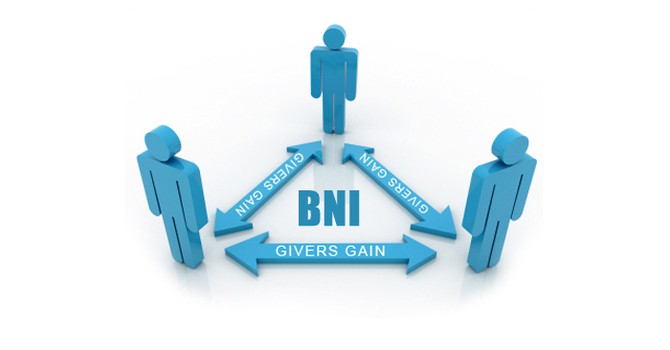
One of BNI’s core philosophies is “Givers Gain” – those who give will receive. Instead of focusing solely on how many referrals you get, start by actively referring clients to others.
-
Refer clients from your personal network to BNI members.
-
Share articles and products of other members on social media to increase their visibility.
-
Provide testimonials for services you have actually experienced.
When you become a “value creator” in the Chapter, other members will be more inclined to refer business back to you.
Frequently Asked Questions
Should small businesses join BNI?
Yes, if the business needs to expand its network and find new business opportunities. BNI is particularly suitable for those willing to invest time in building long-term relationships, not just for finding immediate clients.
How is BNI different from other networking communities?
The main difference is that each chapter allows only one representative per profession, which prevents direct competition within the same group. BNI also operates on a model of regular meetings, referral sharing, and has stricter participation rules than many typical networking communities.
How many people are in a BNI chapter?
A BNI chapter typically has around 20–50 members, representing different fields in the same area.
Is attending weekly meetings mandatory in BNI?
Yes, because BNI operates through weekly meetings that last about 60–90 minutes. If a member is absent too many times, they can be removed from the chapter.
How do I know which BNI chapter is right for me?
You should choose a chapter that has an open spot for your profession, has a member base that aligns with your target customers, and is conveniently located for regular attendance. The article also mentions that if your profession is already taken in a chapter, you will need to find another chapter or a newly forming one.
The above is a complete summary of the information Vietnamese entrepreneurs need to know about the organization, what BNI is, and important considerations. We hope the information in this article helps you understand the benefits and risks of joining BNI.
















