


Digital Transformation in Banking: Adapting for Global Integration


In recent years, the banking sector has adopted many new technologies, causing significant changes not only in financial structures but also in the way traditional transactions are conducted. This has pushed banks to rapidly adopt digital transformation, adapting flexibly to meet the increasingly diverse needs of customers. In the article below, 1Office shares the current situation, challenges businesses face in digital transformation in banking today, and proposes breakthrough solutions to help businesses in the industry advance further on their digital transformation journey.
Mục lục
- What is digital transformation in the banking industry?
- Why is digital transformation necessary in banking?
- The current state of digital transformation in the banking sector
- What are the benefits of digital transformation in the banking industry?
- Top challenges in banking digital transformation
- New technology solutions supporting the banking industry’s digital transformation
- 1Office – Partnering with banking industry businesses for sustainable digital transformation
What is digital transformation in the banking industry?
Digital transformation in the banking sector is the process of integrating digital technologies and innovative strategies into the financial services industry, with the goal of comprehensively changing how banks operate. From customer outreach to risk management and internal operations, every aspect of banking is undergoing a transformation.
This process involves modernizing the systems, processes, and business models of traditional banks. This allows banks to provide services seamlessly, conveniently, and securely through various digital channels. Key elements in this transformation include the development and deployment of mobile applications, online banking services, artificial intelligence (AI), blockchain, and big data processing (Big Data), among others.
Why is digital transformation necessary in banking?
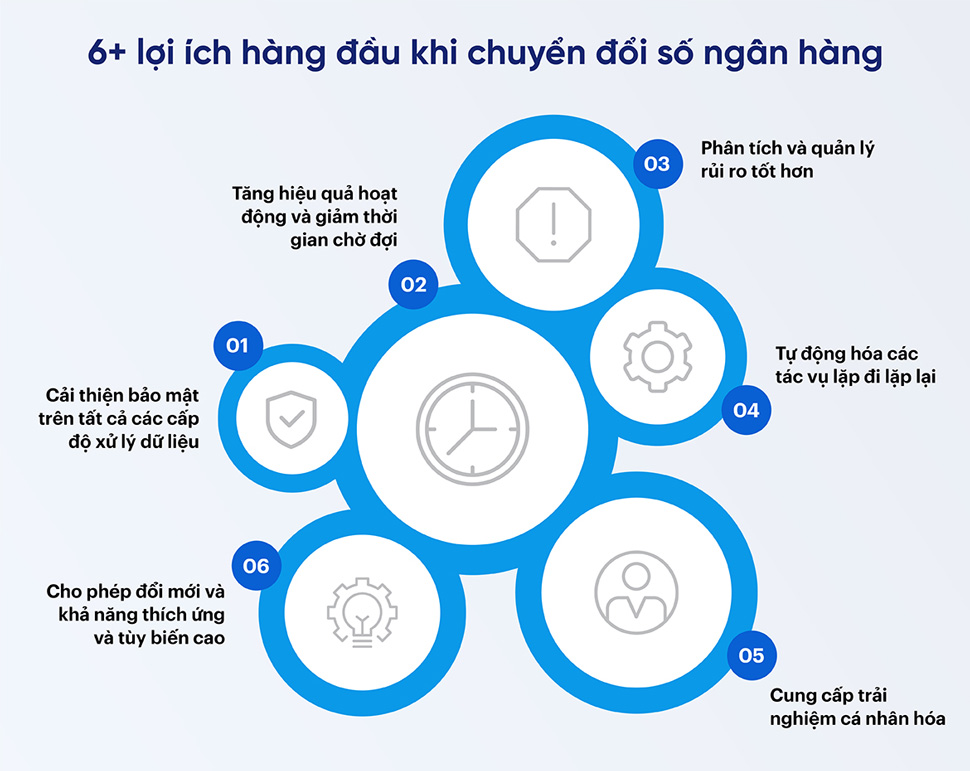
Meeting user needs
The growing preference of users is shifting from offline to online, making cashless payments, transferring money, paying bills, checking balances, and viewing transaction history with just a few taps on their mobile phones. For this reason, banks are undergoing digital transformation to best meet user needs. A prime example is the proliferation of digital and online banks like Timo Bank, TP Bank, etc., aimed at improving the customer experience.
Competitive pressure in the banking industry
The rise of online banks and financial technology (fintech) companies has created intense competition in the banking sector. Traditional banks need to recognize that digital transformation is essential to compete with these rivals. By offering digital services, banks can retain existing customers and attract new ones.
Consumers increasingly demand convenience and a smoother banking experience. They expect to be able to perform banking transactions quickly and conveniently through electronic channels. Digital transformation allows banks to meet these demands, thereby strengthening their competitive edge against other banks and fintech companies.
Reaching customers at a lower cost

Using digital banking channels like mobile apps helps minimize operational costs compared to maintaining a network of traditional bank branches. Online transactions and the automation of financial processes both contribute to reducing time, manpower, and expenses.
The digital transformation process allows banks to automate many processes and services. For example, customers can perform automated transactions like transferring money, paying bills, or checking balances without the intervention of bank staff. This helps banks reach customers more easily without incurring significant costs and manpower.
Digital banking also provides self-service tools for customers, such as chatbots, automated customer service, and virtual assistants. This allows customers to find information, receive support, and resolve basic issues without needing to contact bank staff directly. This helps reduce service costs while providing a 24/7 self-service experience for customers.
The emergence of digital products
Financial technology (fintech) companies have emerged with new digital products/services, intensifying competition in the banking sector. Often focusing on convenience and a better user experience, fintech offers mobile apps, e-wallets, online lending services, and buy-now-pay-later options. To compete with fintech, traditional banks need to undergo digital transformation and provide similar products/services to meet customer demands.
Customers increasingly expect a more convenient, flexible, modern, and professional banking experience. Digital products like mobile apps, e-wallets, online payments, and online banking access have become an important part of their daily lives. To meet this demand, banks need to quickly transform digitally to provide convenient and easy-to-use tools and services.
The current state of digital transformation in the banking sector
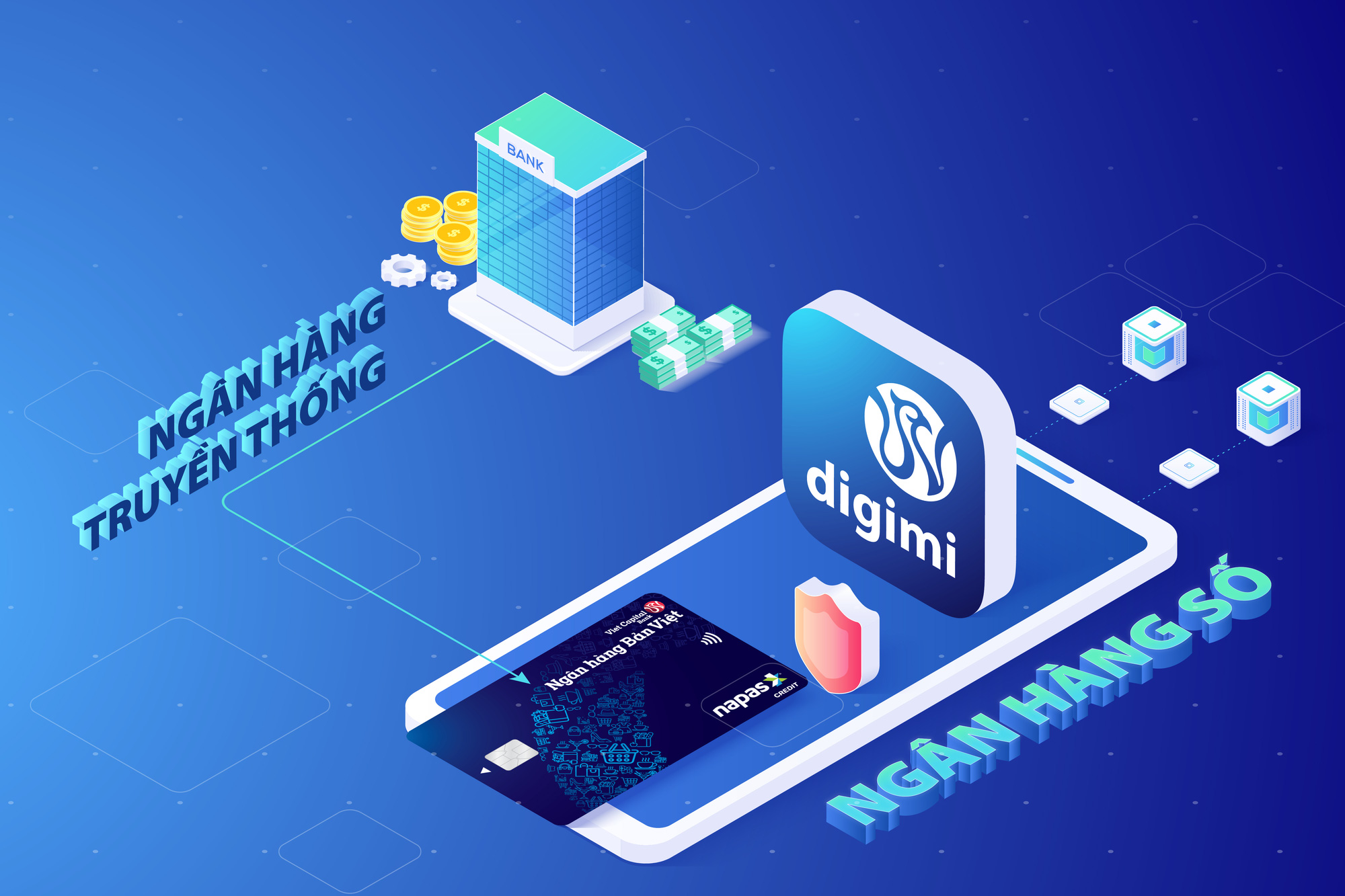
The banking industry in Vietnam is considered one of the leading sectors in the digital transformation process, successfully integrating the achievements of the fourth industrial revolution into management and business.
In Vietnam, two digital banking development models are being successfully implemented: digitizing existing banks and combining digitization with the development of new digital banks. Both models operate concurrently, sharing a common infrastructure but with significant differences in customer interaction.
Digitization of existing banks model
In this model, the bank digitizes parts of its operations, processes, and products/services to interact directly with customers. This model uses a unified multi-channel platform, focusing on the customer experience. The advantages of this model include minimizing physical interactions, enhancing the customer experience, and improving business performance.
Combined digitization and digital bank development model
This is the process of establishing a new digital bank within the existing banking system. A typical example of this model is Vietcombank (Bank for Foreign Trade of Vietnam) with its VCB Digibank service, which unifies online transaction platforms to replace the previous Internet Banking and Mobile Banking services.
In fact, the banking industry has proactively completed the first phase of digital transformation. According to a 2018 survey by the State Bank of Vietnam, 94% of banks had started implementing or were researching and developing a digital transformation strategy, with 59% having already begun practical implementation. This means that only 6% of banks did not have an overall digital transformation strategy.
To date, the finance and banking industry has achieved the following significant digital transformation milestones:
- Completed the development of a policy framework related to the application of scientific achievements in general and non-cash payments in particular. Supplemented data safety and security policies, as well as improved the information technology system.
- Issued standards for QR code technical specifications and domestic chip card standards.
- Developed information technology infrastructure, payment infrastructure, and credit information infrastructure. Connected banking infrastructure with other infrastructures to create a digital ecosystem.
- Supported the development of Fintech companies and enhanced cooperation between banks and Fintech companies.
- Strengthened communication efforts about digital banking to the general public and businesses.
What are the benefits of digital transformation in the banking industry?
When participating in the digital transformation process, not only do organizations in the banking sector benefit, but users and the community as a whole also gain many practical advantages.
Benefits for businesses in the banking sector
Digital transformation in banking brings two fundamental benefits: reducing transaction costs and increasing profits. For example, by implementing digitization through the adoption of e-invoices instead of paper invoices, Saigon Thuong Tin Commercial Joint Stock Bank has saved 10 billion VND per year.
These changes help the banking system in Vietnam enhance its competitiveness and expand its ability to provide services to everyone, especially those in remote and rural areas where frequent travel is difficult. Furthermore, with a high smartphone usage rate (72%) and 62 million 3G and 4G subscribers connected to the Internet, Vietnam creates favorable conditions for organizations to promote and reach customers.
Benefits for customers using the services
Data from PwC’s 2019 Global Consumer Insights Survey, involving 27 countries and territories worldwide, indicated that Vietnam was the fastest-growing market for mobile payments in 2019. The percentage of consumers using mobile payments increased from 37% (in 2018) to 61% (in 2019).
By reducing travel time, consumers can still use services quickly and efficiently for their work. As a result, satisfaction rates and the likelihood of customers returning to use the bank’s services have also increased significantly.
However, the current coverage of financial services, especially lending services in rural areas, is still low. Therefore, digitization will help these potential customers more easily access a diverse banking system, including sectors such as finance, healthcare, insurance, and tourism.
Top challenges in banking digital transformation
Along with the advantages and benefits, digital transformation in banking also presents many challenges for businesses and organizations.
Information security challenges

Information security in businesses is always a top concern for financial and banking institutions, as the use of technology can easily create vulnerabilities in security systems.
According to the latest report on information security in Vietnam by the International Telecommunication Union (ITU), our country currently ranks 50th in the world for information security. This ranking is only average.
Besides protecting the company’s own data, the security of customers’ personal information is also a critical issue for businesses, especially banks. Because the internet’s structure and purpose is an open network, financial transactions can face risks of fraud and theft of users’ OTP codes. To address this, banks have strengthened their security systems and simultaneously launched awareness campaigns to improve customers’ information security knowledge in the online environment.
Perfecting the legal framework for digital transformation activities in banking and Fintech
As mentioned earlier, digital transformation in banking is an inevitable trend. However, to minimize negative impacts, authorities need to quickly develop policies that are suitable for the operating models and new entities participating in the provision of banking services…
Although the current legal system is quite comprehensive, it is still necessary to review and adjust legal limitations to prevent all risks of fraud. Some actions that should be prioritized for early implementation include:
- Completing the national population database to create a channel for sharing and connecting between service industries such as banking, telecommunications, and insurance.
- Specifying regulations on user data protection, digital identification, transaction security, and information security.
- Building a regulatory sandbox for digital transformation activities in banking.
Controlling external partners
Often, banks and financial institutions cannot carry out all the steps of the digital transformation process on their own. Teams often choose to hire a second or third-party partner to provide digital banking services. This is because developing and operating a digital banking system or integrating it with an existing system is a very complex task that requires high-level expertise.
However, outsourcing also brings challenges regarding information security and issues related to handing over control of important data. Therefore, banking organizations and financial enterprises need to carefully consider and find reputable partners to collaborate with.
New technology solutions supporting the banking industry’s digital transformation
Digital transformation in banking needs to be implemented strongly to achieve a deep understanding of customers, align with market trends, improve service quality, and enhance competitive strength. In this process, organizations cannot overlook the following technology solutions to optimize their digital transformation:
Electronic payments

Electronic payment solutions, including electronic payment gateways, cards, or e-wallets, all help users save transaction time. For users, they not only minimize complex payment processes but also ensure a high level of security, while helping to reduce operational costs for banking institutions.
Blockchain and Digital money
In the banking sector, Blockchain technology is often known through cryptocurrencies like Bitcoin. However, in reality, Blockchain’s applications appear in most automated payment cycles, including:
- Signing Smart contracts between relevant parties.
- Enhancing the organization’s supply chain.
- Storing and securing customer orders and complaint information.
- Limiting information errors through duplicate filters.
Artificial Intelligence (AI)
Artificial intelligence helps businesses in the finance and banking industry analyze multi-channel data, quickly detect and trace unusual transactions, and reduce the rate of financial fraud activities such as money laundering. Additionally, AI performs analysis of psychology, behavior, and personalizes experiences. Based on this, it can automatically suggest offers and financial programs suitable for each customer.
Comprehensive enterprise management and business support software

Register for a free 1Office feature demo account
Support from comprehensive business and operational management software is gradually becoming a decisive factor for the success and sustainable development orientation of businesses. Integrated or standalone management software not only helps businesses maintain smooth operational processes but also saves significant labor, time, and administrative effort, thereby creating opportunities for growth and performance optimization.
Some typical benefits that business management software provides:
- Optimize business processes: The software helps automate many business processes, from daily transactions to risk management. This helps minimize manual procedures, enhance work efficiency, and reduce the likelihood of errors.
- Support in-depth data analysis: The software enhances data analysis capabilities, providing detailed information on customer behavior, market trends, and financial forecasts. This helps banks make smart, flexible, and quick decisions.
- Security and risk management: With fraud tracking and detection capabilities, banking security software ensures the safety of customer data and transactions. It also supports banks in managing financial risks and complying with industry regulations.
- Save operational costs: Automating processes and digitizing tasks helps reduce operational costs, from personnel expenses to paperwork and transportation costs.
1Office – Partnering with banking industry businesses for sustainable digital transformation
For nearly a decade, 1Office has gradually built a comprehensive business management software solution, researched and developed based on a scientific, consistent thinking method, combined with a modern technology platform to ensure unity, coherence, and comprehensiveness.

1Office has consulted and implemented digital transformation support solutions for over 5,000 clients, with more than 450,000 users from organizations, businesses, and large corporations across Vietnam. 1Office is confident in helping businesses in the finance and banking industry save 90% of their time, labor, and operational and management costs with 3 main modules:
- Project & Task Management – 1Work: A solution that helps you plan, track, and manage all types of work, fully integrated with features for comprehensive task and project management from creation, monitoring, tracking, reminders, reporting, evaluation, and more.
- Human Resource Management – 1HRM: A powerful support tool that helps businesses manage various HR-related issues such as recruitment, payroll, insurance, management, storage of employee records, performance reviews, etc.
- Sales Management – 1CRM: Integrates a full suite of features for sales and customer care, including information management, sales management, marketing campaign management, and more. By integrating smart features like automatic email sending, customer care calls, and interaction history logging, it helps businesses organize information and track customer care activities in the most optimal way.
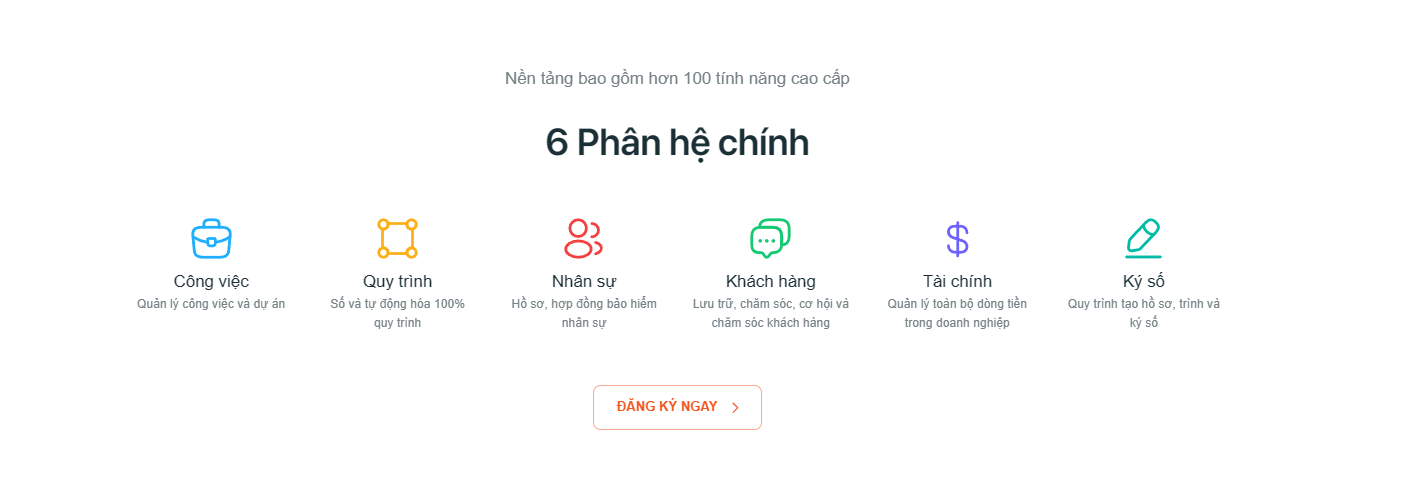
With the features above, 1Office is the leading comprehensive business management solution in Vietnam, helping managers optimize business operations:
- Enhance operational efficiency: 1Office provides banks with a comprehensive management software solution, helping to enhance the bank’s operational efficiency by optimizing processes, reducing processing time, and strengthening data analysis capabilities.
- Optimize integration capabilities: 1Office has strong integration capabilities with third-party software via API, Webhook, or built-in integration gateways such as SMS, Zalo OA, Email, Call Center, IVAN, etc., helping to enhance the bank’s integration capabilities.
—————————-
The above is all the important information related to digital transformation in banking. We hope that with this article, 1Office has helped you clearly understand the benefits, challenges, as well as the opportunities and solutions to help businesses in the finance and banking industry achieve sustainable digital transformation. Don’t forget that 1Office is always ready to accompany your business on the digital transformation journey ahead. Contact 1Office’s experienced team of consultants now for a live demo experience!




