


 12/05/2026
  302 views
Employee evaluation is one of the most important and indispensable tasks in a company’s human resource management. It is the process of assessing and re-evaluating the capabilities, skills, and work performance of employees in the company. In this article, we will explore the 7 most accurate employee evaluation methods, along with standard, comprehensive, and effective employee evaluation templates.
Mục lục
- What is employee evaluation?
- Why is employee evaluation necessary?
- When to evaluate employees
- The standard 5-step employee evaluation process
- Common criteria for accurate employee evaluation
- 4 Golden rules for effective employee evaluation
- Common Employee Evaluation Methods
- Mistakes to Avoid When Conducting Personnel Evaluations
- Easy and Effective Personnel Evaluation with KPI/OKR using 1HRM
What is employee evaluation?
Employee evaluation is the process of assessing and re-evaluating the capabilities, skills, and work performance of employees in a company. It helps the business get a comprehensive overview of its employees and, from there, make appropriate decisions to improve and develop its human resources. Employee evaluation is not just about ranking employees; it is also an opportunity for employees to self-assess and receive feedback from their superiors about their strengths and areas for improvement.

The objectives of employee evaluation that a business should focus on include:
- Evaluating work performance: Evaluating employee work performance is the most important objective of employee evaluation. Through this assessment, the business can determine the extent to which employees complete their tasks, which allows for decisions regarding rewards, discipline, promotions, etc.
- Assessing capabilities: Capability assessment helps the business determine the competencies, professional skills, and expertise of its employees. From this, the business can build suitable training and human resource development plans.
- Assessing development potential: Assessing development potential helps the business determine an employee’s future promotion prospects. From this, the business can create appropriate employee development plans.
Why is employee evaluation necessary?
Employee evaluation plays a crucial role in a company’s human resource management. Here are the main reasons why employee evaluation is necessary:
Determine employee capabilities and performance
Employee evaluation provides the business with a clear view of each employee’s capabilities and work performance. Based on this, superiors can make decisions about work assignments, training, or promotions that are suitable for their employees’ abilities.
Improve employee work performance
Employee evaluation helps employees receive feedback on their strengths and areas for improvement. From this, they can self-assess and strive to improve their work performance to achieve better results.
Build a positive work environment
Employee evaluation gives superiors a comprehensive view of employee satisfaction and development. Based on this, they can implement measures to improve the work environment and create favorable conditions for employee growth.
When to evaluate employees
Employee evaluations can be conducted on a regular cycle or when there is a specific need. Here are the situations where it is necessary to evaluate employees:
- When a new employee joins the company: Evaluating new employees gives the business a clear view of their capabilities and work performance, allowing for appropriate decisions to help them adapt and grow within the company.
- When there is a change in job roles: When an employee is transferred to a new position or has a change in duties, an evaluation helps superiors get a clear view of their abilities and performance in the new role.
- At the end of a work period: Evaluating employees at the end of each work period (usually 6 months or 1 year) gives the business a comprehensive overview of their capabilities and performance over that time.
The standard 5-step employee evaluation process

Step 1: Define objectives
First, define the objective of the evaluation process. This could be to assess the capabilities of specific employees to see if they meet the company’s requirements and can become permanent employees or be promoted. For periodic evaluations, the objective is usually to assess the employee’s level of task completion and whether they have developed their capabilities. This is demonstrated through specific indicators, such as revenue achieved, number of successfully supported customers, number of tasks completed, completion rate, etc., and other factors depending on the specific position and situation.
Step 2: Choose an evaluation method
From the defined objectives, the business will determine the metrics to be measured and select a suitable employee evaluation method. Currently, many popular methods are used, such as performance evaluation by KPIs, using the Balanced Scorecard (BSC), applying competency scales, 360-degree feedback, MBO, OKRs, etc. Each method offers unique advantages and focuses on specific metrics.
Businesses are not required to apply a single evaluation method for all employees; flexibility is needed, especially when different departments or units have different job characteristics.
Step 3: Conduct the employee evaluation
To conduct an employee evaluation, first, the evaluation method must be clearly described, and the implementation time must be set so that both managers and employees are aware. This helps all company members understand the process and criteria, thereby ensuring that the evaluation process is continuous and rigorous.
The business needs to prepare detailed evaluation forms to record the results. Currently, some businesses have switched to using evaluation software to enhance accuracy and transparency. Whether using traditional forms or software, the employee evaluation process should be implemented regularly and periodically. The evaluator must maintain an objective and fair mindset, avoiding any bias.
Step 4: Review the evaluation results
The evaluation results need to be approved at multiple levels and fully communicated to the employees. This helps employees understand their capabilities and gives them the opportunity to build on positive results or improve on weaknesses.
An important point to note when reviewing evaluation results is receiving feedback. Sometimes, the person being evaluated may not fully agree with the results, and they have the right to provide feedback. Typically, the HR department or management will receive and address this feedback. This process helps ensure two-way interaction and minimizes errors in future evaluations.
Step 5: Improve employee quality based on the review
Managers will use the evaluation results to make personnel-related decisions. Specifically, this includes decisions about hiring probationary employees, promotions, salary increases, transfers, terminations, rewards, disciplinary actions, and many other decisions.
The metrics in the evaluation report are also the clearest evidence of the entire company’s performance. Managers will review them to ensure that the overall objectives and implementation processes are properly aligned. From there, they will draw conclusions and propose solutions for issues, consider the feasibility of goals, and decide whether adjustments are needed.
>>>Read more: 5 Steps to Build the Most Standard and Effective Employee Evaluation Process
Common criteria for accurate employee evaluation
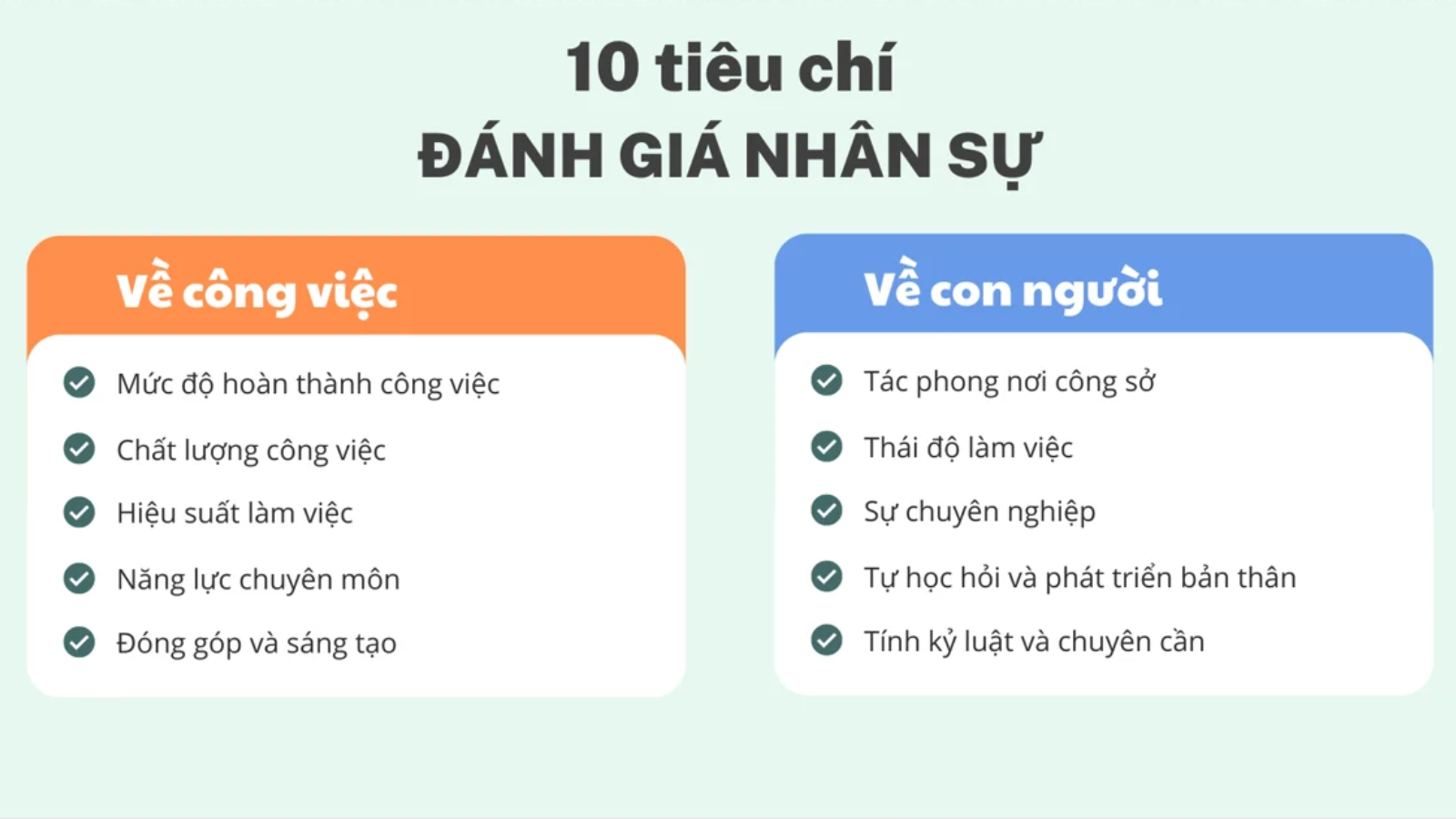
To evaluate employees accurately and effectively, superiors need to define clear and specific evaluation criteria. Below are some of the most basic and common employee evaluation criteria:
Work performance
The performance evaluation criterion is a crucial factor in employee assessment, helping the organization gauge the contribution and productivity of its employees. It also helps identify competency or skill issues that need improvement or further development. To achieve success, businesses need employees who are flexible, efficient, and productive.
However, the performance evaluation process must be conducted fairly and transparently, and evaluation standards must be established beforehand to ensure objectivity and accuracy. Furthermore, conducting regular evaluations is important to help the organization track the work progress of its employees.
Goal/KPI completion
This criterion assesses an employee’s ability to perform their job. Superiors will evaluate whether the employee has the necessary competencies and skills to carry out their work. While performance can be assessed using qualitative and subjective factors, goal achievement becomes a suitable criterion for employee evaluation. This is because this factor can be quantified through a specific and clear number.
Teamwork ability
Teamwork skills play an extremely important role in environments that demand creativity. Effectiveness in teamwork not only helps increase productivity but also delivers higher-quality products/services, while fostering a team spirit within the organization.
During the employee evaluation process, the leadership factor in projects and discussions should also be considered. In this regard, the key questions are: Do they take responsibility and guide the team on the right track? Are they able to motivate and treat all team members fairly?
Work attitude
An employee’s morale and work attitude greatly affect their work performance. Evaluating an employee’s work morale gives superiors a clear view of their character and work attitude.
Today, when recruiting and training employees, many businesses still prioritize “attitude over aptitude.” This is because attitude is the decisive factor in an employee’s success and long-term commitment to the company. An employee’s attitude and work morale are often evaluated through aspects such as discipline, honesty, cooperation, and willingness to learn.
4 Golden rules for effective employee evaluation
Objective, Fair Evaluation
To effectively evaluate employee performance, HR needs to establish a clear system of evaluation criteria, prioritizing quantitative over qualitative aspects. Based on this system, managers have a basis to determine whether an employee meets the job standards.
Evaluating employees based on personal feelings without adhering to criteria can lead to inconsistency. If the criteria are unclear or contain too many qualitative factors, the evaluation process can become arbitrary and lead to the loss of talent. Clarity in criteria helps employees know what their evaluation is based on, how to work, and how they can improve their work performance.
Comprehensive Evaluation
To evaluate employee work performance, managers need to conduct a comprehensive assessment, focusing not only on results but also on the work process. Furthermore, managers must conduct a thorough evaluation and observation to ensure accurate results, while providing specific examples of strengths and weaknesses that need improvement.
There are many different methods for evaluating employee performance, including using scorecards, KPIs, the assessment center method, and many others.
Evaluation Must Be Flexible

Managers can easily evaluate employees based on pre-determined criteria. However, if they rely solely on quantitative criteria and ignore qualitative factors, the evaluation process cannot be comprehensive and complete.
Therefore, it is necessary to establish a flexible employee evaluation process, using criteria appropriate for each specific job position. This means it is not necessary to apply the same set of criteria to all different positions.
Two-Way Evaluation
Leaders should not unilaterally impose their views and evaluations on subordinates. Instead, managers should create conditions for employees to self-evaluate, helping them become aware of their tasks and more proactive in their work. Through this, a two-way evaluation process will create objectivity and enhance work efficiency.
Employee evaluation criteria can also include feedback from customers, colleagues, etc. Especially for employees in customer-facing roles, seeking direct feedback from customers is also an effective way to assess that employee’s capabilities.
Common Employee Evaluation Methods
Evaluating Personnel by KPI
Key Performance Indicator (KPI) is a very popular evaluation method that can be applied in all company departments due to its high flexibility and customizability. KPIs are often cyclical over time.
Due to the diverse nature of work, specific KPI sets will differ. To measure accurately and fairly, the company needs to propose suitable criteria and KPI indicators for each specific department or activity.
>>> Read more: 6+ most complete and detailed KPI employee evaluation templates for all departments in 2022
Evaluating Personnel by MBO
Management by Objectives (MBO) is a method that encourages employee self-discipline, defines personal development paths, and encourages them to self-improve to achieve set goals. Communication between employees and managers is important to build objectives based on the SMART (Specific, Measurable, Achievable, Relevant, and Time-bound) goal-setting method.
Integrating the MBO method into HR processes helps improve employee performance, while committing to goals and clarifying the path forward.
Evaluating Personnel by OKR
OKR – Objective and Key Results, is a flexible method for evaluating work performance. Unlike KPIs, which are often fixed, OKRs allow for adjusting objectives and key results at specific times.
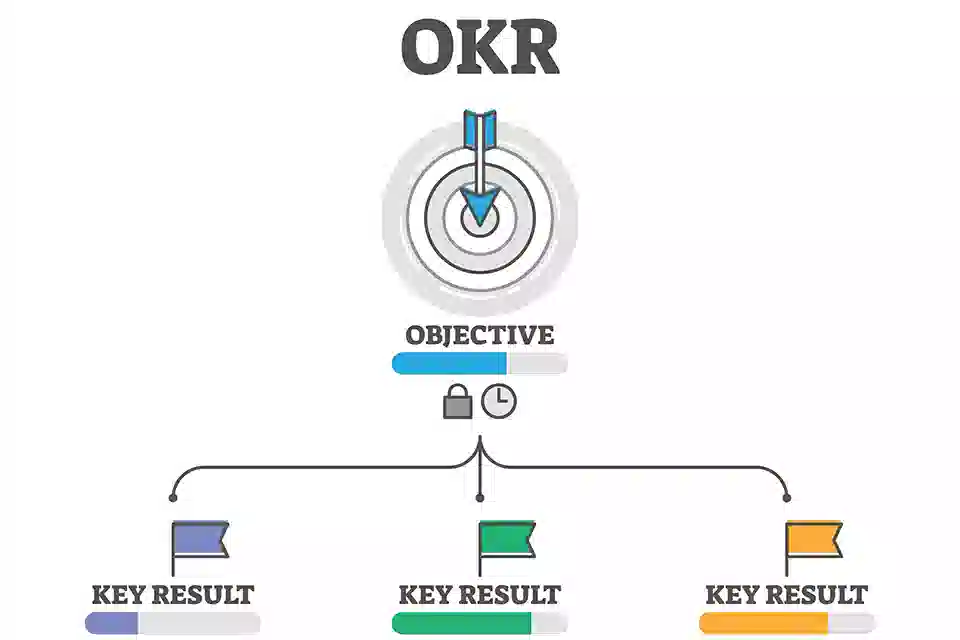
In the process of evaluating personnel using OKRs, the main focus is on setting goals and the ability to achieve them. OKRs focus on objectives at the company, department, and individual levels, with key results that need to be achieved. From there, specific actions can be outlined to implement the objectives.
360-Degree Feedback
360-degree feedback is a method that allows employees to receive confidential and anonymous feedback from multiple sources, including managers, colleagues, customers, and partners. This process requires 10-12 people to fill out a feedback form, providing an anonymous assessment of competencies, skills, and work performance.
Through this method, employees receive a multi-dimensional and objective evaluation on many aspects, including work capacity, skills, job performance, attitude, and suitability for the work environment.
Forced Distribution Evaluation (Incident Method)
Forced distribution evaluation is a method of classifying employees based on a fixed percentage, for example, 50% of employees are rated as average, 40% are classified as good, and 10% are rated as poor. This method is also accompanied by recommended rewards, penalties, or special actions for each group.
The advantage of this method is that it encourages employees to make an effort and can improve the work quality of the entire team. However, its disadvantage is that it can create excessive competition, reduce team spirit, and cause stress, especially if the distribution ratio is too strict.
Graphic Rating Scale
The graphic rating scale method can be applied to many different departments and positions. However, it should be noted that the rating scale will differ due to the different nature of jobs, and the construction of the scale needs to be done carefully.
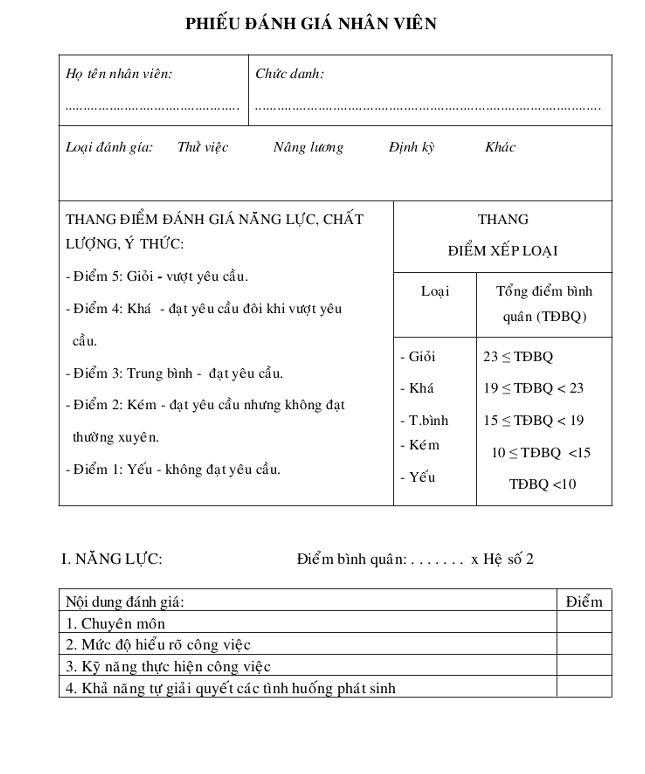
After employees are scored according to criteria, their competence is evaluated on a scale from good, fair, average, poor, to pass or fail. This score allows for performance comparison among employees and simultaneously identifies aspects that need further training and development for each individual.
>> Read more: 7 Effective and Easy-to-Apply Employee Evaluation Methods
Mistakes to Avoid When Conducting Personnel Evaluations
Personnel evaluation is receiving increasing attention in businesses, especially in organizations with a large number of employees. To ensure the effectiveness of this process, managers need to avoid the following mistakes:
- Evaluation not based on any specific standard, relying heavily on subjective thoughts, causing complaints, dissatisfaction, and creating instability in the organization.
- Applying one type of evaluation for all personnel, which is not suitable for the nature of the work, creating unfairness and a lack of flexibility.
- Only considering recent results without evaluating the entire work process, leading to a lack of fairness.
- Lack of a specific process and clear division of responsibilities, not identifying who is responsible for the employee’s self-evaluation or which manager is in charge, causing delays and a lack of approval.
- Not disclosing the results to employees, leaving them with no opportunity to improve themselves and develop their abilities.
- Collecting evaluation data manually, causing time-consuming data entry. The evaluation file system is inflexible, inaccurate, and not synchronized.
Easy and Effective Personnel Evaluation with KPI/OKR using 1HRM
1Office’s KPI management software is a key component of the business management system, effectively supporting comprehensive goal management, suitable for the business realities of the 4.0 era. With many smart features, this software helps to fully digitize workflows and centralize management on a single platform. This helps managers easily allocate, track, and evaluate goals effectively.
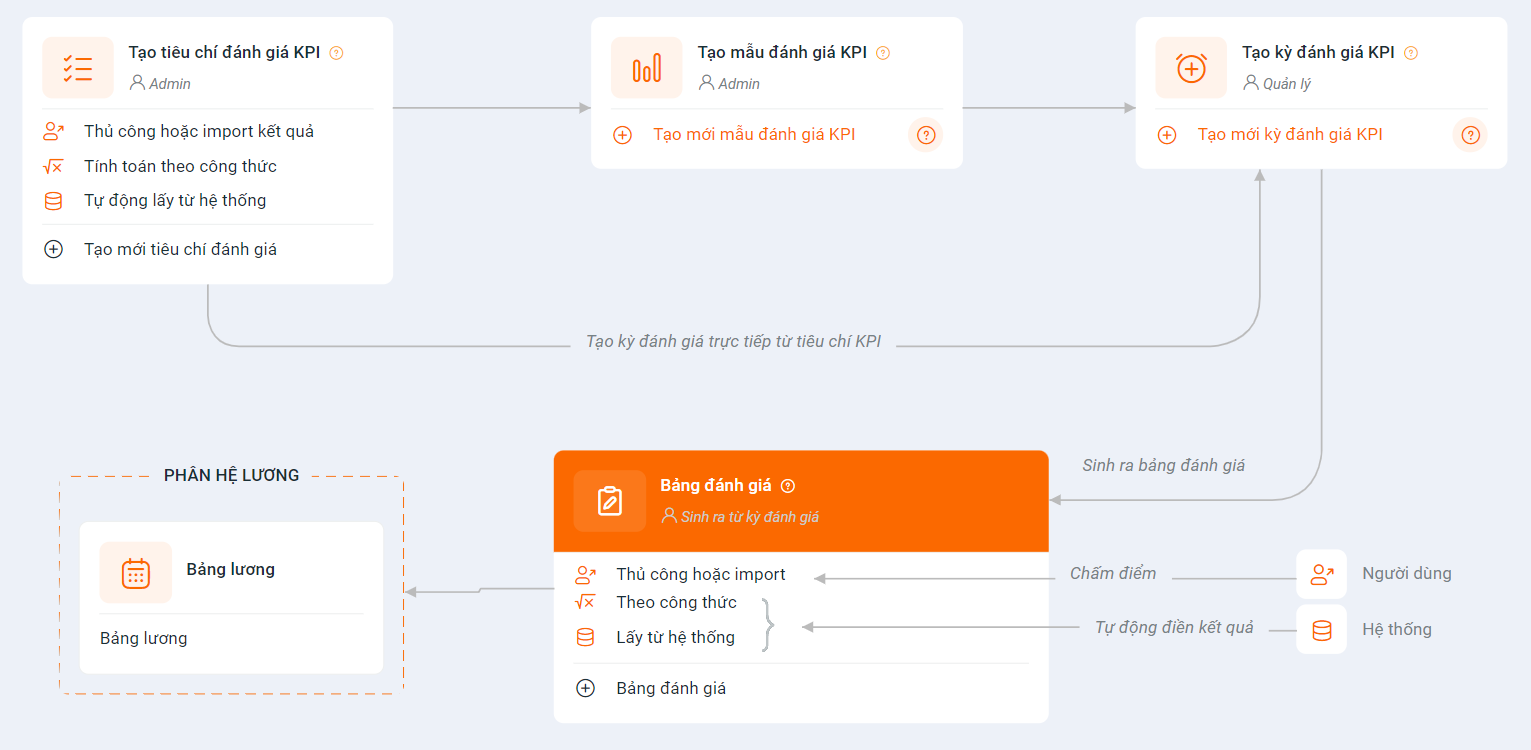
The main features of the 1Office goal management solution include:
- Comprehensive dashboard system: Displays the entire process, helping users track and monitor work progress.
- Work completion percentage report: Each completed task will show the completion level as a percentage, from 10% to 100%.
- Work completion rate report: The software updates the work completion rate when a user achieves a specific percentage of the task.
- Update of implemented work items: Shows the level of completion based on the amount of work performed.
















