


 12/05/2026
  427 views
Middle managers hold a crucial position in the organizational structure. Building a strong team of middle managers is the foundation for sustainable business development. So, what is a middle manager? What competencies does a middle manager need? How can we enhance the capabilities of middle managers? Let’s find out with 1Office in the following article.
Mục lục
- I. What is a middle manager?
- II. Profile of a Middle Manager in a Business
- III. Strategies to enhance the capabilities of the middle management team
- IV. Develop an effective middle manager team with 1Office HRM
I. What is a middle manager?
Middle managers are managers at the intermediate level within the organizational structure. They operate under the direction of the board of directors and senior managers, while also being responsible for leading lower-level managers and operational employees. Middle managers are often in charge of an office, a branch, or a specific department.
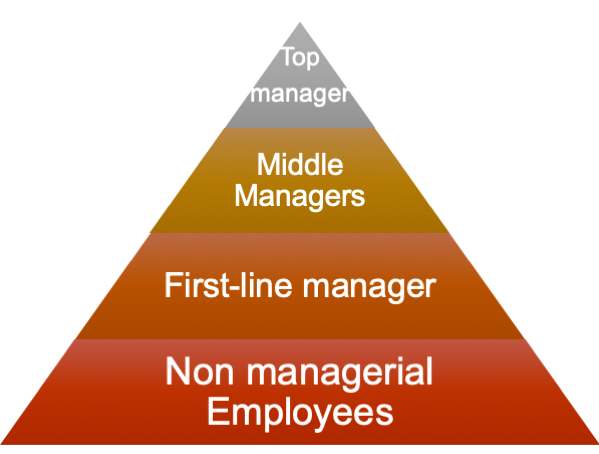
Positions considered to be Middle Managers include:
- Branch Manager, Regional Manager
- Store Manager
- Department Manager, Head of Department, Team Leader
- Factory Manager
II. Profile of a Middle Manager in a Business
1. The Role of a Middle Manager
Supporting Senior Management
Middle managers are the right-hand support for senior leadership in communicating the vision, mission, and implementing business strategies, as well as operating the management system. Therefore, they are responsible for assisting their superiors in implementing operational strategies and communicating directives down to subordinate employees.
Additionally, middle managers are tasked with reporting to senior management on the operational status and work results of the department they oversee.
Managing Subordinate Employees
Middle managers directly lead and manage the activities of their subordinate staff, including first-line managers and employees. Their responsibility is to assign tasks and guide subordinate employees to correctly perform their assigned duties and achieve set goals. They act as leaders and also as mentors to help employees perform their work most effectively.
At the same time, middle managers are also responsible for the work performance and personnel-related issues within their department.

A Bridge Between Employees and Leadership
As mentioned above, middle managers are the intermediary position between senior leadership and lower-level management. They are tasked with receiving the strategic vision from senior leadership and translating it into concrete plans and operating the management system to achieve goals.
The duty of these intermediate leaders is to execute directives from the top management team and relay them to first-line managers to help the staff achieve high work performance, while also identifying obstacles to the initially set goals.
If middle managers communicate well, senior leadership can make decisions that are practical and maximize the company’s existing resources (Personnel, Capital, and Tools).
2. Job Description of a Middle Manager
After understanding the role of middle managers, it is necessary to create a specific job description for this position to clearly define the main tasks and functions that a middle manager undertakes in the organization. The middle manager position will perform the following main tasks:
- Develop processes and build plans after receiving the company’s development strategy from senior management
- Monitor employee performance through reports from lower-level managers
- Assign tasks and divide work among teams
- Ensure compliance with the company’s general processes and principles
- Inspire and motivate employees to work
- Resolve internal issues that arise within the department
- Consolidate and propose ideas to improve employee productivity
- Oversee the recruitment and employee training process
- Summarize results and report issues to senior management
3. Competency Framework for a Middle Manager
Being a middle manager is not a simple position because they have to work and connect with many people within the organization. So, what are the necessary qualities and competencies for a middle manager? In practice, a middle manager needs to be well-equipped with solid professional expertise and management skills to perform their duties effectively.
Communication Skills
Middle managers act as a bridge between employees and senior leaders. Therefore, communication skills must be a top priority. Effective communication helps middle managers convey directives from senior leadership to employees at all levels accurately and clearly.
At the same time, a middle manager with strong communication skills is adept at interpersonal relations, knowing how to balance the interests and desires of employees with the will of the leadership. Communication skills require middle managers to handle situations with tact and flexibility, as well as to listen, understand, and read others.
Decision-making skills
The ability to make decisions is a crucial skill for boosting an organization’s performance. This skill is built from a manager’s experience after a process of investigation, situation analysis, and ultimately, making a final decision. A leader’s decision must be made accurately and quickly.
Middle managers constantly have to handle unexpected situations of varying degrees, and they cannot report every issue they encounter at that moment. Making the right decision helps their team solve problems and minimize mistakes at work. In doing so, middle managers will earn the trust of their subordinates and the respect of senior leadership.
Ability to motivate employees
Building motivation for employees is always a leader’s goal to help them feel more enthusiastic and responsible in their work. Besides the skill of delegating tasks to lower-level management, listening to employees’ difficulties and satisfying their needs is the key to sparking motivation and building an effective system. Motivational skills require strategies such as: fair treatment, providing inspiration and recognition, and rewarding based on work results.
Work organization skills
Middle managers receive tasks from senior leadership and are responsible for allocating and coordinating personnel to achieve set goals. Therefore, they need work organization skills to assign the right tasks to the right people and ensure progress is on track. Work organization skills include the ability to plan, allocate resources, create schedules, and monitor work progress.
4. KPIs for middle management positions
A middle manager not only performs individual tasks but is also responsible for the performance of the entire department. So, what are the KPIs set for Middle managers? In practice, performance evaluation indicators for middle managers are divided into 2 types:
KPIs for individual performance
- Executive ability
- Number of approved proposals
- Number of successfully implemented projects
- Employee satisfaction level
KPIs related to the managed department
- Department’s work progress
- Tasks completed within the month
- Total sales/consumption volume/products produced in the month
- Goal completion rate
- Department-specific KPIs
III. Strategies to enhance the capabilities of the middle management team
Middle management is likened to the “heart” of an organization because they play a role in ensuring smooth operational flow and keeping team members connected. Therefore, the quality of middle management must always be enhanced and trained. Below are the strategies outlined to improve the quality of middle management:
Provide professional training courses
Professional training courses are the most effective solution for enhancing the capabilities of the middle management team. The company can either conduct internal training sessions or send middle managers to external courses for professional development. These courses will help managers hone essential management-related skills such as: Planning skills, Employee motivation skills, Effective employee coaching and training skills, and Problem-solving and decision-making skills.
To ensure that training courses for middle managers are effective, the leadership must set outcome commitments for the managers, including increasing sales, improving work performance, etc.
Coaching
The coaching method is a format where senior managers and leaders directly guide and mentor middle managers to develop their capabilities and adjust their behavior. Senior managers will observe the work process of middle managers to provide appropriate feedback and suggestions.
However, in reality, not every leader has enough time and ability to coach middle managers on their professional skills. Therefore, many businesses now tend to hire external experts for one-on-one coaching for their subordinates. Additionally, a mentor can also offer advice to help middle managers shape their own leadership style and apply it appropriately in specific situations.
Provide special benefits
In addition to training and developing professional competence for middle managers, the issue of benefits and compensation also needs special attention. Compensation packages are a source of support and motivation for middle managers to perform their duties well. To enhance the capabilities of middle managers, the benefits they receive must also be different from those of lower-level managers and employees. For example:
- The right to purchase company shares at a preferential price
- Bonuses based on a percentage of profits exceeding targets
- Opportunities for promotion to senior and strategic positions
- Opportunities to interact and build relationships with major partners
Develop practical skills
A middle manager’s competence comes not only from training and coaching but also from practical, hands-on experience. A middle manager only becomes an effective assistant to leaders and an ideal role model for employees when they can apply their accumulated knowledge and experience in practice to create positive changes for the organization.
Challenge middle managers to maximize their abilities by assigning them “tough” tasks that require thinking and problem-solving skills.
IV. Develop an effective middle manager team with 1Office HRM
Currently, developing the capabilities of employees in general and managers in particular is a top priority in corporate human resource management. To achieve this, many businesses choose to leverage technology to optimally solve the challenge of personnel management at all levels.
With the desire to create the best work experience for both employees and managers, 1Office has developed the HRM module – a solution that helps businesses solve their human resource management challenges.
The 1Office software will help businesses build a systematic personnel development strategy with outstanding features such as:
- Transparent and fair performance evaluation through KPIs and OKRs criteria
- Establish a clear career path, helping personnel track their own promotion progress
- Build corporate culture through an internal network – a bridge between employees and managers
- Create effective internal training plans, track the entire training process, and evaluate results after the training course concludes
This article from 1Office has provided readers with an overview of what a middle manager is, as well as methods to enhance the capabilities of the middle manager team. For a free consultation and a trial of the #1 human resource management software on the market, please contact us using the information below.
For more details, please see:
- Hotline: 083 483 8888
- Fanpage: https://www.facebook.com/1officevn/
- Youtube: https://www.youtube.com/channel/UCeTIRNqxaTwk0_kcTw6SxmA
Related keywords: what is a middle manager, middle management
















