13/05/2026
  200 views
Electronic contracts and digital signatures are gradually becoming the preferred transaction method for many businesses, replacing traditional contracts due to their ability to save time and transaction costs, as well as facilitate convenient data exchange and rapid information sharing. However, many individuals and businesses still have concerns and hesitations about the legality of digital signatures and electronic contracts.
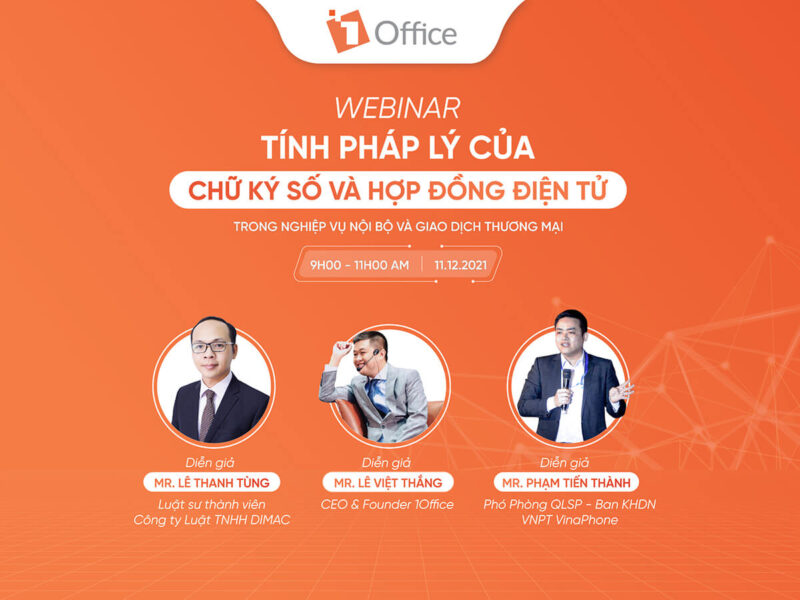
To answer all questions and concerns from businesses regarding electronic signing and electronic contracts, 1Office will host a Webinar with the theme: “The Legality of Digital Signatures and Electronic Contracts in Internal Operations and Commercial Transactions” to share and discuss the legal values, perspectives, and signing processes of current digital transaction methods.
Joining today’s seminar are experts with many years of experience in building and consulting on digital signature & electronic contract solutions for businesses
Mục lục
- Overview of digital signatures and electronic contracts
- Benefits of Applying Digital Signatures and Electronic Contracts
- The legality of electronic contracts and digital signatures
- Digital signature solution to optimize the signing process in businesses
- 1CA – THE EFFICIENT AND PROFESSIONAL DIGITAL SIGNATURE SOLUTION FROM 1OFFICE
Overview of digital signatures and electronic contracts
Kicking off the seminar, Mr. Pham Tien Thanh – Deputy Head of Product Management at VNPT Vinaphone, shared the definitions of digital signatures and electronic contracts, as well as the characteristics of digital signatures. Here are some characteristics of digital signatures:
- First: The availability of digital signatures is greater than that of handwritten signatures. For example, it’s difficult to get a signature when the boss is away, but with just a USB and a smartphone, signing can be done easily.
- Second: Non-repudiation: The secret key is a unique code provided to that business or individual. When a signature is made anywhere, the person holding that key cannot deny it.
- Third: Integrity: The encrypted message will not undergo any changes during transmission before reaching the recipient.
- Fourth: Authenticity: With every message received that has a digital signature, you can fully identify who sent the message, who signed the transaction, and at what time.
- Fifth: Security: Currently, only the Ministry of Information and Communications, the Ministry of Public Security, and other licensed units have the authority to license the service, so no one can forge the signature.
Some forms of digital signatures
- Token Device
- HSM Centralized Signing Device
- Smart Card
- SIM PKI
- Remote Signing
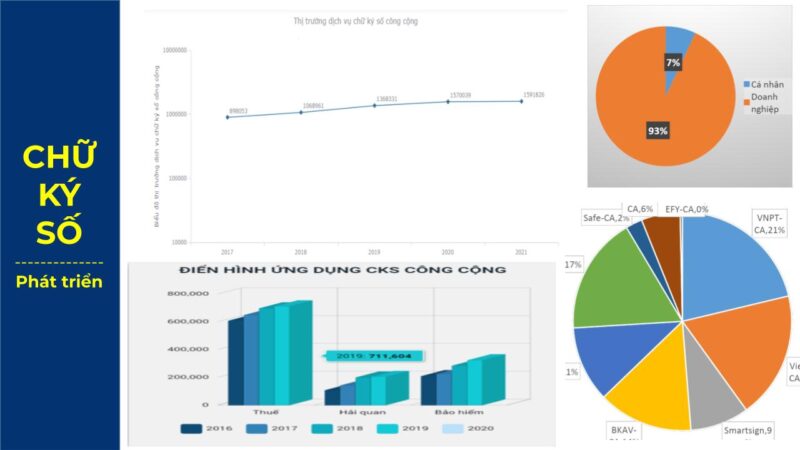
Mr. Pham Tien Thanh shared: “According to statistics from the National Electronic Authentication Center on public digital signature certification services, there are about 1.6 million public digital signatures active in the market. However, digital signatures for businesses account for 93%, while those for individuals make up only 7%, and are mostly used in the treasury sector. It’s clear that individuals still have many reservations when it comes to signing electronic contracts.”
Benefits of Applying Digital Signatures and Electronic Contracts
Regarding the benefits of applying digital signatures and electronic contracts, Mr. Tien Thanh shared: “Paper contracts cost from 50,000-110Benefits of electronic contracts
- Secure, reliable, and transparent data
- Saves significant time and travel costs
- No intermediaries needed
- Easy and convenient
The legality of electronic contracts and digital signatures
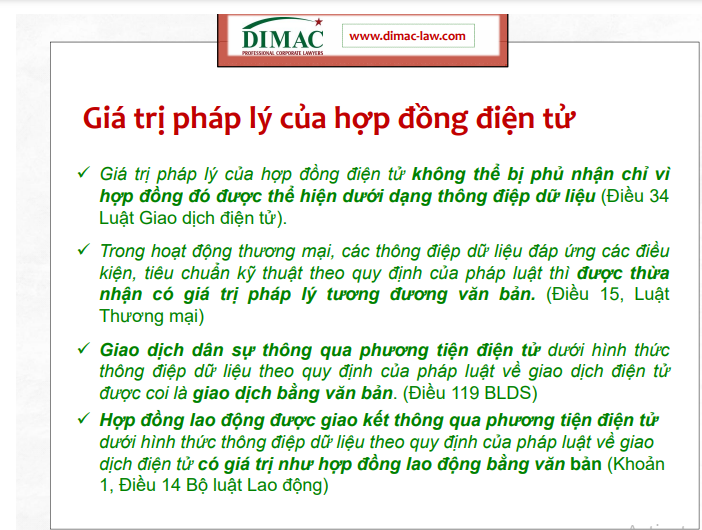
Are electronic contracts legally binding? What forms of digital signatures are accepted by law? To answer these questions in part 2 of the program, Mr. Le Thanh Tung – a member lawyer at DIMAC Law Firm, affirmed: “Digital signatures are more secure than traditional signatures because they are very difficult to forge.” At the workshop, he clarified the 4 legal values of electronic signatures as follows:
– Diversity: includes characters, images, and sounds
– Attached or logically associated with the data message
– Capable of identifying the signer
– Capable of confirming the signer’s approval of the signed content
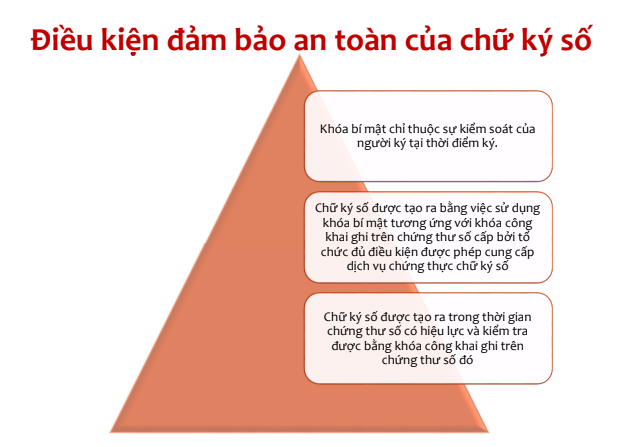
Conditions for ensuring the security of digital signatures
Summary:
– Electronic signatures/e-contracts are legally recognized by law
– The choice to use electronic signatures/digital signatures or electronic contracts depends on the nature of each transaction
– Ensuring security when using electronic signatures/electronic contracts
– Collecting evidence to prove the third-party partner’s consent to participate in the transaction
Digital signature solution to optimize the signing process in businesses
When implementing digital signatures, finding an effective provider is a common concern for any business. Sharing his thoughts on this issue, Mr. Le Viet Thang said: “In just a short time, electronic signing will become as common as e-commerce was 10 years ago. In the near future, electronic contracts will be an inevitable trend due to their convenience and significant benefits such as storage, time savings, etc. This will be an irreversible trend in the future.”
Current status and survey on the application of digital signatures in businesses
According to a recent survey of 500 participants in an online workshop on Electronic Contracts, over 300 people expressed concerns about the legal issues of Electronic Contracts.
– In 2016, only 31% of businesses used electronic contracts
– 94% of businesses reported difficulties in signing contracts with partners and internal documents due to social distancing
– 92% of businesses agree that electronic signing will be an inevitable trend but expressed concerns about legality and a lack of understanding of electronic signing solutions.
1CA – THE EFFICIENT AND PROFESSIONAL DIGITAL SIGNATURE SOLUTION FROM 1OFFICE
Also at the workshop, Mr. Le Viet Thang affirmed: With the 1CA Digital Signature feature, businesses can completely solve the problem of digitally signing all types of documents, vouchers, and records. Not only does it meet all signing needs within a business, but 1CA also offers immense value due to the useful and practical benefits it provides.
5 benefits of using 1CA:
– Save 80% on printing costs
– Save 50% on storage costs
– Save up to 75% on signing time
– Save 100% on express delivery costs
Like other standalone digital signature applications, the 1CA digital signature application allows you to:
– Sign anytime, anywhere
– Sign on any device
– Sign multiple files and with multiple signatures
– Sign digitally and with image signatures quickly
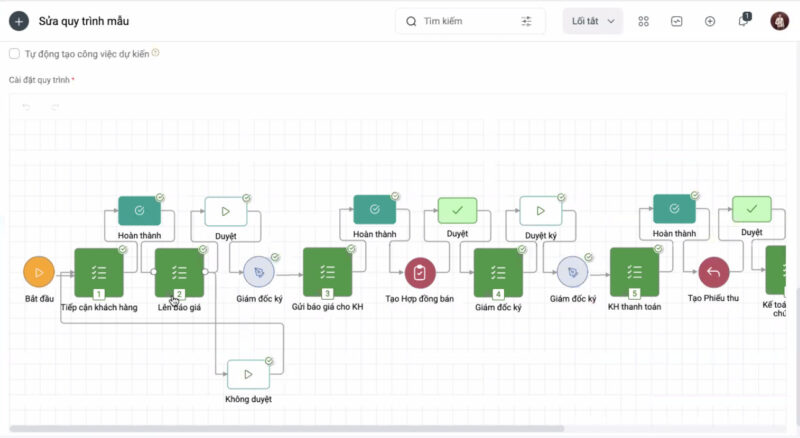
Digital signing process on 1CA
During the Q&A session with the speakers, many questions were raised regarding the topic of digital signatures and electronic contracts. Below are some of the standout questions from the workshop
| Question | Answer |
| Question 1: Is it possible to use a paper contract with a party that uses an electronic contract? | The use of an electronic signature by one party depends on the agreement between all parties. First, the parties have the right to decide whether to use electronic or traditional methods. The parties also have the right to choose their service providers. |
| Question 2: If an electronic contract is signed, for accounting purposes, do businesses still need to print the contract and payment requests as a basis for making payments, for storage, and for auditing? | Legally, an electronic contract has the same value as a regular contract, so it does not need to be printed for business payment purposes. However, tax authorities require a converted invoice. This means you can still use the electronic contract for its purpose and as a basis for making payments. Tax authorities will not deny its legal validity, but some government agencies may still require you to print and stamp a copy for their records. |
| Question 3: What are the legal regulations for canceling or modifying a digitally signed document/contract? | It depends on the type of document. Electronic invoices have their own regulations, while for contracts, a termination agreement is created upon mutual consent of both parties. When you sign a document, you are responsible for that specific type. In general, the execution of electronic agreements mirrors that of paper agreements. The cancellation of an electronic agreement must follow the specific procedure for that type of agreement. |
| Question 4: What types of digital signatures has 1Office integrated with? And if signing a commercial contract with a customer who uses a token, is it possible to sign? | 1CA integrates with all tokens on the market; you can sign by plugging in any USB token. Specifically, HHM has integrated with licensed providers. VNPT is an officially licensed provider in the market. Rest assured, your B2B customers will definitely be able to sign. |
| Question 5: Regarding security, since confidential contracts are stored on the service provider’s server, how can customers ensure that contract information will not be intentionally leaked? | There are many electronic contract providers, and they may use different technologies. Contracts can be stored using blockchain technology and various encryption methods. Each provider chooses different technologies, so electronic contracts offer more choices than paper contracts. |
To re-watch the entire webinar on the Legality of Digital Signatures and Electronic Contracts in internal operations and commercial transactions, you can view the full event recording here: https://www.youtube.com/watch?v=hy176vVQipk
We hope that this webinar provides you with a solid foundation of information to successfully apply these two new transaction methods, helping to promote growth and create a competitive advantage for your business in the digital age.
We are deeply grateful to our speakers and esteemed guests for joining 1Office for this insightful webinar. We hope everyone gained a clearer understanding of the benefits and legality of digital signatures and electronic contracts in today’s era.
For more details, please visit:
Fanpage: https://www.facebook.com/1officevn/
Youtube: https://www.youtube.com/channel/UCeTIRNqxaTwk0_kcTw6SxmA