


Brandkey – The “Master Key” for Business Brand Positioning


Brandkey is a fairly common model in brand positioning. It describes the attributes and components of positioning, which helps in managing the brand’s position. Each brand has a different brandkey to position itself in the market, making it easier for customers to recognize the brand. In this article, 1Office provides readers with the most comprehensive information about “Brandkey” – the master key to brand positioning.
Mục lục
1. Brandkey – The Secret to Brand Success
What is a Brandkey?
Brandkey is a combination of “Brand” and “Key”. Simply put, it is the key to a business’s brand. A brandkey creates the distinction between one brand and another, thereby affirming its position with customers.

The purpose of a brandkey usually aims to:
- Establish goals for the business in brand positioning.
- Capture the brand’s perception in the minds of consumers.
The Importance of a Brandkey in Brand Positioning
Strategic direction: Every business and brand strives to build its own core values. Simply put, a company’s core values are everything that the business and brand try to build for themselves. A brandkey exists to help everyone understand which path the brand is on and what it aims to achieve in the market.
Consistency: A brandkey helps a brand and business maintain consistency and uniformity over time. As operations continue, the brandkey ensures consistency in activities, making it easy for both new and long-term employees to understand the brand’s style.
Focus: All elements within a Brandkey help the brand maintain a certain focus, thereby helping leaders identify which ideas enhance brand positioning and which are redundant.
Inspiration: What a company’s marketing team does, besides advertising products and services to customers, is also about inspiring employees within the company and conveying the brand’s inspiration and message to customers. A brandkey is an effective way to inspire both company employees and customers.
2. What are the constituent elements of a Brandkey model?
Creating a “key” for a brand requires many elements, which are arranged in a specific order and according to certain principles to achieve the best results. A complete Brandkey model includes:
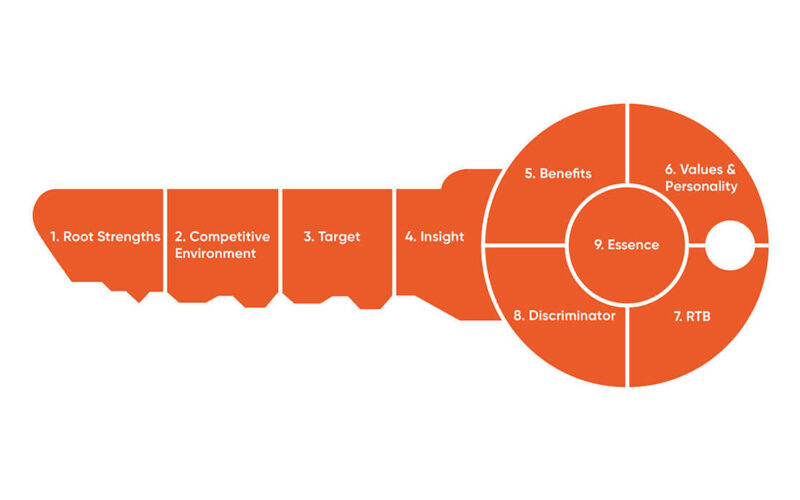
1. Root strengths
This is the crucial foundation of a Brandkey – it represents the existing values and benefits that the brand possesses and upon which the business develops. Root strengths are understood as the company’s assets. They ensure the values that customers remember first when they think of the brand.
However, only long-established brands that have been operating for a long time have Root strengths (which are instantly remembered by customers), while new brands do not yet have them. This is also a way to build a personal brand for a CEO, as the brand is built from the CEO’s mindset.
For example: The Coca-Cola brand key has “family” as its root strength, meaning the brand’s products are aimed at all family members, for gatherings and reunions.
2. Competitive environment
The competitive environment includes factors related to market competition, such as the number of competitors, their potential, their strengths and weaknesses, and the brand’s position in the market and its respective field.
Analyzing the customer’s perspective on this market helps identify which competitors are on par with your brand and which are the leading brands to analyze what needs to be done. This issue requires thorough strategic research to make the right decisions. To have an accurate brand positioning strategy, a business sometimes needs to understand its competitors as well as it understands its own brand.
3. Target
The next element in the brand key model is to determine: Who is the target audience? What are their characteristics? What are their interests? These factors directly affect customer reception of the product when considering consumer attitudes and behaviors.
The target is the customer group for whom the brand is always the best choice. Consequently, the brand will largely revolve around products that serve that customer group.
For example, the Korean cosmetic brands Ohui and Whoo both belong to the LG corporation, under the management of LG Household & Health Care. The products of this corporation are largely aimed at customers who have families and a need for more comprehensive body care (women of the family are often aged 25 and over). Therefore, these two cosmetic brands from the same corporation target the 25-50 age group. Ohui tends to cater to women with average to upper-middle incomes, while Whoo is for women with upper-middle to high incomes and above.
4. Insight – Consumer understanding
Everything you learn about customers: What are their needs? What are they interested in? What does our brand have to meet those needs? This all falls under Customer Insight.
Brand insight needs to be relevant year after year and not become outdated, reflecting that customers always have such needs at any given time. By continuously recording customer feedback and finding the most common themes in the content, the brand will discover its customer insight.
For example, the Insight element of Omo’s brand key in the “Dirt is Good” campaign: “Through Apple’s brandkey case study, brand leaders can gain more experience in building their own brandkey. Building a brandkey is an effective way to bring customers closer, and combining it with the application of 4.0 digital technology in business management operations will help you quickly position your brand and grow in your chosen field.
If you are looking for modern, flexible business management software solutions, please contact 1Office for the most dedicated consultation.
Contact information:
- Hotline: 083 483 8888
- Fanpage: https://www.facebook.com/1officevn/
- Youtube: https://www.youtube.com/channel/UCeTIRNqxaTwk0_kcTw6SxmA




