


 10/05/2026
  109 views
HRM software for the finance and banking industry has been adopted by major financial institutions to drive growth and market confidence. Let’s explore the 5 most widely used HRM software applications with 1Office.
Mục lục
- 1. Top 5 HRM Software for the Finance and Banking Industry
- General Comparison Table
- 1.1. 1Office HRM – Automating HR Processes with AI
- 1.2. VnResource HRM Pro – Specialized Solution for Financial Payroll
- 1.3. SAP SuccessFactors – International Software for Multinational Corporations
- 1.4. FPT iHRP – High-Security HRM Software for the Finance and Banking Industry
- 1.5. MISA AMIS HRM – A Vietnamese Solution Optimized for Labor Laws
- 2. Specific HR Management Needs in the Finance and Banking Industry
- 3. Must-Have Features of an Employee Management Software for Finance and Banking
- 4. Criteria for Choosing HRM Software for the Finance and Banking Industry
- Conclusion
1. Top 5 HRM Software for the Finance and Banking Industry
The current HRM software market is very diverse. However, only a few solutions can meet the strict security, scalability, and integration requirements of the finance industry.
General Comparison Table
| Software | Core Strengths | Suitable Scale |
| 1Office HRM | Automates processes with AI & Low-code, comprehensive management (HRM, Workplace, CRM, BPA). | Large enterprises, Corporations. |
| VnResource HRM Pro | Professional, comprehensive, trusted by many large organizations, strong integration. | Medium and large enterprises. |
| SAP SuccessFactors | International standards, global management, integrates AI and BigData. | Large enterprises, Multinational corporations. |
| FPT iHRP | High security, supports multiple branches, multi-language. | Corporations, Large enterprises. |
| MISA AMIS HRM | “Purely Vietnamese”, fully optimized for Vietnamese labor laws, integrates AI. | Small businesses, SMEs. |
1.1. 1Office HRM – Automating HR Processes with AI
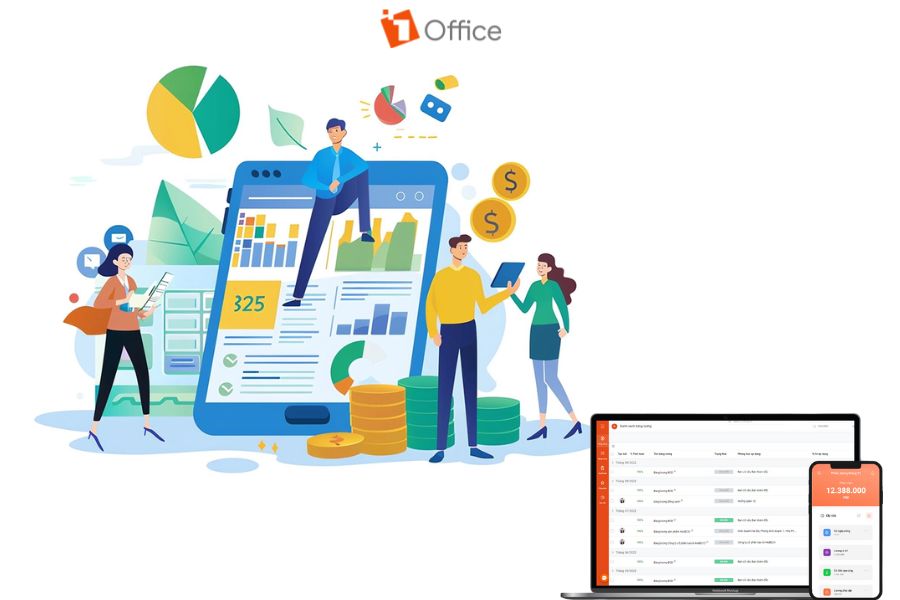
1Office’s 1HRM is a unified business management platform designed to solve the problem of fragmented data and automate complex processes – a critical need in the financial industry.
Key features:
- Applies AI to automatically screen CVs to process thousands of recruitment profiles. The BPA (Low-code) platform allows banks to design their own automated processes (such as onboarding, expense approval, salary changes) without programming, helping to minimize risks and increase compliance.
- Tightly links human resources information (HRM) with work performance (Workplace) and business results (CRM).
- Integrates a Learning Management System (LMS), allowing banks to build online training programs on new products or professional regulations, helping employees quickly improve their capabilities.
1.2. VnResource HRM Pro – Specialized Solution for Financial Payroll
VnResource HRM Pro is a professional and comprehensive software solution trusted by many large organizations in Vietnam, establishing its position among businesses with complex management requirements.
Key features:
- Excels at customizing complex business processes, especially the unique salary, bonus, and benefits policies of the financial industry.
- Has extensive experience in integrating with other core systems such as ERP, SAP, and Oracle, which are widely used by many banks.
- Effectively supports the distributed human resource management model across multiple branches and transaction offices.
1.3. SAP SuccessFactors – International Software for Multinational Corporations
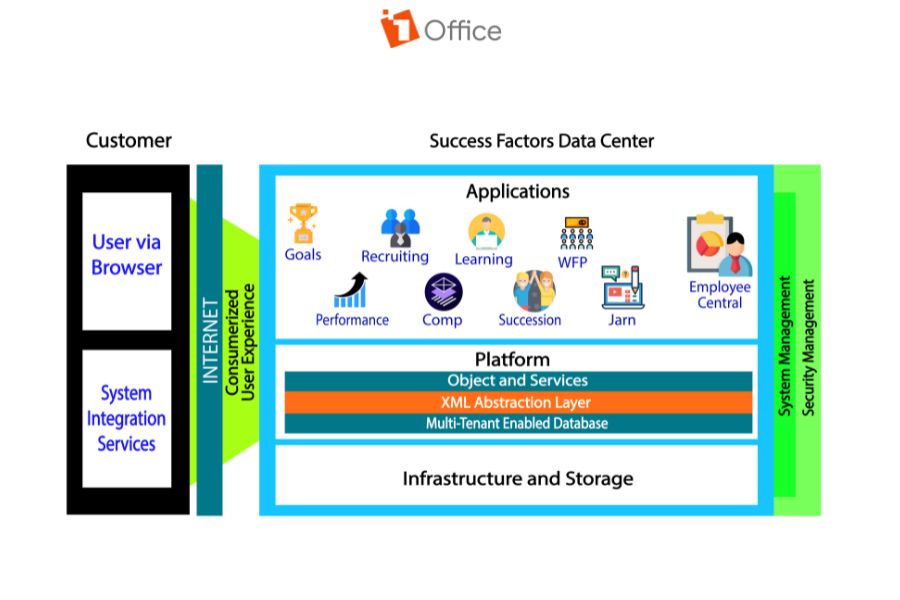
For multinational financial corporations and banks, SAP SuccessFactors is one of the world’s leading solutions, providing a comprehensive suite of human resource management tools, from talent management to data analytics.
Key features:
- Provides a unified, consistent human resource management platform globally, suitable for banks with branches in multiple countries.
- Excels in performance management, succession planning, and leadership development.
- Integrates AI and Big Data not only for management but also to forecast HR trends, supporting leadership in making strategic decisions.
1.4. FPT iHRP – High-Security HRM Software for the Finance and Banking Industry
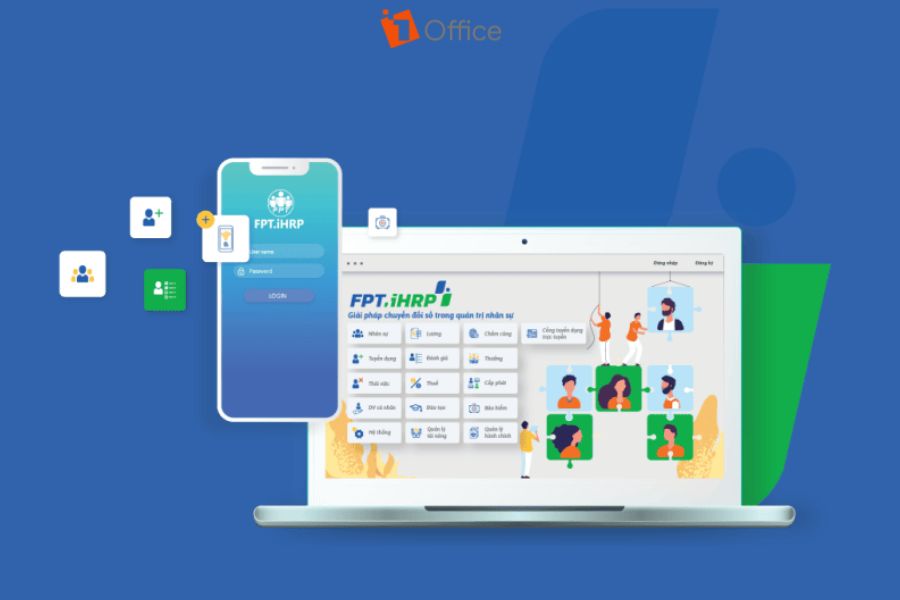
FPT iHRP is a “Made in Vietnam” solution designed for large enterprises and corporations, with a proven track record of successful implementation at financial institutions like Sacombank.
Key features:
- FPT iHRP is built with high security standards, meeting the strict requirements of the banking industry.
- Supports multiple branches and languages, suitable for financial corporations with complex operational networks.
- Capable of deep integration with ERP, SAP, and Oracle systems.
1.5. MISA AMIS HRM – A Vietnamese Solution Optimized for Labor Laws
MISA AMIS HRM is a popular “purely Vietnamese” HRM software for the finance and banking industry, designed to optimize compliance with Vietnamese labor laws, making it particularly suitable for small and medium-sized financial organizations.
Key features:
- Automates and ensures absolute accuracy in complex operations such as social insurance, personal income tax, and labor contracts according to the latest regulations.
- Deeply connects with other software in the MISA ecosystem, especially accounting software, to effectively synchronize salary and bonus data.
- Applies AI to analyze and evaluate work performance and support HR decision-making.
2. Specific HR Management Needs in the Finance and Banking Industry
The finance and banking industry is one of the pillars of the economy, operating in a highly competitive environment with rapid changes and extremely strict legal requirements. These unique characteristics create distinct HR management needs, accompanied by a series of significant challenges.
2.1. Challenges in the Finance and Banking Industry
People are considered the greatest asset, determining the growth and trust of the financial market. However, organizations are facing many major challenges:
2.1.1 Recruiting and Retaining Talent
This industry demands a high-quality workforce, but recruitment processes are often unprofessional. Receiving a huge number of applications makes screening extremely difficult. At the same time, banks must continuously retrain employees to master new technologies and keep up with market changes, but often lack the data to identify the right candidates for training.
2.1.2. Managing a Multi-Branch Model
Banks and financial institutions often have extensive networks of branches and transaction offices. This leads to complex work time management, a lack of a systematic timekeeping system, and difficulty in monitoring the hours of thousands of employees across multiple locations.

2.1.3. Security Issues
The financial industry is always a target for increasingly sophisticated types of crime. Therefore, internal processes need to be closely monitored to reduce the risk of theft, while ensuring absolute compliance with legal regulations on data and transactions.
2.1.4. The Need for a Comprehensive Solution
Financial organizations don’t just need software to handle basic tasks like timekeeping and payroll. They need a strategic, comprehensive solution that includes HR budget planning, recruitment, training, and talent management.
2.2. The Necessity of Specialized HRM Software
Implementing specialized HRM software has become a top priority for improving operational efficiency in the financial industry. A modern HRM system helps banks automate HR management processes, replacing manual methods that are prone to errors.
The system allows for centralized management of all personnel information, helping leadership quickly access information and make accurate decisions based on real-time data. Furthermore, it ensures legal compliance regarding labor contracts, social insurance, and personal income tax, while optimizing recruitment and training processes to quickly find and develop talent.
3. Must-Have Features of an Employee Management Software for Finance and Banking
Professional HRM software for the financial industry must not only have basic features but also address the specific challenges of the sector.
3.1. Personnel Information Management
This is a core feature, requiring the ability to store records centrally and manage all employee data—from personal information, labor contracts, work history, and qualifications to salary and bonus history—on a single platform.
An important feature is the Employee Self-Service (ESS) Portal. This feature allows thousands of employees at different branches to update their personal information, view payslips, check timesheets, or request leave online, ensuring accuracy and flexibility.

3.2. Time and Attendance Management
With a multi-branch model, this feature must be extremely flexible. The software needs to integrate with various types of time clocks (fingerprint, card, facial recognition). Additionally, it must support smart timekeeping methods like GPS, Wi-Fi, or mobile apps to manage employees across multiple locations.
The most crucial feature is the Distributed Attendance Synchronization System (DASS), which allows the system to automatically consolidate timekeeping data from hundreds of machines at various branches to a single server, ensuring clean data and saving time.
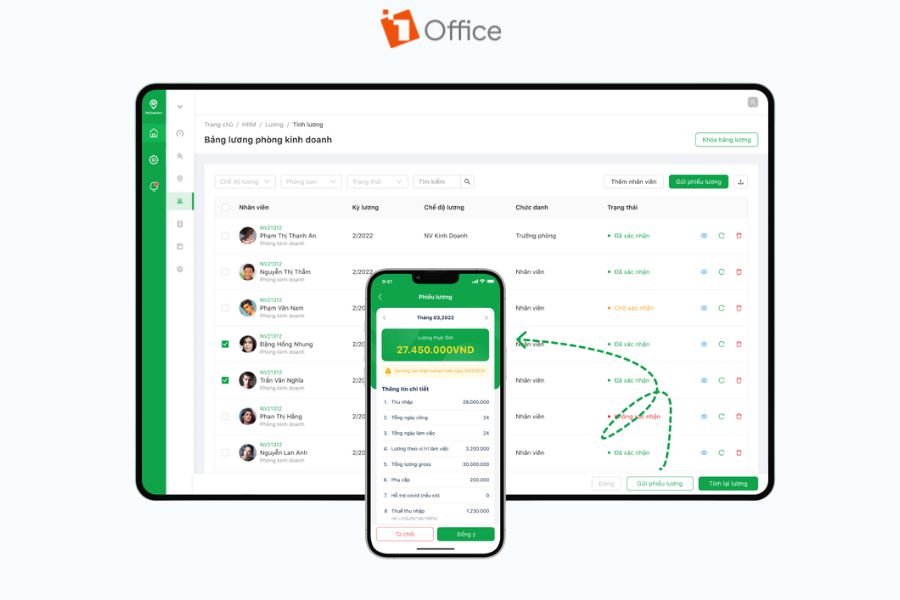
3.3. Payroll Support
Salary structures in the financial industry are very complex. HRM software must have the capability to automate payroll, automatically calculating salaries, bonuses, allowances, and tax deductions based on timekeeping and performance (KPI) data.
The most important feature is “Dynamic Payroll.” This allows the HR department to set up flexible payroll formulas themselves, accommodating complex salary and bonus structures and the constant fluctuations within the bank without IT intervention.
3.4. Recruitment Management
The banking industry frequently recruits in large numbers. Therefore, HRM software needs to support the entire recruitment process, from posting jobs to evaluating and selecting applications. Advanced solutions today must integrate AI (Artificial Intelligence).
For example, features like AI Resume can automatically parse and analyze CVs, search for suitable candidates in the data repository, helping to improve the quality of hires and significantly reduce recruitment time.
3.5. Human Resource Training
To cope with the rapid changes in technology and the market, a training feature is essential. The software should have an AI-integrated Learning Management System (LMS). This system allows businesses to build online training programs and track learning progress.
More importantly, it uses data from competency assessments to identify which personnel need what skills training, thereby creating personalized development roadmaps.
4. Criteria for Choosing HRM Software for the Finance and Banking Industry
The choice should not only be based on basic features but must also meet the specific strategic management and security requirements of the business.
4.1. Multi-branch and Transaction Office Management System
HRM software must be designed to support multi-company, multi-branch, and multi-language models. A Cloud HR platform is almost a mandatory requirement, allowing management and employees to access it flexibly from anywhere, which is crucial for banks with extensive networks.
Furthermore, the system must have scalability to manage a large number of employees, potentially up to tens of thousands.
4.2. Specialized and Flexible Payroll Calculation
This is one of the most important criteria. The ability to flexibly customize features, especially complex timekeeping processes and compensation policies, is mandatory. The software must fully integrate C&B (Compensation & Benefits) operations and, most importantly, ensure 100% compliance with current human resource management regulations in Vietnam (such as Social Insurance, Personal Income Tax).
4.3. Strategic Performance Management
Modern HRM software is not just for timekeeping and payroll. It must be a strategic management tool. The system needs to provide powerful tools to set, track, and evaluate KPIs and OKRs.
Furthermore, it must have real-time data analysis tools (Business Intelligence – BI). These dashboards help management “see” workforce quality, work performance, and make strategic decisions about resource allocation.
4.4. Extensive Integration Capabilities
A bank is a complex technological ecosystem. Therefore, HRM software cannot be an isolated island. It must easily integrate with other systems in use, such as Core Banking, ERP, accounting, SAP, or Oracle systems. This integration helps optimize information flow, avoid data duplication, and ensure consistency throughout the entire organization.

4.5. Security and Legal Compliance
HRM software must ensure the highest level of security for sensitive data such as compensation and personal records. The system must have encryption mechanisms, two-factor authentication, and strict role-based access control. This is extremely necessary to minimize security risks in a banking environment.
Finally, the provider must commit to monitoring and updating the latest legal policies to ensure the system always remains compliant.
Conclusion
Investing in an HRM software for the finance and banking industry is a solid foundation for attracting, managing, and developing talent. Are you ready to elevate human resource management for your financial organization? Contact 1Office today for an in-depth consultation and to learn how our platform can solve your most complex HR challenges.
















