09/05/2026
  162 views
In the context of rapidly advancing artificial intelligence, concepts like AI agent and agentic AI are increasingly mentioned in modern automation systems and AI platforms. However, these two terms are often confused due to their similarities in operation and application goals.
This article will help you clearly understand the difference between AI agent and agentic AI, from their definitions and operational methods to their roles in modern AI systems. A clear understanding of these two concepts not only helps businesses choose the right AI solution but also supports developers in building effective and scalable intelligent systems for the future.
Mục lục
1. What is an AI Agent?
An AI Agent is one of the fundamental concepts in the field of artificial intelligence. These are AI programs designed to automatically perform a specific task by collecting information from the environment, processing data, and taking appropriate actions. To better understand how an AI agent works, it is essential to first grasp its definition and key characteristics.
1.1. Definition and Characteristics
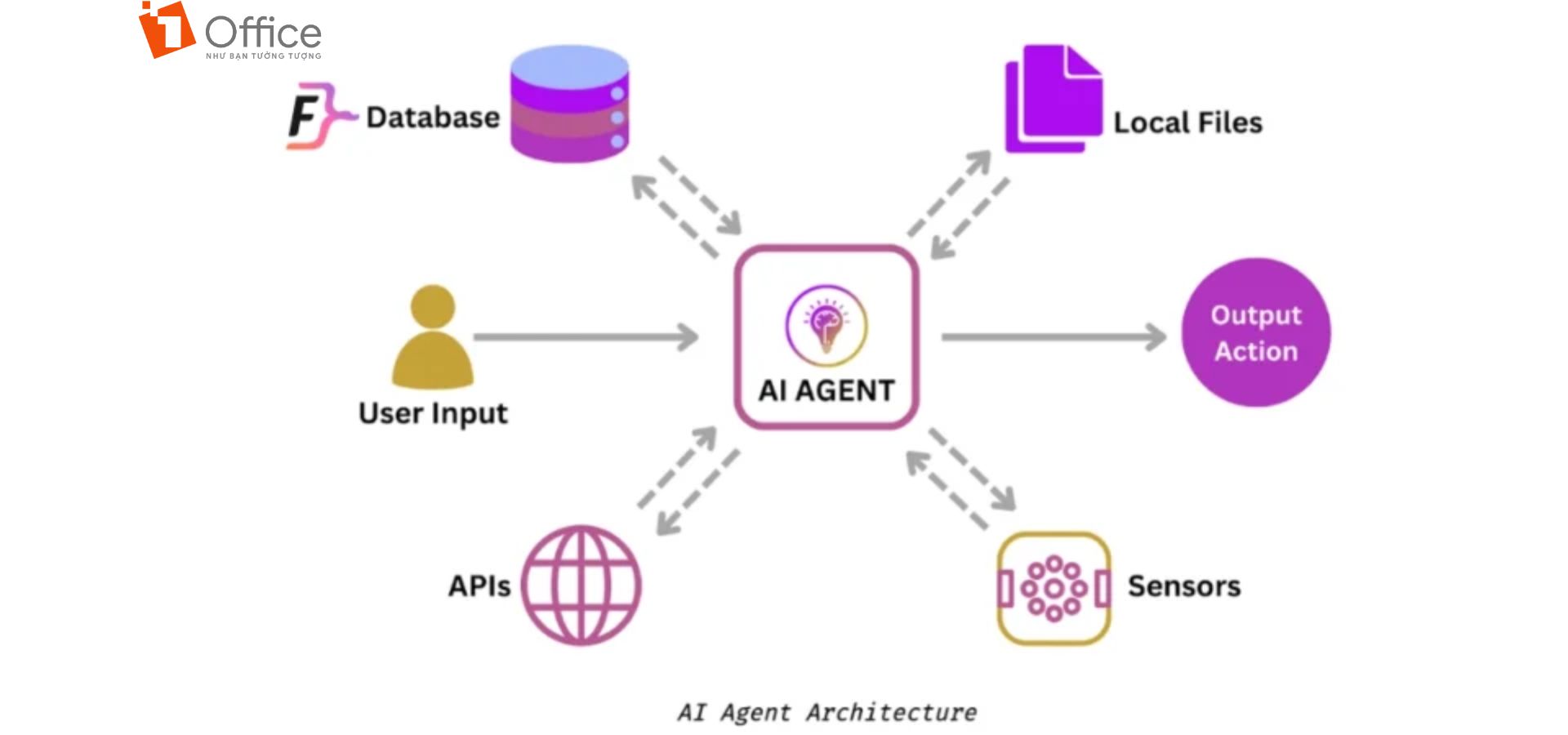
An AI agent can be simply understood as an AI program created to automatically perform a specific task. This program has the ability to receive information from its surroundings, process data, and take appropriate actions to complete the assigned job.
However, an AI agent typically operates within a specific scope of tasks. It does not decide on larger goals but only does what it has been programmed or trained to do.
For example, a customer support chatbot can answer questions about business hours, product prices, or service usage instructions. This is a form of an AI agent.
Some easy-to-understand characteristics of an AI agent include:
-
Operates on request: An AI agent usually responds when a user or system sends a request.
-
Focuses on a specific task: Each agent is designed to handle a particular type of job.
-
Simple process: receive information → process → take action.
-
Operates based on rules or a pre-trained AI model.
Thanks to this, AI agents can help automate many repetitive tasks in software systems.
1.2. Common Types of AI Agents
Depending on their operational method, AI agents can be divided into several common types:
-
Simple reflex agents: Operate based on simple rules. Upon receiving an input signal, the system responds immediately according to pre-programmed rules.
-
Model-based agents: Have the additional ability to store information about the environment to make more accurate decisions.
-
Goal-based agents: Choose actions based on the goal that needs to be achieved.
-
Utility-based agents: Compare various options and choose the one that yields the best outcome.
In practice, many familiar tools also operate like AI agents, for example:
-
Chatbots that answer frequently asked questions
-
Automatic email classification systems
-
Data processing bots in software
1.3. Real-world Applications
AI agents are widely used in software systems to automate repetitive tasks. Some typical applications include:
-
Customer care chatbots that help quickly answer common questions.
-
Automated data entry and processing in management systems.
-
IT helpdesk systems that assist in resolving basic technical requests.
-
Managing work schedules and sending automatic reminders for individuals or teams.
Thanks to these applications, AI agents help businesses save time, reduce manual work, and improve operational efficiency.
2. What is Agentic AI?
Agentic AI is a concept that is increasingly mentioned in the field of artificial intelligence. Unlike AI systems that only perform individual tasks, Agentic AI has the ability to self-plan, analyze, and coordinate multiple tasks to achieve an overall goal. So, how does Agentic AI work, and what makes this technology a significant advancement in modern AI systems? Let’s analyze its definition, characteristics, and applications below
2.1. Definition and Characteristics
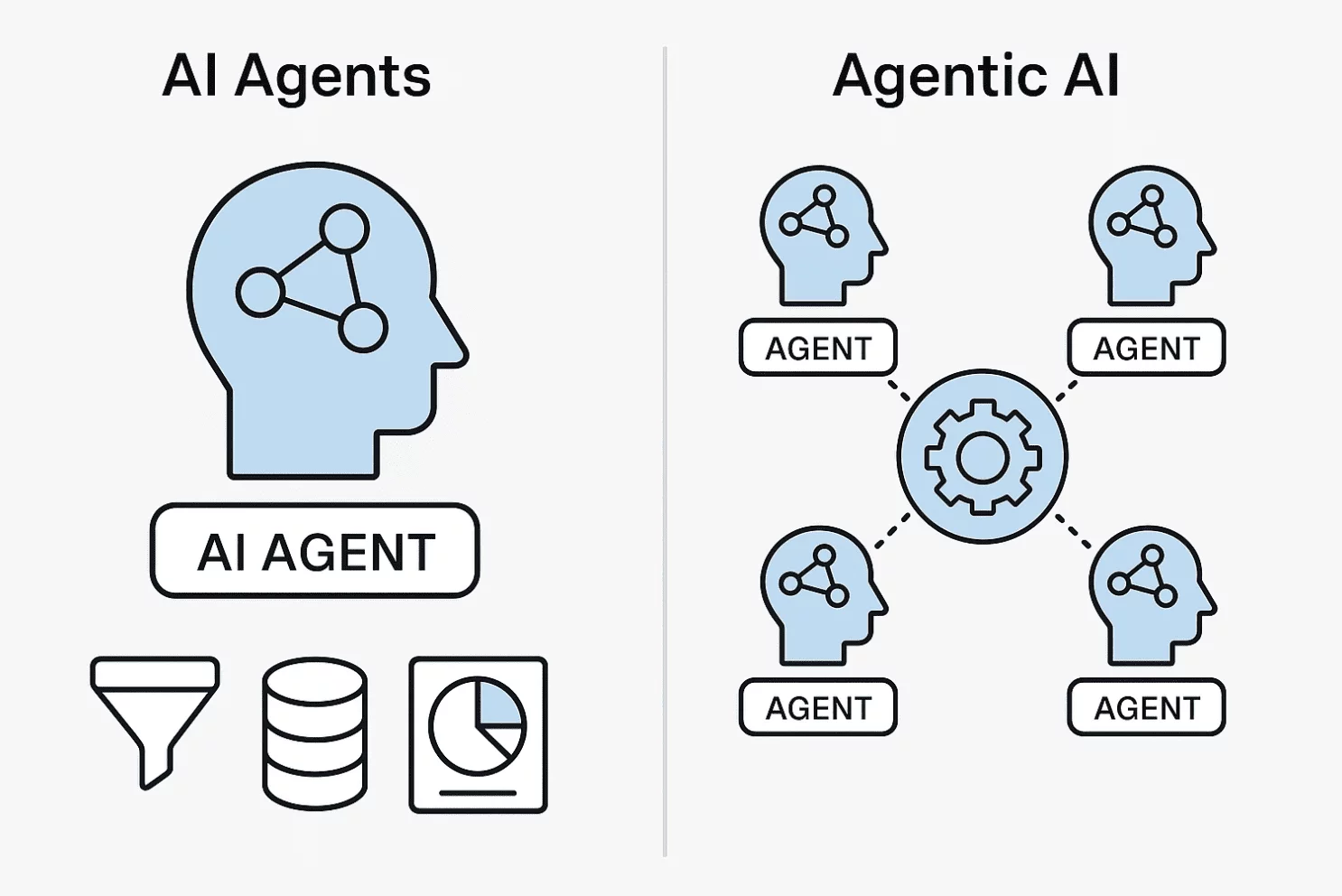
To put it simply, if an AI agent is like an employee working on assigned tasks, then Agentic AI is like a manager who can plan and coordinate various jobs to achieve a larger goal.
Agentic AI is an artificial intelligence system capable of thinking, planning, and coordinating multiple tools or other AIs to accomplish a complex objective. Instead of just performing a single small task, this system focuses on the final outcome.
Some key characteristics of Agentic AI:
-
Proactive: can independently identify what needs to be done instead of waiting for human commands.
-
Goal-oriented: always aims to achieve the overall objective.
-
Capable of learning and adapting: can change its approach when encountering new situations.
-
Coordinates multiple systems: can use various AI agents or other tools to complete the job.
Thanks to these capabilities, Agentic AI can handle complex processes that a single AI would find difficult to perform.
2.2. The Role of LLMs and System Components
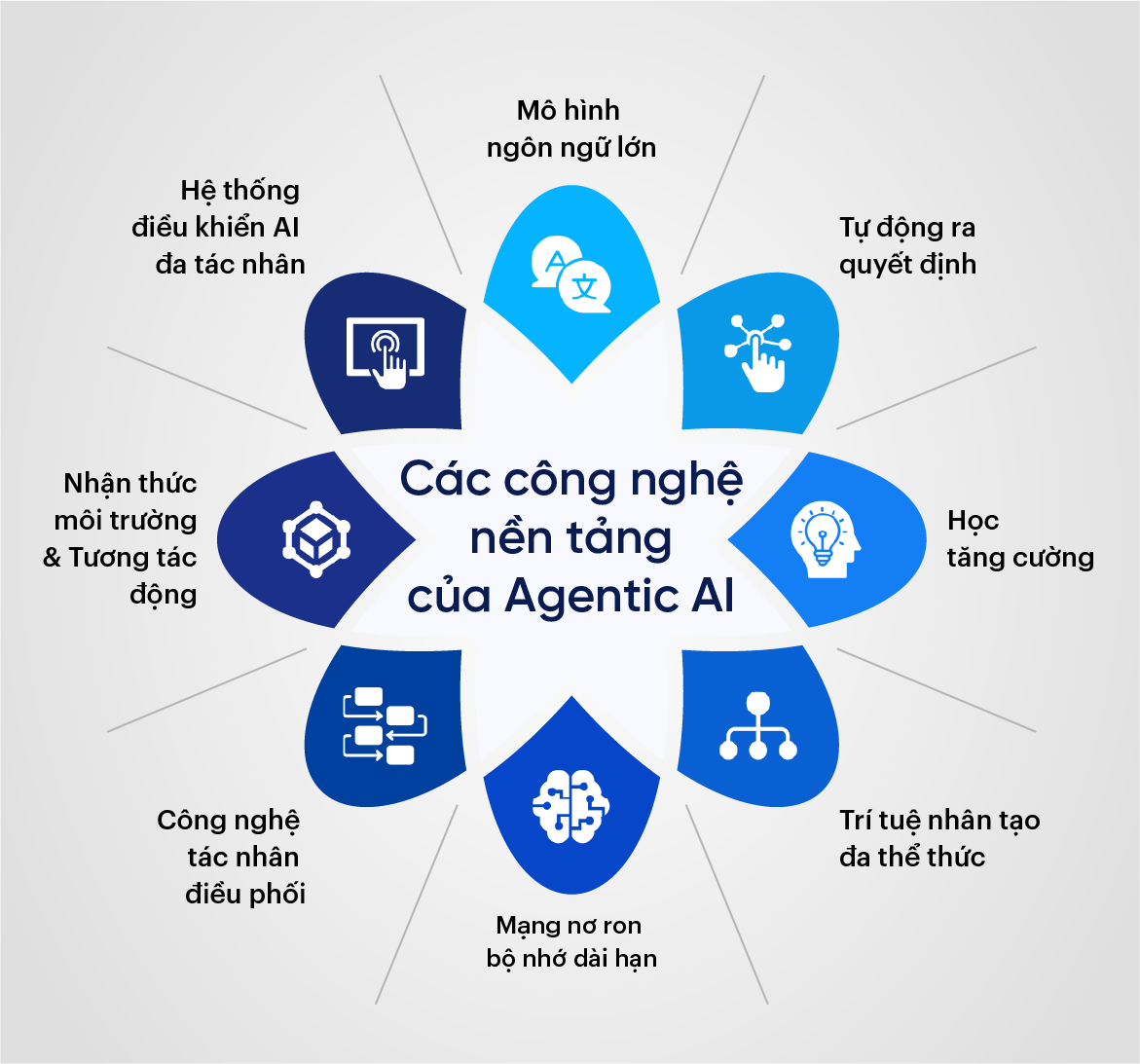
In many current Agentic AI systems, large language models (LLMs)—such as AI models capable of understanding and generating text—often act as the “brain” of the system.
Besides LLMs, an Agentic AI system typically includes important components such as:
-
Memory: stores information and results from previous processes to improve efficiency.
-
Planning module: helps the system determine the steps needed to achieve the goal.
-
Tool integration: allows the AI to use external software, data, or APIs.
-
Feedback loop: helps the system evaluate results and adjust its approach if necessary.
These components work together to enable Agentic AI to analyze situations, plan, and make decisions more effectively.
2.3. How Agentic AI Works
An Agentic AI system typically operates according to a process consisting of the following steps:
- Step 1: Define the objectives to be achieved.
- Step 2: Create a plan to find the best way to achieve the objectives.
- Step 3: Break down the work into specific tasks.
- Step 4: Select the appropriate AI agent or tool for each task.
- Step 5: Execute the work steps according to the plan.
- Step 6: Monitor and check the results during execution.
- Step 7: Adjust the approach as needed to achieve better results.
Thanks to this process, Agentic AI can handle complex tasks and continuously improve its operations.
2.4. Advanced Applications
Agentic AI is particularly suitable for complex tasks that involve multiple processing steps and various systems. Instead of humans having to manually monitor and coordinate each step, Agentic AI can independently plan, assign, and control the entire process.
Here are some easy-to-understand examples of how Agentic AI can be applied in practice:
Automating business workflows
In many companies, a workflow can involve multiple departments. For example: from when a customer submits a request → the sales department receives it → the technical department processes it → the customer care department responds.
Agentic AI can automatically monitor the entire process, assign tasks to each system, and ensure every step is completed on schedule.
Intelligent cybersecurity systems
In the field of security, Agentic AI can continuously monitor system activity, detecting unusual signs such as unauthorized access or the risk of a cyberattack.
When a risk is detected, the system can automatically issue alerts, block access, or activate security measures, helping to minimize damage before an incident occurs.
Intelligent project management
In large projects, tracking progress, assigning tasks, and updating work status often consume a lot of time.
Agentic AI can automatically monitor project progress, send reminders to team members, detect delayed tasks, and suggest plan adjustments.
Supply chain optimization
In manufacturing and logistics, businesses need to forecast market demand, manage inventory, and plan production.
Agentic AI can analyze sales data, predict future demand, and automatically recommend appropriate procurement or production plans
3. Detailed Comparison: AI Agent vs. Agentic AI
| Criteria | AI Agent | Agentic AI |
|---|---|---|
| Level of autonomy | Low level of autonomy. The AI only performs pre-programmed tasks or upon user request. | Higher level of autonomy. The system can independently determine what needs to be done and proactively execute tasks to achieve goals. |
| Task complexity | Typically handles single, well-defined, and repetitive tasks. | Can handle multi-step processes, including multiple interrelated tasks. |
| Proactiveness | Operates reactively: only works when triggered by a signal or request. | Operates proactively: can detect problems or opportunities and initiate appropriate actions on its own. |
| Learning capability | Limited learning capability, primarily improving within the scope of the assigned task. | Capable of learning and adapting strategies, changing its approach to achieve better results. |
| Decision-making process | Makes decisions based on rules, conditions, or pre-trained models. | Can analyze, reason, and adjust decisions based on real-time situations. |
| Scope of operation | Operates within a narrow scope, usually limited to a specific function. | Can connect and coordinate multiple systems, tools, or other AI agents. |
| Role in the system | Usually acts as a tool for executing specific tasks. | Acts as a coordinator or manager for the entire process. |
| Operational objective | Focuses on completing a task. | Focuses on achieving a goal or final outcome. |
| Real-world examples | Chatbots answering questions, email sorting bots, automated data entry systems. | AI project management systems, automated business process operations, or systems that coordinate multiple AI agents to achieve larger goals. |