


 12/05/2026
  269 views
Sales collaborators are one of the important factors that help businesses improve their business efficiency. They assist the sales department in tasks such as market expansion, reaching potential customers, etc. So, who are collaborators? How to build an effective sales collaborator system? This article by 1Office will answer all your questions.
Mục lục
1. Introduction to the collaborator system
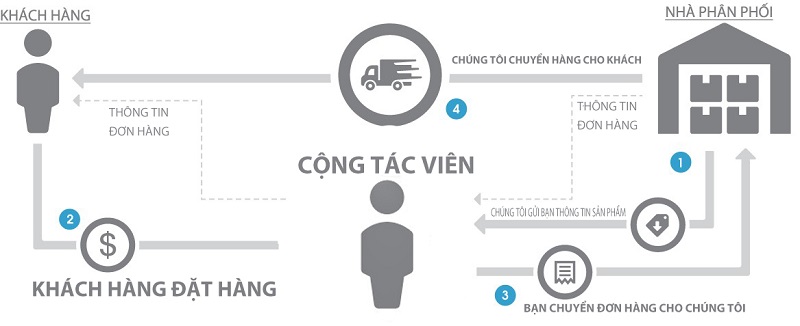
Who is a collaborator?
A collaborator is a freelancer who is not directly employed by any company. This type of work is quite popular among students because of its flexible working hours, and it also helps them accumulate valuable experience for their future careers. Collaborators are paid based on commission, the number of products sold, or the progress of a project.
Benefits of building a collaborator system
Successfully building a sales collaborator system will bring significant benefits to a business, not only in terms of revenue and sales but also in marketing and brand recognition. Specifically, a collaborator system can offer the following advantages:
A new, profitable sales channel
For a business, the collaborator/agent model (Affiliate Marketing) generates significant income without requiring a large advertising budget. Unlike a dedicated sales team, this model operates and earns money at all times. It is also considered a passive sales funnel for businesses looking to expand and scale more quickly.
Optimize personnel costs
Compared to other strategies like hiring more sales or marketing staff, building a collaborator system helps businesses save a significant amount on personnel salaries. Collaborators are typically paid only a commission on each successful order (5-25%).
Correctly identify potential customers
Collaborators are always the ones who understand and directly approach customers. Therefore, it provides an opportunity to reach a large number of potential target customers for the business or organization.
Contribute to increasing brand recognition
Any business or supplier participating in the sales collaborator or affiliate collaborator model will have a large team of people promoting their brand image. This is a large community of participants that your company’s marketing team cannot compare to, which is why affiliate marketing can help businesses increase brand recognition. In addition, businesses can also leverage high-quality backlinks (an important factor in website SEO).
2. Process for building a potential collaborator system
To build an effective collaborator system, businesses need to follow this process:
Step 1: Establish policies and contracts
Before starting to recruit collaborators, businesses need to create clear and transparent policies and contracts. This will help ensure the rights of both the business and the collaborators.
The necessary policies for collaborators include:
- Commission policy
- Discount policy
- Return and exchange policy
- Compensation policy
A contract needs to be signed between the business and the collaborator, clearly stating the rights and obligations of each party.
Reference the sample Collaborator Policy here!
Step 2: Develop a collaborator recruitment plan

The collaborator recruitment plan needs to clearly define the objectives, target audience, recruitment channels, and budget.
- Recruitment objectives can be to increase the number of collaborators, expand the market, or boost sales.
- The target audience for recruitment should be suitable for the business’s products and services.
- Recruitment channels can be online (website, social media, etc.) or offline (direct recruitment, etc.).
- The budget for recruitment activities must be balanced and appropriate for the company’s financial capacity.
Step 3: Search for potential collaborators
Defining the criteria and characteristics of a potential collaborator is crucial before starting the recruitment process. There needs to be a selection process to recruit collaborators who fit the characteristics, skills, and nature of the job. For example: Good communication skills, understanding customer psychology, etc. A high-quality initial selection will make the training phase easier for managers.
Channels/methods for finding potential collaborators:
- Post on recruitment websites like TopCV, Jobstreet, JobsGO, etc.
- Collaborator job groups on Facebook
- Through the existing network of collaborator contacts
After searching, the business needs to create a list of potential collaborators. This list should include basic information about the collaborators such as: name, age, address, phone number, email, etc.
Step 4: Train on products, marketing, and sales processes
In addition to the skills mentioned above, you need to thoroughly train collaborators on the product and skills such as consulting, sales, handling situations, etc. In-depth training will help collaborators improve their sales capabilities, thereby boosting the company’s revenue.
- Product training helps collaborators clearly understand the business’s products and services.
- Marketing process training helps collaborators build effective marketing strategies to reach customers.
- Sales process training helps collaborators close sales successfully.
Step 5: Evaluate Performance
Managers need to measure metrics and evaluate the performance of the collaborator system periodically (monthly, quarterly, annually), then screen each collaborator cyclically. This evaluation, measurement, and tracking will help you understand a lot of information, such as which customer segments are suitable for collaborators and which markets your sales and marketing teams have not covered or cannot work in.
The criteria for evaluating a collaborator’s performance may include:
- Tasks performed
- KPI completion rate
- Sales revenue
- Return and exchange rate
Note: Each company, industry, and product will have different methods and criteria for performance evaluation.
3. How to Optimize the Collaborator System

Provide a Specific Job Description
To achieve the best work efficiency, ensure collaborators clearly understand their tasks. You should provide hands-on guidance if you have time. Do not let them feel vague, directionless, or unsure about what they are doing, its purpose, or where the work is heading. If they feel the work is ineffective, they will soon resign or work irresponsibly.
Example of a basic job description for an online sales collaborator:
- Tasks to be done: Post product introductions on personal pages, nurture new Facebook accounts, join review groups, and post seeding content.
- Working hours: Flexible (Morning: 8 AM – 12 PM; Afternoon: 1 PM – 5 PM)
- Work requirements: Understand Facebook’s policies to avoid account suspension.
- Salary: Base salary support of 3 million VND + 20% commission/order + sales bonus
Set Clear and Suitable KPIs
KPIs are a measure of a collaborator’s performance. Businesses need to establish clear and suitable KPIs that align with the collaborators’ goals. A collaborator’s KPIs can be evaluated based on the following metrics:
- Number of new customers
- Sales revenue
- Number of orders
- Conversion rate
Have a Transparent Bonus and Penalty Policy
A job with set KPIs should have rewards for achievement and penalties for violations. This will help motivate the collaborator team to strive harder and not neglect their work. Managers can refer to some of the bonus and penalty policies below:
- Bonus of 500K VND for the collaborator with the highest weekly/monthly revenue.
- Increase commission by 5% for collaborators whose sales revenue exceeds expectations for 3 consecutive months.
- Impose a fine or terminate employment if a collaborator provides incorrect advice to customers or engages in fraudulent behavior during the sales process.
A transparent bonus and penalty policy helps collaborators clearly understand their rights and obligations. However, businesses need to build a policy that complies with legal regulations.
Provide Regular Encouragement and Motivation
Every leader wants their collaborators to strive and grow in their sales work. To achieve this, leaders need to take actions that positively impact their collaborators. One effective way is to feature outstanding individuals in the company.
Having top performers share their achievements, work experiences, and future career goals will inspire and motivate new collaborators. They will see that they can achieve similar success through effort and hard work.
Encouraging and motivating collaborators can be done through the following activities:
- Communicate regularly, listen to, and understand the thoughts and aspirations of collaborators.
- Promptly recognize and praise the achievements of collaborators.
- Create opportunities for collaborators to develop themselves and showcase their abilities.
- Establish a positive and friendly work environment.
4. 1Office CRM – Effective Collaborator System Management Software

With your current team of collaborators, are you feeling confused about how to manage them effectively? Don’t worry, 1Office CRM is here to help you solve this difficult problem. With its smart features, 1Office CRM helps managers:
- Collect and store collaborator information
- Track customer care history
- Export revenue and commission reports for each collaborator
- Evaluate KPI completion levels and automatically apply bonus and penalty mechanisms according to company policy
Compared to managing collaborators manually, which is costly in terms of both personnel and time, using software will help save a great deal of time and effort. This is an effective tool for solving the challenges of managing collaborators.
We hope this article has helped managers and business owners learn specifically about the process of building an effective collaborator system and acquire a team of potential collaborators for the future. We wish you success
















