


 09/05/2026
  107 views
A Personal Income Tax Refund is a legitimate right of taxpayers when the amount of tax provisionally paid is greater than the actual liability. Entering 2026, regulations on conditions, documents, and procedures for tax refunds continue to be standardized towards digitalization, helping employees be more proactive and convenient in the process.
Mục lục
- 1. Overview of Personal Income Tax Refunds
- 2. What are the conditions for a personal income tax refund?
- 3. Documents to Prepare for a 2026 Personal Income Tax Refund
- 4. Guide to online personal income tax refunds
- 5. Authorizing Another Party for Personal Income Tax Refund
- Question 2. Can I submit a tax refund application at any time?
- Question 3. How do I get a tax refund if I have income from multiple sources?
- Question 4. Can I get a tax refund if I don’t have a tax identification number?
- Question 5: What should I do if my tax refund application is rejected or requires additional information?
- Question 6: How will the tax refund be paid (bank transfer, cash)?
- Question 7: How long does it take to receive a personal income tax refund?
- Conclusion
1. Overview of Personal Income Tax Refunds
Below is basic information to help you understand the nature, applicable subjects, and significance of personal income tax refunds:
1.1. What is a personal income tax refund?
A personal income tax (PIT) refund is a procedure that allows taxpayers to receive back the excess tax paid to the State Budget during the tax year, when the actual tax payable is lower than the amount provisionally withheld.
Benefits of the tax refund procedure
- Receive overpaid tax back: The refund amount can range from a few hundred thousand to tens of millions of VND, depending on income level and the number of dependents eligible for deductions.
- Offset against the next tax period: If you choose not to receive cash, you can opt to carry forward the overpaid tax to the next tax period.
- Proactive and transparent personal finances: The tax finalization process helps you fully control your total income, deductions, and tax obligations for the year.
Note:
If you are required to pay additional tax but fail to file for finalization, you may be penalized according to regulations. Conversely, if you are eligible for a refund but do not complete the procedure, you will not face administrative penalties, but it means you will not receive the money you are entitled to.
1.2. In which month of the year should you file for a personal income tax refund?
The deadline for the tax refund procedure coincides with the tax finalization period, which is the last day of the 4th month after the end of the calendar year (usually April 30th). If April 30th falls on a public holiday, the deadline will be extended to the next working day as per regulations.
1.3. Processing time for tax refund applications
The time to receive a tax refund is stipulated in Article 75 of the 2019 Law on Tax Administration, specifically:
- Applications subject to refund first, inspection later: The processing time is no more than 06 working days from the date the tax authority receives a complete and valid application.
- Applications subject to inspection first, refund later: The processing time is no more than 40 working days from the date of receiving a complete and valid application.
Understanding the application processing deadlines will help taxpayers proactively track the progress and prepare all necessary documents, avoiding unnecessary delays.

Overview of personal income tax refunds
2. What are the conditions for a personal income tax refund?
To be eligible for a personal income tax refund, taxpayers must meet the following conditions:
- The individual has registered for a tax identification number and has a valid tax ID at the time of filing the tax finalization application.
- There is an overpayment of tax, including cases where: The tax paid is higher than the amount payable after finalization; Tax was paid, but the actual income did not reach the taxable threshold;
3. Documents to Prepare for a 2026 Personal Income Tax Refund
To carry out the personal income tax refund procedure, taxpayers need to prepare the following basic documents and papers:
- Tax finalization declaration form 02/QTT-TNCN: This is a mandatory form. When declaring, the individual chooses the option to receive a refund or offset it against the next period as needed.
- PIT withholding certificates: Issued by income-paying organizations in cases where tax has been withheld. It is necessary to compile all certificates corresponding to each income source within the year.
- Valid personal identification documents: Including Citizen ID Card/ID Card or passport, used to verify information when submitting the application in person or sending a scanned copy for online submission.
- Documents proving dependents (if registering for family circumstance deductions): This may include birth certificates, student confirmation letters, certificates of no income, or other relevant documents as required by regulations.
- Personal bank account information: This is the primary account used to receive the tax refund. This information must be declared accurately in the finalization form.
- Request for handling of overpaid tax: Only applicable when handling a separate overpaid tax amount, not concurrently with the tax finalization application.

Preparing documents for a 2026 Personal Income Tax Refund
4. Guide to online personal income tax refunds
Below is a detailed step-by-step guide to getting a personal income tax refund online, helping you complete the process quickly and correctly from home.
Method 1: PIT refund on the General Department of Taxation’s portal
Step 1: Access the e-Tax portal at: https://thuedientu.gdt.gov.vn
Step 2: Select the appropriate login method and enter your full account information.
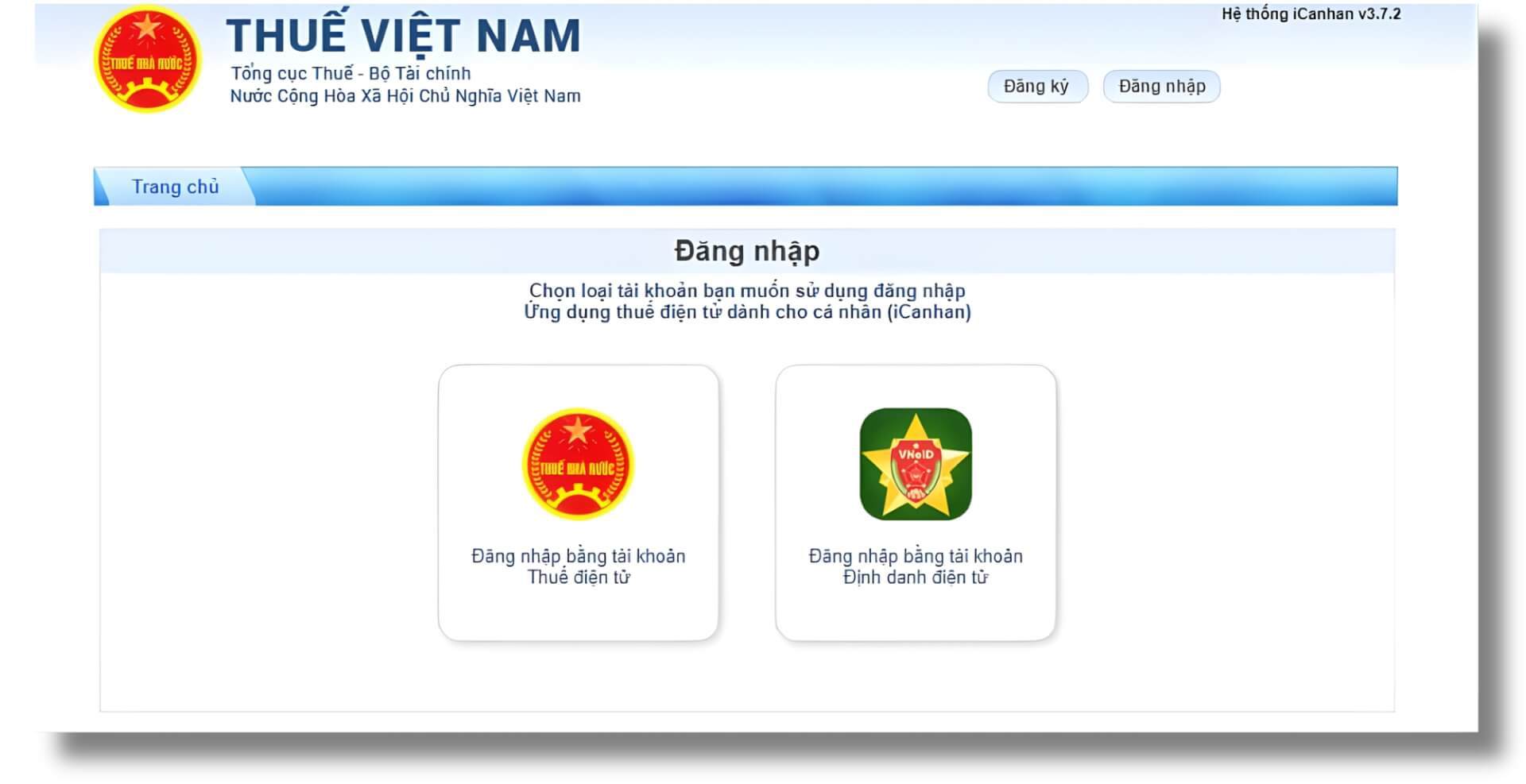
Illustration for step 2
Step 3: On the main interface, select Tax Finalization → Online Tax Declaration.
Step 4: Fill in the tax finalization declaration information
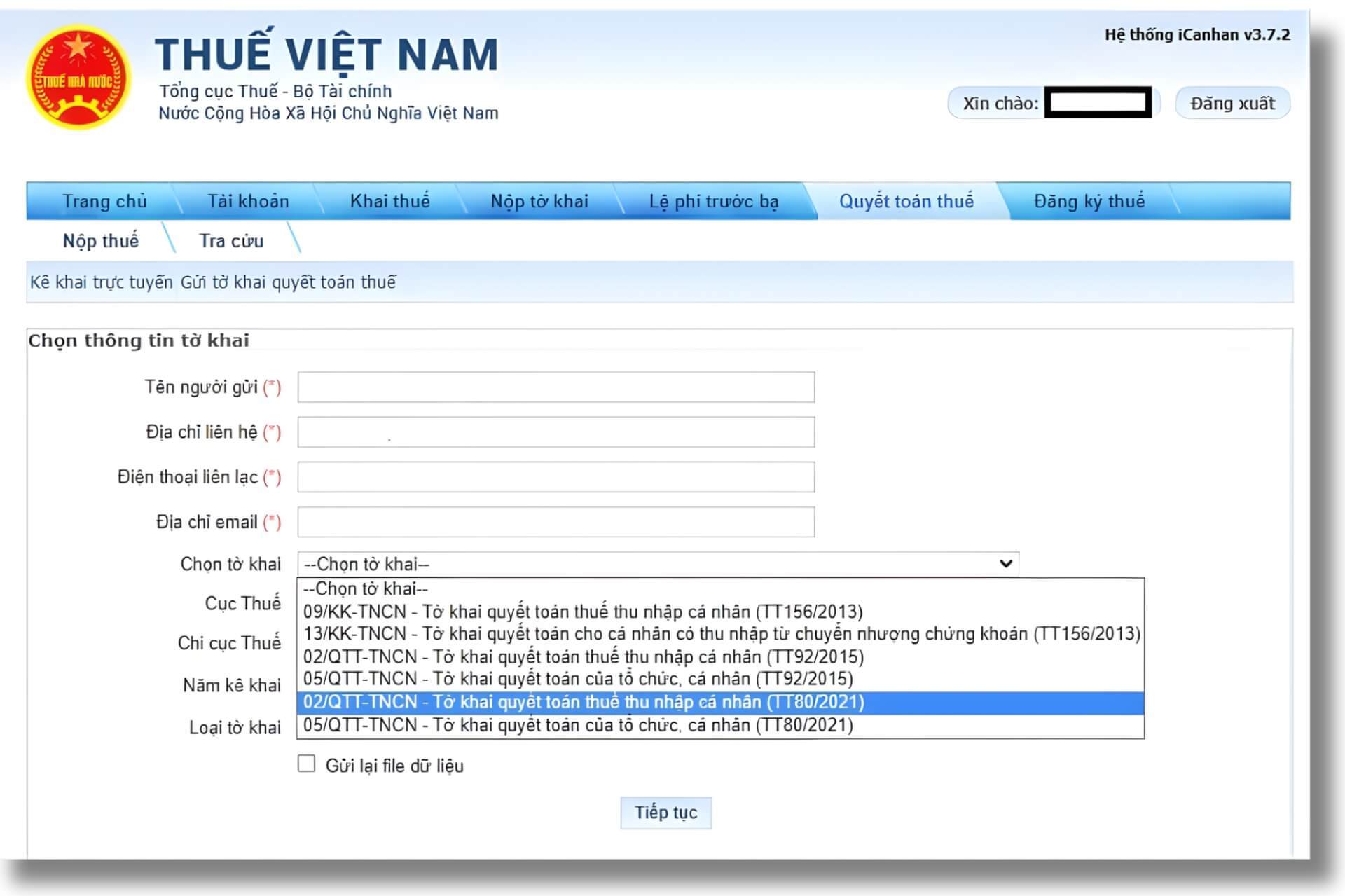
Illustration for step 4
The taxpayer fills in the following basic information:
After selecting the declaration form, the system displays the Tax Refund Request screen, where the taxpayer enters the data:
Declare income and deductions:
Other deductible amounts:
Information on tax paid:
Determine tax payable or refundable:
The system will automatically determine:
Declare tax refund request:
|
Step 5: Click Continue.
Step 6: Review and complete the declaration data.
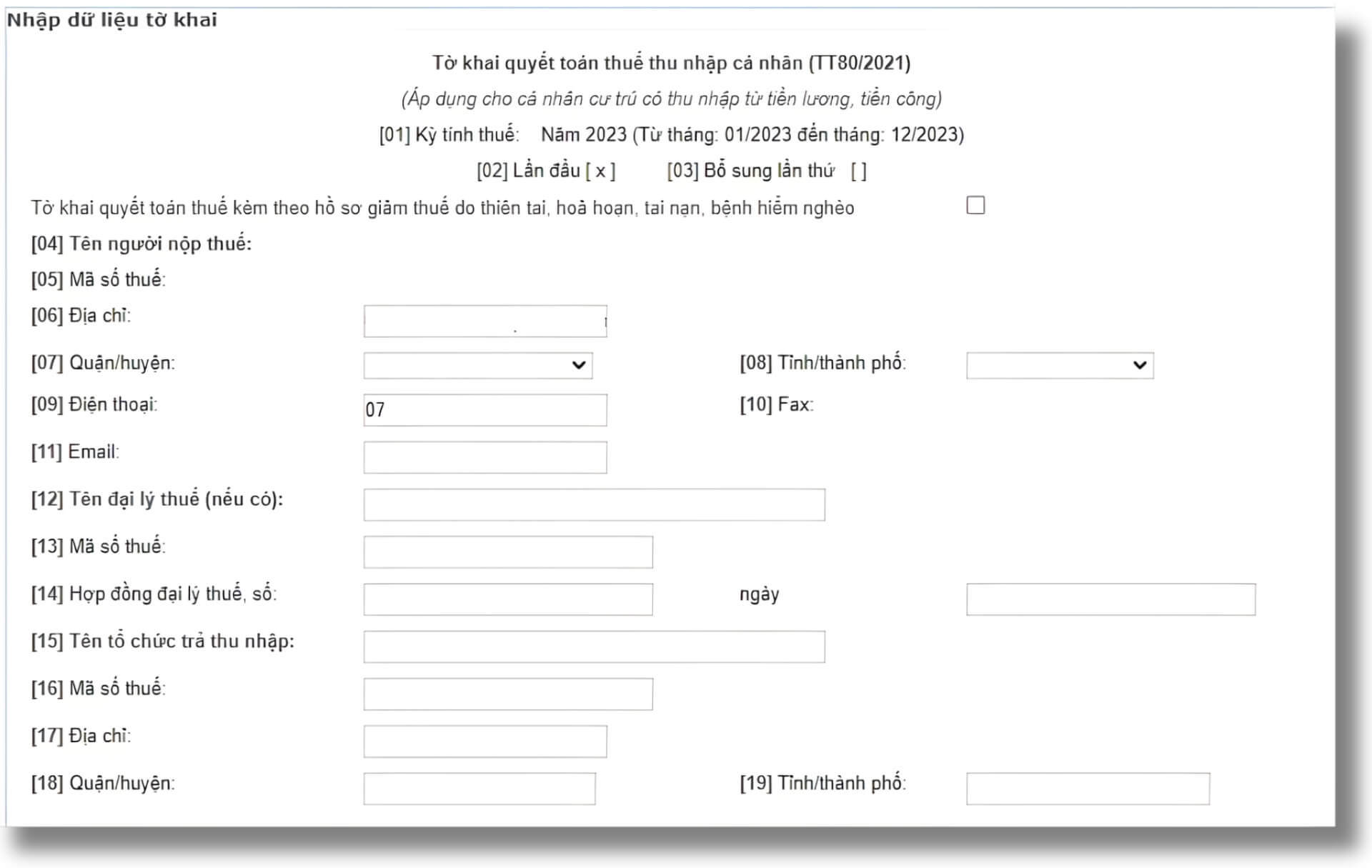
Illustration for step 6
Step 7: Select Complete Declaration.
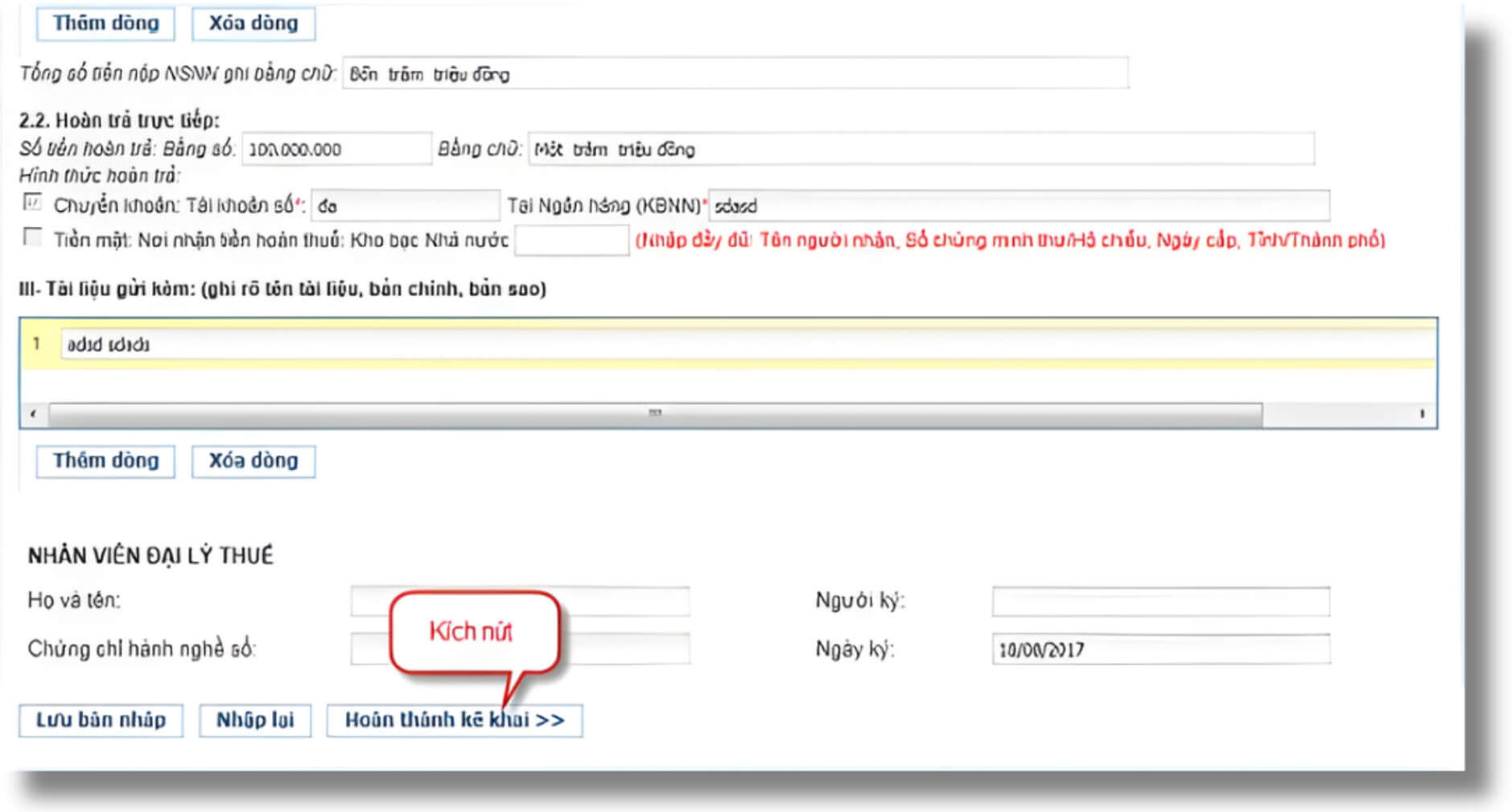
Illustration for step 7
Step 8: Export the XML Declaration, then select Sign and submit declaration, enter your PIN, and confirm.
The system will notify you that the declaration file has been signed successfully.
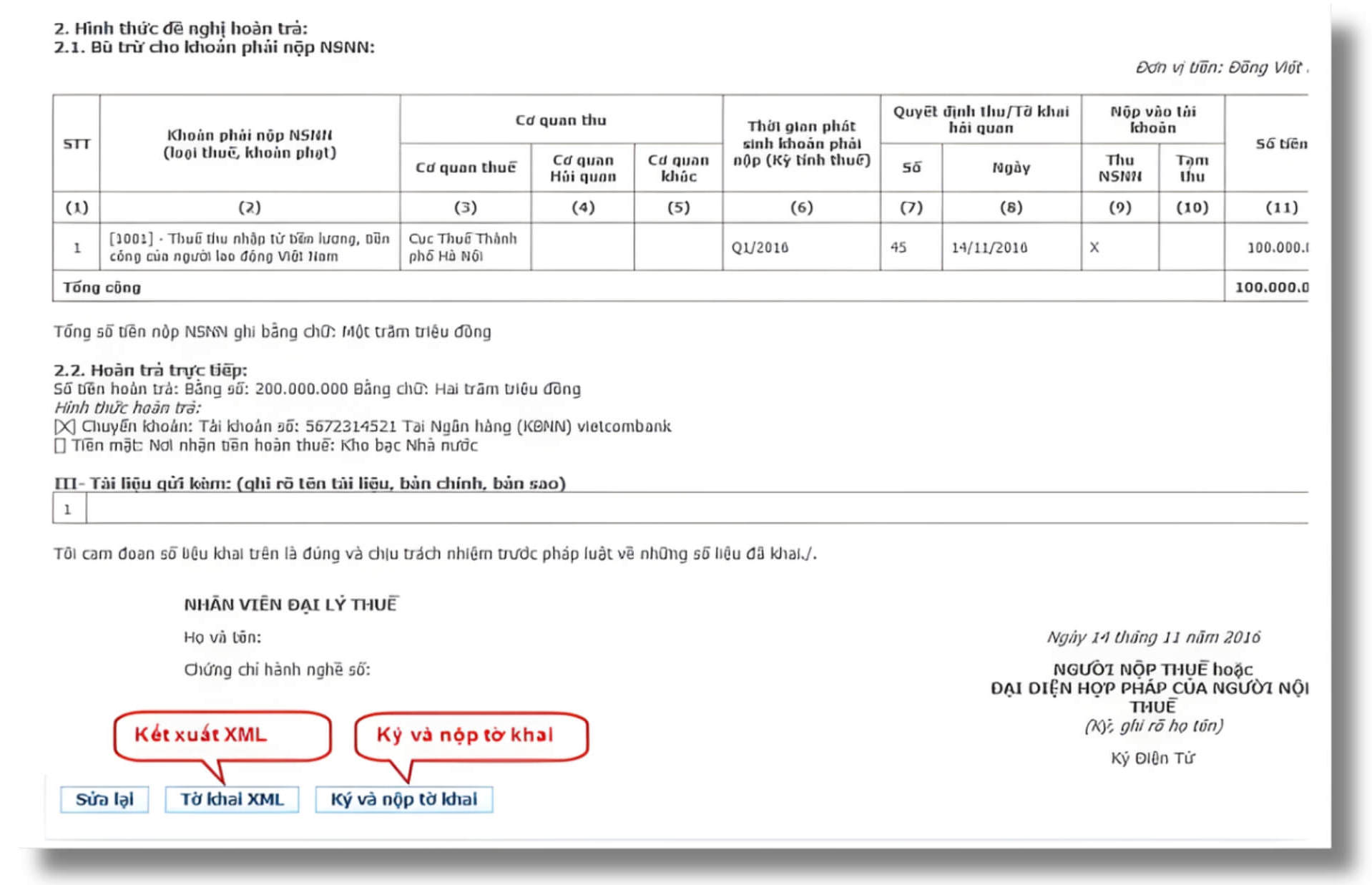
Illustration for step 8
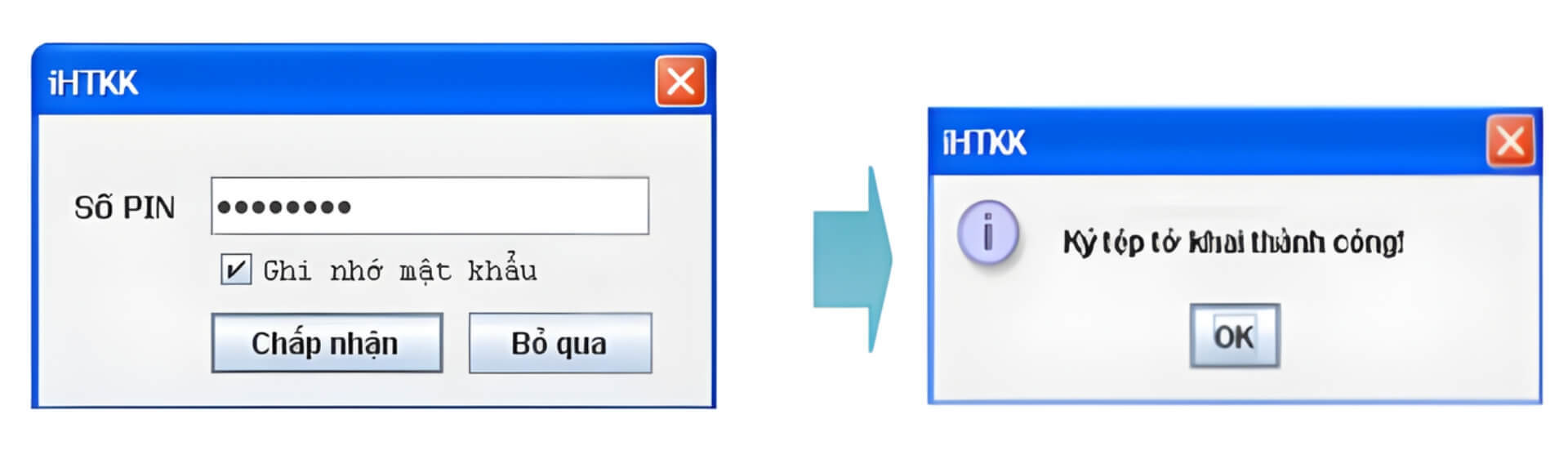
Completed
Method 2: PIT Refund on eTax Mobile
Step 1: Log in to the eTax Mobile application with your personal account.
Step 2: Select the Request to process overpayment function. Then, select the Tax Department and Sub-department (if any) that will receive the application → click Continue.
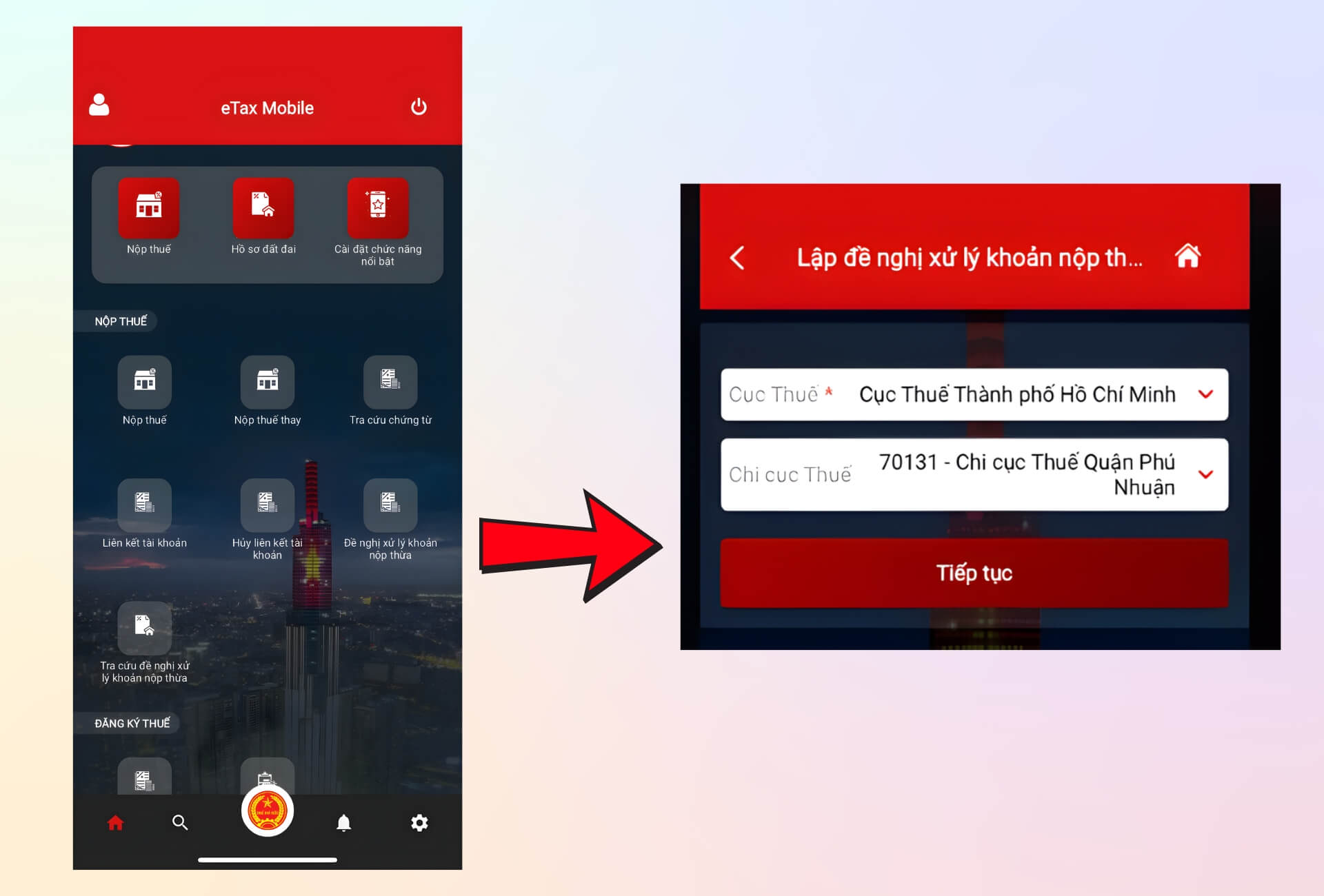
Illustration for step 2
Step 3: Enter the full information of the person requesting to process the overpayment → select Continue.
Note: Fields marked with an asterisk (*) are mandatory.
Then, review the information on the tax amount, late payment interest, and overpayment penalty → select Continue.
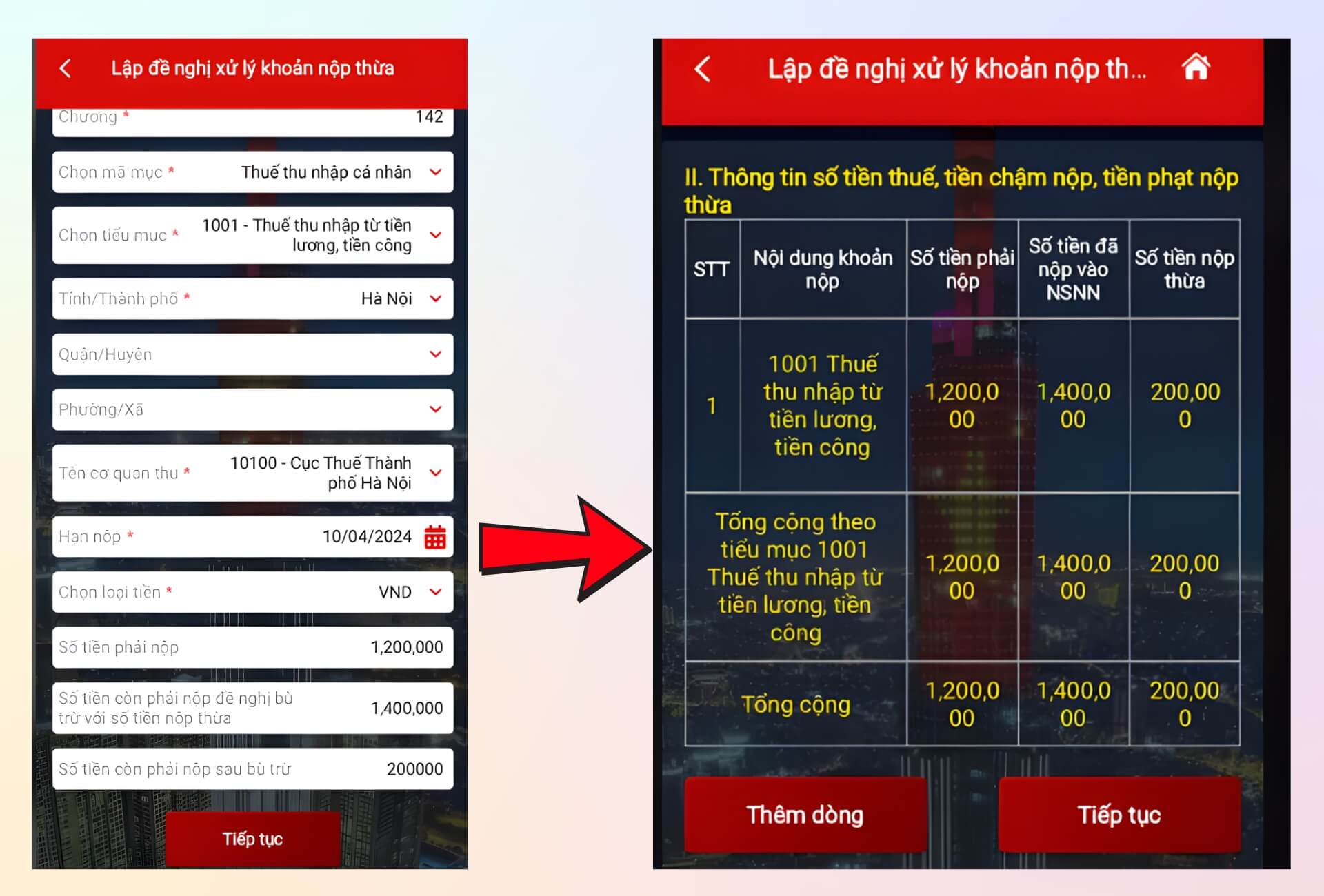
Illustration for step 3
Step 4: Declare the following amounts:
- Remaining amount payable
- Amount requested for offsetting against the overpayment
- Remaining amount payable after offsetting (if any)
After filling in all mandatory information, select Continue. Note: Fields marked with an asterisk (*) are mandatory.
Then, review all information regarding the requested amounts to be processed → select Continue.
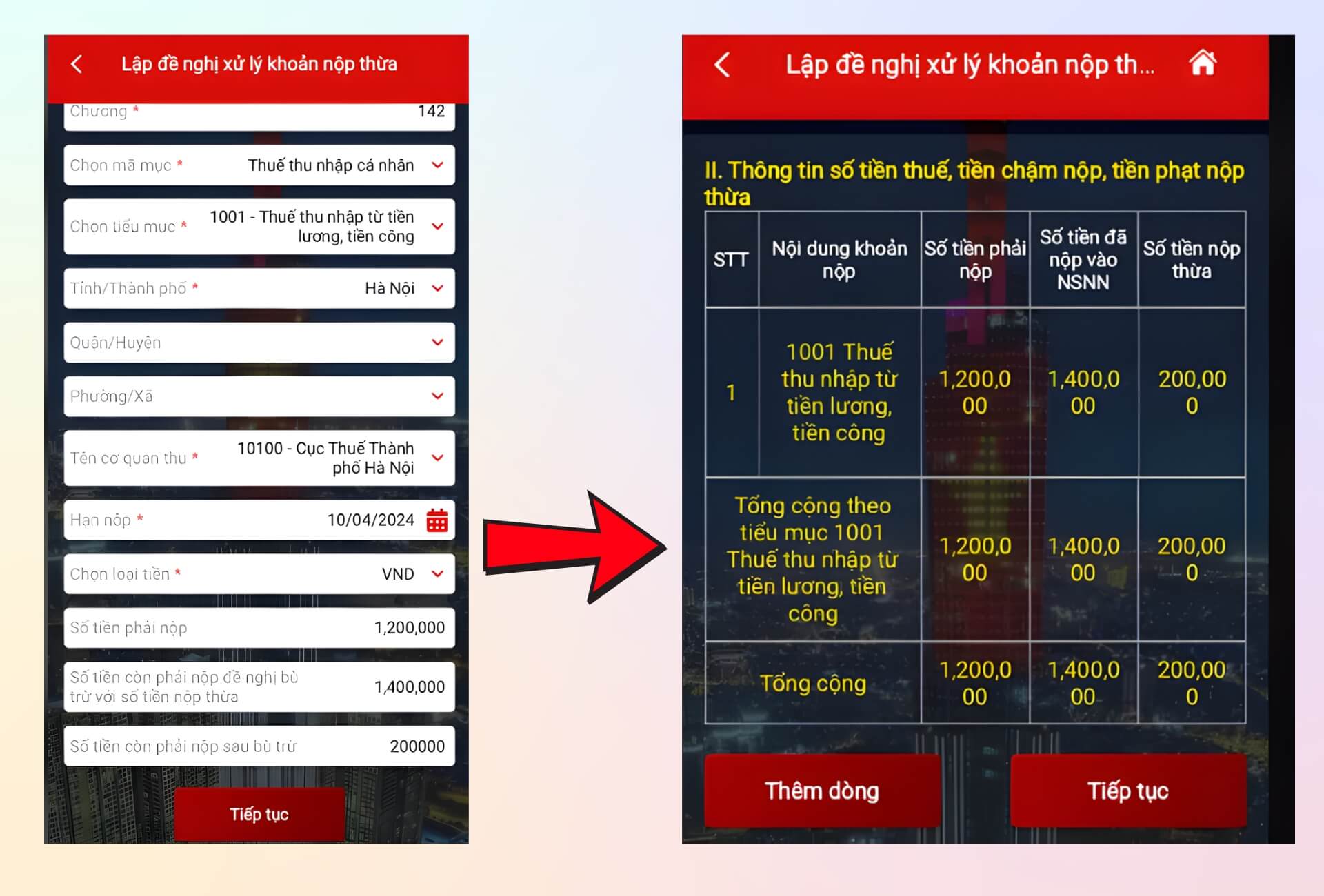
Illustration for step 4
Step 5: Name the attached file and select Tax Refund Request Form.
Declaration form used: 02/QTT-TNCN – PIT Finalization Declaration (TT80/2021)
You can download the declaration form template to attach to the application
Then click Continue.
Enter the OTP code sent to the taxpayer’s phone number → select Complete to submit the application.
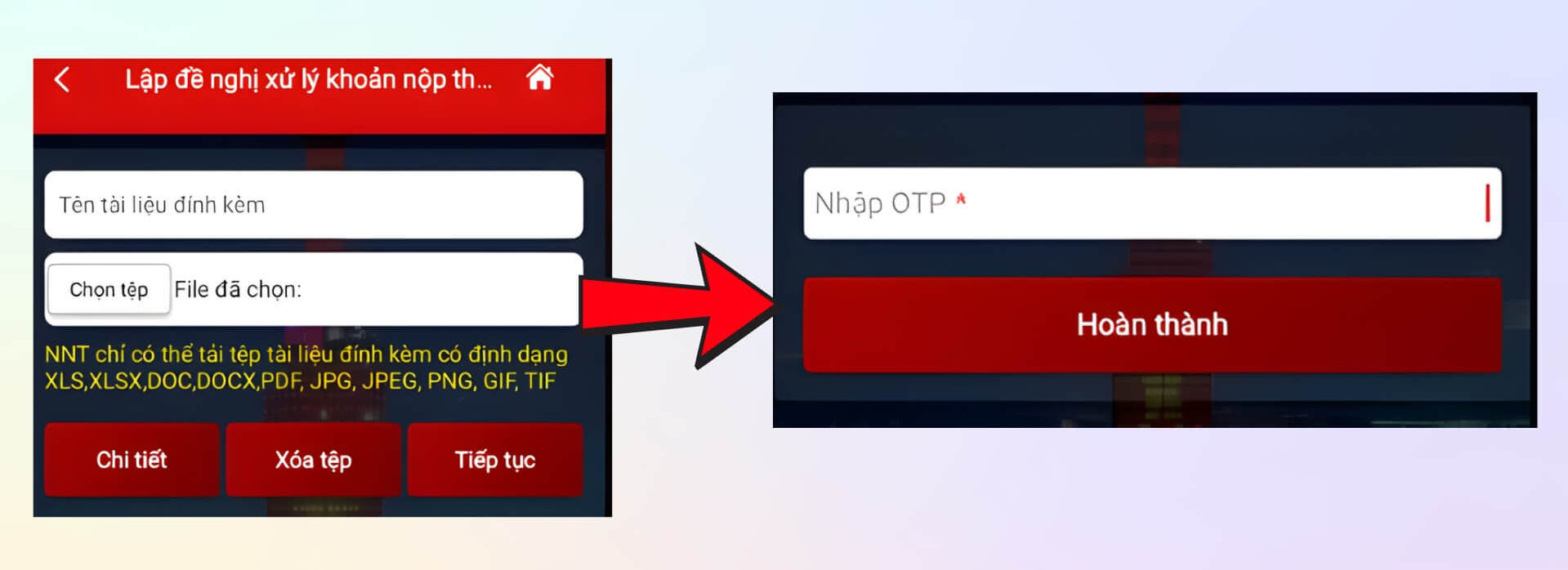
Illustration for step 5
(1) Who can authorize PIT finalization: An individual can authorize their income-paying organization to finalize their tax on their behalf if they meet all of the following conditions:
Condition 1: Having income from wages and salaries
- Signed a labor contract of 03 months or more
- <span style="font-weight: 4
If the results show that you have overpaid your taxes, you are eligible to proceed with the personal income tax refund procedure.
Question 2. Can I submit a tax refund application at any time?
Not exactly. The law allows individuals to submit a personal income tax refund application within a maximum period of 10 years from the deadline for filing the tax return for the period in which the tax overpayment occurred (according to the Law on Tax Administration).
However, for a swift and trouble-free process, you should adhere to the following timelines:
- Individuals filing their own tax finalization: Submit the application before April 30th of the following year (e.g., for the 2025 tax finalization, submit before April 30th, 2026).
- Cases authorizing the income-paying entity: The enterprise performs the tax finalization and submits the application before March 31st of the following year.
Note that if the 10-year period is exceeded, the overpaid tax amount will no longer be eligible for a refund.
Question 3. How do I get a tax refund if I have income from multiple sources?
When you have income from multiple sources, you cannot authorize another entity to file for you. You must personally complete the personal income tax finalization to consolidate all your income for the year. Based on this, the tax authority will redetermine the payable tax amount and any overpaid tax (if applicable) to consider for a refund.
The tax finalization application should be submitted to the tax authority that manages the entity paying the largest portion of your income during the year, as stipulated in Decree 126/2020/ND-CP (amended and supplemented by Decree 373/2025/ND-CP). If the income sources are of equivalent value, you can choose which tax authority to submit your application to.
The steps to determine the refundable tax amount are: consolidate all taxable income from all sources, apply statutory deductions, calculate the tax based on the progressive tax schedule, and then compare it with the total tax amount that has been withheld. If the tax paid is higher than the actual liability, you can proceed with the tax refund request.
Question 4. Can I get a tax refund if I don’t have a tax identification number?
No. A mandatory condition for receiving a personal income tax refund is that the individual must have a tax identification number (or a personal identification number, applicable from July 1, 2025) at the time of submitting the tax finalization/refund application.
Specifically:
- No tax ID number at the time of submission: You are not eligible for a refund. The withheld tax amount can only be considered for offsetting against future tax liabilities (if any).
- Registering for a tax ID number after earning income: This is acceptable, as long as you have a tax ID number before submitting the tax finalization or refund application.
Advice: You should register for a tax ID number early via eTax Mobile or directly at the tax office to avoid complications and ensure your rights when applying for a tax refund.
Question 5: What should I do if my tax refund application is rejected or requires additional information?
When there is an issue with your tax refund application, the tax authority will send a notification specifying the reason, which is often related to missing documents, data errors, or not meeting the refund conditions.
- If additional documents are requested: The taxpayer needs to complete and submit the additional documents by the deadline stated in the notification. The time taken for supplementation is not included in the tax refund processing time. Submissions can be made through the electronic portal or directly at the tax office.
- If the application is rejected: You are allowed to submit a supplementary declaration to correct errors as stipulated in Article 47 of Decree 126/2020/ND-CP and Circular 80/2021/TT-BTC. If you still disagree with the outcome, you have the right to appeal to a higher tax authority (the Provincial Tax Department or the General Department of Taxation).
You should carefully review your application before submission and regularly monitor its processing status on the eTax system to make timely additions or corrections as needed.
Question 6: How will the tax refund be paid (bank transfer, cash)?
Currently, personal income tax refunds are primarily paid via direct bank transfer to the personal bank account that has been registered and verified with the tax authority.
When submitting the tax finalization or refund application (via eTax Mobile or the canhan.gdt.gov.vn portal), the taxpayer must provide complete bank account information for the tax authority to process the payment.
Receiving payment in cash is only applicable in special and uncommon cases; therefore, bank transfer remains the preferred method as it is fast, secure, and transparent.
Question 7: How long does it take to receive a personal income tax refund?
The time to receive the tax refund depends on the application processing category as stipulated in Article 75 of the Law on Tax Administration 2019:
- Refund first, audit later (for simple, valid applications): The tax authority will process the refund within a maximum of 06 working days from the date of application acceptance.
- Audit first, refund later (for applications requiring verification): The processing time is a maximum of 40 days from the date of application acceptance.
- Automated system refund: Provided the application is complete, has no issues, and the bank account is verified, the money can be received in as little as 03 working days.
Note that these timelines are for the tax authority to issue the refund decision. Afterward, the money will be transferred by the State Treasury to the registered account. Taxpayers can track the application processing status on the eTax Mobile app.
Conclusion
In summary, for a correct and fast Personal Income Tax Refund, taxpayers need to prepare a complete application, have a valid tax identification number, and follow the correct finalization process. In practice, compiling documents, tracking application status, or coordinating with companies can still be time-consuming for many people.
For businesses, using an HR and payroll management platform like 1Office helps centralize the management of tax data, income, and finalization, reducing errors and supporting employees in carrying out their tax refunds more smoothly from the start. If you need detailed consultation or support in implementing a suitable solution, please contact the 1Office team for prompt and accurate guidance.
















