


 12/05/2026
  295 views
A purchasing process flowchart is one of the essential activities that businesses must establish and follow. By doing so, businesses can quickly accelerate their production and business activities, ensuring a quality and timely supply of goods. However, many businesses are still struggling, either not knowing how or having built a purchasing process that is not effective. So how can you build an effective purchasing process flowchart? Let’s find out with 1Office in the article below!
Mục lục
- I. Overview of the Purchasing Process Flowchart
- II. Description of the Purchasing Process in a Business
- Step 1: Identify Needs and Create a “Purchase Requisition”
- Step 2: Request for Quotation
- Step 3: Collect and consult other suppliers
- Step 4: Approve the quote
- Step 5: Create the purchase contract
- Step 6: Create “goods receipt proposal” and “goods inspection proposal”
- Step 7: Proceed with warehouse receiving
- Step 8: Complete the payment
- III. Advantages and disadvantages of the purchasing process
- IV. Methods for Managing and Building an Effective Purchasing Process Flowchart
- V. Some Notes for Implementing an Effective Goods Purchasing Process for Businesses
- VI. Conclusion
I. Overview of the Purchasing Process Flowchart
Below is some of the most basic information that anyone must grasp when starting to build a flowchart:
1. What is a purchasing process flowchart?
A purchasing process flowchart, or purchasing process, encompasses all activities/steps related to procuring goods/services within a business. When a business establishes a purchasing process, it can implement purchasing activities effectively. Specifically: faster purchasing, purchasing at a lower cost, better product/service quality, etc. Purchasing activities carried out according to a process create professionalism. Furthermore, in subsequent purchases, the business can still apply that process to purchase any product/service conveniently.
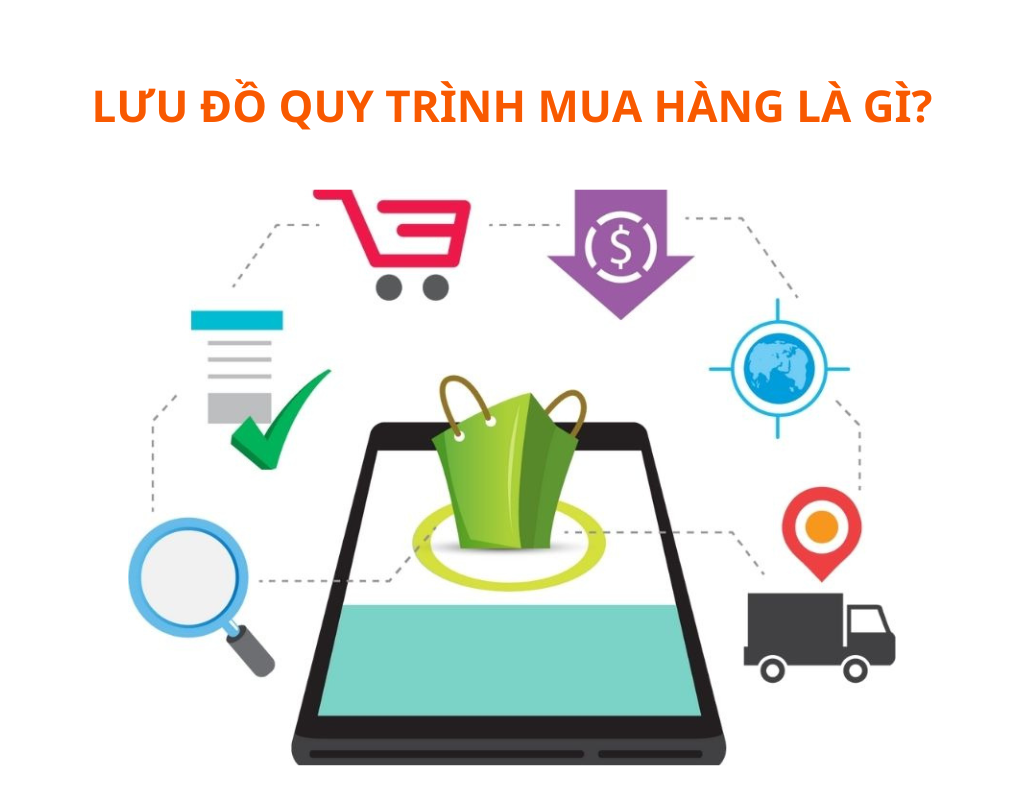
In general, the purchasing process is carried out in specific steps. However, many business owners ask the question: “Is it necessary to create a purchasing process flowchart?” Find the answer in the next section!
2. Do businesses need to draw a purchasing process flowchart?
In reality, many businesses have not drawn a purchasing process flowchart but still manage to purchase successfully. Immediately, business owners weigh the pros and cons of drawing a purchasing process flowchart versus not drawing one.
So, do businesses need to draw a purchasing process flowchart? Does carrying out purchases according to a process bring efficiency to the business?
– The answer is YES. Every business needs to build a purchasing process flowchart. Purchasing according to a process will bring the business countless benefits, such as:
- Cost optimization – purchasing at a low cost: Through the supplier selection process, the business can find suppliers with the lowest costs and highest quality.
- Choosing the right supplier: There are many suppliers on the market; the business’s job is to find the most suitable and satisfactory one. Naturally, drawing a flowchart will help the business do this easily.
- Selecting quality goods: The purchasing process flowchart will include a step for product quality inspection and supplier evaluation. This process will help the business select quality sources of goods.
- Limiting situations like overstocking or stockouts: Purchasing activities are carried out according to standards and actual needs. The business will ensure the quantity and demand for goods are met.
So how do you build a standard purchasing process flowchart? 1Office will share the detailed information with you in part (II) of this article.
II. Description of the Purchasing Process in a Business
Understanding the importance of a purchasing process flowchart, many businesses have built their own specialized purchasing processes. Based on 1Office’s synthesis and research, a purchasing process in a business is usually carried out in the following steps:

Step 1: Identify Needs and Create a “Purchase Requisition”
Purchasing activities are initiated when the business has a need. Specifically, the need comes from departments, managers, etc. To make a purchase, you first need to send a request to the department responsible for procurement operations. The purchase requisition will be approved by department heads or other authorized personnel.
Once the purchase requisition is approved, purchasing staff will be assigned, and the search for suppliers will begin.
Step 2: Request for Quotation
At this step, the person in charge of purchasing will search for suppliers and request quotes from them. It is recommended to find more than 3 suppliers for the most objective comparison and evaluation.
Step 3: Collect and consult other suppliers
After sending out quote requests, the next step in the purchasing process flowchart is for suppliers to send detailed quotes. Based on the purchasing criteria and conditions, combined with the quote data from suppliers, the best supplier is identified.
Step 4: Approve the quote
As mentioned above, the purchase request will be approved by department heads or relevant personnel. Therefore, when supplier quotes are received, the approver will base their decision on evaluation criteria such as:
- Price – promotions
- Reputation/brand
- After-sales warranty service
- Needs – suitability
Step 5: Create the purchase contract
After the evaluation and decision-making process, the most suitable supplier is selected, and the process moves to the contract creation stage. The contract will be made in 2 copies for signing to ensure the rights of both the supplier and the business.
*Note: The purchase contract must include complete information about the selling price, payment terms, receiving time, delivery time, commitments, contact information, etc.
In some other cases, the contract may be signed multiple times (based on the number of orders per purchase). The business must still ensure the above content is included to maintain accuracy and transparency.
The contract will be forwarded to relevant departments to serve as a basis for payment/debt tracking. At the same time, it helps track the goods receiving process and the quantity of goods in the warehouse.
Step 6: Create “goods receipt proposal” and “goods inspection proposal”
The sixth step in the purchasing process flowchart is to create a “goods receipt proposal” and a “goods inspection proposal”. At this stage, the responsible departments will monitor and receive the goods according to the schedule.
– Case 1: Goods meet standards
Inspect => Goods meet standards => Receive into warehouse => Create payment documents => Accounting department receives and re-verifies information => Pay the supplier.
– Case 2: Goods do not meet standards
Inspect => Goods do not meet standards => Report to the purchasing department => Contact the supplier => Receive standard-compliant goods into the warehouse (if any) => Provide feedback to the purchasing department for additions/corrections.
Step 7: Proceed with warehouse receiving
Establishing goods inspection criteria before receiving them into the warehouse is mandatory. This activity helps the business ensure the quality of goods upon receipt.

Each type of goods will have different evaluation and inspection criteria. Below are some basic goods inspection criteria in the purchasing process flowchart that businesses can refer to:
- Quantity
- Quality
- Barcodes and labels
- Packaging
- …
Goods that meet the receiving criteria will be entered into the company’s warehouse by the receiving department.
*Note: Items that do not meet the standards must be reported to the person in charge of purchasing for resolution.
Step 8: Complete the payment
Completing the payment is the final step in the purchasing flowchart. Based on the actual quantity of goods received into the warehouse compared to the quantity on the contract and any related terms (if any), the purchasing department prepares the payment documents. These are then transferred to the Accounting Department for verification and payment processing.
III. Advantages and disadvantages of the purchasing process
With the 8 steps mentioned above, businesses can more easily draw a purchasing process flowchart. In addition, businesses also need to clearly understand the advantages and disadvantages of the purchasing process to enhance purchasing efficiency within the company. Details are as follows:
1. Advantages:
Surveys of many businesses that have established an in-house purchasing process show many outstanding advantages compared to conventional procurement methods. Here are some of the key advantages compiled by 1Office:
2. Disadvantages:
The notion that “simply establishing a purchasing process guarantees efficiency” is completely mistaken. Any established process will only be effective for the business if it is executed CORRECTLY – COMPLETELY – CONSISTENTLY. Therefore, it is very difficult for a business to achieve its purchasing goals if:
IV. Methods for Managing and Building an Effective Purchasing Process Flowchart
As can be seen, purchasing is a frequent activity within a business, especially for manufacturing companies. With the high frequency and large quantity of goods in each purchase, it is very difficult for a business to control information about purchased goods using manual methods. Therefore, building a purchasing process flowchart combined with automated management methods is essential.
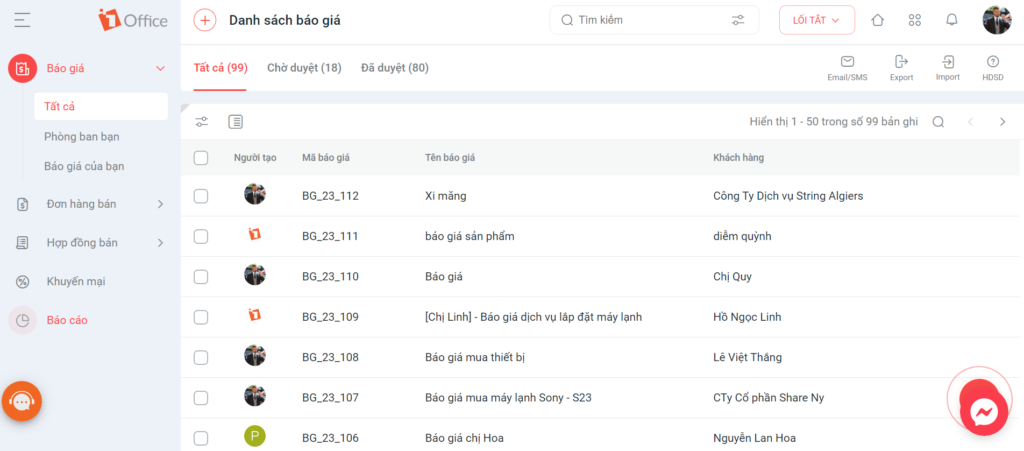
The purchase management feature of 1Office is a top choice for businesses’ purchasing activities today. Purchasing becomes easier and more efficient thanks to:
- The process is monitored comprehensively, systematically, and automatically.
- Track and grasp the detailed process right on the system, from anywhere, as long as the device has an internet connection.
- Evaluate the process’s effectiveness after each execution.
- Ensures professionalism in purchasing activities.
Purchasing activities are carried out QUICKLY – ACCURATELY – CONVENIENTLY with the following outstanding features:
- Centralized supplier management, facilitating communication and information tracking.
- Assign and track the overall person in charge. This means managers/executors can know the status of the purchasing process as well as who is responsible.
- Create payment vouchers and purchase orders quickly.
- Automatically store information and history of purchases/persons in charge.
- Easily search for order information using various filters.
V. Some Notes for Implementing an Effective Goods Purchasing Process for Businesses
Once you have drawn the purchasing process flowchart and applied support tools to your purchasing activities, businesses should also note a few basic things:
1. Determine When the Business Needs the Goods
The demand for goods varies at different times. Purchased goods must be delivered in a timely manner, otherwise business operations will be affected. Therefore, determining when the goods are needed is extremely important.
Answering the 5 questions below will help the business determine the detailed timing for the goods to be purchased:
- When to buy the goods?
- When will the goods be available?
- When will the goods be received?
- When will the goods be used?
- When will the goods run out?
2. Carefully consider the quantity
The quantity of goods purchased is not just about providing estimated figures. In the purchasing process flowchart or in standard purchasing methods, it also needs to be based on the company’s current and future needs. The quantity of goods to be purchased is determined by many factors, such as:
- Demand for purchasing and using goods
- Current and future inventory levels
- Level of necessity
- Revenue expectations and profit targets
- Risk assessment, buffer stock quantity

Determining the appropriate quantity of goods to purchase will help the business avoid overstocking, optimize storage costs, and control the supply source. This is also the foundation for promoting the company’s business activities.
3. Understand and track the actual status of the order
Many businesses leave everything to the supplier, leading to many unforeseen consequences such as late deliveries, poor quality goods, insufficient quantities, etc. Therefore, it is essential to understand and track the actual status of the order.
Continuously tracking purchased orders helps the business quickly and promptly implement contingency plans if problems arise. This ensures the best supply of goods to meet the company’s needs.
4. Determine when the business should place an order
Businesses purchase goods for various purposes. The goods may or may not be used immediately upon arrival. Therefore, the ordering time needs to be carefully considered based on criteria such as:
- The urgency of the goods
- The most advantageous time to buy (Price, discounts, available supply, etc.)
- Storage costs
- Safe storage capacity
VI. Conclusion
The purchasing process flowchart is a “portrait” that describes the steps of a company’s procurement process. It includes the following 8 basic steps:
- Step 1: Identify needs and create a “Purchase Request”
- Step 2: Request for quotation
- Step 3: Collect and compare quotes from different suppliers
- Step 4: Approve the quotation
- Step 5: Create a purchase contract
- Step 6: Create a “Goods Receipt Note” and “Inspection Request”
- Step 7: Proceed with inventory receiving
- Step 8: Complete payment
Purchasing and tracking the entire process—BEFORE, DURING, and AFTER the purchase—becomes easier when the business uses purchasing management software. This is one of the outstanding features researched and developed by 1Office, trusted by thousands of businesses of all sizes.
Thus, this article has shared with you how to build a detailed purchasing process flowchart for your business. We hope you find the content useful. Don’t forget to apply 1Office’s purchasing management software to optimize your procurement activities! We wish you success!
Contact us now for a detailed consultation on the Purchasing Management feature of 1Office via:
- Hotline: 083 483 8888
- Facebook: https://www.facebook.com/1officevn/
- Youtube: https://www.youtube.com/@1office-chuyendoisodn
















