09/05/2026
  170 views
Did you know that over 98% of businesses operating in Vietnam are small and medium-sized? They are the “backbone” of the economy, making significant contributions to GDP growth and job creation. However, many business owners are still unclear about the concept of what a small and medium-sized enterprise is. This article will be a comprehensive guide, decoding this most common type of business from A to Z.
Mục lục
- 1. What is a small and medium-sized enterprise?
- 2. Criteria for identifying small and medium-sized enterprises
- 3. Guide to calculating detailed criteria
- 4. Benefits and accounting regulations for small and medium-sized enterprises
- 5. Comparison of small and medium-sized enterprises with household businesses and the conversion procedure
- 6. Conclusion
1. What is a small and medium-sized enterprise?
Small and Medium Enterprises (SMEs) are legally registered business establishments according to the law, with a scale of capital, labor, or revenue at or below the medium level.
In Vietnam, this group of enterprises is classified into 3 specific levels:
- Micro-enterprises
- Small enterprises
- Medium-sized enterprises
This classification is not just a formality but an important legal basis for determining accounting regimes, tax policies, and preferential support packages that businesses are entitled to.

2. Criteria for identifying small and medium-sized enterprises
According to Article 5 of Decree 80/2021/ND-CP, the size of an enterprise is determined based on its main field of activity (divided into 2 groups: Agriculture – Forestry – Fisheries – Industry – Construction and Trade – Services) combined with indicators of the average annual number of employees participating in social insurance and total revenue or total capital.
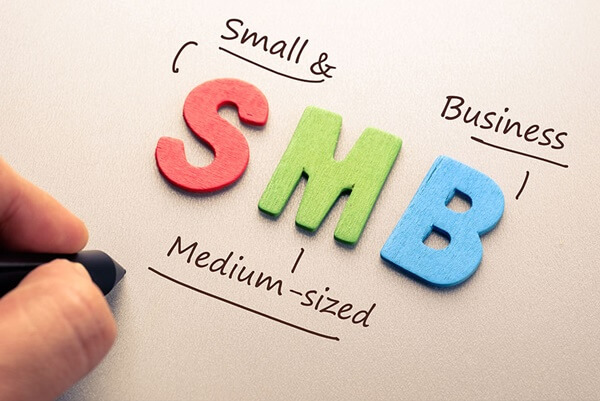
Below is a detailed criteria table for you to self-assess the size of a small and medium-sized enterprise:
2.1. Regulations for micro-enterprises
This is the largest group, often consisting of startups or family businesses.
| Business Sector | Average annual number of employees contributing to social insurance | Total annual revenue | Total capital |
| Agriculture, Forestry, Fisheries; Industry and Construction | Not more than 10 people | Not more than 3 billion VND | Not more than 3 billion VND |
| Trade and Services | Not more than 10 people | Not more than 10 billion VND | Not more than 3 billion VND |
2.2. Regulations for small businesses
This group has already seen some growth in scale and management structure.
| Business Sector | Average annual employees with social insurance | Total annual revenue | Total capital |
| Agriculture, Forestry, Fisheries; Industry, Construction | Not exceeding 100 people | Not exceeding 50 billion VND | Not exceeding 20 billion VND |
| Trade and Services | Not exceeding 50 people | Not exceeding 100 billion VND | Not exceeding 50 billion VND |
2.3. Regulations for medium-sized enterprises
Within the SME sector, these are considered the major players with stronger financial and human resources compared to small and micro-enterprises.
| Field of operation | Average number of employees participating in social insurance per year | Total annual revenue | Total capital |
| Agriculture, Forestry, Fisheries; Industry, Construction | Not more than 200 people | Not more than 200 billion VND | Not more than 100 billion VND |
| Trade and Services | Not more than 100 people | Not more than 300 billion VND | Not more than 100 billion VND |
3. Guide to calculating detailed criteria
To avoid confusion when determining business size, enterprises should note how to calculate the following indicators:
- Determine the field of operation: Based on the main business line the enterprise has registered. If the enterprise operates in multiple sectors, choose the one with the highest revenue. If it cannot be determined by revenue, it will be based on the sector that employs the most labor.
- Average annual number of employees participating in social insurance: Calculated by taking the total number of employees participating in social insurance for all months of the year and dividing by 12. If the enterprise has been operating for less than a year (e.g., newly established), calculate the total number of employees for the months of operation and divide by the actual number of months of operation.
- Total capital: This figure is determined from the balance sheet of the financial statement of the immediately preceding year, at the end of the year (December 31). If the enterprise is newly established, it is based on the charter capital stated in the business registration certificate.
- Total revenue: This is the total revenue from sales and service provision of the immediately preceding year. If the enterprise has no revenue or has been operating for less than a year, the determination criterion will be prioritized based on total capital.
4. Benefits and accounting regulations for small and medium-sized enterprises
Being classified as an SME brings many advantages in terms of administrative procedures and financial support.
4.1. Flexible accounting regulations
Small and medium-sized enterprises have greater “autonomy” in choosing an accounting system that suits their management capabilities:
- Choice of applicable Circular: Enterprises can choose to apply the Accounting System according to Circular 133/2016/TT-BTC (specifically designed for SMEs) or Circular 200/2014/TT-BTC (the general system for all enterprises) if they want stricter management.
- Special privileges for micro-enterprises: This group is also allowed to apply Circular 132/2018/TT-BTC with extremely simplified procedures: a smaller chart of accounts, no mandatory submission of the trial balance, and maximally simplified financial statements.
4.2. Government support policies
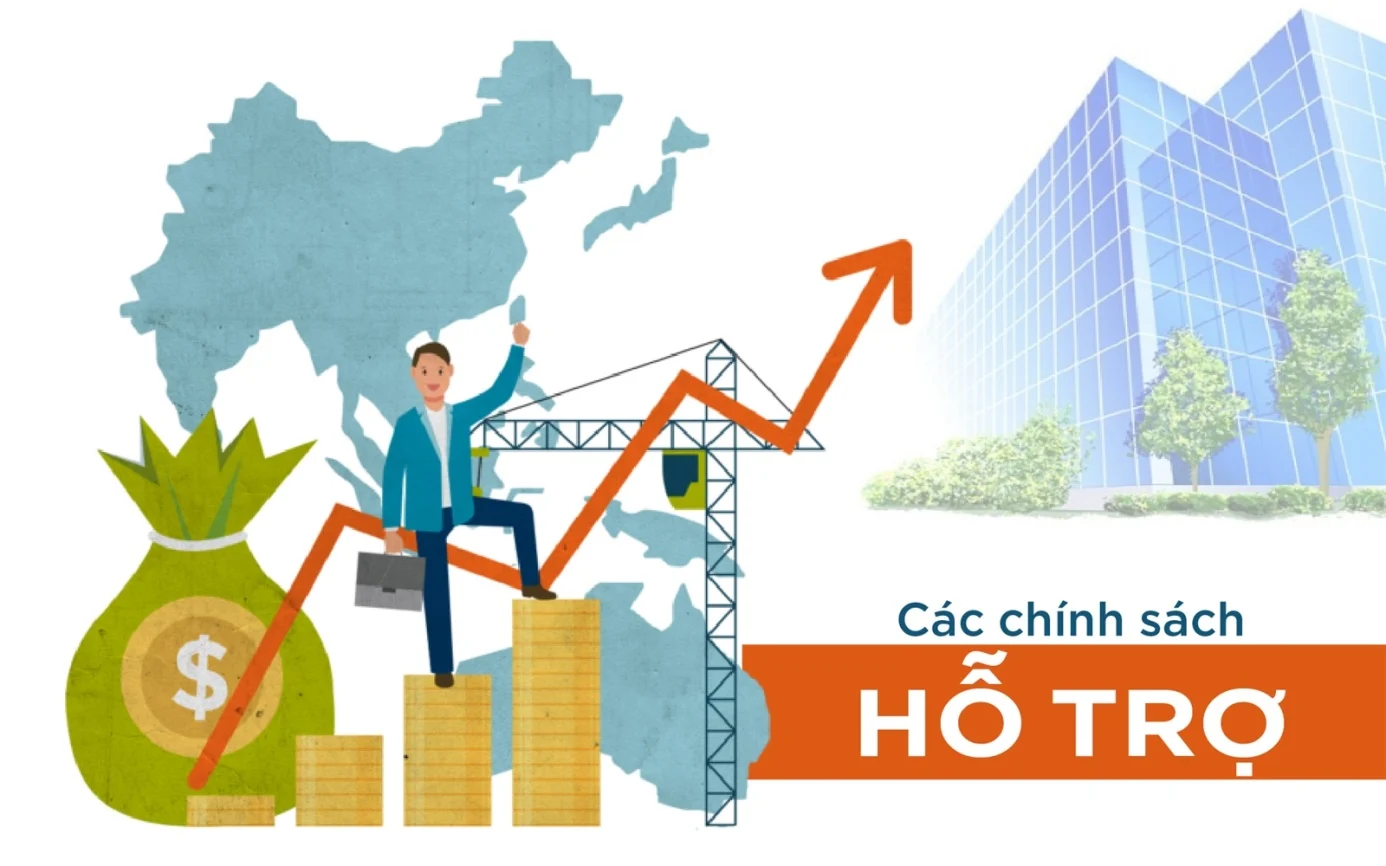
According to the Law on Support for Small and Medium-sized Enterprises, this group enjoys a range of practical incentives:
- Consulting support: The government supports 100% of the value of consulting contracts for micro-enterprises (up to 50 million VND/year) and 30-50% for small and medium-sized enterprises (up to 150 million VND/year).
- Technology & digital transformation support: Enterprises are supported with up to 50% of the cost of renting or purchasing digital transformation solutions, with a cap of 50 million VND/year (small enterprises) and 100 million VND/year (medium-sized enterprises).
- Access to capital and premises: They are given priority access to the Credit Guarantee Fund for Small and Medium-sized Enterprises, and are also supported with rental prices for premises in industrial parks and industrial clusters (maximum support period of 5 years).
5. Comparison of small and medium-sized enterprises with household businesses and the conversion procedure
During the expansion process, many household business owners often wonder: “Should I continue with the household business model or convert to an enterprise?”. To make the right decision, you need to clearly understand the differences between the two models and the appropriate time to convert.
5.1. Differences between small and medium-sized enterprises and household businesses
The comparison table below helps you clearly see the differences in legal nature, development potential, and suitability of each model:
| Comparison Criteria | Business Household | Small and Medium Enterprises |
| Scale & Revenue | Suitable for small scale. When revenue is high, it’s easy to be assessed a high flat-rate tax, which is risky if declarations are not accurate. | Suitable when revenue grows (e.g., >100 million/year). Helps make input-output costs transparent to optimize taxes. |
| Capital Mobilization Ability | Very difficult. Hard to get large bank loans or call for investment due to limited legal status. | Easier. Has a clear legal entity status, making it easier to access bank credit and attract investment capital. |
| Prestige & Brand | Lower level of trust in the eyes of large partners. | Creates a professional and trustworthy impression (“LLC”, “JSC”). Intellectual property and brand rights are better protected by law. |
5.2. When should you convert from a household business to a small and medium-sized enterprise?
A household business is like a small boat: flexible and easy to navigate in a small pond, but it cannot withstand large waves. Conversely, an enterprise is a registered ship; although more complex to operate, it is strong enough to venture into the open sea.
You should consider converting when:
- Scale and revenue increase significantly: When revenue is high (e.g., over 100 million VND/year), household businesses are subject to a fixed tax and risk having tax authorities impose a higher assessed revenue if their declarations are not accurate. Converting to an enterprise helps make input and output costs transparent, optimizing taxes.
- Need to raise capital: It is very difficult for a household business to borrow large sums from banks or call for investment capital. The enterprise model has a clear legal entity status, making it easier to access credit and investment capital sources.
- Want to increase credibility and professionalism: “Limited Liability Company” or “Joint Stock Company” always creates a more trustworthy impression than “Individual Household Business” in the eyes of partners and customers. Furthermore, enterprises receive better legal protection for their intellectual property and brand.
5.3. Documents and procedures for determining/declaring business scale
- Conversion procedure: Pursuant to Decree 01/2021/ND-CP, a household business can convert to a Private Enterprise, Limited Liability Company, or Joint Stock Company. The application file includes: An application for enterprise registration, the company’s charter, a list of members/shareholders, and personal identification documents.
- Self-declaration of scale: To benefit from the support policies mentioned above, enterprises need to proactively determine and declare their scale (micro, small, or medium) using the form specified in Decree 39/2018/ND-CP. The enterprise is legally responsible for the accuracy of this information.
6. Conclusion
Understanding what a small and medium-sized enterprise is not only helps you accurately position yourself in the market but is also the key to unlocking government support. Whether you are a micro or medium-sized enterprise, mastering the rules and making good use of support resources will help your business ship navigate the waves steadily and sail far.