What is an AI Agent Platform? Top Popular AI Agent Building Platforms in 2026


AI Agent Platforms are becoming a crucial foundation for building automated AI systems for businesses. Instead of just using chatbots or single AI models, these platforms allow for the creation and management of AI Agents capable of reasoning, planning, and executing multi-step tasks.
In this article, we will explore what an AI Agent Platform is, the common types of platforms, important features, and how to choose the right platform to effectively implement an AI Agent system.
Mục lục
- What is an AI Agent Platform?
- Why are AI Agent Platforms changing the way businesses operate?
- Key features to look for in an AI Agent Platform
- Prominent AI Agent Platforms in 2026
- Những thách thức khi triển khai AI Agent Platform
- The Future of AI Agent Platforms and Automated Enterprises
- Discover the AI Agent Solution for Businesses from 1Office
What is an AI Agent Platform?
An AI Agent Platform is a platform that helps create and manage AI Agents – AI assistants that can automatically perform tasks based on assigned goals. Unlike typical chatbots that only answer individual questions, an AI Agent can remember information, think through the necessary steps, and autonomously execute a series of actions to complete a task. Simply put, an AI Agent is like a virtual assistant that can work in place of a human for certain processes.
To function, an AI Agent typically has several basic capabilities, such as:
-
Information gathering: retrieving data from systems, documents, or the surrounding environment.
-
Memory: saving data or work history for future use.
-
Analysis and planning: understanding the task and determining the necessary steps to execute it.
-
Taking action: interacting with software, data, or other tools to complete the job.
-
Learning and improving: using past data and results to work more effectively.
The AI Agent Platform is what provides the tools to build, manage, and operate these AI Agents. This enables businesses to automate many tasks such as customer support, data processing, sales assistance, or internal process management.
Why are AI Agent Platforms changing the way businesses operate?
AI Agent Platforms are creating a major shift in how businesses organize and run their operations. Instead of just using AI to support individual tasks, these platforms allow for the deployment of AI systems capable of automatically executing complex workflows, coordinating with multiple systems, and taking action based on data. This helps businesses improve efficiency, speed up task processing, and optimize operational costs.
Enhanced automation and efficiency
AI Agent Platforms allow businesses to automate many types of tasks, from repetitive duties to multi-step processes that require coordination between multiple systems. AI Agents can collect data, analyze information, and take action according to a pre-established workflow.
As a result, businesses can significantly reduce manual workloads and allow their teams to focus on more strategic tasks.
Real-world examples:
-
In e-commerce: An AI Agent can automatically track order statuses, send shipping notifications to customers, handle return requests, and update data in the inventory management system.
-
In customer service: An AI Agent can receive support requests, classify issues, retrieve data from internal systems, and provide an initial response before escalating to a human agent.
-
In data analytics: An AI Agent can automatically aggregate data from multiple sources, generate periodic reports, and send analytical insights to the management team.
Flexible scalability
AI Agent Platforms help businesses scale their operations without a corresponding increase in headcount. The agents can handle thousands of requests simultaneously and operate continuously without being limited by working hours.
Additionally, AI Agents can learn from data and improve their performance over time, making the system increasingly more effective.
Example: A global e-commerce platform can deploy an AI Agent to handle tens of thousands of customer support requests daily, including order lookups, product information inquiries, and complaint resolution. This helps the system maintain service quality even during sudden spikes in customer traffic.
Improved decision-making capabilities
AI Agent Platforms allow businesses to leverage large-scale data to support the decision-making process. The agents can collect data from various sources, analyze it quickly, and provide data-driven recommendations.
For example:
-
In retail, an AI Agent can analyze sales data by region and forecast product demand during peak seasons.
-
In finance, an AI Agent can monitor for unusual transactions and alert the risk control department.
-
In manufacturing, an AI Agent can analyze data from machinery systems to predict potential failures and recommend a maintenance schedule.
These capabilities help businesses make faster and more accurate data-driven decisions.
Personalized customer experience
AI Agent Platforms enable businesses to provide a personalized experience for each customer, even at a large scale. The agents can analyze behavioral data and interaction history to deliver relevant content or recommendations.
For example:
-
A streaming platform can use an AI Agent to suggest content based on a user’s viewing history.
-
An e-commerce system can recommend products that align with previous shopping behavior.
-
In customer service, an AI Agent can retrieve interaction history to provide more accurate and faster responses.
This helps businesses enhance the customer experience and increase brand engagement.
Cost optimization and improved ROI
Implementing an AI Agent Platform helps businesses significantly reduce operational costs, especially in processes that handle large volumes of data or require a large workforce.
Through automation and process optimization, businesses can:
-
Reduce personnel costs for repetitive tasks
-
Increase task processing speed
-
Enhance the overall efficiency of the operating system.
For example, a logistics company can use an AI Agent to automatically plan optimal delivery routes based on traffic data and delivery demands. This helps reduce fuel costs, optimize delivery times, and improve operational efficiency.

Key features to look for in an AI Agent Platform
When choosing an AI Agent Platform, businesses need to evaluate the platform’s core features to ensure the system can operate stably, scale easily, and integrate well with existing infrastructure. An effective AI Agent Platform not only supports agent creation but also provides orchestration, governance, monitoring, and development capabilities in an enterprise environment.
AI Agent Orchestration Capabilities
In many modern AI systems, a task is often performed by multiple agents collaborating. Therefore, an AI Agent Platform needs multi-agent orchestration capabilities to help divide and manage tasks within an automated workflow.
The platform must allow for the design of multi-step processes and ensure that agents can collaborate effectively to complete tasks.
Key capabilities include:
-
Managing multiple AI Agents within the same system
-
Orchestrating complex automation workflows
-
Allocating and routing tasks among agents
Integration with Enterprise Systems
For an AI Agent to operate effectively, the platform must support integration with the systems and tools the business is already using. This allows the agent to access data and perform actions directly within operational processes.
Commonly integrated systems include:
-
CRM for managing customer data
-
ERP for processing operational and financial information
-
Communication tools like Slack or Microsoft Teams
-
Data systems or internal software
Integration is typically done through APIs or pre-built connectors.
Memory and Context Management
An effective AI Agent needs the ability to remember information from previous interactions to maintain context and improve response quality. Therefore, the AI Agent Platform must provide mechanisms for memory management and contextual data retrieval.
Key capabilities include:
-
Long-term memory storage for extended interactions
-
Remembering conversation or task history
-
Contextual data retrieval using RAG (Retrieval-Augmented Generation) techniques
Reasoning and Planning Mechanisms
Unlike traditional chatbots, an AI Agent needs the ability to analyze goals and plan task execution. The platform must support reasoning mechanisms so the agent can break down tasks and process them step-by-step.
Key capabilities include:
-
Analyzing and understanding task requirements
-
Breaking down processes into executable steps
-
Adjusting plans when data or conditions change
System Monitoring and Observability
In an enterprise environment, monitoring the activity of AI Agents is crucial to ensure performance and detect errors promptly. Therefore, the platform must provide tools for monitoring and analyzing agent activity.
Common features include:
-
Real-time monitoring of agent activity
-
Logging processing steps and actions
-
System performance analysis
-
Debugging tools for error checking
Governance and Security
When an AI Agent processes business data, security and governance factors become especially important. The AI Agent Platform must provide access control mechanisms and ensure data is processed in compliance with regulations.
Essential elements include:
-
User access permissions
-
Data security and protection of sensitive information
-
Compliance with standards like GDPR or HIPAA
-
Human-in-the-loop mechanisms for human oversight of critical decisions
Scalability and Development Environment
Finally, an AI Agent Platform must be designed with flexible scalability to meet the growing needs of the business. The platform should support deployment on cloud infrastructure and provide a development environment suitable for both technical and non-technical users.
Some key factors include:
-
Ability to deploy at a large scale
-
Cloud-native or serverless architecture
-
Intuitive interface for no-code / low-code users
-
SDKs and development tools for developers
These features help make an AI Agent Platform a comprehensive foundation for building, managing, and operating automated AI systems within a business.
Prominent AI Agent Platforms in 2026
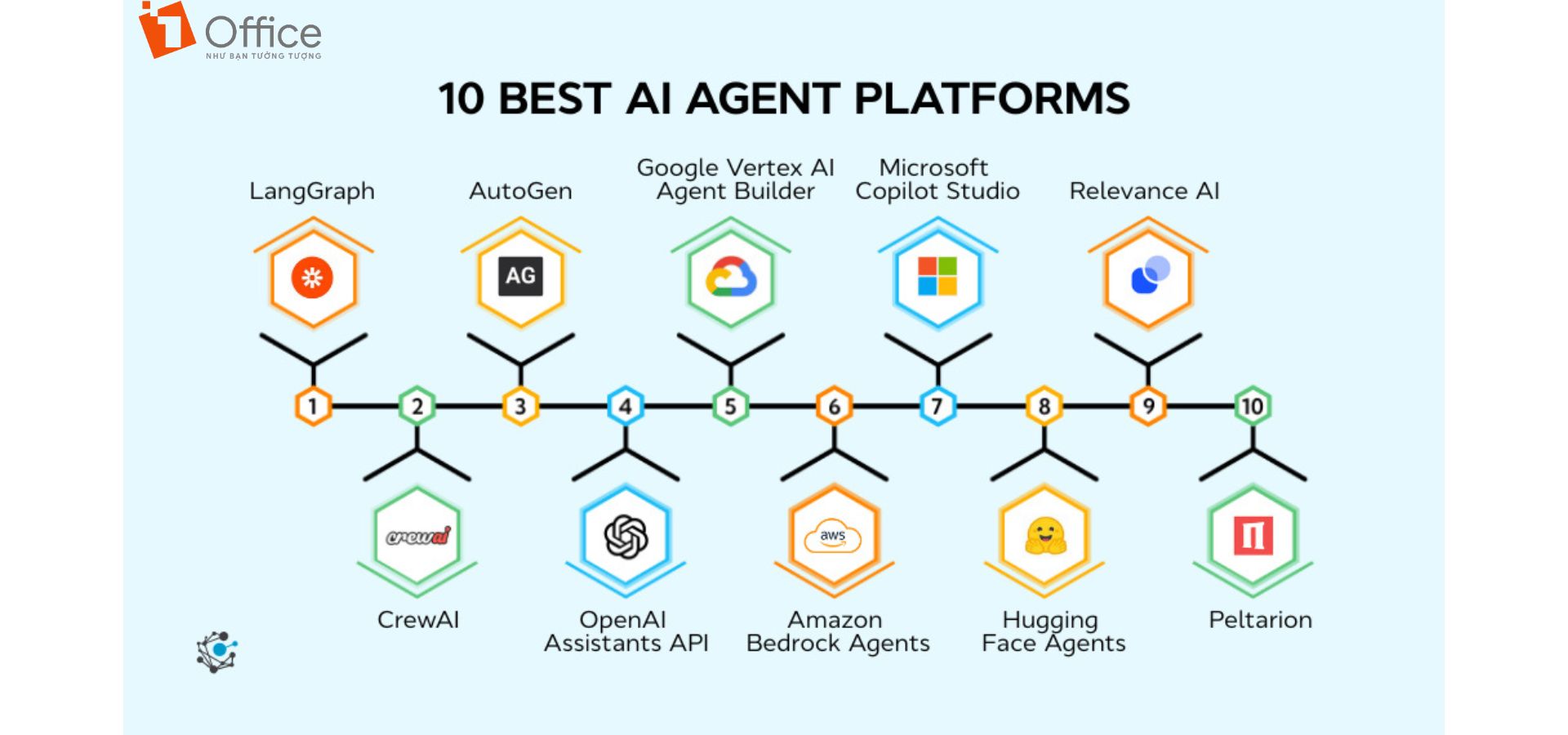
The rapid development of AI Agents has spurred the emergence of many platforms and frameworks that support the building, deployment, and management of automated AI systems. Depending on their needs, businesses and developers can choose suitable platforms—from open-source frameworks for AI engineers to enterprise or no-code platforms that enable rapid deployment of automation workflows.
Below are some of the prominent AI Agent Platforms widely used in 2026.
CrewAI
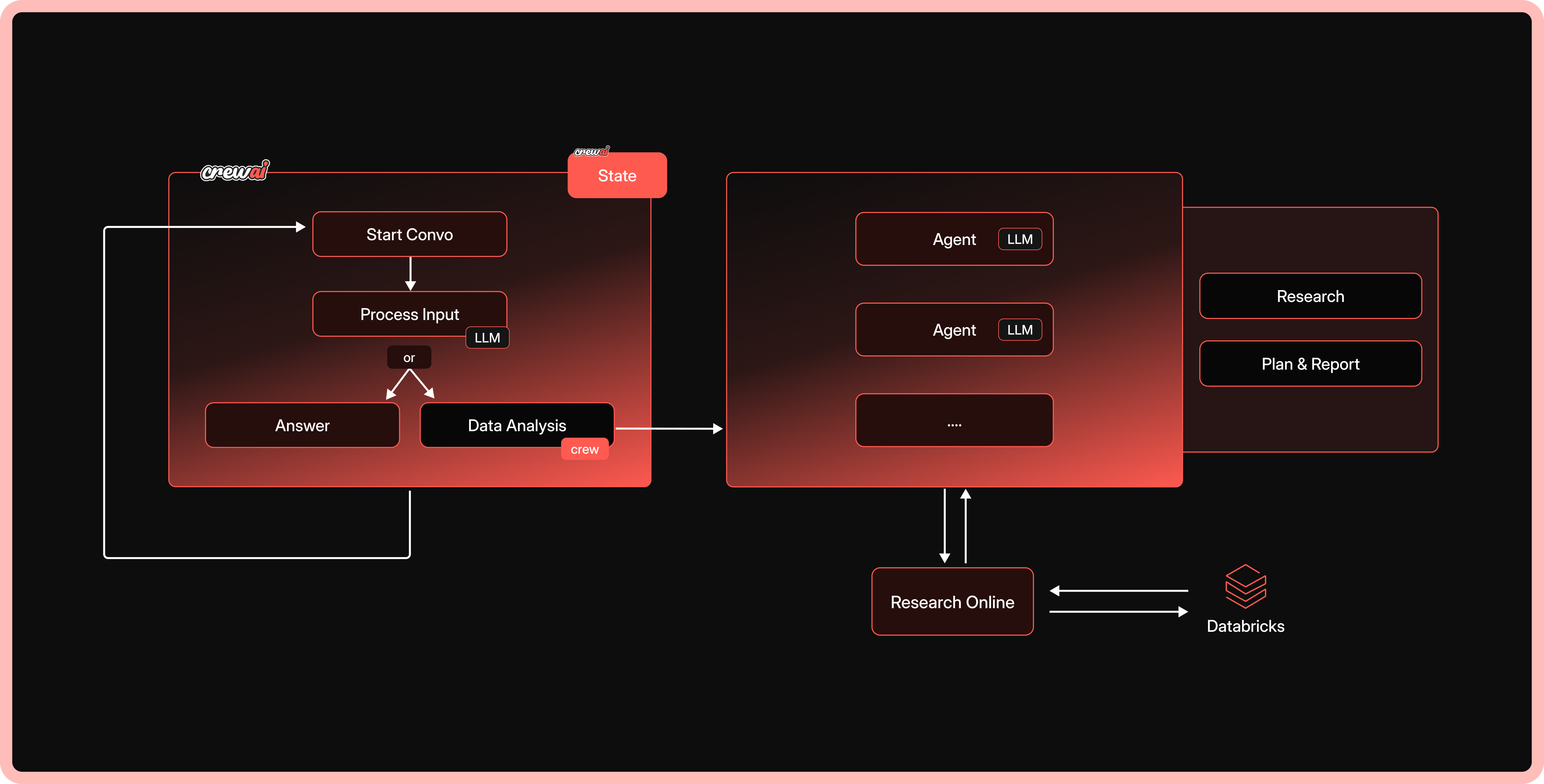
CrewAI is an open-source framework focused on building multi-agent systems where multiple AI Agents can collaborate to complete complex tasks. This platform is designed primarily for developers but also supports low-code deployment models in some cases.
Some key features of CrewAI include:
-
Open-source framework with a strong development community
-
Focus on multi-agent collaboration architecture
-
Easy integration with LLMs and external tools
Kore.ai Agent Platform
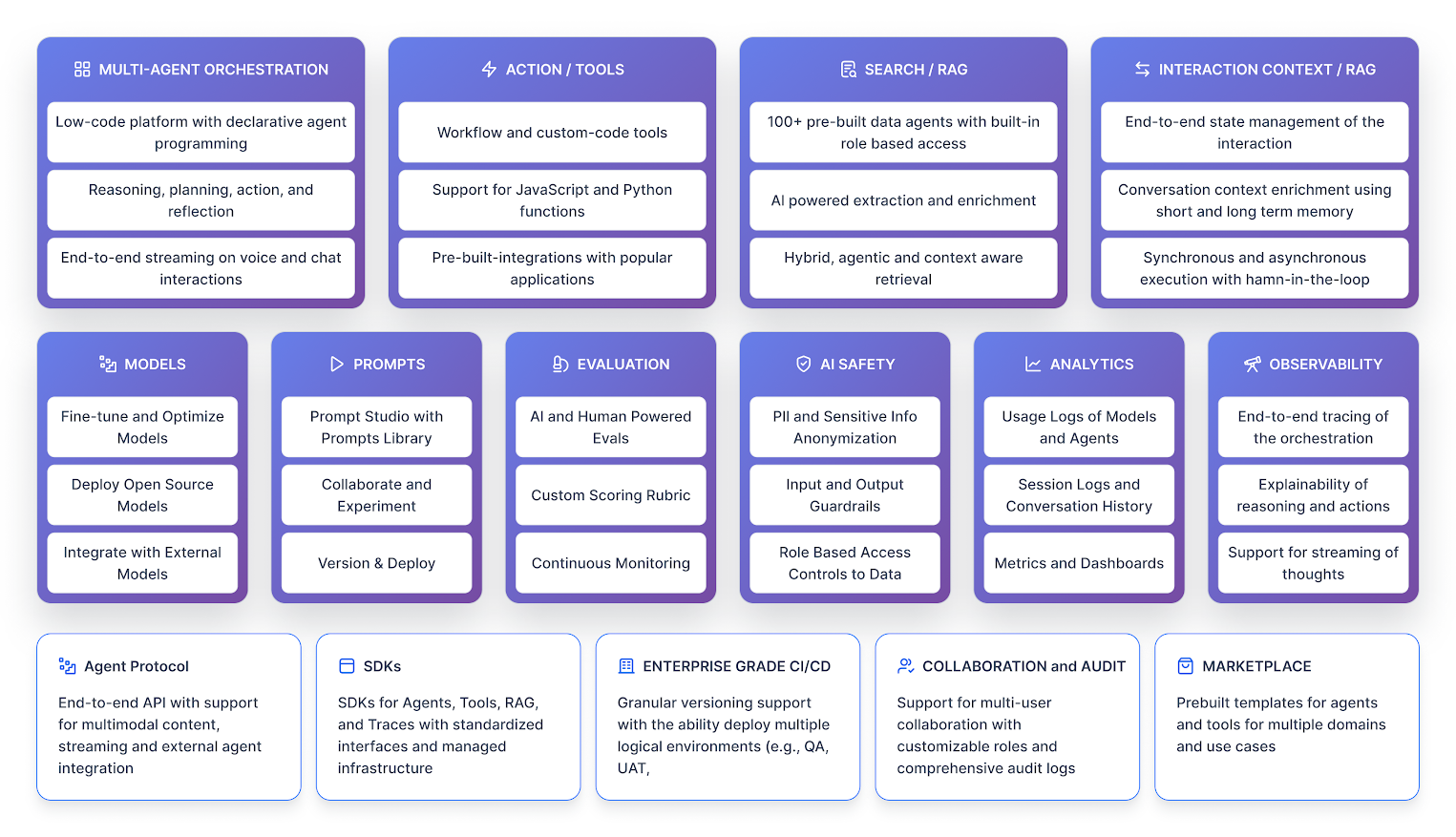
Kore.ai Agent Platform is an enterprise-grade AI platform designed to help organizations deploy AI Agents at scale. This platform provides a unified framework for building, managing, and operating AI Agents in an enterprise environment.
Common applications of the Kore.ai Agent Platform include:
-
Customer service automation
-
Optimizing internal operational processes
-
Supporting digital transformation projects within the enterprise
Nhờ khả năng quản lý tập trung và tích hợp với nhiều hệ thống doanh nghiệp, Kore.ai thường được lựa chọn trong các tổ chức có quy mô lớn hoặc có yêu cầu cao về quản trị.
Google Vertex AI Agent Builder và Amazon Bedrock Agents
Google Vertex AI Agent Builder và Amazon Bedrock Agents là các nền tảng AI Agent được phát triển trong hệ sinh thái cloud của Google và Amazon. Những nền tảng này cho phép doanh nghiệp xây dựng và triển khai AI Agent trực tiếp trên hạ tầng cloud với khả năng mở rộng mạnh mẽ. Điểm nổi bật của các nền tảng này là khả năng tích hợp sâu với các dịch vụ dữ liệu, machine learning và hệ thống cloud hiện có. Điều này giúp doanh nghiệp dễ dàng xây dựng các hệ thống AI Agent phức tạp mà không cần quản lý hạ tầng riêng.
Một số ưu điểm chính bao gồm:
-
Kiến trúc cloud-native với khả năng mở rộng cao
-
Hệ thống bảo mật và quản lý dữ liệu mạnh mẽ
-
Công cụ quản lý toàn bộ vòng đời AI Agent từ phát triển đến triển khai
Những nền tảng này đặc biệt phù hợp với các doanh nghiệp đã sử dụng hệ sinh thái cloud của Google hoặc AWS.
Stack AI
Stack AI là một nền tảng AI Agent theo hướng no-code, cho phép người dùng xây dựng các workflow AI mà không cần viết mã. Nền tảng này tập trung vào việc tự động hóa quy trình và giúp doanh nghiệp triển khai AI nhanh chóng. Stack AI cung cấp giao diện visual builder để thiết kế workflow, cùng với các template sẵn giúp người dùng triển khai các tác vụ phổ biến như xử lý dữ liệu, phân tích nội dung hoặc tự động hóa quy trình vận hành.
Một số đặc điểm nổi bật:
-
Nền tảng no-code với giao diện trực quan
-
Template workflow có sẵn
-
Phù hợp với cả doanh nghiệp vừa và nhỏ (SMB) và doanh nghiệp lớn
Vellum AI
Vellum AI là nền tảng cho phép xây dựng AI Agent thông qua prompt và cấu hình logic workflow. Thay vì yêu cầu người dùng phải thiết kế toàn bộ hệ thống AI, Vellum tập trung vào việc đơn giản hóa quá trình tạo và quản lý agent. Nền tảng này thường được sử dụng trong các quy trình tự động hóa vận hành hoặc xử lý dữ liệu, nơi AI Agent cần thực hiện các tác vụ theo kịch bản được cấu hình sẵn.
Một số ưu điểm nổi bật của Vellum AI:
-
Giao diện thân thiện và dễ sử dụng
-
Giảm độ phức tạp khi triển khai AI
-
Phù hợp với các đội vận hành hoặc sản phẩm
AutoGen (Microsoft)
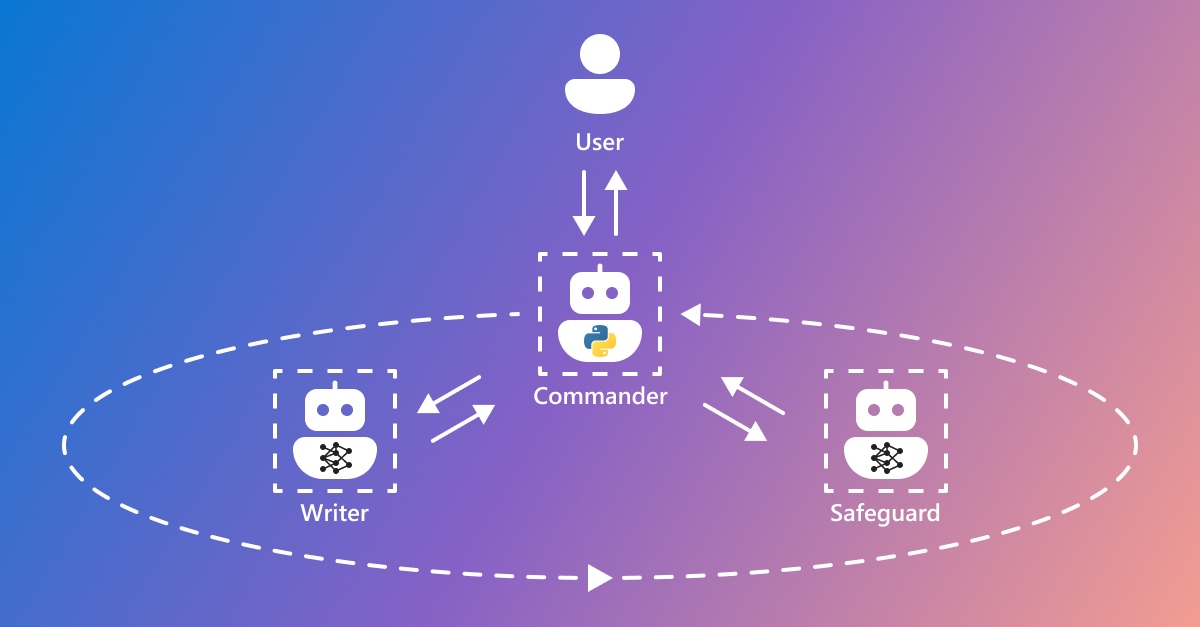
AutoGen là một framework mã nguồn mở do Microsoft phát triển, được thiết kế để xây dựng các hệ thống multi-agent collaboration. Framework này cho phép nhiều agent tương tác với nhau thông qua các cuộc hội thoại hoặc workflow được lập trình. AutoGen đặc biệt phù hợp với các dự án AI nghiên cứu hoặc các ứng dụng yêu cầu nhiều agent phối hợp để giải quyết một bài toán phức tạp.
Framework này thường được sử dụng bởi:
-
Developer
-
AI engineers
-
Đội ngũ nghiên cứu AI
Lindy AI
Lindy AI là một nền tảng no-code tập trung vào việc tạo ra các AI employee – những AI Agent có thể đảm nhận các nhiệm vụ cụ thể trong doanh nghiệp như bán hàng, hỗ trợ khách hàng hoặc quản lý lịch làm việc. Các AI Agent trên Lindy AI có thể được cấu hình để thực hiện các workflow tự động, giao tiếp với khách hàng hoặc xử lý các yêu cầu nội bộ.
Relevance AI
Relevance AI là nền tảng low-code tập trung vào việc xây dựng AI workforce, tức là hệ thống nhiều AI Agent cùng tham gia vào các quy trình công việc của doanh nghiệp.
Nền tảng này thường được sử dụng trong các hoạt động:
-
Sales automation
-
Marketing automation
-
Data workflows và phân tích dữ liệu
Nhờ khả năng xử lý dữ liệu mạnh mẽ và hỗ trợ nhiều LLM khác nhau, Relevance AI đang trở thành một trong những công cụ phổ biến cho các đội ngũ vận hành và phân tích dữ liệu.
Những thách thức khi triển khai AI Agent Platform
Việc triển khai AI Agent Platform trong doanh nghiệp không chỉ đơn thuần là áp dụng một công nghệ mới, mà còn liên quan đến chiến lược dữ liệu, tích hợp hệ thống và quản trị vận hành. Để đảm bảo hệ thống AI Agent mang lại giá trị thực tế, doanh nghiệp cần tuân theo một số nguyên tắc triển khai quan trọng, đồng thời nhận diện các thách thức có thể phát sinh trong quá trình áp dụng.
Xác định mục tiêu và use case rõ ràng
Một trong những sai lầm phổ biến khi triển khai AI là cố gắng áp dụng công nghệ vào quá nhiều lĩnh vực cùng lúc. Thay vào đó, doanh nghiệp nên bắt đầu với những use case cụ thể và có tác động lớn, nơi AI Agent có thể nhanh chóng chứng minh hiệu quả.
Việc triển khai theo từng giai đoạn giúp doanh nghiệp dễ dàng đánh giá hiệu quả, tối ưu hệ thống và mở rộng sang các ứng dụng khác sau khi đạt được kết quả ban đầu.
Xây dựng chiến lược dữ liệu
Dữ liệu là yếu tố cốt lõi quyết định hiệu quả của AI Agent. Các agent chỉ có thể hoạt động chính xác khi được cung cấp nguồn dữ liệu đáng tin cậy và có cấu trúc rõ ràng. Vì vậy, doanh nghiệp cần xây dựng chiến lược quản lý dữ liệu bao gồm việc thu thập, xử lý và tích hợp dữ liệu từ nhiều nguồn khác nhau.
Ngoài ra, quá trình knowledge ingestion – đưa dữ liệu vào hệ thống AI – cần được thiết kế cẩn thận để đảm bảo agent có thể truy xuất thông tin đúng ngữ cảnh và cập nhật kiến thức liên tục.
Tích hợp với hệ thống hiện có
Một thách thức lớn khi triển khai AI Agent là tích hợp với các hệ thống công nghệ hiện có của doanh nghiệp. Các agent cần kết nối với nhiều nền tảng khác nhau như CRM, ERP, hệ thống dữ liệu nội bộ hoặc các công cụ giao tiếp.
Việc tích hợp cần đảm bảo các workflow hiện tại vẫn hoạt động ổn định, đồng thời giúp AI Agent tham gia trực tiếp vào quy trình vận hành mà không tạo ra sự gián đoạn trong hệ thống.
Áp dụng chiến lược Human-in-the-Loop
Mặc dù AI Agent có khả năng tự động hóa nhiều quy trình, nhưng trong nhiều trường hợp doanh nghiệp vẫn cần sự giám sát của con người. Mô hình human-in-the-loop cho phép con người kiểm tra, phê duyệt hoặc can thiệp vào các quyết định quan trọng của AI.
Cách tiếp cận này giúp giảm rủi ro khi triển khai AI, đồng thời đảm bảo các quyết định quan trọng vẫn được kiểm soát bởi con người.
Bảo mật và quyền riêng tư dữ liệu
AI Agent thường xử lý lượng lớn dữ liệu doanh nghiệp, bao gồm cả thông tin nhạy cảm. Vì vậy, các nền tảng AI cần đáp ứng các tiêu chuẩn bảo mật và tuân thủ quy định pháp lý liên quan đến quản lý dữ liệu.
Doanh nghiệp cần đảm bảo hệ thống AI Agent đáp ứng các tiêu chuẩn như GDPR, HIPAA hoặc SOC 2, đồng thời triển khai các cơ chế bảo vệ dữ liệu và kiểm soát truy cập phù hợp.
AI có trách nhiệm và các cơ chế kiểm soát
Khi triển khai AI Agent trong môi trường thực tế, doanh nghiệp cũng cần quan tâm đến các yếu tố đạo đức và trách nhiệm trong việc sử dụng AI. Điều này bao gồm việc thiết lập các guardrails để hạn chế sai lệch dữ liệu, giảm thiểu bias và đảm bảo hệ thống hoạt động công bằng.
These control mechanisms help ensure that AI Agents are deployed transparently and responsibly.
Measuring Effectiveness and ROI
To evaluate the effectiveness of the AI Agent Platform, businesses need to define specific performance indicators. Tracking these metrics helps businesses assess the system’s success and optimize the implementation process.
Some key metrics to track include:
-
Increase in work efficiency
-
Operational cost savings
-
Customer satisfaction level
-
Reduction in process error rate
Clearly measuring these metrics also helps businesses build a solid business case for expanding the deployment of AI Agents within the organization.
The Future of AI Agent Platforms and Automated Enterprises
The collaborative model between humans and AI systems helps businesses improve work efficiency and make better use of organizational resources. In this context, the AI Agent Platform acts as an infrastructure layer that connects agents with the business’s data systems and operational processes.
The Autonomous Business of the Future
In the long term, many businesses may move towards an autonomous business model, where most operational processes are supported or automated by AI Agent systems. From data analysis and process management to decision support, agents can participate in many activities within the organization.
To operate this model effectively, businesses need a central platform capable of managing, coordinating, and monitoring AI Agents throughout the entire system. The AI Agent Platform will therefore become a critical component of a business’s technology infrastructure, helping to connect data, processes, and AI systems to create a more flexible and efficient operating environment.