


 10/05/2026
  156 views
What is profit margin? This is a crucial indicator that helps businesses and investors evaluate business efficiency, profitability, and cost management. In this article, let’s explore with 1Office how to calculate profit margin and look at easy-to-understand illustrative examples to help you grasp the financial health of your business.
Mục lục
1. What is profit margin? An example of profit margin

The concept of profit margin
What is profit margin? Profit Margin is a financial indicator that shows the percentage (%) of profit a business earns from its total revenue. In other words, for every 100 units of revenue, it shows how many units of profit the business retains after deducting costs.
Common types of profit margins include: gross profit margin (revenue minus cost of goods sold, divided by revenue), operating profit margin (profit before tax over revenue), and net profit margin (profit after tax over revenue). The higher this indicator, the more efficiently the business operates and the greater its profitability.
Example of profit margin (a rough example – without applying the formula):
Suppose you open a pho restaurant and sell each bowl for 50,000 VND. Of that amount, 25,000 VND is the cost of ingredients (meat, pho noodles, vegetables, etc.). The remainder is used to cover other expenses such as rent, employee salaries, and utilities, and what’s left after that is your profit.
In other words, profit margin tells you how many units of profit you retain for every 100 units of revenue after deducting all costs. A high profit margin means you are operating efficiently, earning more profit on each product or service.
Profit margin is a financial indicator that shows the percentage of profit a business earns from its total revenue
2. The significance of profit margin

When evaluating financial performance, many people only look at revenue or net profit, but these two figures sometimes do not fully reflect the “health” of a business. Understanding what profit margin is provides a clearer view of actual profitability—that is, how much a business retains from each unit of revenue—thereby allowing for the evaluation of operational efficiency, product pricing, and cost control.
For managers, profit margin is a measure of internal efficiency:
- A high profit margin indicates that the business creates significant value from each unit of revenue, has good cost control, and operates stably.
- A low profit margin reflects issues with pricing, costs, or operational productivity.
For investors, it is an indicator for assessing sustainable profitability and a basis for comparing the operational efficiency of companies within the same industry.
3. How to calculate profit margin
Below are four common types of profit margins, along with detailed calculations for each:
3.1. How to calculate Gross Profit Margin
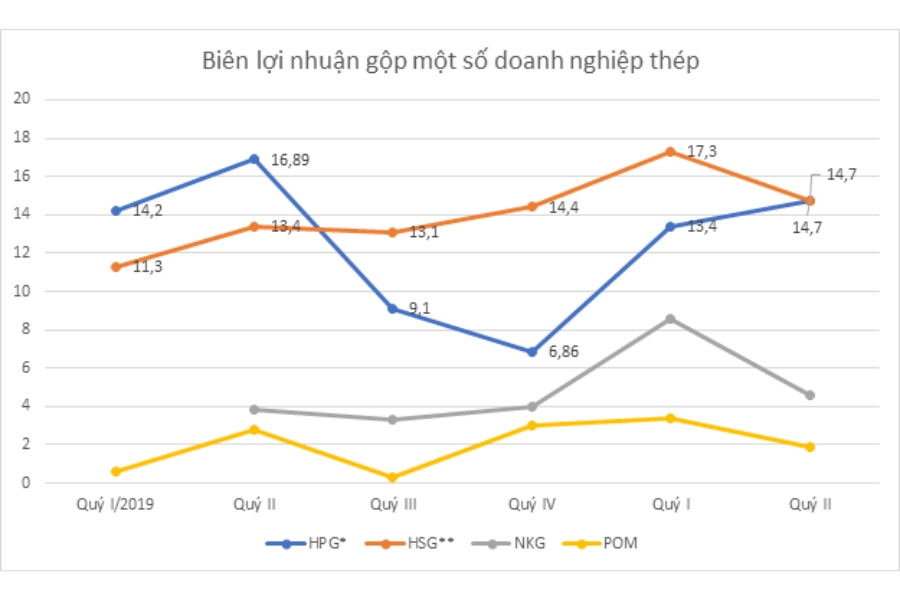
Gross profit margin shows how much profit a business has left after deducting the cost of goods sold, before accounting for administrative, selling, or financial expenses. This indicator reflects the company’s ability to control production costs and optimize its selling price.
Gross profit margin formula:
|
Gross Profit Margin = (Gross Profit / Net Revenue) × 100% |
Where:
- Gross Profit = Net Revenue – Cost of Goods Sold
- Net Revenue = Total Revenue – Deductions (discounts, returned goods…)
For example: If net revenue is 1,000 billion VND and the cost of goods sold is 700 billion VND, the gross profit will be 300 billion VND → Gross Profit Margin = (300 ÷ 1,000) × 100% = 30%. A high gross profit margin indicates that the business is producing efficiently or has good product pricing, but it does not fully reflect operating and management costs.
3.2. How to Calculate Net Profit Margin
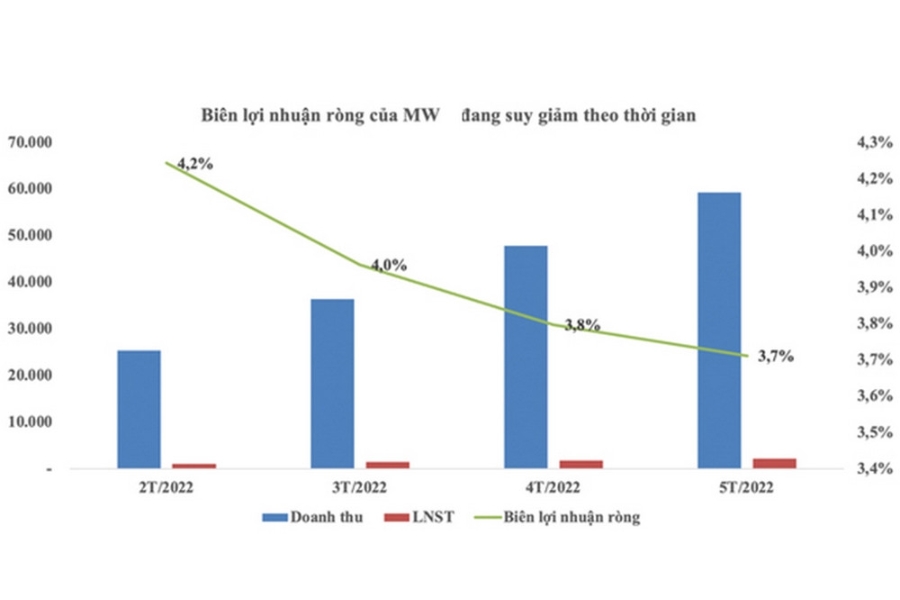
Net profit margin is an indicator that shows the percentage of net profit a business earns on its net revenue. This metric indicates how much profit the business retains for every dollar of revenue after deducting all costs, including the cost of goods sold, operating expenses, financial costs, taxes, and other expenses.
Net profit margin formula:
|
Net Profit Margin = (Profit after tax / Net Revenue) × 100% |
Where:
- Net profit: The profit remaining after deducting all costs and taxes.
- Net revenue: The revenue after deducting reductions such as discounts, returned goods, and taxes.
For example: A business has a post-tax profit of 50 billion on a net revenue of 1,000 billion → Net profit margin = (50 / 1,000) × 100% = 5%.
The net profit margin reflects the true profitability of the business. A low margin may result from high financial costs, suboptimal operational efficiency, or an unsuitable business model.
3.3. How to Calculate Pre-tax Profit Margin
The pre-tax profit margin reflects the amount of money a business earns for each dollar of revenue before deducting taxes. This indicator shows the ability to generate profit from core business activities, unaffected by tax factors or interest expenses.
Formula:
|
Pre-tax profit margin = (Pre-tax profit / Net revenue) × 100% |
For example: If a business has a pre-tax profit of 80 billion and net revenue of 1,000 billion → Pre-tax profit margin = (80 / 1,000) × 100% = 8%.
This metric is often used to compare the efficiency of different businesses or markets, especially when tax rates vary between countries.
3.4. How to Calculate Operating Profit Margin

Operating Profit Margin, also known as operating margin, is a metric that indicates the percentage of profit a business retains from its revenue after deducting the cost of goods sold and operating expenses such as selling, general, and administrative costs. This measure reflects the efficiency of core business operations, before accounting for financial costs or taxes.
Formula:
|
Operating Profit Margin = (Operating Profit / Net Revenue) × 100% |
Where:
- Operating profit = Net revenue – (Cost of goods sold + Operating expenses)
- Net revenue = Gross revenue – Deductions (discounts, sales returns, indirect taxes…)
For example: If a business achieves an operating profit of 100 billion on a revenue of 1,000 billion → Operating profit margin = (100 / 1,000) × 100% = 10%.
4. Factors affecting profit margin
To gain a deeper understanding of what profit margin is, we need to consider the factors that affect this indicator, specifically:
|
Factor Group |
Detailed Content |
| 1. Internal Business Factors | – Cost Structure:
– Pricing Strategy:
– Operational Efficiency: Applying technology and automation helps reduce costs and increase efficiency. – Product Portfolio: High-end products often yield higher profit margins. – Inventory Management: Large inventories lead to high storage costs, reducing profit margins. |
| 2. Market & Industry Factors | – Competition:
– Industry Specifics:
– Cyclicality: Seasonal industries (tourism, fashion) have profit margins that fluctuate over time. – Raw Material Supply: Increased raw material prices → higher cost of goods → lower profit margins. |
| 3. Macroeconomic Factors | – Economic Situation:
– Inflation: Increases costs if prices cannot be raised accordingly. – Tax Policy: High tax rates reduce the net profit margin. – Exchange Rates: Fluctuations in exchange rates directly affect revenue and cost of goods. |
| 4. Customer & Partner Factors | – Consumer Habits: A trend towards saving → businesses must adjust selling prices and products.
– Suppliers: The price of raw materials or service quality directly affects costs. – Logistics & Distribution: Transportation costs or supply chain disruptions → reduced profit margins. |
| 5. Management & Strategy Factors | – Cash Flow Management: Good control over financial costs and maintaining liquidity helps protect profit margins.
– Development Strategy: Investing in technology, quality, and branding helps improve long-term profit margins. – HR Management & Performance: Team efficiency directly affects operating costs and productivity, thereby impacting profit margins. Using an integrated HR management software like 1Office can help businesses:
|
5. What is a good net profit margin?

There is no fixed number that is considered absolutely “good,” as performance depends on many criteria such as industry, business scale, business strategy, and cost management level. Comparing against industry standards and historical performance helps businesses determine a reasonable profit margin. Here are specific guidelines:
5.1. Based on the type of profit margin
(1) For gross profit margin
- A high gross profit margin (usually over 50%) indicates that the business has good control over production costs and an effective pricing strategy.
- Typically, the manufacturing industry maintains a gross profit margin of 20-40%, while the technology or software industry can reach over 70% due to low variable costs.
(2) For operating profit margin
- A rate of 10-20% is considered good in most industries.
- Sectors with low operating costs, such as services, technology, and software, often achieve an operating profit margin of over 20%, reflecting efficient resource utilization and high productivity.
(3) For net profit margin
- A net profit margin of 10% or more indicates good profitability, especially in competitive markets.
- Industries like retail or fast-moving consumer goods typically only achieve 1-5%, while the technology and finance sectors can exceed 20% due to low fixed costs and flexible business models.
5.2. Comparison with the business industry
Each industry has its own unique characteristics regarding cost structure, value-added, and competition level, so a “good” profit margin must be evaluated within the context of that industry. Below are references for common gross and net profit margin levels:
| Industry | Good Gross Profit Margin | Good Net Profit Margin |
| Technology & Software | 60-90% | 15-25% |
| Retail | 20-40% | 1-5% |
| Manufacturing | 30-50% | 5-10% |
| Financial Services | 50-80% | 20-30% |
| Food & Beverage | 40-60% | 5-15% |
5.3. Other factors to consider

- Growth over time: A profit margin that increases steadily over the years or remains at a high level is a positive sign, indicating that the business is controlling costs well and creating more value from its business activities.
- Cost management efficiency: A low profit margin is not necessarily negative if the business is investing in expansion or operating in a high-cost industry.
- Debt ratio: The net profit margin needs to be high enough to cover interest payments and other financial costs.
- Comparison with competitors: A profit margin that surpasses that of other businesses in the same industry is a strong signal of financial health and competitive ability.
Whether a net profit margin is considered good depends on many different evaluation criteria
6. Frequently Asked Questions about Profit Margin
6.1. What is the difference between gross profit and net profit?
The difference between gross profit and net profit
- Gross profit is the profit a business makes after subtracting the direct costs related to producing or providing its products/services (cost of goods sold) from revenue. This metric reflects the efficiency of sales and production activities but does not include indirect costs such as selling, administrative, financial, or taxes.
- Net profit is the amount remaining after subtracting all expenses from revenue, including production, selling, administrative, financial, taxes, and other costs. It is a measure of actual profitability, reflecting the overall financial health of the business.
In summary: gross profit shows how much a business earns from its sales activities before deducting other expenses, while net profit shows how much the business retains after deducting all costs and taxes – it is a crucial indicator for evaluating business efficiency and sustainability.
6.2. What is industry profit margin?
Industry profit margin is the average percentage of profit that businesses in the same industry achieve relative to their revenue. This indicator reflects the overall profitability of the industry and helps a business evaluate its performance against the industry average.
Different industries have different average profit margins: for example, the technology industry often has high profit margins due to low production costs and high added value, while the retail industry typically has low profit margins due to high competition and significant operating costs.
6.3. What are the abbreviations for profit margin
Profit margin is often abbreviated as GPM (gross profit margin), OPM (operating profit margin), and NPM (net profit margin).
6.4. What is marginal profit?
Marginal Profit is the profit a business earns from producing and selling one additional unit of a product or service. It is calculated by subtracting the additional cost of producing that unit from the additional revenue it generates.
This metric helps determine the optimal production scale: a business should increase output until the marginal profit is zero, meaning the revenue from the additional product just covers its cost. A high marginal profit indicates that the business is profiting well from each additional unit; conversely, if it is low or negative, production or business strategy needs adjustment.
6.6. What is the abbreviation for profit margin
Profit margin is often referred to by its English name, Profit Margin. This is an indicator that shows the percentage of profit a business earns for each dollar of revenue. This metric helps evaluate a business’s operational efficiency and profitability.
7. Conclusion
Understanding what profit margin is and how to apply this metric will help businesses make sound strategic decisions, optimize costs, and increase business efficiency. If your business wants to manage its finances and operations more effectively, please leave your information HERE. The team of experts at 1Office will quickly connect with you to provide consultation on a comprehensive HRM and business management software solution tailored to your company.
















