10/05/2026
  138 views
What is a CDP? A CDP (Customer Data Platform) is a platform that helps businesses collect, consolidate, and analyze customer data from multiple sources, thereby building detailed customer profiles and optimizing business campaigns. In this article, 1Office will explore the functions, types, and effective ways to set up a CDP for your business.
Mục lục
1. What is a CDP? Key Functions of a CDP
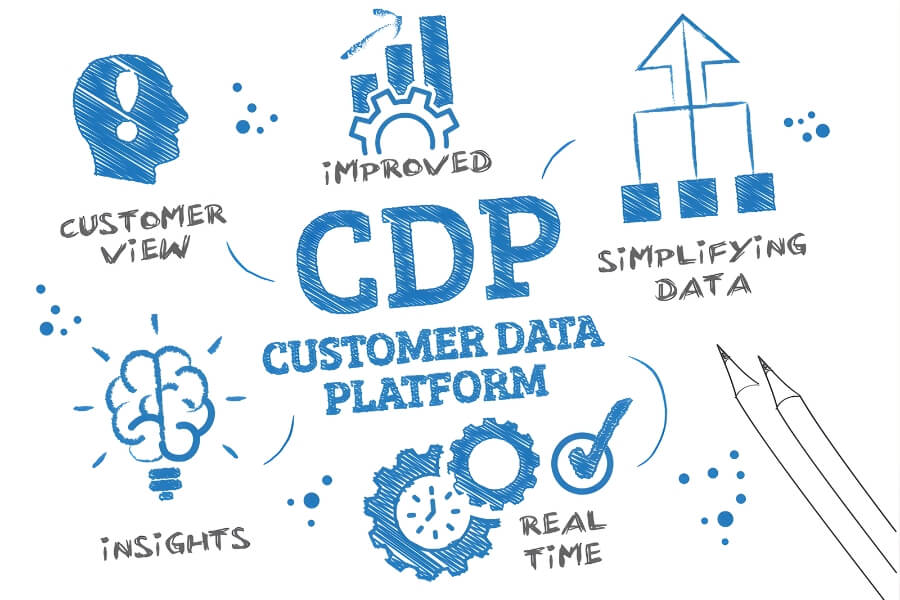
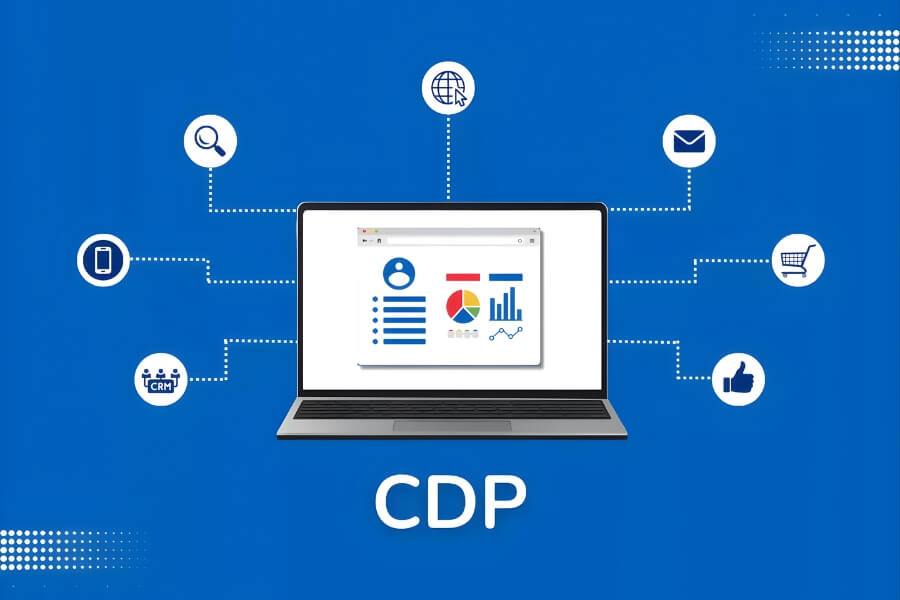
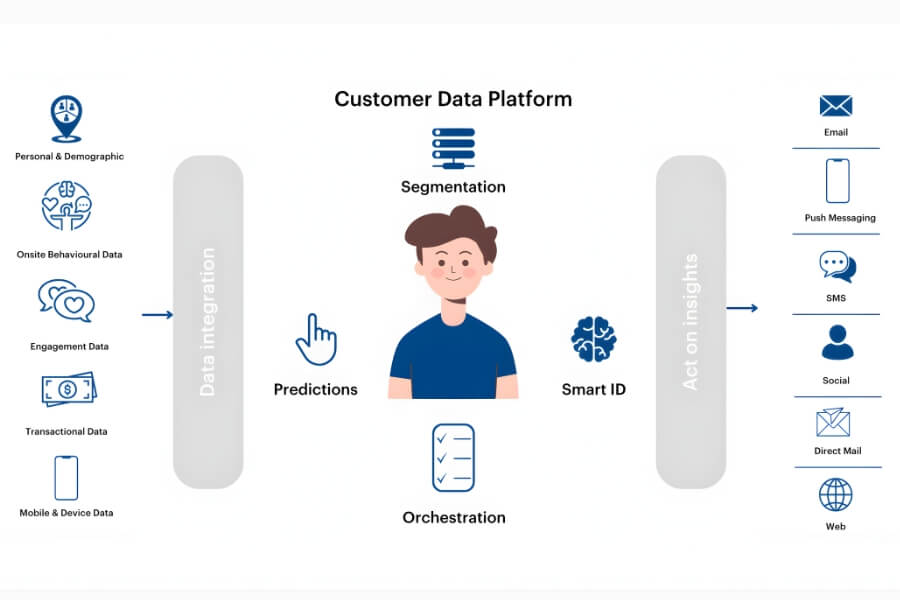
What is a CDP? A CDP (Customer Data Platform) is a technology platform that allows businesses to collect, consolidate, and standardize customer data from various sources (websites, apps, social media, CRM, POS, email, etc.). It then creates a unified customer profile (Single Customer View – SCV) that is continuously updated in real-time, supporting more effective marketing, sales, and customer care activities.
Unlike standalone storage systems, a CDP is “intelligent,” helping to transform raw data into actionable information. Its main functions include:
- Multi-channel Data Consolidation and Standardization: A CDP connects and collects data from every customer touchpoint (online and offline). Identity Resolution technology helps merge all fragmented information into a single, unique ID, regardless of how many devices the customer uses.
- Building a Unified Customer Profile (SCV): A CDP creates a 360-degree view of each customer, including demographic information, interaction history, behavior, preferences, and their current position in the buying journey. All departments share a single, accurate source of data.
- Intelligent Customer Segmentation: From the SCV, a CDP allows for segmenting customers based on behavior, value, engagement level, or predictions (such as churn probability). This flexible segmentation helps businesses optimize personalized campaigns at every stage.
- Data Activation and Distribution: A CDP distributes processed segments to advertising platforms, email marketing systems, automation tools, or websites to execute consistent, accurate, and automated campaigns in real-time.
- AI-based Suggestions and Recommendations: When integrated with AI, a CDP analyzes customer needs and psychology to provide recommendations, such as selecting target audiences, suggesting products, and identifying the right time for interaction, thereby enhancing the customer experience and increasing marketing effectiveness.
2. Common Types of CDPs
Below are the main types of CDPs, along with their typical functions and applications, to help businesses better understand what a CDP is and choose the right platform for their business strategy:
| CDP Type | Key Functions | Applications |
| Data CDP | Collects customer data from various sources, links data to customer identities, and stores it in a centralized database. | Businesses can share the database and customer segments from the CDP with other systems for various business purposes. |
| Analytics CDP | In addition to data collection capabilities, this CDP integrates analytical tools to process and visualize data. It automatically sends analyzed data to other business systems. | Smart customer segmentation, trend prediction, data modeling, revenue source identification, and customer journey mapping. |
| Campaign CDP | Combines data collection, analytics, and customer interaction management. Supports creating personalized messages or product suggestions for each customer within the same segment. Coordinates multi-channel marketing campaigns (email, website, apps, etc.). | Manages complex marketing campaigns and real-time customer interactions, enhancing conversion efficiency. |
| Delivery CDP | In addition to the functions above, this CDP can send messages directly to customers through multiple channels (email, ads, mobile apps, CRM) and ensure message consistency. | Triggers messages based on customer interaction history and preferences (e.g., sending a discount code after a customer adds a product to the cart but doesn’t complete the purchase). Integrates with CRM to personalize messages, such as post-purchase thank-you emails or birthday SMS messages with special offers. |
3. What types of customer data does a CDP handle?
After understanding what a CDP is, here are the types of customer data that a CDP collects and manages, providing a comprehensive view of customer behavior, preferences, and needs:
3.1. Identity Data
This is the type of data that helps businesses create a unique individual profile for each customer on the CDP, reducing information duplication. It is often considered the basic personal information of a customer.
Examples include:
- Full name
- Phone number
- Email address
- Social media profiles (Facebook, Instagram, etc.)
- Demographic information (age, gender, occupation, location, income level)

3.2. Descriptive Data
This is extended data based on identity data, helping businesses gain a more comprehensive view of the customer persona. Each company can define and collect different types of descriptive data to suit its business needs.
Examples include:
- Career: Industry, job title, income
- Lifestyle: Type of housing, transportation, pets
- Family: Marital status, number of children
- Hobbies: Shopping habits, frequency of participation in leisure activities like reading magazines or going to the gym
3.3. Quantitative or Behavioral Data
This type of data helps businesses understand how each customer interacts with the brand through specific actions, transactions, or activities, thereby assessing their preferences and consumption habits.
Examples include:
- Purchases: Quantity, type of products purchased or returned, order date, cart status.
- Email interactions: Email opens, clicks on CTAs within emails.
- Online activity: Website visits, product clicks, social media interactions.
- Customer service: Contact date, type of issue, satisfaction level after support.
3.4. Qualitative Data
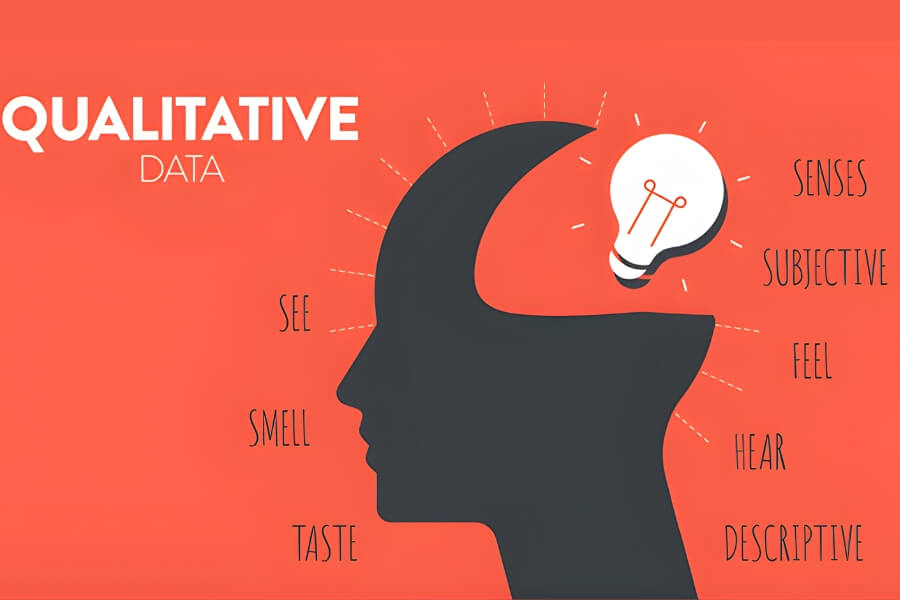
This type of data helps businesses understand the motivations, opinions, and attitudes of customers towards the brand, often collected through surveys, reviews, or direct feedback.
Examples:
- Motivation: Where did the customer learn about the brand? What made them choose this product over others?
- Opinions and reviews: How does the customer feel about the product/service? Are they willing to recommend the brand to others?
Thus, a CDP collects and organizes various types of customer data, but the classification and arrangement of data categories will be flexible, depending on the industry specifics and business strategy of each company.
4. How does a CDP work?
You can think of a CDP as a customer data hub where all information is transformed into detailed stories, helping businesses clearly understand the customer journey and choose the right approach. The basic activities of a CDP include:
- Collect customer data: A CDP aggregates data from all available sources, including website browsing behavior, CRM interactions, email opens, advertising campaigns, and more. Everything is consolidated in one place, helping to build detailed customer profiles that are easily accessible to staff when needed.
- Process customer data: A CDP links collected data with existing customer profiles through Identity Resolution, eliminating duplicates and ensuring each customer has a single, unique profile. For example, if a customer has subscribed to a newsletter via email and has previously interacted with the website, the CDP will connect all this information to create a complete profile, giving the business a clear view of the customer’s behavior, needs, and interactions.
- Segment and activate customer data: Once the profiles are complete, the CDP segments customers based on behavior, demographics, or purchase history. For example, it can separate customers who “purchased product A in the last month” or “interacted with campaign B.” The data is then sent to marketing tools to deploy personalized campaigns via email, SMS, push notifications, and more.
5. Benefits of Using a CDP in Business & Marketing
Using a Customer Data Platform (CDP) helps businesses collect and manage customer information in detail, thereby optimizing business and marketing activities. The main benefits include:
5.1. Create a Comprehensive Customer Profile – Customer 360
A CDP helps businesses collect, consolidate, and manage all customer information from various sources, including personal data, transaction history, consumer behavior, and shopping preferences.
Thanks to the 360-degree view, businesses can build a comprehensive picture of each customer. This helps sales, marketing, and customer care teams implement precise outreach strategies: sending the right product with the right message to the right customer at the right time and on the right channel.
5.2. Enhance Marketing Effectiveness – Optimize Marketing Campaigns
By accurately analyzing customer data, a CDP helps businesses understand the tastes, preferences, and purchasing needs of each customer segment. This allows businesses to design more effective, personalized marketing campaigns, including running ads on Google Ads and Facebook Ads, as well as sending promotions, announcements, or vouchers via email, SMS, etc.—low-cost communication channels that can encourage repeat purchases from existing customers.
Simultaneously, targeting the right potential customer groups across multiple channels helps businesses optimize their marketing budget, increase reach, and strengthen brand recognition in the minds of customers.

5.3. Create Personalized Customer Experiences
A CDP helps businesses manage customer profiles comprehensively, including preferences, purchasing behavior, demographics, and previous interactions. Based on this data, businesses can interact with customers in a timely manner, resolve inquiries quickly, and provide personalized experiences that meet their specific needs and increase satisfaction.
5.4. Enhance Experience, Retain Potential Customers
The customer experience focuses on building a lasting connection between the business and consumers through optimized touchpoints at every stage. When the experience is improved, engagement levels increase, and customers feel understood and valued. This not only helps businesses retain potential customers but also enhances satisfaction, creating a positive impression even with new customers.

6. Setting Up an Effective CDP for Your Business
After understanding what a CDP is, here are the basic steps to help your business implement a CDP effectively, from planning to operation, ensuring data is optimized for business goals:
Phase 1: Planning and Defining Objectives
Before implementing a CDP, businesses need to create a detailed plan to clearly define the scope and objectives for using the platform. In this step, the business will:
- Define business objectives: Clarify the desired outcomes from the CDP, such as enhancing customer data analysis capabilities, optimizing marketing campaign effectiveness, or increasing customer engagement and retention.
- Define project scope: Identify the participating departments, the data sources to be collected, and the systems that need to be integrated for the CDP to operate synchronously and effectively.

Phase 2: Requirements Analysis and Architecture Design
After clearly defining the objectives and scope of implementation, the business needs to move to a more critical step: understanding exactly what types of data need to be collected (refer back to section 3) and how the CDP system will operate (refer back to section 4). This forms the foundation for ensuring the CDP is built correctly from the start.
- Analyze data requirements: The business needs to fully identify the data groups to be collected and processed, including behavioral, transactional, demographic, and data from various other interaction channels. This analysis helps clarify which data is core, which is supplementary, and how it will be used in marketing and operational activities.
- Design CDP architecture: Based on the data requirements, the business proceeds to build the overall architecture for the CDP system. This phase includes selecting technology, deployment infrastructure, storage models, and the analytical tools to be integrated, ensuring the system is scalable, secure, and operates stably.
Phase 3: Data Collection and Unification
In this phase, the business begins to feed actual data into the CDP system. The goal is to ensure that all information from multiple channels is fully collected and unified into a single customer profile.
- Connect data sources: The business establishes connections with all existing data sources, such as the website, mobile app, CRM, POS system, social media, and other operational platforms. This connection allows the CDP to automatically collect data in real-time, ensuring no customer touchpoint is missed.
- Unify data: After data is ingested into the system, the CDP cleans, standardizes, and merges duplicate records to form a single customer profile. This process ensures the data is synchronized, accurate, and ready for subsequent analysis, personalization, and marketing activities.

Phase 4: Data Storage and Management
Once data has been collected and unified, the business needs to build a robust storage and management platform to operate the CDP effectively.
- Data storage: The business sets up a centralized database system where all customer data is stored securely and can scale over time. This infrastructure must meet standards for retrieval speed, load capacity, and high security to support long-term CDP analysis and operation.
- Data management: In parallel with storage, the business needs to establish data governance processes to ensure data is always accurate, consistent, and protected. This includes controlling access rights, checking data integrity, and periodically reviewing and updating information to maintain the highest data quality.
Phase 5: Data Analysis and Activation
Once the data is stably stored and managed, the business enters the phase of extracting real value from the CDP.
- Data analysis: The business uses analytical tools to decode customer behavior, preferences, and needs. From this, reports, data visualizations, and in-depth analytical models are created, helping the business understand customers more systematically and accurately.
- Data activation: Based on the analysis results, the business implements more effective marketing and customer care activities. Data activation includes segmenting customers into target groups, personalizing content across channels, optimizing interaction timing, and enhancing the effectiveness of marketing campaigns.

Phase 6: Testing and Deployment
When the CDP system is complete in terms of structure and data, the business needs to conduct a final testing step before going live.
- System testing: All modules and processes for data collection, processing, storage, and analysis are reviewed to ensure they operate stably, accurately, and meet the initial requirements. This testing helps detect potential errors early and optimize the system before actual use.
- System deployment: After testing is successfully completed, the CDP is deployed to the live production environment. At this stage, the business begins using the platform to manage customer data, activate campaigns, and support departments in sales, marketing, and customer care activities.
Phase 7: Evaluation and Improvement
After the CDP is operational, the business needs to regularly evaluate the system’s performance to ensure business objectives are met.
- Performance evaluation: Track metrics related to data management, customer behavior analysis, experience personalization capabilities, and the CDP’s impact on sales, marketing campaigns, and customer retention.
- Continuous improvement: Based on evaluation results, the business makes necessary adjustments and upgrades, optimizing the processes of data collection, analysis, and activation, while also adapting to new business needs and changing customer behaviors.

7. The Differences Between a CDP, CRM, and DMP
Below are the fundamental differences between a CDP, CRM, and DMP, helping businesses recognize the strategic value of each system in managing and leveraging customer data:
| Criteria | CDP | CRM | DMP |
| Concept | Customer Data Platform, aggregates and manages customer information from multiple sources | Customer Relationship Management system, helps maintain and increase customer loyalty | Data Management Platform, focuses on collecting anonymous data to segment target customers |
| Purpose | Build complete, detailed customer profiles to enhance experience and business efficiency | Track and manage customer information to improve relationships and foster loyalty | Optimize advertising campaigns, identify potential customers, and segment the market |
| How it works | Collects, analyzes, and aggregates data from multiple sources, both online and offline (website, stores, CRM, POS…) | Records and tracks customer information such as feedback, transaction history, and sales data | Collects anonymous data from online channels like websites, social media, apps, and ads to analyze behavior |
Differences between CDP and CRM
Let’s explore the fundamental differences between CDP and CRM to help businesses clearly understand the role and application of each system in managing and optimizing the customer experience:
| Criteria | CDP | CRM |
| Data Source | Connects data from multiple sources, including third-party data, to create a unified data platform. | Uses internal data, primarily basic information collected by employees. |
| Data Scope | Stores all customer data, from interests and behaviors to spending habits. | Stores data related to sales and customer care. |
| Data Type Processed | Processes both structured and unstructured data: audio, images, videos, text, etc. | Only processes structured data: name, email, phone number, address. |
| Data Access Method | Accesses and utilizes data through various tools: chatbots, SMS Marketing, email, applications, etc. | Accesses and uses data through the CRM interface. |
To fully leverage customer data management and exploitation capabilities, 1Office CRM is the superior solution for businesses. With over 10 years of experience in implementing CRM systems and the trust of more than 5,000 customers, 1Office helps businesses:
- Manage automated Marketing campaigns, update data from Facebook, Google…
- Provide professional customer care with automated scripts and smart reminders
- Manage online sales, store orders, contracts, and generate real-time reports
Contact 1Office now for a free consultation and a demo of the CRM software to help your business optimize business processes and customer care most effectively.
The difference between CDP and DMP
Let’s explore the key differences between CDP and DMP to help businesses choose the right solution for their data strategy and personalized marketing:
| Criteria | CDP | DMP |
| Data Type | Collects identified data based on IDs. Allows for customer identity recognition across both online and offline channels. | Collects anonymous data based on cookies. Only provides information about user behavior on online channels, not linked to specific individuals. |
| Purpose of Use | To create personalized experiences, understand current customers, and develop long-term relationships across multiple channels. | To optimize online advertising campaigns, identify potential customers, and improve conversion efficiency. |
| Focus | Deeply understanding customers, personalizing experiences, and enhancing customer lifetime value. | Identifying potential customers to increase advertising effectiveness. |
| Storage Duration | Long-term, can be up to decades thanks to continuously updated and persistent IDs. | Short-term, typically under 1-3 months as cookies are deleted. |
Understanding what a CDP is helps businesses manage customer data centrally, improving marketing effectiveness and customer care. With the CDP-integrated CRM solution from 1Office, businesses can collect, analyze, and activate customer data all on a single platform. If your business is interested in the solution, please leave your information HERE, and the 1Office team of experts will contact you for a detailed consultation.