10/05/2026
  163 views
DISC is a popular tool that helps businesses better understand the personality, communication, and working style of each individual. If you want to learn what DISC is and how to apply it in human resources, this article will help you quickly grasp the core concepts.
Mục lục
I. What is DISC?
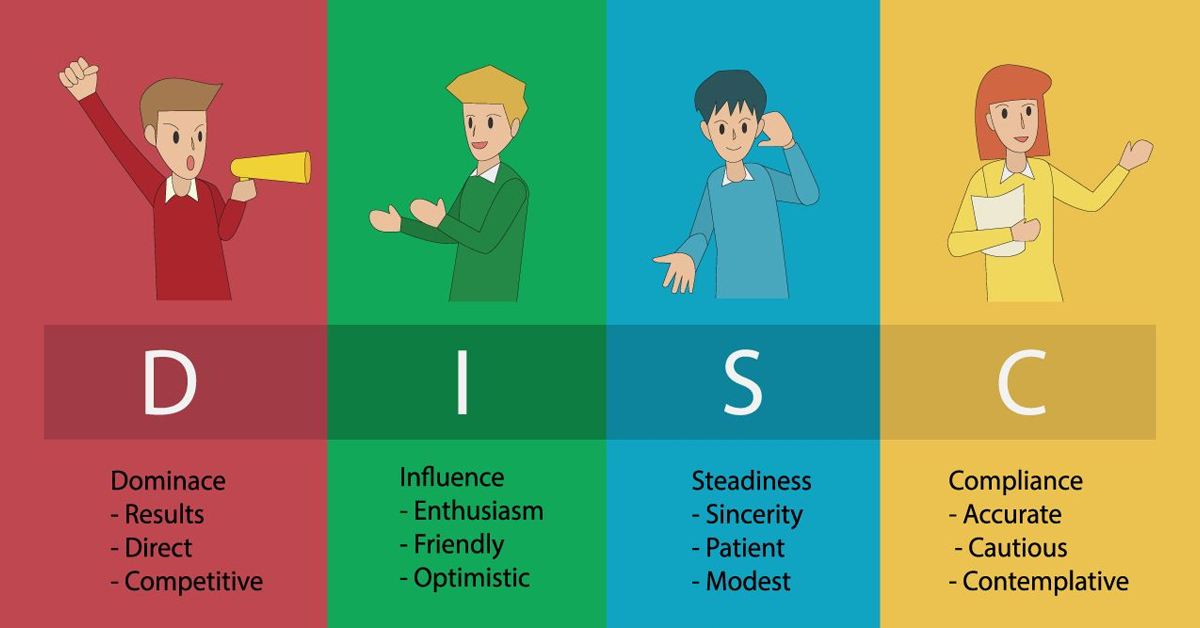
DISC is a model for assessing human behavior developed by William Moulton Marston, which divides people into 4 personality types: D (Dominance), I (Influence), S (Steadiness), and C (Conscientiousness). This tool helps in understanding communication styles, improving teamwork efficiency, and managing personnel.
DISC is not an intelligence or competency test, but a tool to help understand communication and working styles, thereby enhancing interaction and collaboration.
Quick summary:
DISC is a behavioral assessment tool based on four personality types: D – Dominance, I – Influence, S – Steadiness, C – Conscientiousness.
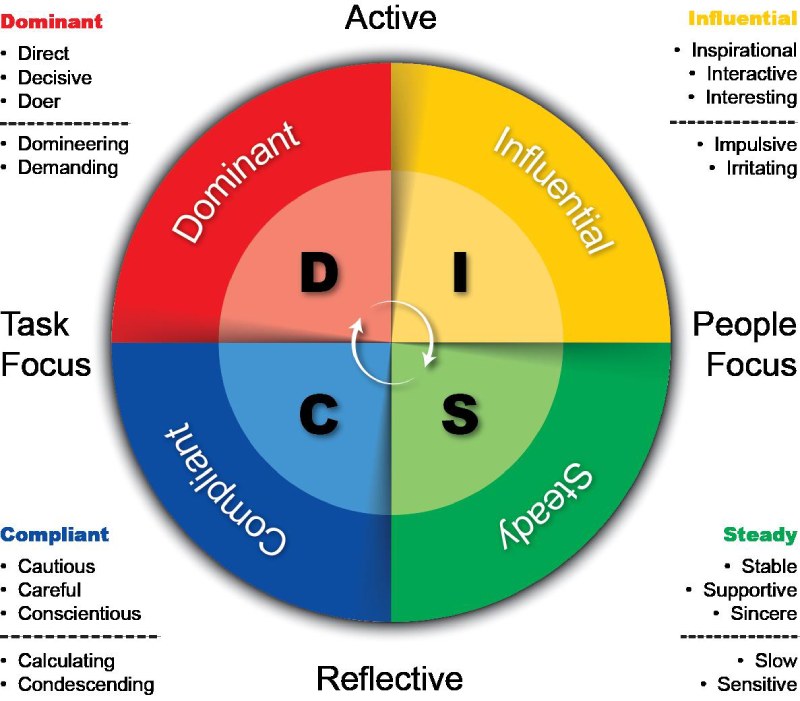
II. What are the 4 personality types in DISC?
1. D – Dominance
- Characteristics: decisive, results-oriented, loves challenges.
- Strengths: dynamic, proactive, has leadership qualities.
- Weaknesses: impatient, can be domineering.
2. I – Influence
- Characteristics: outgoing, inspiring, optimistic.
- Strengths: good communicator, motivates others.
- Weaknesses: lacks focus, can be ruled by emotions.
3. S – Steadiness
- Characteristics: calm, patient, loyal.
- Strengths: reliable, a good listener.
- Weaknesses: resistant to change, can be passive.
4. C – Conscientiousness
- Characteristics: meticulous, principled, perfectionistic.
- Strengths: accurate, works systematically.
- Weaknesses: critical, fears making mistakes.
III. How to take the DISC model test
- Step 1: Visit a reputable website such as: 123test.com or Truity.com | If you prefer Vietnamese, you can try: https://tracnghiemtinhcach.vn/disc-test
- Step 2: Answer the multiple-choice questions based on how much you agree or disagree.
- Step 3: Receive your results and read the detailed description of your personality type.
Tip:
You can take a free DISC test at 123test DISC
IV. What are the applications of DISC?
1. In recruitment:
- Businesses use DISC to assess a candidate’s suitability for a job position.
2. In communication and teamwork:
- Understand each member’s style to adjust communication and avoid conflicts.
3. In personal development:
- Helps each individual understand their strengths, weaknesses, and suitable career paths.
For example, Group D individuals may be suitable for management roles, while Group C individuals are a good fit for roles like auditors and data analysts.
V. What is the difference between DISC and other personality tools?
| Tool | Characteristics | Main Objective |
|---|---|---|
| DISC | Behavioral assessment | Communication, collaboration, recruitment |
| MBTI | Personality classification | Self-awareness, career orientation |
| Big Five | 5 personality traits | Psychological research, behavior prediction |
Advantages of DISC: easy to understand, easy to apply, short test duration.
Disadvantages: does not analyze inner depth like MBTI.
DISC results reflect behavior at the time of the test – so they are not 100% unchangeable. Below explains why the same person can have different results and suggests how to take the test to achieve high objectivity.
VI. Factors That Change DISC Model Results
DISC results are not a “fixed identity” but reflect your behavior at the time of the test. Therefore, the same person can still receive different results at different stages. Factors such as work environment, pressure, social roles, emotional state, or the quality of the questionnaire can all influence you to choose answers based on temporary habits rather than long-term natural behavior. Understanding these factors helps you interpret the results more accurately and use DISC for its intended purpose.
Factors That Change DISC Results
- Work environment & current role: People in leadership positions often exhibit many D traits; those in support roles show more S interactions. When roles change (promotion, team transfer), DISC scores can shift.
- Pressure and temporary circumstances: During a crisis, people may act more decisively (D-oriented) or panic and withdraw (S-oriented).
- Emotional state during the test: Fatigue, stress, or happiness all affect how answers are chosen. A person under stress may answer defensively.
- Social experience & culture: An organizational culture that values expression (creativity, I) or compliance (C) will influence how people “present” themselves.
- Tool accuracy & language: Non-standardized test versions, poor translations, or leading questions can skew the results.
- Objective when taking the test: If the test-taker “wants to be seen as a leader,” they may answer according to a desired archetype (self-presentation), not reflecting their actual behavior.
Tips for Taking the DISC Test Objectively and Accurately
- Ensure a stable mindset: Avoid taking the test when tired, overly busy, or in an extreme emotional state.
- Take the test in a neutral context: If possible, do it in a quiet, uninterrupted place.
- Answer honestly based on actual behavioral habits, not “desires” (don’t choose an answer just because you want to appear that way).
- Choose a reputable DISC tool: Use a standardized questionnaire with clear instructions and, if necessary, have an analyst/coach explain the results.
- Combine multiple assessment sources: Compare DISC results with 360° feedback, direct observation, or results from different times to get a comprehensive view.
- Distinguish between Natural vs. Adaptive: Many modern DISC assessments separate results into natural behavior and adapted behavior — read both to understand when the person is “being themselves” and when they are “changing for the situation.”
- Retake the test over time: Retake it after 6–12 months or when your role changes to check for stability or fluctuations.
Notes on Interpreting Results
-
DISC results are not fixed labels; use them to guide development, not to exclude or apply negative stereotypes.
-
For recruitment, combine DISC with competency interviews — don’t hire based solely on DISC.
-
When using DISC for coaching, focus on communication skills and behavioral adjustments, not on forcing someone to completely change their nature.
VII. Conclusion
Through this article, we hope you now understand what DISC is. It is an excellent tool for understanding yourself and others, thereby improving communication skills, enhancing teamwork efficiency, and making better decisions at work. Applying DISC not only helps businesses recruit more effectively but also helps each individual discover their potential and guide their personal development.
Pro tip:
Use DISC as a personality map to navigate behavior in work and life.