10/05/2026
  192 views
Personal financial management is the process of planning, allocating, and using your own financial resources reasonably to achieve set goals. This is a crucial factor in ensuring a stable and free financial future. In this article, 1Office will share with you 9 smart personal financial management methods used by business leaders. Let’s dive in!
Mục lục
- I. What is personal financial management?
- II. Why is personal financial management necessary?
- III. Effective personal financial management methods
- IV. 9 Smart Personal Finance Management Principles
- Principle 1: Always Control Daily Expenses
- Principle 2: Set Clear Financial Goals and a Roadmap
- Principle 3: Don’t Spend More Than 10% of Your Earnings
- Principle 4: Escape the “Vicious Cycle” of Debt, Avoid Bad Debt
- Principle 5: Always Save 10-15% of Your Monthly Income
- Principle 6: Strive to Increase Income from Multiple Sources
- Principle 7: Get a Life Insurance Policy
- Principle 8: Use Tools to Support Cash Flow Management
- Principle 9: Learn financial management from experts
- V. Common mistakes in personal financial management
- VI. Good financial habits to maintain daily discipline
- VII. 8 Effective Personal Finance Management Apps
I. What is personal financial management?
Personal financial management is the systematic process of planning, organizing, monitoring, and adjusting personal cash flow to achieve long-term and short-term financial goals. It is the foundation that helps each individual proactively control their income, expenses, savings, investments, and risk management, thereby building a stable, sustainable financial foundation suitable for every stage of life.

II. Why is personal financial management necessary?
In modern life, money is one of the key factors that determine a person’s quality of life. Therefore, effective personal financial management is extremely necessary.
- Ensure financial stability: Personal financial management ensures you have enough money to cover basic needs such as food, water, housing, and transportation. It also helps you build a cash reserve to deal with financial crises.
- Achieve financial goals: Effective financial management will help you identify and achieve higher financial goals in the future, such as buying a house, a car, traveling, studying, or retiring earlier.
- Reduce stress and anxiety: When you manage your personal finances smartly, you feel more confident about your financial situation and avoid unnecessary stress and anxiety.
- Create opportunities for investment and self-development: Specifically, pursuing higher education, learning a new language, or using accumulation apps to smartly save money for investment helps secure your financial future, especially for retirement.
- Increase the ability to cope with incidents: Good financial management helps you feel more confident when facing financial crises such as job loss, sudden medical expenses, or natural disasters.
- Improve quality of life: Proper personal financial management can improve your quality of life by allowing you to enjoy the experiences and activities you love.
III. Effective personal financial management methods
Effective personal financial management is not just about recording income and expenses but also requires discipline and a clear strategy. Below are methods widely applied by many financial experts and individuals.
1. Apply the 50/30/20 rule
-

Apply the 50/30/20 rule
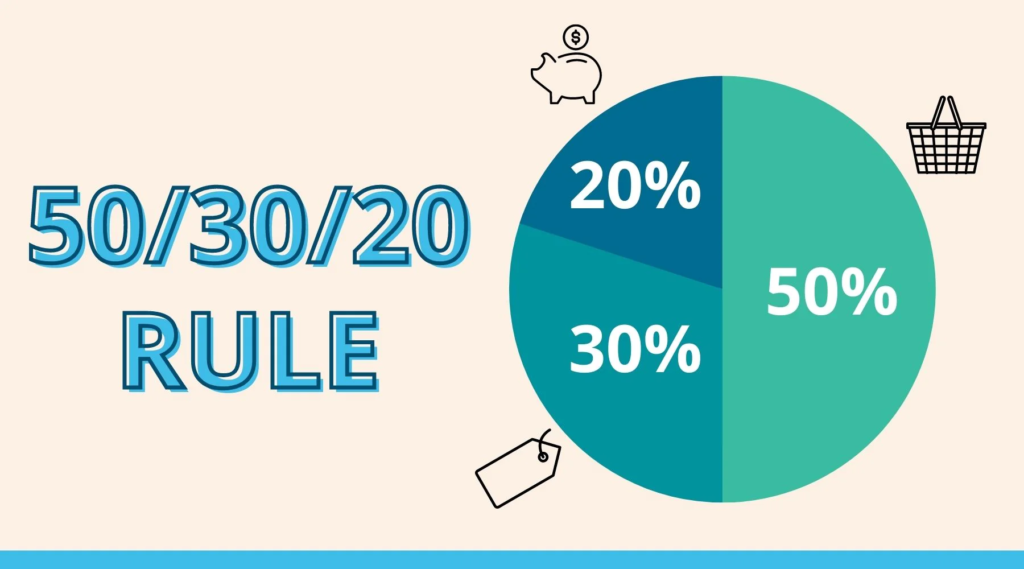
The 50/30/20 rule is a popular and easy-to-apply personal financial management method. According to this rule, you should allocate 50% of your income to essential expenses, 30% to wants, and 20% to savings and investments.
- Essential expenses (50%) include mandatory costs to maintain your life, such as rent, utilities, food, transportation, etc.
- Wants (30%) include non-essential expenses that bring you comfort and relaxation, such as shopping, entertainment, travel, etc.
- Savings and investments (20%) are the funds you set aside to accumulate assets and achieve long-term financial goals, such as buying a house, a car, retiring, etc.
Advantages and disadvantages of this method:
| Advantages | Disadvantages |
|
|
Pros and cons of the 50/30/20 rule
2. Apply the 6 Jars rule
-

Apply the 6 Jars rule

The 6 Jars rule is a highly effective personal finance management method. It involves allocating finances based on 6 different goals, including:
- Jar 1: Necessities: This is the money for mandatory expenses, accounting for about 55% of your income.
- Jar 2: Long-term savings: This is the money for long-term financial goals, such as buying a house, a car, retirement, etc., accounting for about 10% of your income.
- Jar 3: Education fund: This is the money for educational expenses, such as tuition, books, etc., accounting for about 10% of your income.
- Jar 4: Play: This is the money for non-essential expenses that bring you joy, such as shopping, entertainment, travel, etc., accounting for about 10% of your income.
- Jar 5: Financial investment fund: This is the money for profitable investments, accounting for about 10% of your income.
- Jar 6: Charity fund: This is the money for charitable activities, accounting for about 5% of your income.
Pros and cons of the 6 Jars rule:
| Advantages | Disadvantages |
|
|
3. The Kakeibo Method (Japan)
How to do it:
- Manually record all expenses in a financial notebook.
- At the end of each week/month, review your spending behavior to adjust your habits.
- Benefits: Enhances financial awareness and controls emotional shopping. Suitable for those who tend to spend based on emotions.
4. The Envelope System Method
How to do it:
- Divide your income into multiple envelopes corresponding to categories: food, transportation, entertainment, etc.
- Only use the exact amount of money in each envelope; no additional withdrawals are allowed.
- Benefits: Sets very clear spending limits. Easy to control real finances, especially for those who frequently use cash.
5. The Zero-Based Budgeting Method
How to do it:
- Every dollar of income is specifically allocated to a purpose.
- At the end of the month, the entire budget must be “disbursed” according to its goals, leaving no ambiguous surplus.
- Benefits: Optimizes every dollar. Particularly effective for people with many fixed expenses or unstable income.
IV. 9 Smart Personal Finance Management Principles

- 9 “Golden” Principles for Successful Personal Finance Management

Principle 1: Always Control Daily Expenses
Track and record your daily, weekly, or monthly expenses to know where your money is going and adjust your spending habits accordingly. You also need to closely review your expenses to ensure you are not overspending. Some specific measures for this principle include:
- Categorize your expenses into different groups for easier management, such as less important and important, reducible and non-reducible, etc.
- Set spending limits for each group to avoid overspending and try to cut down on less important personal expenses.
Principle 2: Set Clear Financial Goals and a Roadmap
To manage personal finances effectively, you need to clearly define your financial goals. Financial goals can be short-term, medium-term, or long-term, such as buying a house, buying a car, retiring, etc.
After defining your financial goals, you need to build a specific and clear plan to achieve them. Also, regularly monitor and adjust your financial plan. This will help you direct your spending and savings, and provide motivation to achieve the financial goals you have set.
Principle 3: Don’t Spend More Than 10% of Your Earnings
Limit your monthly spending ratio to ensure you save a portion of your income. This is a simple but incredibly effective principle. Every month, you should not spend more than 10% of the money you earn. This will help you build a savings fund for emergencies or to achieve long-term financial goals.
Principle 4: Escape the “Vicious Cycle” of Debt, Avoid Bad Debt

- Escape the “vicious cycle” of debt, avoid bad debt
Debt is one of the reasons personal finances become difficult. You need to try to escape the “vicious cycle” of debt by paying off debts on time and minimizing new ones. Some notes for this personal finance management principle are:
- If you have multiple debts from different sources, you should create a repayment plan with specific deadlines to get out of debt quickly.
- Organize and prioritize paying off high-interest debts first.
- Minimize loans for non-essential consumer spending as much as possible.
Principle 5: Always Save 10-15% of Your Monthly Income
Saving is one of the most important principles in personal finance management. You need to save at least 10-15% of your monthly income to have a fund for emergencies or to achieve long-term financial goals.
Principle 6: Strive to Increase Income from Multiple Sources
You need to find ways to increase your income from multiple sources to meet your financial needs. This could be working overtime, finding a new job, investing, etc.
However, you should carefully consider opportunities to increase your income. Ensure that these side jobs or income-generating activities do not negatively affect your health and life.
Principle 7: Get a Life Insurance Policy
Life insurance is a financial tool that helps protect you and your family from financial risks. You should get a life insurance policy that suits your needs and financial capacity. Some significant benefits of having life insurance include:
- Protecting yourself and your family from financial risks.
- Having a sum of money to cover living expenses in case of an unfortunate crisis.
- Leaving an asset for your loved ones after you pass away.
Principle 8: Use Tools to Support Cash Flow Management
On the market today, there are many tools to help individuals and businesses manage their finances, revenues, and expenditures. You can use these software to easily track and manage your personal finances more effectively.

- 1Office corporate financial management solution

1Office CRM – Proud to be the leading revenue and expenditure management software used by over 5,000 businesses to track, generate statistical reports, and forecast costs.
Principle 9: Learn financial management from experts
If you find it difficult to find a personal financial management method, you can consult with financial experts. These experts can help you build a financial plan that suits your needs and abilities. This will help you get a comprehensive view of your financial situation and choose suitable financial solutions.
V. Common mistakes in personal financial management
Below are some common mistakes that users often make in managing their personal cash flow:
- Lacking a financial plan and not creating a budget leads to irresponsible spending, not knowing where your money is going.
- Uncontrolled shopping and spending can cause financial stress and lead to debt.
- Not saving a portion of your monthly income, resulting in no cash reserves for the future or emergencies.
- Not prioritizing paying off high-interest debt, causing long-term debt.
- Having no investment plan for retirement, leading to insufficient funds upon retirement.
- Not investing for profit or investing too riskily can cause you to miss opportunities to generate financial returns.
- Uncontrolled abuse of credit cards can create debt and high-interest costs.
- Lacking a financial plan for a financial crisis can put you in a difficult situation when unexpected incidents occur.

- What are financial costs?

VI. Good financial habits to maintain daily discipline
Personal financial management is not just about tracking income and expenses, but also a process of cultivating discipline and long-term thinking. Maintaining small, consistent daily habits will build a solid foundation for financial stability and freedom in the future.
1. Record daily expenses
Recording expenses is the first step to understanding your personal cash flow. By taking just a few minutes each day to update your expenditures, you will get a transparent financial picture and a basis for making reasonable adjustments.
Users can choose suitable tools such as a notebook, Excel spreadsheet, or a financial management application to make recording easier and more accurate.
2. Set short-term and long-term financial goals
Clear goals are the guiding principle for all spending decisions.
-
Short-term: saving for a trip, buying work equipment, or creating an emergency fund.
-
Long-term: buying a house, saving for children, or aiming for financial independence.
When you have specific goals, every expense has a clear meaning and is directed towards long-term value.
3. Pay on time, maintain good credit
Paying on time not only helps avoid late fees but also demonstrates personal financial responsibility.
Users of credit cards or loans should set up automatic payments to ensure they are on time, while also maintaining a good credit score – an important factor when needing access to financial products in the future.
4. Maintain a fixed savings rate
Savings should not depend on the money left over at the end of the month, but should be treated as a mandatory expense.
The recommended rate is 10–15% of monthly income, divided into:
-
Short-term: an emergency fund or plans for the year.
-
Long-term: investments, retirement, or major financial goals.
Regular saving helps build a financial safety net and reduces pressure in unexpected situations.
5. Automate your cash flow
Automation is an effective solution for maintaining financial discipline. Setting up recurring transfers to a savings account or automatic bill payments helps minimize the risk of forgetting or being late and supports you in adhering to your set spending plan.
6. Enhance Your Personal Finance Knowledge
Knowledge is a decisive factor in managing and growing your finances.
Regularly update your knowledge through books, podcasts, courses, or professional channels to improve your understanding of investing, insurance, risk management, and long-term financial planning. This helps you make informed decisions and optimize the use of your capital.
7. Conduct Regular Financial Reviews
At the end of each month or quarter, you should conduct a comprehensive review of your financial situation: spending levels, debts, savings rate, and progress toward your goals.
Regular check-ups help identify problems early and allow for timely adjustments to ensure you stay on track with your personal financial plan.

Financial discipline isn’t built in a day; it comes from small, consistently maintained actions. When these habits become part of your lifestyle, you will not only manage your money well but also achieve proactivity, freedom, and peace of mind in your financial future.
VII. 8 Effective Personal Finance Management Apps
1. Mint (iOS/Android)
Key Features:
-
Links with bank accounts and credit cards to automatically import transactions.
-
Tracks spending and categorizes it automatically.
-
Create budgets, set savings goals, and receive notifications when you exceed your budget.
-
Generates easy-to-understand financial reports.
Pros: User-friendly interface, free, and very easy for beginners to use.
2. YNAB (You Need A Budget) (iOS/Android)
Key Features:
-
Create budgets for specific goals.
-
Forecasts future expenses and plans for every dollar.
-
Supports tracking loans and financial costs.
-
Provides detailed guidance on how to allocate your budget effectively.
Pros: Smart financial management method that helps users maximize savings. However, it is a paid service.
3. GoodBudget (iOS/Android)
Key Features:
-
Virtual envelope system for budget management.
-
Manages spending by specific categories.
-
Syncs across devices, making it easy to track your finances anywhere.
Pros: Suitable for those who prefer the envelope method (Envelope System), simple and easy to use.
4. PocketGuard (iOS/Android)
Key Features:
-
The “In My Pocket” feature shows you how much money is available after deducting fixed expenses and savings.
-
Automatically tracks spending and analyzes personal finances.
-
Suggests ways to save and reduce costs based on your spending history.
Pros: Simple, easy-to-use features that specifically help optimize daily spending.
5. Spendee (iOS/Android)
Key features:
-
Links with bank accounts and credit cards.
-
Manage spending and analyze finances by purpose (savings, investments, daily expenses).
-
Provides detailed reports and visual charts on your financial situation.
Pros: Supports multiple currencies, easily connects to accounts, and allows for financial sharing among family members.
6. Wallet (iOS/Android)
Key features:
-
Manage spending, create budgets, and track investments.
-
Integrates with bank accounts and e-wallets to automatically update transactions.
-
Create financial goals and receive periodic spending reports.
Pros: Simple, user-friendly interface, supports multiple account types and currencies.
7. Toshl Finance (iOS/Android)
Key features:
-
Manage multiple account types (savings, spending, investment).
-
Categorize expenses for easy tracking.
-
Provides future expense forecasts and alerts when you exceed your budget.
Pros: Supports multiple currencies and easy financial analysis, with a forecasting feature to help users prepare for future expenses.
8. Expensify (iOS/Android)
Key features:
-
Manage business and personal expenses, suitable for freelancers or entrepreneurs.
-
Scan receipts to store and track expenses.
-
Syncs data across devices, making it easy to create expense reports.
Pros: Useful for freelancers or small businesses, making it easy to track and report expenses.
These applications help you control your personal finances systematically and effectively. They can help you track spending, create budgets, save, invest, and easily build a sustainable financial strategy. Choose a suitable app for yourself to start managing your finances today!