


What is a USP? How to build a USP to make your product stand out and sell better


USP (Unique Selling Proposition) is the core factor that helps a product or service stand out in a competitive market. A clear USP not only creates differentiation but also helps customers remember and make purchasing decisions faster. In this article, 1Office will help you understand what a USP is, along with how to build an effective USP and practical, easy-to-apply examples.
Mục lục
- 1. What is a USP?
- 2. What is the role of a USP in Marketing?
- 3. Steps to establish an accurate USP for a product
- 4. How to develop a unique and effective USP?
- 5. Common mistakes when building a USP
- 6. What is the difference between USP and PoD?
- 7. Real-world examples of outstanding USPs in businesses
- 8. Frequently Asked Questions
1. What is a USP?
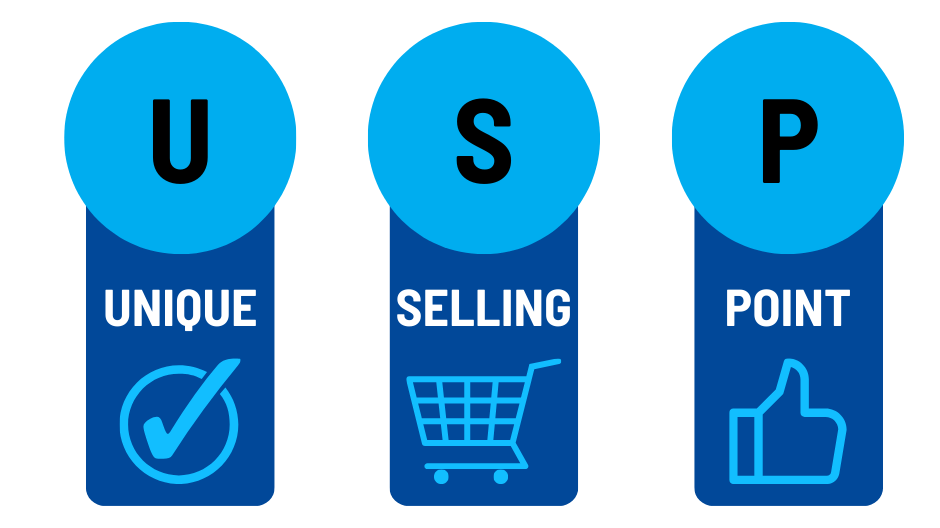
USP is an acronym for the phrase Unique Selling Point or Unique Selling Proposition. This is a crucial concept in marketing and business, referring to the unique features, benefits, or values that a product/service offers and cannot be found in competitors. Examples include the lowest price, highest quality, smallest size, safest product, etc.

A USP is also an opportunity for a business to differentiate its product, build its brand, and effectively attract potential customers. Therefore, a USP is considered the strength that makes your product stand out from the crowd, creating a special impression in the minds of consumers and helping them see that this product or service is the best.
In the field of Marketing, a USP is an excellent tool to position a product, express the core value that the business brings to customers, and is also seen as “What you have that your competitors don’t”.
2. What is the role of a USP in Marketing?
A USP (Unique Selling Proposition) contributes to various aspects of a marketing strategy, helping businesses build a strong image and attract customers. Here are some of the main roles of a USP in Marketing:
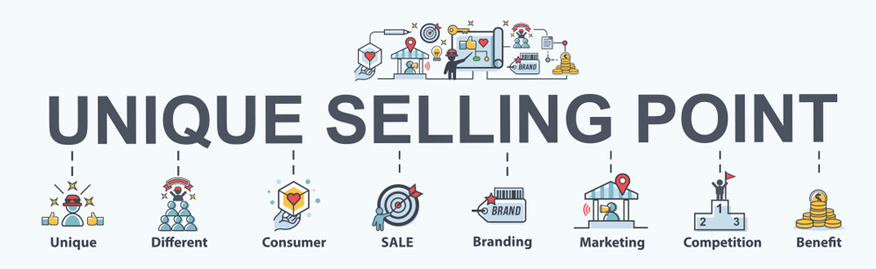
- Build brand, capture market share: A USP is a tool for building a strong brand, helping to shape the brand’s personality and core values to create a unique image in the customer’s mind. By creating clear differentiation and unique value, you can gain customer preference and capture market share.
- Differentiate products and services from competitors: A USP helps your product or service stand out from competitors. This helps customers easily recognize what is unique and better about your product, making it their preferred choice.
- Attract potential customers for the business: A strong USP generates attention and curiosity from potential customers. It is a crucial factor in attracting them to learn more about your product or service, creating opportunities for interaction and conversion.
- Build trust and value for customers: By defining the specific benefits your product or service provides, you can build trust and a stronger connection with customers. When customers feel they can trust and receive value from your business’s products and services, they are more likely to support and make a purchase.
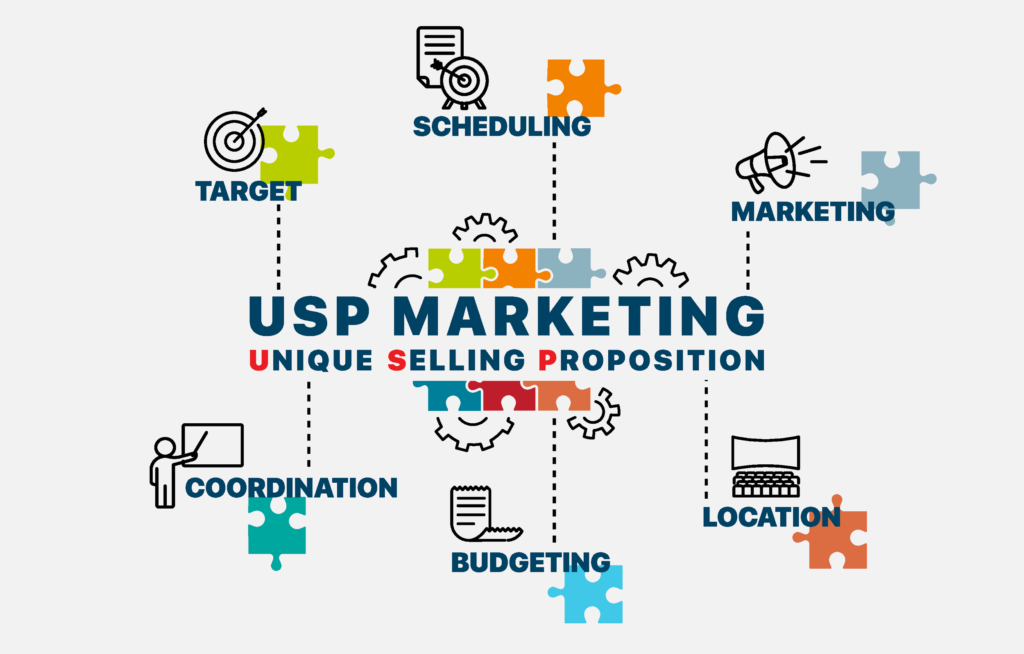
- Define a suitable Marketing strategy: A USP helps set the direction for your marketing strategy, shaping how you advertise, create content, and interact with customers. A USP plays a crucial role in identifying the key points to focus on and how to approach the market.
3. Steps to establish an accurate USP for a product
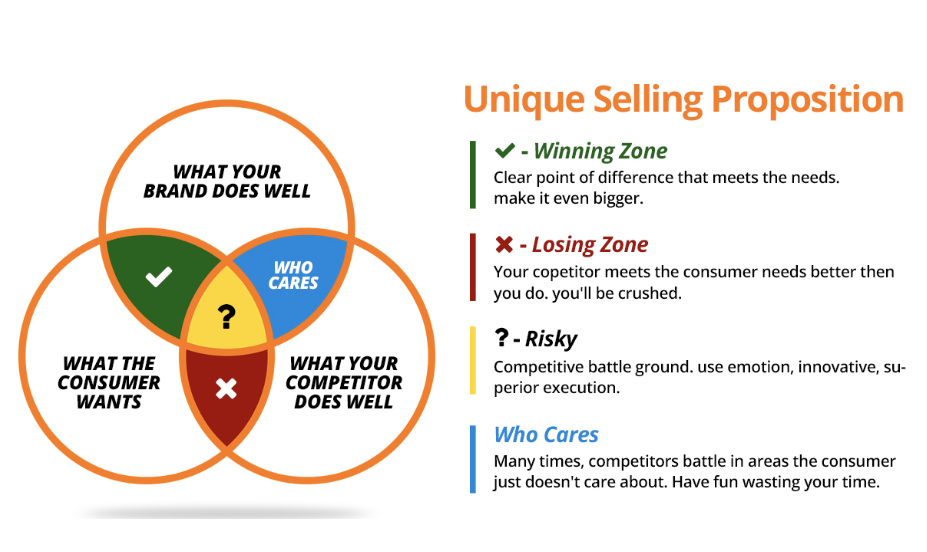
Step 1: Research the target market
First, businesses need to clearly understand their target market, which includes learning about the target audience, the current market, trends, and other related factors. You need to have a clear understanding of your business environment and customers to get a comprehensive overview and set the right direction.
- Comprehensive overview: Researching the target market helps you clearly understand the context in which your product or service will exist. Determine the market size, development trends, and influencing factors.
- Market segmentation: Identify the specific target audiences you want to reach. Who are they? What are their needs? A clear understanding of each segment helps you create a more accurate USP.
Step 2: Understand customer needs

To establish a successful USP, you need to deeply understand the core needs that customers value in your product or service. This requires a subtle understanding of customers and the ability to identify the factors that create real value. Some methods to help businesses identify a quality USP for their product include:
- Surveys and feedback: Use survey tools and collect feedback from customers to better understand their needs and wants. Identify the problems they are facing and how your product or service can solve them.
- Expert consultation: Seek opinions from experts in your field. Highly qualified and experienced individuals will have deeper insights into the market and customers, helping you identify a quality USP.
Step 3: Analyze competitors
Competition is an inevitable factor in business development. A deep analysis of competitors, focusing on how they do business, their sales policies, promotions, and customer care, will help your business generate precise ideas for building a perfect USP.
Businesses need to learn from competitors, not copy them. The key is to recognize what they do well, incorporate it into your own USP, and create real differentiation. At the same time, find gaps in your competitors’ strategies that you can exploit and identify the differences between your product or service and theirs.
Step 4: Identify unique strengths
Use information from market research, understanding customer needs, and competitor analysis to identify the unique elements of your product or service. A unique strength should reflect the special difference your product or service offers. It must create significant value for the customer.
Consider the gaps or shortcomings that competitors are not addressing and determine how your product or service can fill them. Select unique strengths that can create differentiation and value for customers. This could be an exclusive feature, a unique solution, or a better customer experience.
Step 5: Maintain and develop your differentiation
For your USP to remain effective, you need to continuously maintain your differentiation—not just maintain it, but also promote greater differentiation and breakthroughs.
- Customer feedback: Listen to feedback from customers on how they perceive your USP and how it can be improved. This feedback helps you adjust and perfect your USP over time.
- Integrated development: Find ways to further develop your USP elements to enhance value. This can be done by creating new features, improving the customer experience, or expanding your distribution channels.
- Keep up with changes: Monitor changes in the market, customer needs, and new trends to ensure your USP remains relevant and appealing.
4. How to develop a unique and effective USP?
To develop a unique and effective USP (Unique Selling Proposition), put yourself in your customers’ shoes and answer the following questions:
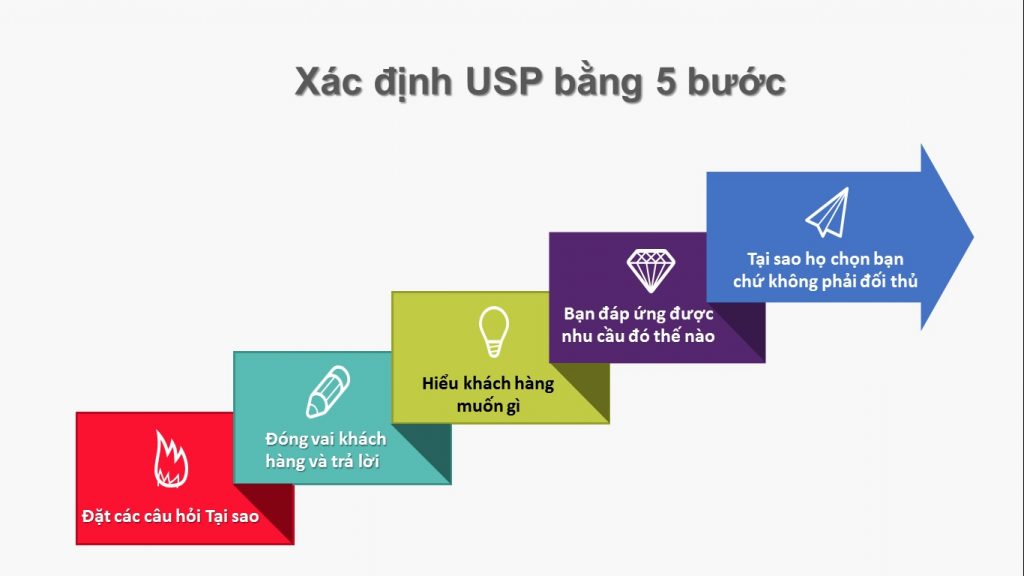
Why is your product or service different?
- What makes your product or service stand out from other options on the market?
- What unique features can only your product provide?
What are the specific benefits of the product/service for the customer?
- What positive change does your product or service bring to the customer’s life?
- How does your product or service help them solve a problem or meet their needs?
Why should customers choose your product/service over your competitors’?
- What specific strengths can you leverage to persuade customers to choose you?
- What advantages does your product or service have that no competitor can match?
How can the USP message be conveyed clearly and effectively?
- How can you summarize your USP into an easy-to-understand and impressive message?
- What phrases or images can you use to create a strong impression of your USP?
How does it align with the customer’s values and lifestyle?
- How does your product or service fit with the customer’s values and lifestyle?
- What aspects of the USP can create a strong connection with customers?
How to maintain uniqueness and improve your USP over time?
- Do you have a plan to monitor changes in the market and customer needs?
- How can you develop and expand your USP to ensure it continues to meet customer interests and demands?
5. Common mistakes when building a USP
The USP (Unique Selling Proposition) is considered the “soul” of a brand strategy. However, many businesses make the following mistakes when they start building their USP:
5.1. Writing a USP that is too general and vague
One of the most common mistakes is writing a USP that is too general and vague. Slogans like “Customer-centric” or “Bringing the best value to the community” sound nice but can be applied to any brand, turning the USP into an “empty slogan.”
5.2. Focusing only on product features, ignoring customer benefits
Additionally, many businesses focus only on product features and forget about customer benefits. Saying “small-sized software” is not as appealing as “lightweight software, quick to install, doesn’t take up memory” – because practical benefits are what customers truly care about.
5.3. Changing the USP constantly, lacking consistency
Another mistake is changing the USP constantly and inconsistently. For example, a phone company might claim to have the “Best camera,” then switch to the “Longest-lasting battery,” and later shift to the “Lowest price.” This confuses customers, leaving them unsure of the brand’s true strength.
5.4. Creating a USP that exceeds actual capabilities
More seriously, many businesses create a USP that exceeds their actual capabilities – for example, promising “2-hour delivery” but often being 4–5 hours late. When the promise doesn’t match the experience, the brand’s credibility collapses.
5.5. Not validating the USP with the target audience
Finally, an equally important mistake is not validating the USP with the target audience. If the USP is built on feelings rather than insights, such as promoting “the software with the most features on the market” when the SME customer group only needs something “easy to use and affordable,” it will undoubtedly waste marketing resources.
In summary: An effective USP must be specific, consistent, feasible, and aligned with customer insights.
6. What is the difference between USP and PoD?
POD – Point of Difference is the factor that makes a company’s product or service different from its competitors. There are many ways to create differentiation for a product, including both positive and negative aspects. However, POD only refers to positive differentiating factors that enhance the value and appeal of the product in the market.
| Criteria | USP (Unique Selling Proposition) | PoD (Point of Difference) |
|---|---|---|
| Concept | The unique selling point, representing the unique value that the product/service provides to customers. | The point of differentiation of a product/service compared to competitors in the market. |
| Objective | To emphasize uniqueness and non-replicability, aiming to persuade customers to choose the product/service. | To create a positive difference to help the product stand out and compete with rivals. |
| Scope | Focuses on a single, unique highlight that is strongly differentiated from other products. | Can include various factors that create differentiation from competitors. |
| Application | Used as the foundation for advertising messages and product positioning in the customer’s mind. | Used to highlight the superior benefits of the product when compared to competitors. |
| Value Represented | Represents the uniqueness and the main reason why customers should choose the product/service. | Represents the superiority or specific benefits that the product/service offers compared to competitors. |
| Target Audience | Target customers who are looking for a clear and unique difference in a product. | Customers who want to see superior value compared to competitors’ products. |
| Impact | Has a strong influence on the purchasing decision because the product offers a unique value that no other product has. | Creates a competitive advantage by highlighting positive differences, making the product more attractive. |
7. Real-world examples of outstanding USPs in businesses
1Office: Comprehensiveness and automation capabilities
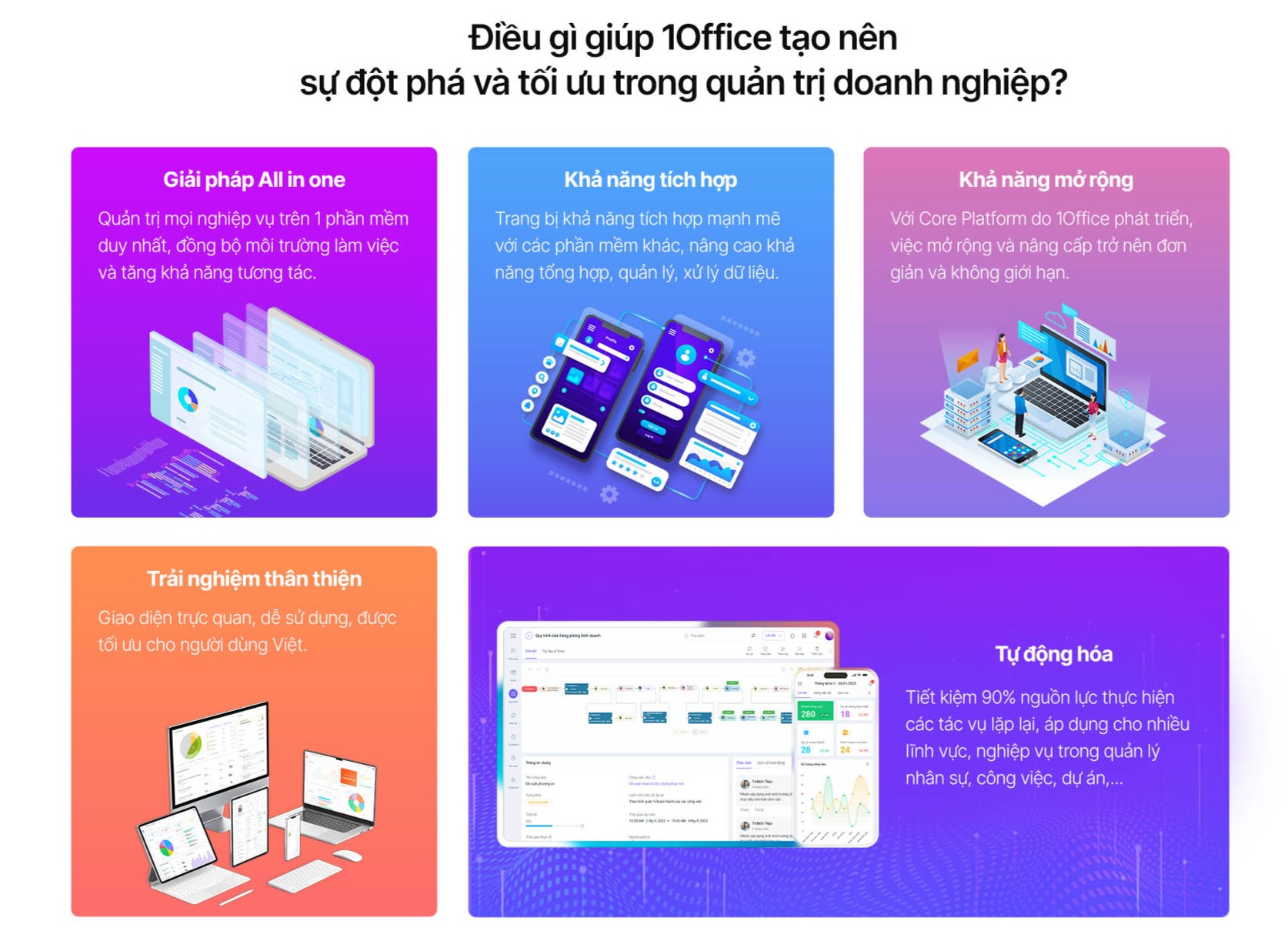
1Office’s USP focuses on its ability to automate management processes and its comprehensiveness. Comprehensiveness is demonstrated through the ability to manage all aspects of a business holistically. From managing tasks, projects, human resources, and payroll to managing sales, customers, revenue, expenses, finance, and business opportunities, everything is integrated into a single system. This helps businesses easily monitor and operate all activities, saving time and resources.
Register for a free 1Office feature demo account!
1Office’s automation capabilities allow businesses to easily track and manage repetitive tasks, minimize errors, and save valuable time. Additionally, the tight integration between departments such as HR, finance, and projects on a single platform means businesses do not need to use multiple separate software, ensuring a seamless and efficient workflow.
Apple: Unique design and user experience
Apple has always focused on creating devices and products with beautiful, minimalist, and unique designs. This helps them create a luxurious and aesthetic image, while also generating curiosity and appeal among consumers. Ease of use and a great user experience have become Apple’s USP. A user-friendly operating system, seamless integration between devices, and excellent customer support have made Apple a top choice for many.
Domino’s Pizza: Delivery speed and quality
Domino’s Pizza built its USP by committing to fast delivery and meeting customer needs in a short time. The 30-minute delivery service has created trust and convenience for customers.
Starbucks: A friendly coffee experience
Starbucks has built its USP based on a friendly coffee experience and creating a special community. Customers come to Starbucks not just for coffee, but also to enjoy the atmosphere and social experience.
8. Frequently Asked Questions
Can a business have multiple USPs at the same time?
Yes. However, you shouldn’t communicate too many USPs at once. A business may have many strengths, but it should choose the most prominent message so that customers can easily remember and compare.
Should a USP be used for the entire brand or for individual products?
It depends on the business model. If a company has multiple product lines or different customer groups, each product may need its own USP instead of using a single, shared message.
Does a USP need to be as short as a slogan?
Not necessarily. A USP needs to be clear first, then concise. A business can have a full version of its USP for internal use, and then shorten it into a slogan or an external marketing message.
If a product isn’t truly different, can you still build a USP?
Yes, but you should start with differences in service, implementation, industry specialization, support speed, or customer experience, not necessarily just features.
Are a USP and an advertising message the same thing?
No. A USP is the core differentiator, while an advertising message is how the USP is expressed for each campaign, channel, and customer group.
———————————–
Thus, 1Office has shared insights on the USP. A USP is considered a tool that helps a business stand out among thousands of competitors. From the buyer’s perspective, a USP answers the crucial question: “Why should potential customers choose your product or service?”. Therefore, businesses need to focus on finding a unique USP by creating a unique value that only their company possesses, thereby gaining an optimal advantage in marketing and business.




