


 11/05/2026
  488 views
A financial plan is a crucial tool that helps businesses control costs, manage cash flow, and make effective decisions. In this article, 1Office shares 7 systematic, easy-to-apply steps for creating a financial plan – helping managers build a solid foundation for financial operations.
Mục lục
- 1. The Most Detailed 7-Step Process for Creating a Financial Plan
- Step 1: Define Financial Goals
- Step 2: Analyze the Current Financial Situation
- Step 3: Create Future Financial Statements
- Step 4: Identify Available and Projected Capital Sources
- Step 5: Create a Specific Budget for Each Activity
- Step 6: Manage Business Cash Flow
- Step 7: Monitor, Evaluate, and Adjust Periodically
- 2. What is a Financial Plan?
- 3. The role of financial planning in sustainable development
- 4. What should you base an effective financial plan on?
- 5. Mastering the 5 principles of financial planning
- See more:
- 6. 7 financial planning mistakes that cause businesses to lose control of cash flow and costs
- 7. 1Office Revenue and Expenditure Management Software
- 7. Frequently Asked Questions about Financial Planning (FAQs)
- 8. Conclusion
1. The Most Detailed 7-Step Process for Creating a Financial Plan

Step 1: Define Financial Goals
Before starting to build a financial plan, a business needs to clearly define its goals: revenue growth, profit optimization, or maintaining stable cash flow. Clarifying these goals is the foundation that will guide the entire financial planning and management process that follows.
Example: A technology company’s financial goal might be to increase revenue by 30% in the next year by expanding its market and developing new products.
Step 2: Analyze the Current Financial Situation
An accurate financial plan cannot be created without data collection and analysis. The business needs to review all information related to costs, revenue, liabilities, cash flow, and other factors affecting financial performance. This forms the basis for making practical decisions and reducing risks.
Example: A company’s CFO notices that in the past year: the net profit report shows a 7% decrease, the cash flow from operating activities report shows a $10 million decrease, and the return on assets ratio has decreased by 1%. Through this analysis, they can see that profit growth is slow and that risk management needs to be strengthened.
Step 3: Create Future Financial Statements
Based on financial goals and the analysis of the current financial situation, the business needs to create projected financial statements for the future. This includes forecasting revenue, costs, profits, and cash flow for a specific period. Accurate financial forecasting helps determine the necessary financial resources and shape the financial plan.

Example: A manufacturing company needs to create a projected financial statement for the next year, specifically forecasting $30 million in revenue from new contracts, $25 million in operating costs, and a projected net profit of $5 million.
Step 4: Identify Available and Projected Capital Sources
Before implementing the financial plan, the business needs to assess its existing internal capital and future fundraising possibilities, such as bank loans, venture capital, or issuing shares. This helps to clearly define financial limits and optimize resource allocation throughout the plan.
Example: A startup assesses its available capital as 75% from investors and 25% from business operations. At the same time, the company is also considering the possibility of raising capital by issuing shares or taking out a bank loan.
Step 5: Create a Specific Budget for Each Activity
Based on the projected financial statements and available capital, the CFO needs to create a specific budget for each of the company’s activities. Specifically, the business needs to allocate financial resources for marketing, research, development, risk management, investments, etc. A more detailed budget will help the organization define goals, assign responsibilities, and manage finances effectively.
Example: A retail company creates a specific marketing budget that includes $20,000 for online advertising, marketing expenses, and market research. This budget ensures that financial resources are used effectively and consistently for marketing activities.
Step 6: Manage Business Cash Flow
The CFO needs to pay special attention to managing business cash flow to ensure financial operations run smoothly. This process includes tracking daily income and expenses, managing collection and payment cycles, forecasting future cash flow, and optimizing cash reserves.

Example: A financial services company manages its business cash flow to ensure stability and sufficient cash reserves. This quarter, the company had an income of $50,000 and expenses of $30,000, resulting in a positive cash flow of $20,000.
Step 7: Monitor, Evaluate, and Adjust Periodically
Finally, the business needs to monitor and evaluate the financial plan regularly and periodically to achieve the best results. The necessary activities include: comparing actual figures with projections, analyzing financial performance, and identifying new risks and opportunities. Based on the analysis results, the business can make adjustments such as cutting costs, optimizing cash flow, or adjusting revenue targets accordingly.
Example: The CFO of a manufacturing company compares actual results for revenue, costs, and profit against a forecast of a 5% decrease. Based on this analysis, the CFO can assess financial performance and adjust the financial plan by optimizing costs or boosting sales activities to achieve better results.
2. What is a Financial Plan?
A financial plan (Financial Planning) is a detailed report that outlines financial goals, strategies, and specific measures to achieve those goals within a certain period. It is a crucial strategic framework that helps managers effectively control the organization’s financial situation. It includes identifying financial resources, forecasting revenue and expenses, assessing financial risks, creating balance sheets, and planning investments.

A financial plan is created based on technical analysis and existing financial data. It also includes the consideration and evaluation of external business factors such as the economic environment, market trends, and competitors.
The goal of a financial plan is to ensure cash flow stability, optimize the use of financial resources, and guide the organization’s successful development. Furthermore, financial planning helps managers make smart decisions, clearly define financial performance, and accurately assess progress during implementation.
Below is a comparison table of the three types of financial plans: short-term, medium-term, and long-term:
| Short-term financial plan | Mid-term financial plan | Long-term financial plan | |
| Time | From one quarter to one year | From one to three years | More than three years |
| Scope | Orienting and managing daily finances to ensure stability and efficiency in short-term business operations. | Managing finances in the near future to shape financial strategy and ensure the stable development of the organization. | Shaping and managing finances in the distant future to determine long-term financial strategy and create sustainable value for the organization. |
| Tasks | Focuses on managing cash, cash flow, budgets, and short-term financial risks. | Includes financial forecasting, budget management, investment and financial management, and mid-term financial risk management. | Includes shaping long-term financial strategy, identifying investment opportunities, managing capital and resources, and long-term financial risk management. |
| Example | A manufacturing company sets a goal to increase revenue by 10% in the next 6 months by boosting advertising and expanding its market. | A software company plans to invest $5 million in research and development of new products within 3 years to grow and compete in the market. | Corporation A aims to expand its global operations and invest in new industries within 10 years to achieve sustainable growth and generate long-term profits. |
Comparison table of 3 types of financial plans: short-term, medium-term, and long-term
3. The role of financial planning in sustainable development
Ensuring stable cash flow
Financial planning allows businesses and leaders to manage cash flow effectively. Balancing revenue and expenses and allocating budgets for business activities will help the company maintain stable financial resources, avoiding cash flow shortages or wasted investment capital. As a result, businesses can proactively respond to short-term financial fluctuations and maintain stable business operations.
Optimizing costs and resources
A detailed financial plan will help a business clearly identify necessary expenses and cut ineffective costs. At the same time, planning helps the business use resources (capital, human resources, assets, etc.) more rationally and effectively, thereby enhancing profitability and creating added value.
Supporting long-term strategy development
Financial planning not only helps a business focus on immediate core issues but also outlines long-term strategies, including scaling up, investing in new projects, or developing products/services. Thanks to thorough financial preparation, businesses can proactively pursue new business opportunities and maximize long-term profits.
Managing financial risks
With a detailed financial plan, a business can predict and prevent potential financial risks such as inflation, economic recession, or interest rate fluctuations. Through analysis and contingency planning, businesses can develop plans to protect capital and assets, helping to minimize risks and maintain financial stability during difficult periods.
Enhancing capital mobilization and investor confidence
A transparent and clear financial plan will easily attract the interest of investors and financial institutions. Investors will have a more comprehensive view of the business’s development potential and ability to return capital, thereby increasing confidence and willingness to invest.
4. What should you base an effective financial plan on?
To build a realistic and feasible financial plan, a business needs to base it on internal data (financial health, scale) combined with strategic objectives and objective fluctuations from the external business environment.

4.1. Based on the current financial situation
To build an effective financial plan, a business needs to analyze its current financial situation, including assessing its capital structure, cash flow, debt status, existing assets, etc. Assessing the financial situation will help the business identify strengths and areas for improvement, thereby guiding its long-term financial strategy for the future.
In any business, a complete financial plan will include 3 important report templates that Chief Financial Officers need to master: the Income Statement, the Cash Flow Statement, and the Balance Sheet.
See more: What is corporate financial management? Principles of effective corporate financial management
4.2. Based on business goals and strategy
Define the specific financial goals the organization wants to achieve in the future, such as revenue growth, profit optimization, scaling up, or investing in new product research and development. From there, build a business strategy and financial plan to achieve these goals.
4.3. Based on the scale of business operations
A business needs to consider its current and projected scale of operations to determine and build financial reports. The scale of operations includes the products or services provided, human resources, production processes, supply network, and market coverage. The scale of operations affects the necessary financial resources and how finances are allocated to meet business goals.
4.4. Based on business environment analysis
A business needs to assess the risks, challenges, and opportunities in the business environment. Factors such as market fluctuations, policy changes, legal regulations, technological advancements, competitor developments, and other macroeconomic factors can significantly affect the organization’s financial activities.
5. Mastering the 5 principles of financial planning

5.1. Always manage monthly cash flow and spending
Any business, regardless of its industry, needs to track and manage its monthly cash flow and expenditures. By controlling and optimizing costs, businesses can maintain a positive cash flow and enhance their ability to make payments and investments.
5.2. Build a financial contingency fund
This is a crucial principle for dealing with market fluctuations and financial risks. Businesses need to accumulate a contingency fund to ensure financial stability in case of a crisis or unexpected expenses.
5.3. Prioritize paying off high-interest debts
Businesses should focus on paying off high-interest debts first to effectively reduce interest costs and improve long-term financial health.
5.4. Build savings and investments
This principle encourages businesses to accumulate and invest surplus funds to increase income and generate additional profits. By investing regularly, businesses can leverage their financial potential and achieve long-term financial goals.
5.5. Use existing money to make more money
Businesses should find ways to use existing money to create additional value and income, which can be done through business expansion, investing in financial instruments, or creating new projects for growth and profit.
See more:
6. 7 financial planning mistakes that cause businesses to lose control of cash flow and costs
Cash flow is the lifeblood of a business. However, many organizations struggle with financial operations due to a few seemingly small mistakes in the planning process. Below are 7 common issues that cause businesses to be “profitable on paper – negative in reality”:
- Not forecasting cash flow monthly or quarterly: Creating an annual financial plan without breaking down cash flow into shorter cycles makes it easy for businesses to face cash shortages at payment times.
- Creating a budget that lacks detail for each activity: Allocating the budget only at a high level makes it difficult for the CEO to control cash flow by department or project, thus making it hard to evaluate budget efficiency.
- Not setting up a financial contingency fund: When market fluctuations, unexpected costs, or delayed customer payments occur, the business lacks the resources to respond promptly.
- Not updating the financial plan periodically: A plan made at the beginning of the year, if not adjusted based on quarterly/monthly realities, will quickly become outdated, leading to flawed decisions.
- Failing to track receivables and payables: Prolonged debt disrupts cash flow, causing payment difficulties for the business even when accounting profits are positive.
- Not measuring performance with specific financial ratios: Ignoring indicators like ROA, capital turnover, and liquidity ratios leaves the CEO/CFO without sufficient data to make operational decisions.
- Using manual Excel sheets without an alert system: Managing financial plans with separate spreadsheets poses many risks: errors, no alerts for overspending, negative cash flow, or fragmented budgets.
7. 1Office Revenue and Expenditure Management Software
Besides Excel, many businesses now prefer to use revenue and expenditure management software to improve the efficiency of financial planning and control cash flow more transparently.
1Office Revenue and Expenditure Management Software is a powerful tool that helps businesses create plans and manage their cash flow anytime, anywhere. With the software, businesses can easily manage daily financial activities, cash books, receipts, payment vouchers, fund transfer orders, and other related documents.
-
Manage cash books, receipts, payment vouchers, and fund transfer orders centrally.
-
Clear role-based permissions: create, edit, and approve documents according to proper authority.
-
Automatic alerts for upcoming receivables and payables to avoid omissions.
-
Link debts with contracts, orders, and quotes to ensure data consistency.
-
Provide overview reports on revenue, expenditure, and cash flow by month, quarter, and year.
-
Supports setting up flexible approval processes with transparency.
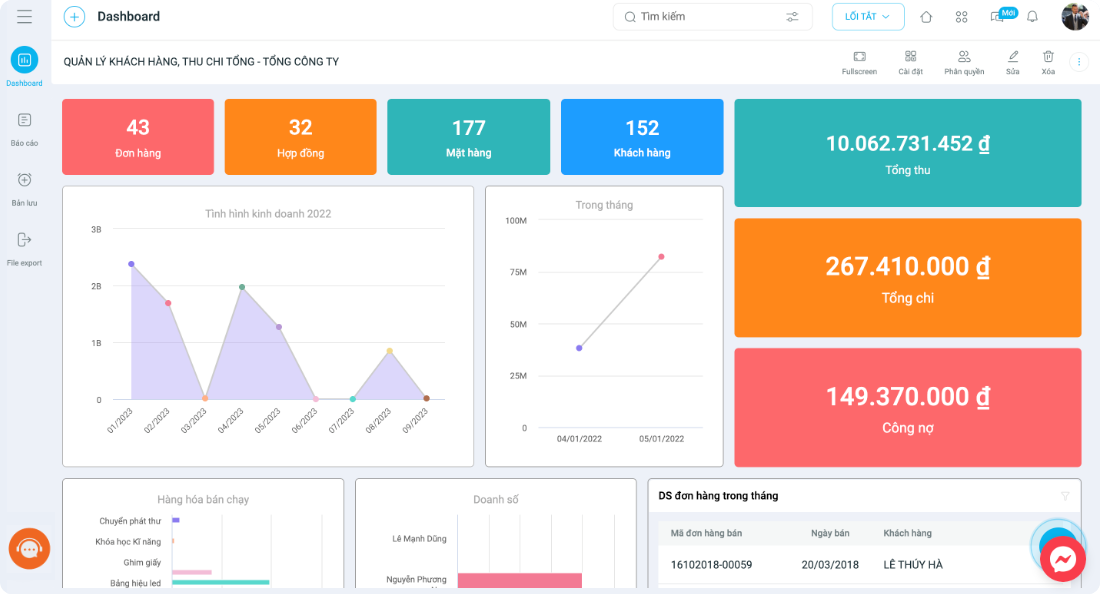
With real-time cash flow tracking and smart alerts, the software helps businesses proactively allocate budgets, control risks, and execute financial plans systematically.
7. Frequently Asked Questions about Financial Planning (FAQs)
Why do profitable businesses still face cash shortages?
Because cash flow is tied up in uncollected debts (accounts receivable) or excessive inventory. Financial planning helps you balance the timing of actual cash inflows to ensure solvency.
How much should be set aside for a financial reserve fund to be safe?
The ideal reserve should be equivalent to 3-6 months of fixed operating costs. This amount helps the business maintain normal operations during market fluctuations or sudden revenue drops.
How do I know if the financial plan is on the right track?
Compare actual figures with forecasts on a monthly/quarterly basis. If revenue or cost deviations exceed 10%, you need to analyze the cause and adjust your goals immediately.
When should debt repayment be prioritized over reinvestment?
Prioritize paying off debts with interest rates higher than the rate of return on current projects. This helps reduce financial pressure and improves the company’s safety ratio.
What is the most effective tool for budget control?
Instead of using error-prone manual spreadsheets, businesses should use software like 1Office. The system will automatically issue alerts when spending exceeds set limits, helping managers control cash flow in real-time.
Sign up for a free feature Demo!
8. Conclusion
Above is all the information on the principles and process for creating a financial plan that 1Office wants to share with businesses. We hope the information in this article will help CFOs create an effective plan.
















