


 12/05/2026
  302 views
In the 4.0 era, as the business focus gradually shifts from “product” to “customer,” understanding and building an accurate Customer Journey is a mandatory requirement for business success. So how can you understand your customers and meet the core objectives of your business? Let’s find out with 1Office in the article below!
Mục lục
1. What is a Customer Journey?
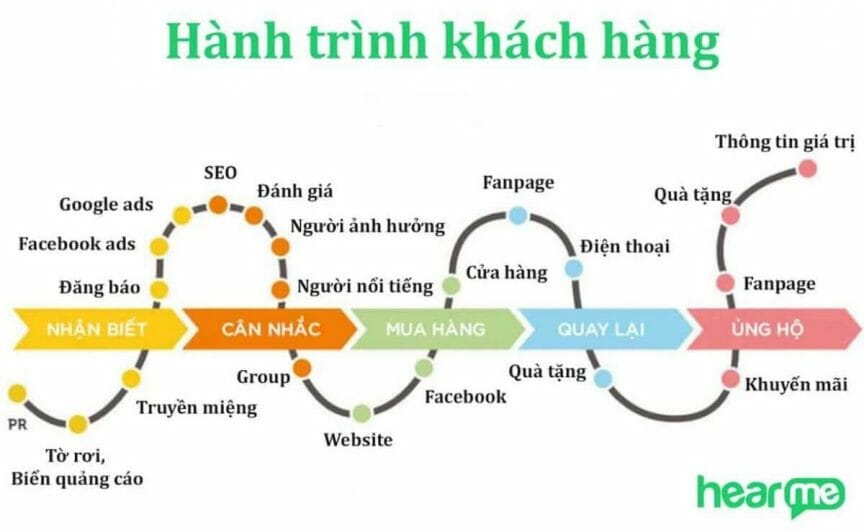
Customer Journey is a term that represents the customer’s experience with a brand over time; in other words, it is the series of interactions a customer has with a brand/business throughout their customer lifecycle. The customer journey shows the touchpoints during the customer’s interaction with the business. This journey consists of 3 stages:
Stage 1: Pre-purchase
- Awareness: The buyer realizes they have a problem to solve or a desire they want to fulfill
- Consideration: The buyer clearly defines their problem and researches, evaluating options to solve it. At this step, they will consider and look at products from different brands to move to the decision stage
- Decision: The customer chooses the most optimal solution for the money they are spending
Stage 2: Purchase
- Purchase: The customer proceeds to buy the product and make the payment
Stage 3: Post-purchase
- Retention: The process of retaining customers and maintaining interaction with the brand
- Advocacy: The customer shares the product with friends and family
By understanding the customer journey, businesses will know how to optimize touchpoints at each stage, helping to provide a better shopping experience for customers and ensure consistency across all touchpoints on all channels. This, in turn, increases conversion rates, optimizes advertising budgets, and nurtures better customer relationships.
Simply put, managing the customer experience meticulously and effectively will help your business generate more revenue from the same media budget.
| A great experience will create happiness for customers, and it is that happiness that creates business success! – Scott Snyder – Founder & CEO of SELLUTIO |
2. How to Build a Customer Journey in the Digital Age
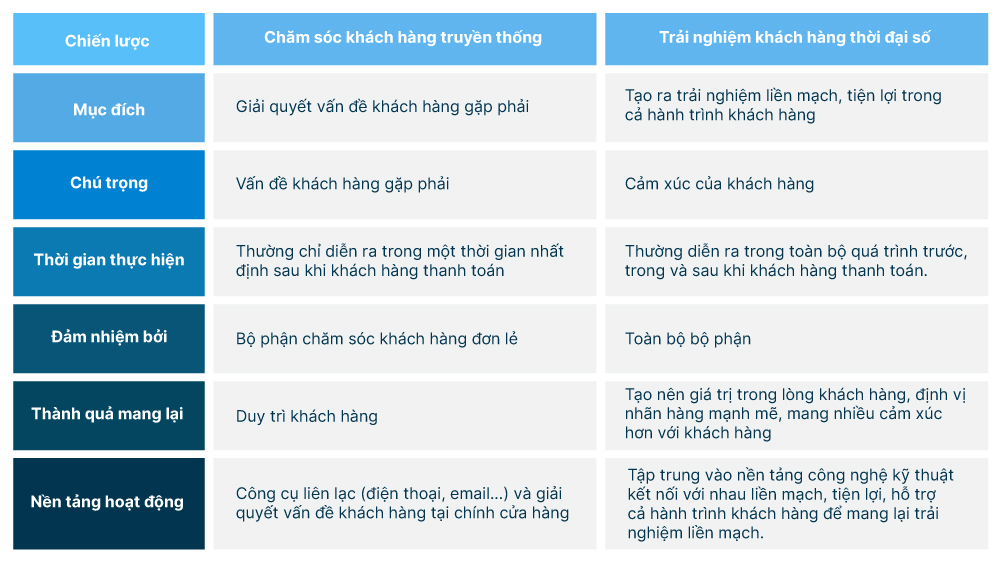
Today, customer preferences and behaviors change frequently due to technological advancements. Brands themselves need to take appropriate steps to keep up with these changes. Businesses need to build and optimize the Customer Journey regularly and cyclically.
In the digital age, the customer journey has completely changed as people primarily interact and communicate through smart devices. The metric for evaluating customer experience is no longer based on how employees at traditional stores greet customers, but on whether online services are fast, convenient, and provide a seamless experience. The shift from offline to online is the first step in a digital-age customer experience strategy to maintain connection and engagement with customers, as well as to integrate processes for handling online customer requests.
Additionally, the explosion of social media has made customers more proactive in searching for and sharing information. Customers tend to trust messages from other customers more than from the brand itself. In the Consideration stage, besides searching on Google, asking in forums, groups, and especially reading Reviews is an extremely common behavior today. This is a channel that strongly influences purchasing decisions and is one of the competitive advantages for brands because it lets considering customers know about the post-purchase experiences of previous customers.
Furthermore, to ensure future sustainability, businesses also need to maintain interaction with customers, turning them into loyal customers by applying technology and data analytics to optimize personalized user experiences.
3. Leveraging Technology to Optimize the Digital Age Customer Experience with 1Office
In the 4.0 era, applying digital technology will help brands optimize the customer experience. A positive customer experience will bring long-term value to the business, not only in terms of revenue but also by helping the business reach the right target audience, enhance the customer experience, and strengthen customer relationships.
To optimize the Customer Journey, businesses will need a customer data platform to collect and build touchpoint maps effectively, automatically, with accurate, real-time synchronization. However, the current reality is that businesses are using too many separate software programs for management and tracking, such as customer management software, call center, marketing, logistics, etc. In this case, the business management system becomes extremely cumbersome and consumes excessive costs and human resources.
Understanding this, 1Office has launched a comprehensive Business Management Toolkit. With just one software, your business can manage a CRM system that includes 6 modules: Customers, Sales, Marketing, Finance, Inventory, and Suppliers. By integrating all business aspects on a single platform, 1Office’s solution is considered a breakthrough in building and optimizing the customer journey, identifying customer insights, and delivering the best experience to retain customers and maximize revenue for the business.
-

1Office provides a comprehensive Business Management Toolkit
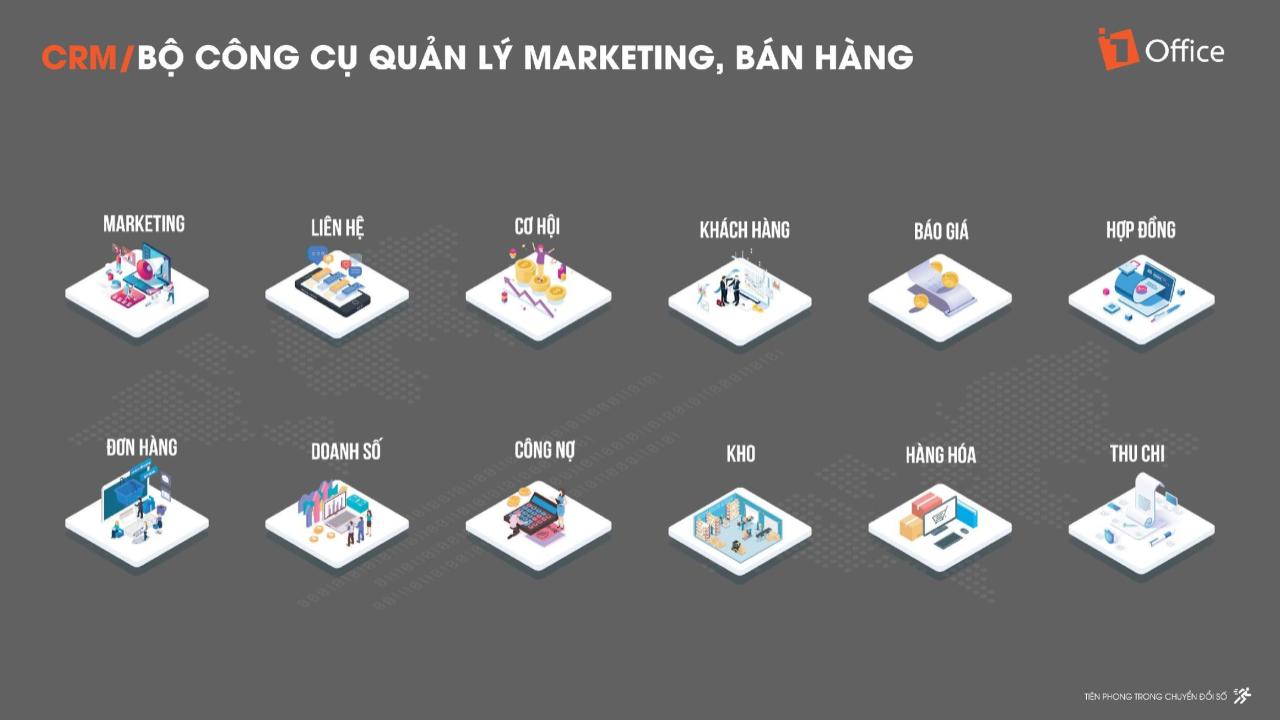
1Office’s automated CRM system helps businesses optimize & digitize all operations BEFORE, DURING, and AFTER the sale. With 1Office, your business can design automated multi-channel customer care processes and segment customers according to different scenarios, thereby accurately evaluating the care effectiveness of each individual/department for timely improvements. The software also stores all information, interaction history, and transactions, helping staff connect comprehensively with customers. In addition, 1Office also supports building and editing professional sales processes for each business stage. As a result, businesses will target the right potential customers and increase sustainable revenue, while customers will have a seamless and professional experience with the brand.
It can be said that customer behavior and needs can change continuously, so businesses need to be flexible in capturing and modifying the journey map according to actual changes to deliver the best experiences for customers and maximize profits for the business. With the knowledge about the customer journey mentioned in this article, 1Office hopes that managers and marketing teams can find an effective implementation plan while still optimizing costs.
For more detailed information, please visit:
















