


 12/05/2026
  428 views
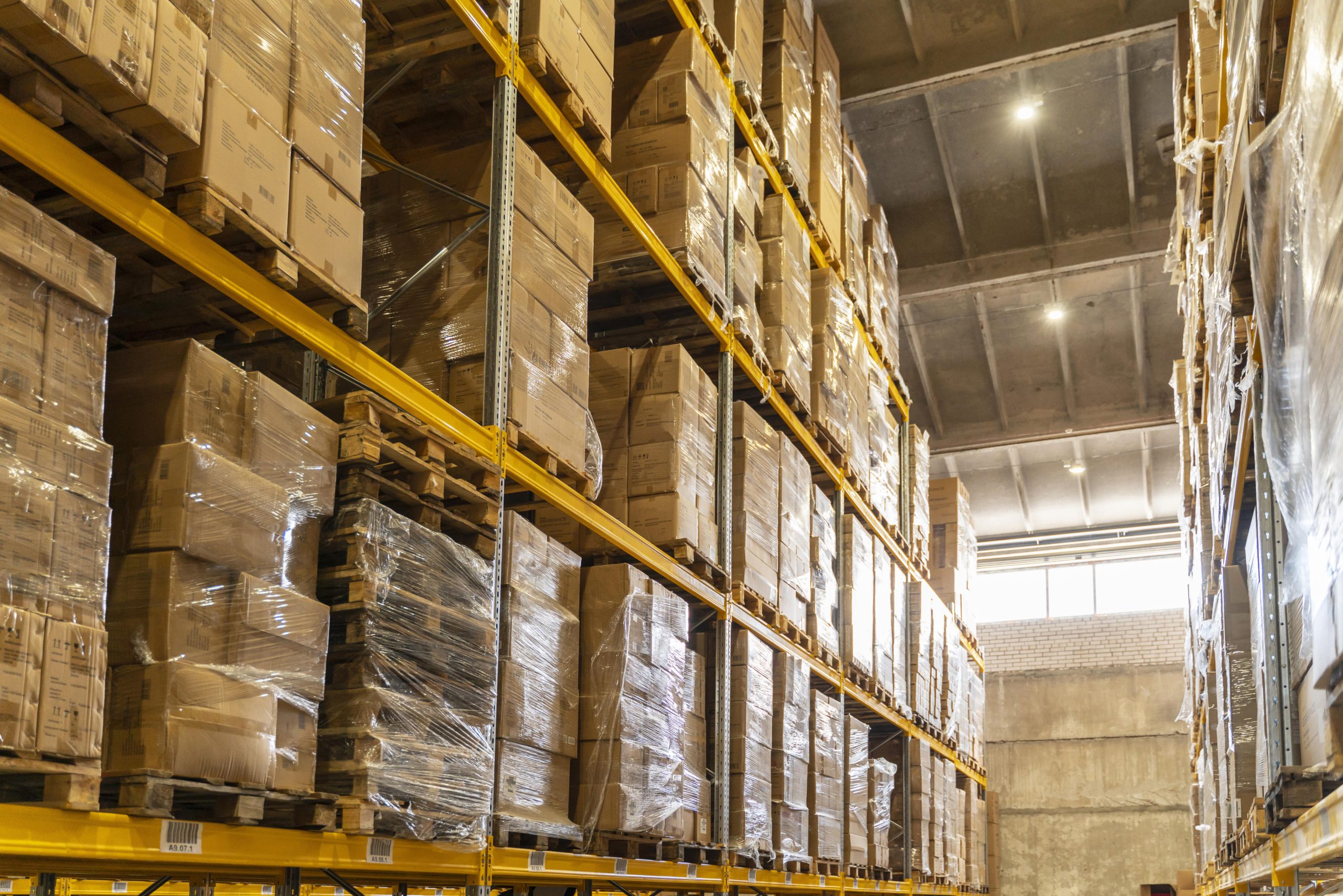
Regardless of the business sector, every company needs its own warehouse. In it, inventory often constitutes the largest portion and is also the asset with the highest proportion of the company’s total assets. So, what does inventory include? How can you manage inventory effectively? This article will provide the answers.
Mục lục
1. What is inventory?
For a long time, the term “inventory” has often been associated with “stagnant” goods in a workshop that are “unsold” or unmarketable. However, this understanding is completely inaccurate.
Inventory is a term in business management and accounting that refers to the assets or products a company holds for sale, for use in the production process, or for providing services.
From an accounting perspective, inventory is a term for products that a company stores in its warehouse to serve the production process or while awaiting sale. According to Vietnamese Accounting Standard (VAS) 02, inventory is defined based on the following 3 criteria:
- Products held for sale in the normal course of production and business.
- Products in the process of production or business that are incomplete.
- Raw materials, materials, tools, and supplies used in the production, business, or service provision process.
Inventory can sometimes have negative connotations because if goods and raw materials are stored for too long, it indicates that production or business operations are facing problems, with goods not circulating or being sold. At the same time, prolonged inventory can lead to a decrease in quality (especially in industries like food and processing) and an increase in storage costs.
Therefore, inventory management is always a crucial task that businesses are concerned with. Currently, businesses often use accounting software with integrated inventory management features to easily update and synchronize accounting information.
2. What are the types of inventory?
Inventory is classified into the following 4 groups:
- Supplies: These are materials necessary for the production process, often needing to be purchased new and used regularly. Examples include office supplies, fuel for machinery, and cleaning materials for machines.
- Raw materials: These are raw materials that are imported and stored for use in the production process. These materials will then be processed or manufactured at the factory or sent out for processing.
- Work-in-progress: To create a finished product, it must go through many stages. Raw materials will be stored at each stage and wait for the next production step. These are products that have gone through the production process but are not yet complete, or are complete but have not yet undergone the final procedures after production.
- Finished goods: These are products that are complete and stored in the warehouse, ready to be sold to the market.
For example: For a steel manufacturing company, inventory may include:
- Raw materials for steel production: Coke, iron ore
- Production supplies such as chemicals, electricity
- Finished goods such as steel plates, steel pipes, construction steel
- Work-in-progress such as unprocessed steel billets
- Tools, production machinery, steel cutting and bending tools
- Service costs such as transportation, processing, quality inspection
3. Principles for determining inventory value
According to Vietnamese Accounting Standard (VAS) 02, inventory is valued at historical cost. In cases where the net realizable value is lower than the historical cost, it must be calculated based on the net realizable value.
Historical cost of inventory:
- Purchase cost: Includes the purchase price, non-refundable taxes, transportation costs, loading and unloading, and storage during the purchasing process, and other costs directly related to the purchase of goods.
- Processing costs: Includes costs directly related to product manufacturing such as: direct labor, fixed and variable manufacturing overhead incurred in the process of converting raw materials into finished goods.
- Other costs: Includes costs other than the purchase and processing costs of inventory.
- Cost of services provided: Includes employee costs and other costs directly related to providing the service, such as supervision costs and related overhead costs.
4. 5+ Effective Inventory Management Methods
4.1. Use Inventory Management Software
Because warehouse management is a critical activity, many units and businesses have chosen to use software as a solution to help accountants manage inventory accurately and effectively. Inventory management software provides many useful features such as controlling the value and quantity of inventory, tracking the movement and use of raw materials and supplies, as well as creating and controlling goods receipt/issue notes and other necessary reports.
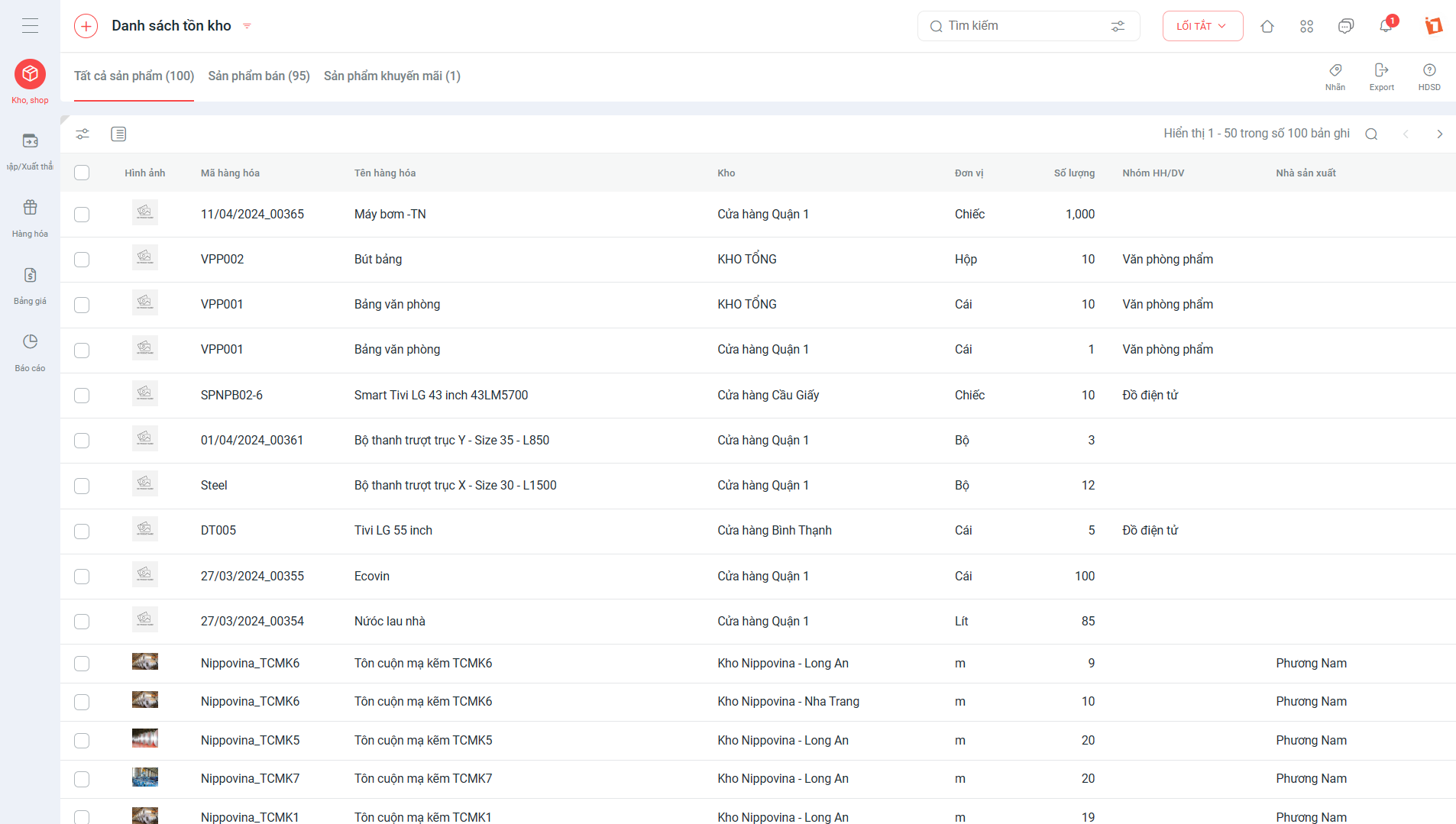
1Office software fully meets the above requirements with its warehouse management feature. In addition, this software is suitable for the specific warehouse management needs of businesses in all sectors:
- Automatically calculates the cost of goods sold using various methods such as weighted average at period-end and moving average. It allows for calculating the cost for individual items or all items at once, by warehouse or not by warehouse, as well as by period.
- Allows for goods receipt and issue; manages and tracks goods by various attributes such as color, size, serial number, frame number, etc.
- Provides a full range of document templates such as Goods Receipt/Issue Notes, warehouse ledgers, stock cards, and inventory reports by item or warehouse, by SKU, lot number, expiration date, etc., and allows accountants to customize report templates according to management needs.
- Manages goods by multiple units of measure and automatically converts from the alternate unit to the primary unit for inventory management by each unit. At the same time, the software allows setting a minimum stock level for each item so the company can plan to purchase more goods when the stock is nearing the minimum level.
4.2. Use Barcodes for Easy Inventory Management
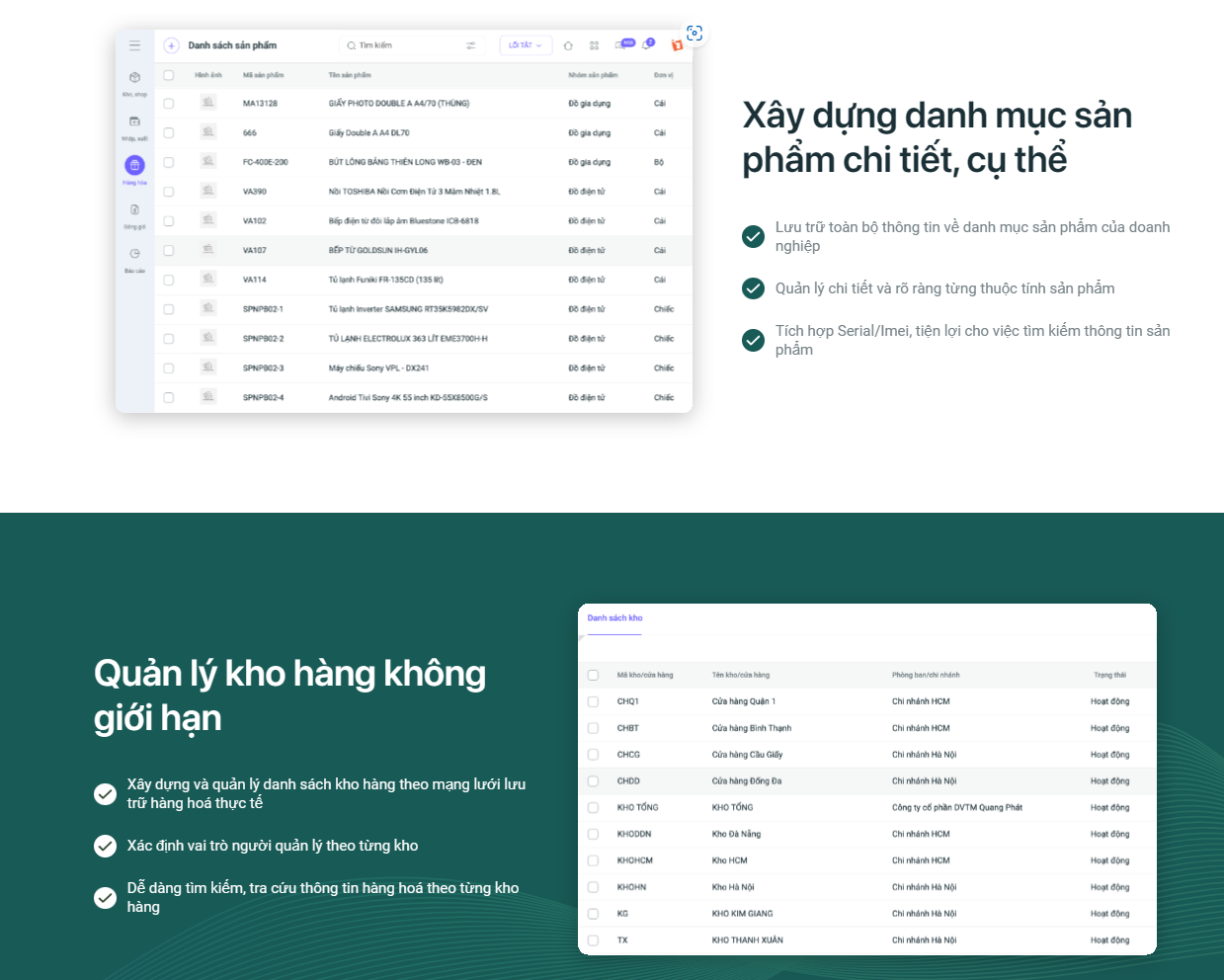
Using barcodes is an important tool that helps organize and arrange inventory scientifically and effectively. It is now widely adopted by many businesses in managing the import and export of goods in the warehouse. Barcodes are used to easily assign names to each group of goods for management purposes.
When searching for a specific item, the accountant simply needs to scan the barcode, and the system will provide information about the shelf location, quantity, product status, and other pre-configured details for easy lookup. This helps save time and effort in warehouse management.
4.3. Control the Goods Receipt and Issue Process
For companies in the market, the volume of customer orders being dispatched from the warehouse is increasing daily. Therefore, the process of finalizing orders and handing them over to packing and shipping staff needs to be closely monitored by business owners to avoid unnecessary risks.
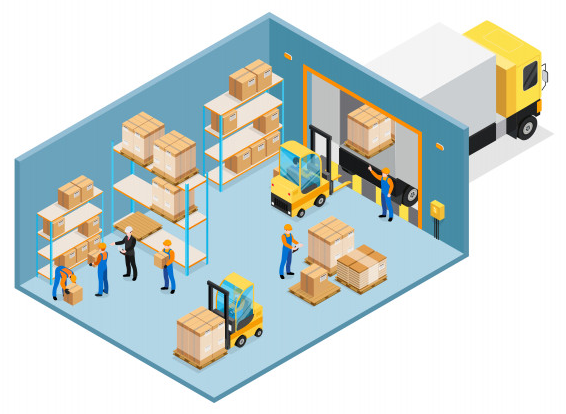
This quality check process is carried out by comparing the purchase order with a list of picked products to ensure that the item codes and quantities match perfectly. At the same time, this is also an opportunity for staff to perform quality control and double-check everything to ensure that the goods are shipped without any issues. Business owners need to be careful in selecting experienced individuals with a deep understanding of warehouse management and company operations to perform this task. Only with such personnel can businesses save time and reduce unnecessary costs.
4.4. Establish Warehouse Location
Inventory checking can face many risks if warehouse staff do not have adequate working space. Therefore, business owners need to pay attention to the location and size of the warehouse. A small space should not be designated as a warehouse with the mindset that warehouse management is unimportant.
Instead, businesses should locate their warehouse in a place that is easy to monitor and convenient for receiving, dispatching, and handling goods. This will help minimize risks and simultaneously avoid wasting time and money.
4.5. Apply the Lean Manufacturing Model
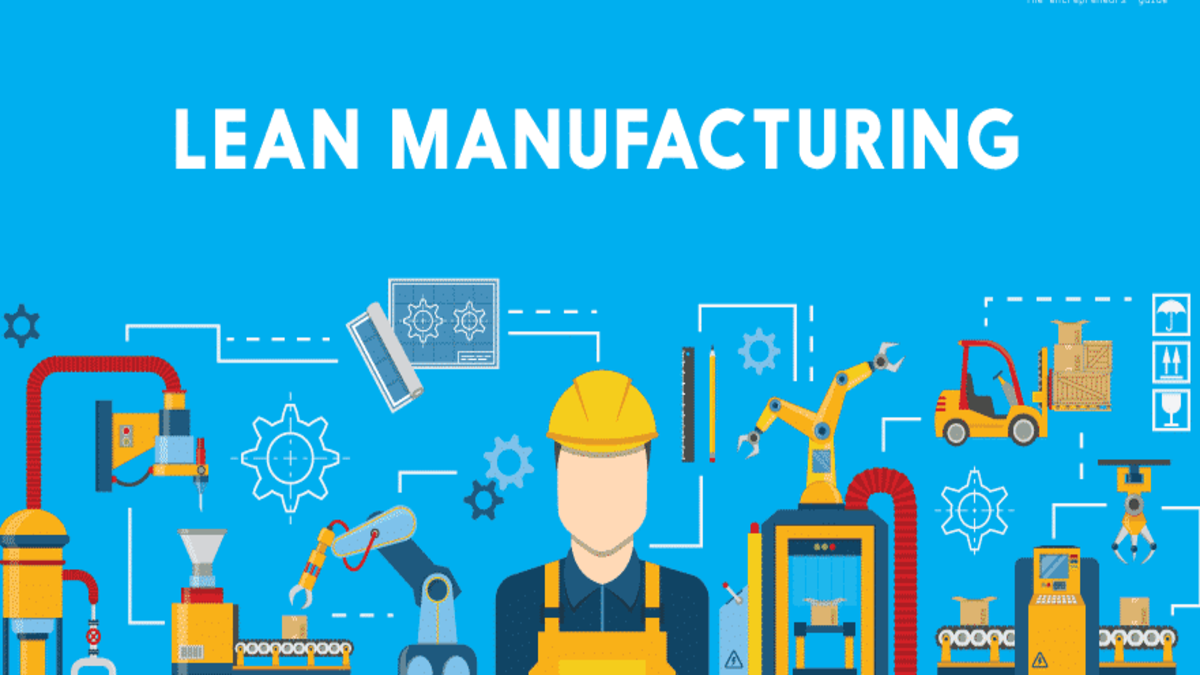
Lean Manufacturing is a management model designed to optimize the management of inventory in the warehouse, ensuring that products are available to meet market demand without causing waste in production and storage costs.
The Lean Manufacturing model offers many benefits, such as:
- Increased operational efficiency: Eliminates waste, improves productivity, minimizes inventory.
- Improved product quality: Enhances accuracy, detects defects early, increases customer satisfaction.
- Enhanced employee morale: Empowers employees, creates an effective work environment, improves teamwork efficiency.
- Increased flexibility: Ability to adapt quickly, enhances responsiveness to customer needs, increases competitive advantage.
4.6. Calculate inventory turnover
Measuring inventory turnover is a method that helps businesses forecast import times. Calculating inventory turnover provides more accurate predictions about the market situation.
The inventory turnover ratio indicates the number of times inventory is replenished within a specific period, thereby estimating the average time required to sell all inventory. Through this, businesses can plan their imports with appropriate quantities and timing.
5. 3 Secret Inventory Management Principles for Business Owners
5.1. Continuously conduct warehouse inventory checks
Inventory is an inseparable part of a business’s production and sales process, and therefore, it constantly faces fluctuations. To manage inventory effectively, it is mandatory to conduct inventory checks, update the status of goods, and record any unusual issues for timely resolution.
During the inventory check process, it is important to pay attention to information about the current inventory quantity, and the quantity of damaged, expired, or lost goods. Afterward, this information needs to be compared with the records in the books to detect and review any discrepancies. This real-world data serves as a basis for management to review and make necessary adjustments, avoiding significant losses in the future.
5.2. Arrange goods in the warehouse scientifically for convenient searching and dispatching
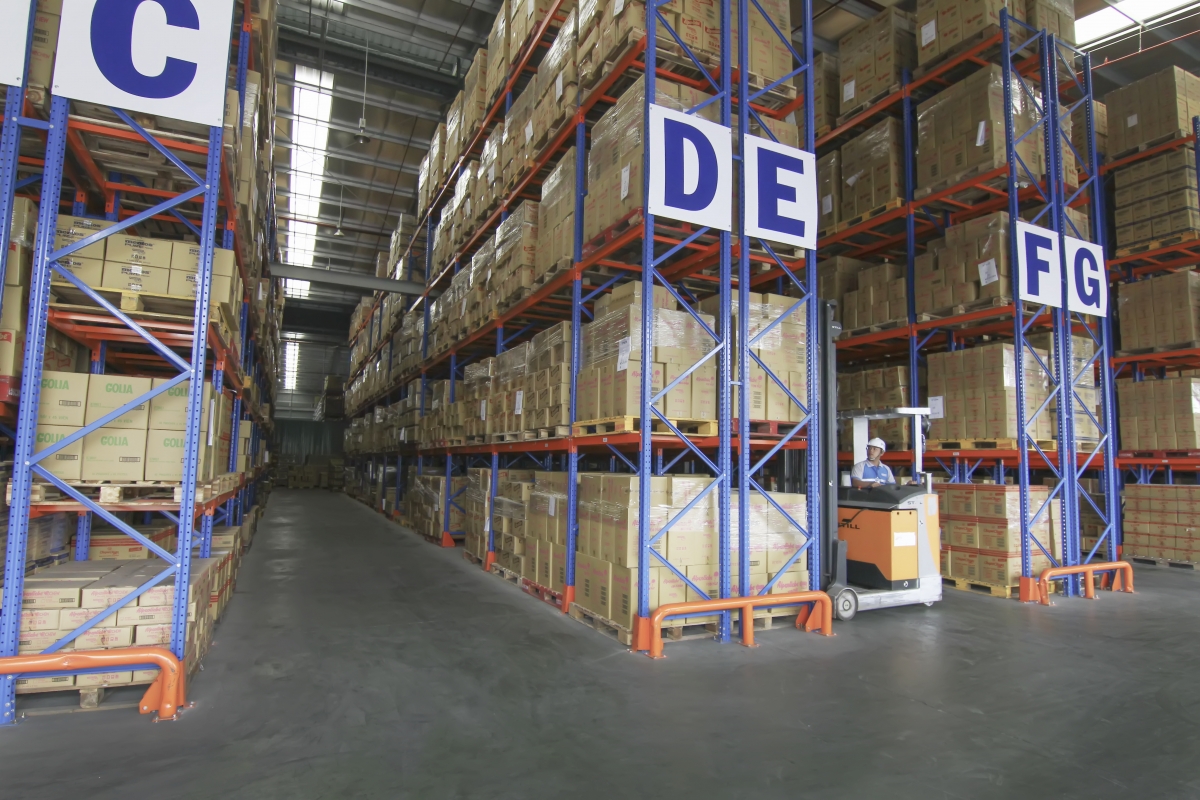
If we do the two things above well but don’t know how to arrange goods in the warehouse, all efforts to manage inventory effectively will be meaningless. Nowadays, businesses often apply the method of arranging materials/goods by location, which is the most scientific, convenient, and reasonable approach. Each type of material/good needs to be classified and placed in appropriate areas within the warehouse, which also helps the warehouse keeper easily identify the location of goods when needed for dispatch or inventory checks. Location-based management also helps businesses avoid losses due to mistakes or theft.
There are two methods for arranging goods as follows:
- Fixed location method: this is a method where items are placed in a fixed position with a clearly displayed location. The advantage of this method is that it’s easy to find goods quickly. However, the disadvantage is that it takes up a lot of space and is not suitable for small warehouses with a large volume of frequently rotated goods.
- Flexible location method (free location): this is a method where items do not have a fixed position. All locations are numbered and displayed on a warehouse map. When an item is placed in a location, the item’s name is also recorded in the corresponding position on the warehouse map. The advantage of this method is that it saves space. However, the disadvantage is that it takes time to set up the warehouse map and display the warehouse layout.
5.3. Set inventory levels for each product
Inventory level is the determined quantity of goods to be maintained in the warehouse, aiming to ensure sufficient supply when demand arises and to keep business operations running continuously without interruption.
Inventory management becomes more convenient when business owners know how to set minimum and maximum inventory levels for each product, meaning the quantity of goods is not allowed to fall below the minimum or exceed the maximum level.
To determine the optimal inventory level, the following criteria should be considered:
- Current actual inventory quantity
- Number of customer orders
- Goods supply situation from suppliers
- Product consumption status
Additionally, inventory levels can be adjusted over time. Businesses should conduct periodic checks, on a quarterly basis, to ensure that inventory levels are still appropriate for the company’s current situation. If necessary, adjust the inventory levels for tighter and more effective warehouse management.
6. Conclusion
The above is an overview of information about inventory management and effective ways to manage a warehouse. We hope this information will assist your business in successfully completing its tasks.
















