12/05/2026
  645 views
Media channels play a crucial role in helping businesses convey messages and build their brand. Choosing the right media channels not only increases reach effectiveness but also optimizes marketing costs. In this article, 1Office will help you understand what media channels are, analyze 10 popular forms along with their pros and cons, and how to apply them in practice.
Mục lục
1. What are media channels?
Media channels are a collection of tools used by businesses to convey information and products/services to their target audience. Some popular media channels used today include newspapers, social media, television, online forums, or communities, etc.
Media channels are divided into three main types: mass media, social media, and personal media.
- Social media: These are media channels where information is shared and interacted with among members of a community or social network. Examples include platforms like Facebook, Twitter, Instagram, LinkedIn, TikTok, etc.
- Mass media: Media channels used to transmit information to a large number of consumers or the public, such as television, radio, newspapers, news websites, etc.
- Personal media: Media channels that allow users to share content with an individual or a small group. This includes forms such as email, text messages, phone calls, or direct conversations.
>> See also: 10+ tips for product PR to attract customers – With examples
2. Why are media channels important?
Media channels act as the lifeblood of information, helping to connect businesses with the market and unite individuals in society, thereby promoting economic growth and the advancement of community knowledge.
2.1. For businesses
Media channels play a crucial role for businesses, helping them achieve business objectives such as:
- Increase brand awareness: Media channels help businesses promote their brand and products/services to a wider audience.
- Generate purchasing demand: Thanks to media channels, customer demand for a business’s products/services is created through the effective provision of information and message delivery.
- Boost sales: Media channels help businesses increase sales by encouraging customers to purchase products or use services.
- Enhance customer service quality: By providing quick information and 24/7 online customer support.

2.2. For society
Media channels play a vital and indispensable role in contemporary society. They influence every aspect of life, such as:
- Providing information: Information transmitted through newspapers, social media sites, and television programs helps people stay updated quickly.
- Educating and raising awareness: Media channels provide knowledge on all aspects and raise public awareness about social, economic, political issues, etc.
- Connecting and sharing: Social media sites, email, and messaging apps allow people to communicate, share information, and maintain relationships in modern society.
- Boosting the economy: They create opportunities for advertising, marketing, and e-commerce, contributing to economic development and job creation.
See more:
o Top 6 Effective and Detailed Communication Plan Templates from A-Z
3. Popular mass media channels today
| Communication Medium | Communication Purpose | Suitable for Business Type | Suitable for Product/Service Line |
| 1. Social Media | Connecting, sharing information, and promoting the brand, products/services to customers. | All types of businesses can use it, especially B2C (when reaching end customers). | All products can be advertised to create customer interaction. |
| 2. Television | Promoting the brand, products/services, and creating public awareness. | Businesses with large budgets and those in the entertainment, sports, technology, etc., sectors. | High-end products/services with high recognition, such as electronics, software, etc. |
| 3. Press | Providing news, information, and marketing products to the public. | Media units, news-providing businesses, and non-profit organizations. | Suitable for many product/service lines such as news, information, reports, e-books, etc. |
| 4. Website and Blog | Introducing the brand, products/services, providing information, and increasing credibility in the eyes of customers. | Suitable for almost all businesses, especially online businesses and those specializing in a professional field. | All product lines can be advertised and introduced via a website and blog. |
| 5. Email Marketing | Direct marketing, providing information, promoting products/services, and building customer relationships. | Suitable for many types of businesses, both B2B and B2C. | Products and services that require specific customer information for email marketing. |
| 6. Mobile Phone | Promoting the brand, products/services, and direct marketing. | Small and medium-sized enterprises, large enterprises. | Products/services that offer convenience. |
| 7. Forums and Online Communities | Building a community, interacting with customers, and collecting feedback. | Businesses specializing in a specific field. | High-value products or services used by many people and relevant to the community. |
| 8. Online Video and Live Streaming | Promoting the brand, products/services, and interacting with customers. | Small and medium-sized enterprises, large enterprises, especially online businesses. | All products or services can be introduced and demonstrated via video. |
| 9. Internet Advertising | Marketing and promoting the brand, products/services. | Small and medium-sized enterprises, large enterprises. | All types of products/services. |
| 10. Game Applications | Promoting the brand, products/services, and branding through games. | Suitable for businesses in the education and entertainment sectors. | Products/services aimed at young people and with high entertainment value. |
Comparison of 10 popular media channels
Social Media has become a popular media channel today. With the growth of Facebook, Twitter, Instagram, TikTok, and LinkedIn, businesses can connect with customers, partners, and suppliers with just a few clicks.
Advantages:
- Low cost, easy to reach many users.
- High interaction capability, creating engagement with customers.
- Communication effectiveness can be measured.
Disadvantages:
- Difficult to control content, misinformation can spread easily.
- Advertisements can be annoying to users.
Social media is considered a powerful marketing tool that allows businesses to reach their customers through authentic advertising and useful shared content. In addition, social media also allows businesses to interact directly with their customers to meet their needs and desires.
3.2. Television
Television is one of the most traditional media channels, capable of reaching a large number of users. Information in the form of high-resolution images and sound allows businesses to access a variety of different content, from news to entertainment programs.
Advantages:
- Capable of reaching a large number of users.
- Can convey information and images vividly.
- Can create a strong impression on viewers.
Disadvantages:
- High cost.
- Short user exposure time.
- Difficult to measure communication effectiveness.
Television is also an important communication tool that allows businesses to reach customers through TV commercials (TVCs). At the same time, businesses can also create entertainment and educational programs to enhance interaction with their customers.
3.3. Press
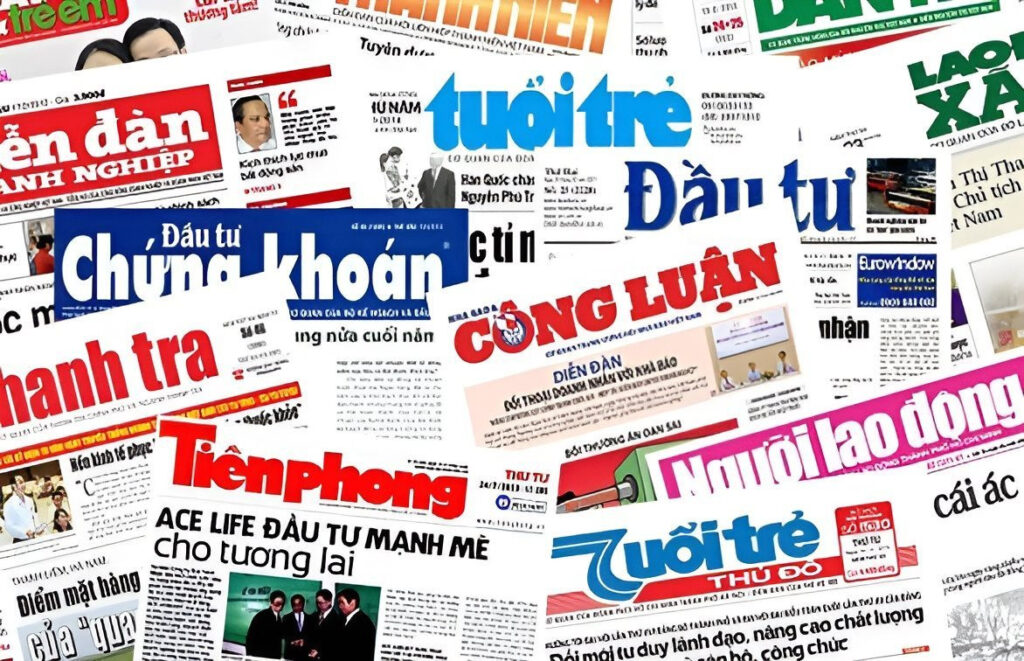
This is a traditional media channel that helps customers access the latest and most important news about a business. However, with the development of the Internet, the press has faced many new opportunities and challenges, as readers can access the latest information with just a few clicks.
Advantages:
- Capable of reaching a large number of users.
- Can convey information accurately and objectively.
- Can build credibility for the business.
Disadvantages:
- High cost.
- Short user exposure time.
- Difficult to measure communication effectiveness.
However, the press remains an important marketing tool, allowing businesses to reach a large readership through advertising campaigns, PR articles, and partnerships.
3.4. Websites and Blogs
Websites and blogs are online media channels that help businesses share their information, knowledge, and experience with people all over the world. By building a quality website, we can attract a large volume of traffic, interactions, and conversions from potential customers.
Advantages:
- Low cost, easy to reach many users.
- Provides detailed, complete, and in-depth information about products/services.
- Communication effectiveness can be measured.
Disadvantages:
- Requires time to build and develop the website.
- Difficult to attract visitors in the initial stage.

This media channel allows businesses to build and develop their brand while reaching customers by sharing useful information and content. In addition, websites and blogs also help businesses create an interactive channel to receive feedback and engage with target customers.
3.5. Email Marketing
Email marketing is a popular online media channel for reaching customers via email. Businesses will build a customer data list and send email content containing product/service information, promotional programs, or the latest news, etc.
Email Marketing also allows businesses to interact directly with customers by sending personalized emails or automated emails based on customer behavior on the website. This helps increase customer interaction and conversions.
3.6. Mobile Phones
Mobile phones have become an indispensable part of our daily lives. We use mobile phones to make calls, send messages, browse the web, watch videos, play games, and even work. Mobile phones provide us with a flexible and convenient communication medium.
Advantages:
- Low cost, easily accessible to many users.
- Can interact with customers quickly.
- Can measure communication effectiveness.
Disadvantages:
- Reach is limited by mobile devices.
- Advertisements can be annoying to users.
Businesses also use mobile phones to reach their customers through mobile apps, SMS messages, and phone calls. Additionally, mobile phones allow businesses to create a better user experience by developing mobile apps and mobile-compatible websites.
3.7. Forums and Online Communities
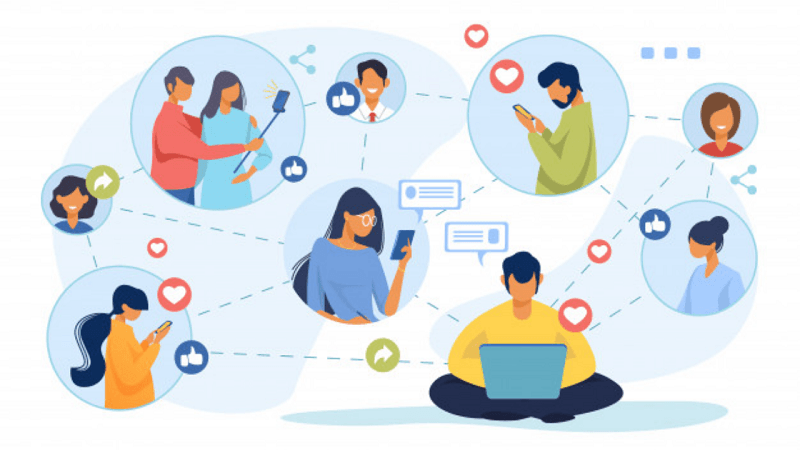
Forums and online communities are places where we can interact, share information, and discuss common topics with each other. We can join forums and communities related to our hobbies, work, or fields of interest.
Advantages:
- Low cost, easily accessible to many users.
- Can be used to build a community and create a bond with customers.
- Interact directly and collect feedback from customers.
Disadvantages:
- Difficult to control content.
- Difficult to attract participants.
Businesses also use forums and online communities to reach and interact with their customers. We can create groups, pages, or separate websites to share information, provide product advice, and answer customer questions.
3.8. Online Video and Live Streaming
Online video and live streaming are popular media in the digital age. We can watch videos on YouTube, TikTok, Facebook, and many other platforms. Online video helps us access entertainment content, tutorials, news, and live events.
Advantages:
- Can create a strong impression and attract viewers.
- Can interact with customers directly.
- Can measure communication effectiveness.
Disadvantages:
- Requires equipment and technical skills to shoot and stream online video.
Businesses also use livestreaming to reach, interact with, and introduce products or services to customers. We can create promotional videos, product tutorial videos, or live broadcast events and discussions to attract customer attention.
3.9. Internet Advertising
Internet advertising is an important communication medium for reaching and interacting with target customers. We can see ads across all media on websites, search pages, social networks, and mobile apps. Online advertising allows businesses to reach a large number of users and create a powerful advertising effect.

Advantages:
- Can reach the target customers the business is aiming for.
- Used to promote brands, products/services.
- Communication effectiveness can be measured.
Disadvantages:
- Can be annoying to users.
- Costly.
Businesses also use internet advertising to build their brand, increase product recognition, and achieve marketing goals. Some common types of advertising today include banner ads, search ads, video ads, or pay-per-click ads, etc.
3.10. Gaming Applications
Gaming applications have become a popular and rapidly growing communication medium in recent times. We can download and play games on mobile phones, tablets, and personal computers. Gaming apps help users entertain themselves, relax, and interact with each other through online games.
Advantages:
- Can create an enjoyable experience for users.
- Can measure communication effectiveness.
Disadvantages:
- Requires a large budget.
- Requires technical skills to develop gaming applications.
Businesses also use gaming applications to reach and interact with customers. We can create advertising games, educational games, or interactive games to attract customer interest and participation.
4. Future Trends in Media
In the context of rapidly changing technology and an increasing need for connection, media is no longer just about transmitting simple information. It is opening up new opportunities for businesses to reach, interact with, and build trust with customers. The future of media will be linked to the development of modern technology and new consumer trends. Therefore, to maximize benefits, businesses need to pay attention to the development of media as well as prominent trends in mass communication.
4.1. The Development of Media
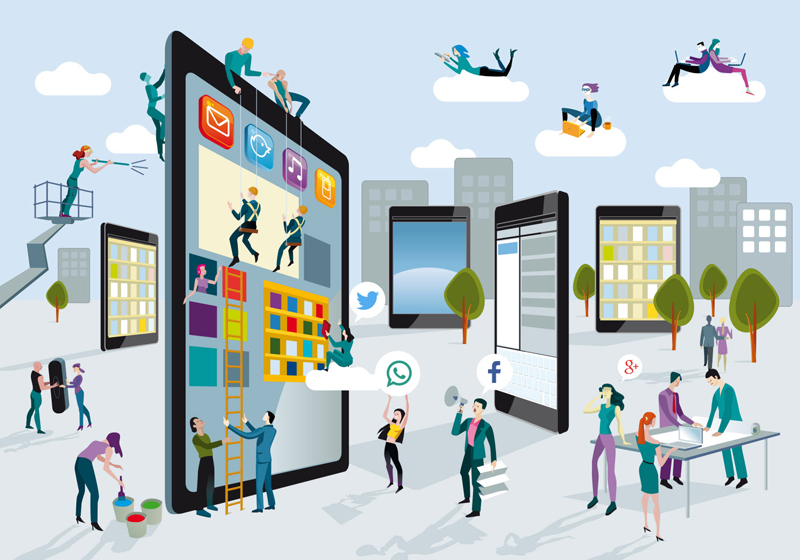
Technology is constantly evolving, which means that media will also continue to develop. We can witness the emergence of new advanced technologies such as 5G communication, virtual reality, artificial intelligence, and the Internet of Things. These technologies will bring new experiences to users and open up many new communication opportunities for businesses.
4.2 Development Trends in Mass Media
Mass media is expected to evolve according to the following trends:
- Increased Interaction: Mass media will continue to grow strongly with interactive methods, online chats with customers in communities, groups, live streams, etc.
- Multi-channel Integration: Media will integrate various channels to create a seamless user experience. Businesses should use a combination of social media, television, and websites in their marketing and advertising campaigns to achieve optimal effectiveness.
- Focus on Quality Content: Quality content tailored to the target audience is always the top factor for effective communication. The emergence of new content distribution platforms and channels like podcasts, online learning videos, and interactive media will open up new trends for business communication campaigns.
5. Which Media Should Businesses Start With?
To start effectively, businesses need to choose communication channels based on the intersection of three core factors: target customer persona, specific business goals, and the organization’s actual financial and human resources.
5.1. Choosing Media Channels Based on Customer Targets
To select effective communication channels, the target customer is the most crucial starting point. Analyzing and choosing channels based on customer characteristics, behavior, and needs helps businesses deliver the right message to the right person at the right time in the right way. If this factor is overlooked, businesses may spend a lot on communication with very limited results, as the message fails to reach the intended audience. A detailed summary of customer groups and suitable channels is as follows:
By generation & age:
- Gen Z (1997–2012): Prefers TikTok, Instagram, YouTube Shorts – short, visual, and quick entertainment content.
- Millennials (1981–1996): Frequently on Facebook, YouTube, Podcasts – prioritizes in-depth content, reviews, and shared experiences.
- Gen X & Boomers (1960–1980, 1946–1959): Better suited for email marketing, online newspapers, television, and offline seminars.
By profession & income:
- Office workers, professionals: LinkedIn, email, webinars.
- General laborers: Facebook, Zalo, local radio.
- Entrepreneurs/investors: Business newspapers, industry seminars, LinkedIn Ads.
By customer location:
- Large cities: Strong on multi-channel digital marketing (Facebook Ads, Google Ads, TikTok).
- Rural & remote areas: Prioritize Zalo, radio, out-of-home (OOH) advertising.
By purchasing behavior:
- B2C customers: social media (Facebook, TikTok, Instagram), e-commerce (Shopee, Lazada).
- B2B customers: LinkedIn, email marketing, industry seminars.
- New customers: Awareness-building channels (social media, influencers).
- Potential customers: Remarketing, email nurturing, chatbots.
- Loyal customers: Private community groups, membership programs, loyalty apps.
A prime example is Nike’s campaign targeting Gen Z customers. In 2020, Nike launched the #YouCantStopUs campaign on TikTok and Instagram with short videos centered on the spirit of sports, diversity, and globality. As a result, within just one week of its launch, the video garnered over 25 million views on TikTok, attracted 600,000 shares, and increased online sales by 7% in the US market.
The campaign succeeded because Nike chose the right media channels for Gen Z, focusing on creative, fast-spreading video content instead of using traditional channels like TV or print media, which are less appealing to this audience.

5.2. Choosing Media Channels Based on Business Goals
For effective communication activities, businesses need to clearly define their business goals before selecting implementation channels. Each goal—from increasing brand awareness and boosting sales to retaining customers—requires a different approach. Choosing the right communication channel not only helps optimize costs but also ensures the message is correctly targeted, meets the right needs, and delivers clear, measurable results. The detailed business goals & suitable communication channels are as follows:
Brand awareness:
- Channels: TVC, press, social media (Facebook, TikTok, Instagram), out-of-home (OOH) advertising.
- Explanation: Creates broad reach, quickly attracts attention in a short time.
Increase sales revenue:
- Channels: Facebook/Google Ads, e-commerce platforms, influencer marketing.
- Explanation: Drives direct purchase actions, easily measured by sales figures.
Stimulate sales (short-term):
- Channels: Email marketing, SMS, livestream flash sales.
- Explanation: Targets immediate needs, creates a sense of scarcity & FOMO.
Increase potential customers (Leads):
- Channels: Landing pages, Lead form ads, webinars, LinkedIn Ads.
- Explanation: Generates a database of potential customers for future nurturing.
Retain customers & increase loyalty:
- Channels: Loyalty apps, private community groups (Facebook Group, Zalo OA), customer care emails.
- Explanation: Creates long-term engagement, increases CLV (Customer Lifetime Value).
Expand to new markets:
- Channels: Multilingual advertising (Google Display, YouTube), collaboration with international KOLs, PR in the local market.
- Explanation: Quickly builds brand presence in a new region.
Increase interaction & build community:
- Channels: TikTok Challenges, Facebook Groups, Discord, specialized forums.
- Explanation: Creates an environment for customers to discuss, share, and enhance connectivity.
Enhance user experience:
- Channels: UX/UI optimized website, AI chatbots, mobile apps, personalized content.
- Explanation: Helps customers feel valued, increases the return rate.
In 2019, Coca-Cola launched the “Share a Coke” campaign with the goal of increasing sales and enhancing brand engagement. Instead of focusing solely on mass advertising, Coca-Cola printed popular names and nicknames on its cans and bottles, then encouraged users to share photos with the products on Facebook, Instagram, and Twitter. The company’s goal was to increase sales and create an emotional connection with young customers, so it used social media as the main channel, combined with out-of-home (OOH) advertising and PR.
Results: Within 6 months, the campaign helped Coca-Cola increase sales in the US by 2%, attracted over 500,000 photos shared on social media, and garnered more than 25 million online interactions. The biggest success factor was that Coca-Cola chose the right communication channels aligned with its business goals: leveraging social media for viral spread while turning customers into “content co-creators”.
5.3. Choose a media channel to start with based on your business’s resources
To choose the right media, in addition to customer factors and business goals, businesses must also consider their available resources. Implementing a communication campaign requires costs, personnel, technology, and time—therefore, if the scale and practical capabilities are not clearly defined, businesses can easily overcommit and fail. Choosing a channel that matches your resources helps businesses optimize costs, implement effectively, and have a sustainable development roadmap. The business sizes & communication channels suitable for a business’s resources are detailed as follows:
Small businesses / Startups:
- Suitable channels: Social media (Facebook, TikTok, Instagram), SEO, Email marketing, online communities.
- Explanation: Limited budget, prioritize channels with low costs but fast reach and easy measurement.
Mid-sized businesses:
- Suitable channels: Social media combined with Paid Ads, online PR, webinars, influencer marketing.
- Explanation: With a moderate budget, expand from low-cost online channels to more credible channels to strengthen the brand.
Large enterprises:
- Suitable channels: TVC, press, OOH (out-of-home advertising), offline events combined with digital channels.
- Explanation: Financially stable, can build multi-channel 360° Marketing campaigns to both build credibility and reach a mass audience.
Corporations / Multinational enterprises:
- Suitable channels: Global TV, international PR, multilingual Digital Marketing, international KOL/KOC collaborations, global event sponsorships.
- Explanation: Aiming for a global image, requires media with international reach and the ability to synchronize across multiple markets.
Non-profit enterprises / Social organizations:
- Suitable channels: Press PR, community campaigns, social media, viral videos.
- Explanation: Prioritizes virality and empathy, with optimized costs but high social impact.
A prime example of choosing media channels appropriate for available resources is Airbnb. When it was founded in 2008, Airbnb was just a small startup with a limited budget, and its main goals were to expand its user base and build customer trust. Instead of running expensive traditional ads like TVCs or print, they focused on social media and content marketing. Airbnb encouraged users to share their real stay experiences on personal blogs and social media platforms, while also launching hashtag campaigns on Twitter and Instagram to create a viral community effect.
This approach was both cost-effective and helped build trust organically. As a result, just six years later, by 2014, Airbnb was present in 190 countries, had served over 10 million guest stays, and had become one of the fastest-growing startups globally. Later, when their resources became more abundant, Airbnb expanded to large-scale media channels like international PR, TVCs, and global event sponsorships to solidify its brand position. This example shows that selecting media channels appropriate for the resources available at each stage not only helps save costs but also builds a solid foundation for sustainable future growth.
6. Frequently Asked Questions about Media (FAQs)
How do I know which media channel is performing effectively?
Businesses need to track actual metrics: engagement (Social Media), conversion rates (Website), and the number of potential customers flowing into the data management system (CRM). An effective channel is one that delivers the highest conversion value for the investment cost.
With a limited budget, where should I start?
Prioritize social media and content marketing. These are channels with low startup costs, are easy to spread virally, and allow businesses to interact directly and build trust with customers from the very beginning.
Why shouldn’t I focus on just one media channel?
Using multiple channels helps businesses appear at every “touchpoint” in the customer journey, reduces risk when a platform changes its algorithm, and maximizes the ability to reach different customer segments.
What media trends are leading right now?
Short-form video (TikTok, Reels) and content personalization using artificial intelligence (AI). Users today prefer quick, visual information and messages tailored specifically to their individual needs.
Are traditional channels like TV and print newspapers still worth investing in?
They are still necessary if the goal is to establish credibility and reach a large-scale mass audience. However, businesses should combine them with online channels to optimize costs and measure results more accurately.
7. Conclusion
Media is an important tool that helps businesses reach customers and promote their products/services. Businesses need to carefully consider factors such as communication objectives, budget, target audience, and products/services to choose the appropriate media. We wish your business success