12/05/2026
  274 views
The Canvas model is a familiar tool, widely used in building business strategies and evaluating corporate governance effectiveness. This tool helps effectively analyze campaigns and supports increasing profits for specific goals. So, what is the Canvas model, how is it applied, and how can it be used effectively in business? Let’s explore with 1Office in the article below.
Mục lục
What is the Business Model Canvas?
The Business Model Canvas is a strategic management tool that helps businesses describe, design, discuss, and analyze business models in a visual and systematic way. Developed by Alexander Osterwalder and Yves Pigneur, this model helps businesses better understand how they operate, from creating value for customers to managing resources and partnerships.
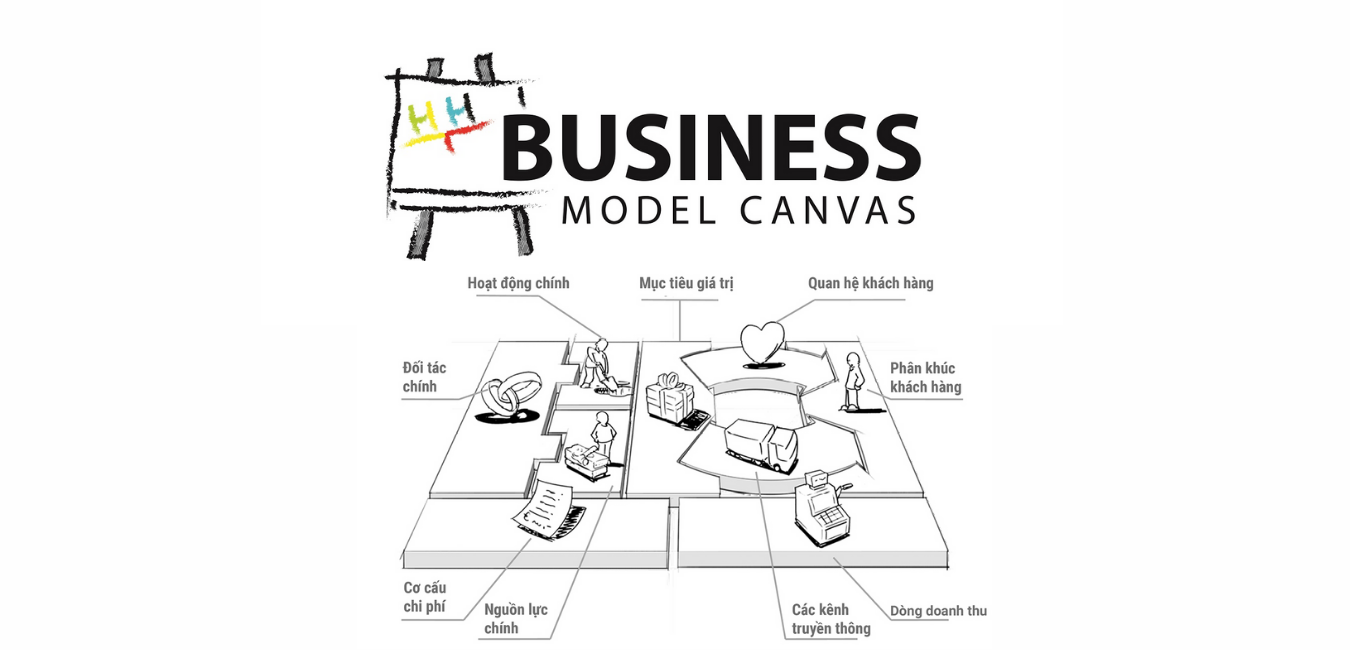
For businesses, the Business Model Canvas helps optimize business operations by providing a better understanding of the necessary elements. It encourages creativity and innovation in creating new business models. For managers, this model helps identify potential risks and develop plans to mitigate them.
Thanks to the Business Model Canvas, businesses can develop more effective strategies, optimize operations, and manage risks better. This helps businesses maintain competitiveness and achieve sustainable growth in the market.
Why should you use the Canvas model in business?
The Business Model Canvas is widely applied in business and research due to the following outstanding benefits:
- Provides a visual and clear overview: The Canvas consolidates the most important elements of a business’s operations into a single, logical model, replacing complex planning documents. This helps business owners easily track and connect all business aspects comprehensively and effectively.
- Helps build focused business ideas and plans: With its 9 key elements, the Business Model Canvas assists business owners in developing business ideas that align with the company’s characteristics and resources. Additionally, once an idea is formed, this model helps evaluate it from various perspectives, ensuring its feasibility.
- Ensures business processes align with customer needs: The Business Model Canvas helps clarify most elements of the customer’s interaction journey with the brand. This allows business owners to evaluate and adjust any unsuitable points in the customer experience, optimizing the entire system.
- A tool for understanding competitors and winning over investors: The Canvas not only supports business operations but also serves as a tool for analyzing and understanding the market. By analyzing a competitor’s Business Model Canvas, a company can clearly identify their strengths, weaknesses, and strategic direction.
- Attracts and persuades investors: The Canvas model helps business owners easily present their company’s operations and potential in a visual way. This allows investors to quickly grasp the information and make informed investment decisions.
9 core elements of the Canvas model that CEOs need to know
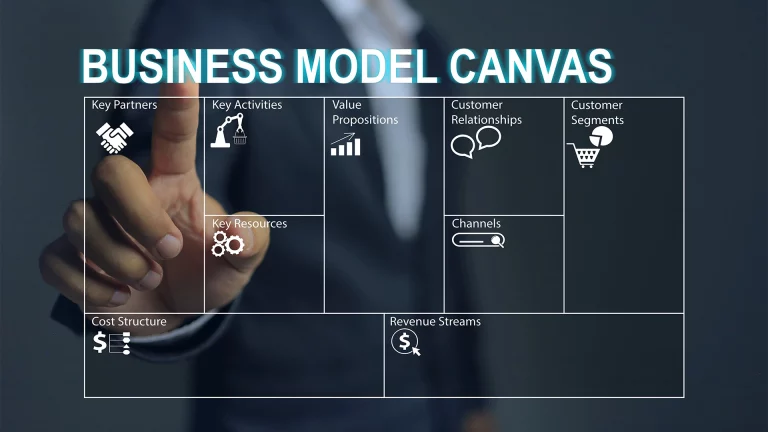
The Business Model Canvas consists of 9 core elements that revolve around a company’s business activities, specifically:
Customer Segments (CS)
A company’s customers are divided into segments based on the specific needs your products or services aim to meet. Customer segments are a crucial element of an organization’s business model and serve as the basis for ensuring product features align with the characteristics and needs of each segment.
To segment customers effectively, you first need to clearly understand their current and future needs. Next, list and prioritize customers, including a list of potential future customers. Finally, thoroughly evaluate customers by identifying their strengths and weaknesses, while also exploring other customer groups that could be highly beneficial if the business focuses on them.
Value Propositions (VP)
A brand’s value proposition is the combination of products and services offered to customers, creating unique and distinct value compared to competitors.
In the business model, value propositions are divided into two types:
- Quantitative value: Focuses on the price or efficiency of products and services.
- Qualitative value: Focuses on the customer experience, results, and benefits the product delivers.
Value propositions can be delivered through attributes such as flexible customization, performance, getting the job done, brand/status, design, innovation, reasonable pricing, cost optimization, risk reduction, and accessibility,…
Channels (CH)
Channels are the bridge between a company’s value proposition and its customer segments. A business has many channel options, and the decision is often based on criteria such as speed, efficiency, and the lowest investment cost.
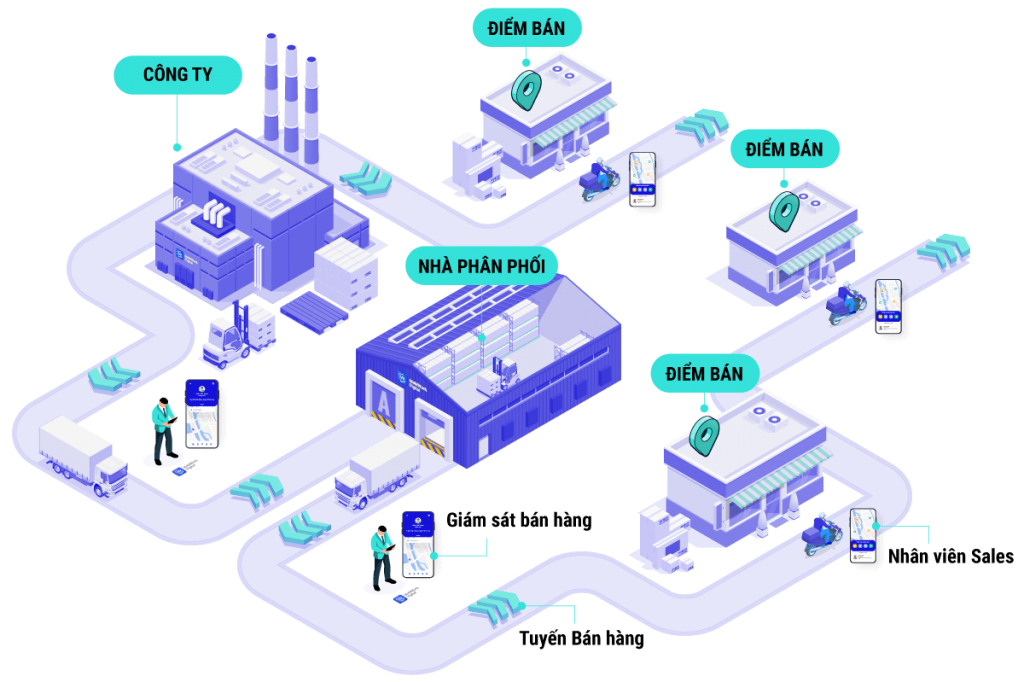
There are two main types of channels:
- Company-owned channels (such as direct stores)
- Partner channels (such as distributors)
A business can choose one of these two channel types, or combine both to optimize the distribution process.
Customer Relationships (CR)
Customer relationships are the result of the process a business builds and maintains with its customer segments. A business needs to attract new customers and retain existing ones. Here are some methods for building customer relationships:
- Personal Assistance: The business interacts directly with customers through employees, supporting them before, during, and after the purchase.
- Dedicated Personal Assistance: This relationship is characterized by close interaction between the customer and the business through a dedicated representative, who is personally responsible for the customer’s entire experience with the company.
- Self-Service: The business provides support tools for customers to serve themselves and manage their own experience.
- Automated Services: Customer feedback is stored and analyzed to better tailor products and services.
- Communities: Building communities on social platforms like Facebook, TikTok, etc., helps the business interact, receive feedback from customers, answer questions, and build its brand image.
- Co-creation: Customers participate in the product development process, contributing ideas and helping to perfect the company’s product.
Prioritize identifying the type of customer relationship the business wants to build, then evaluate customer value based on purchase frequency. Investing in relationships with loyal customers is essential as they are a stable and sustainable source of revenue.
Revenue Streams (RS)
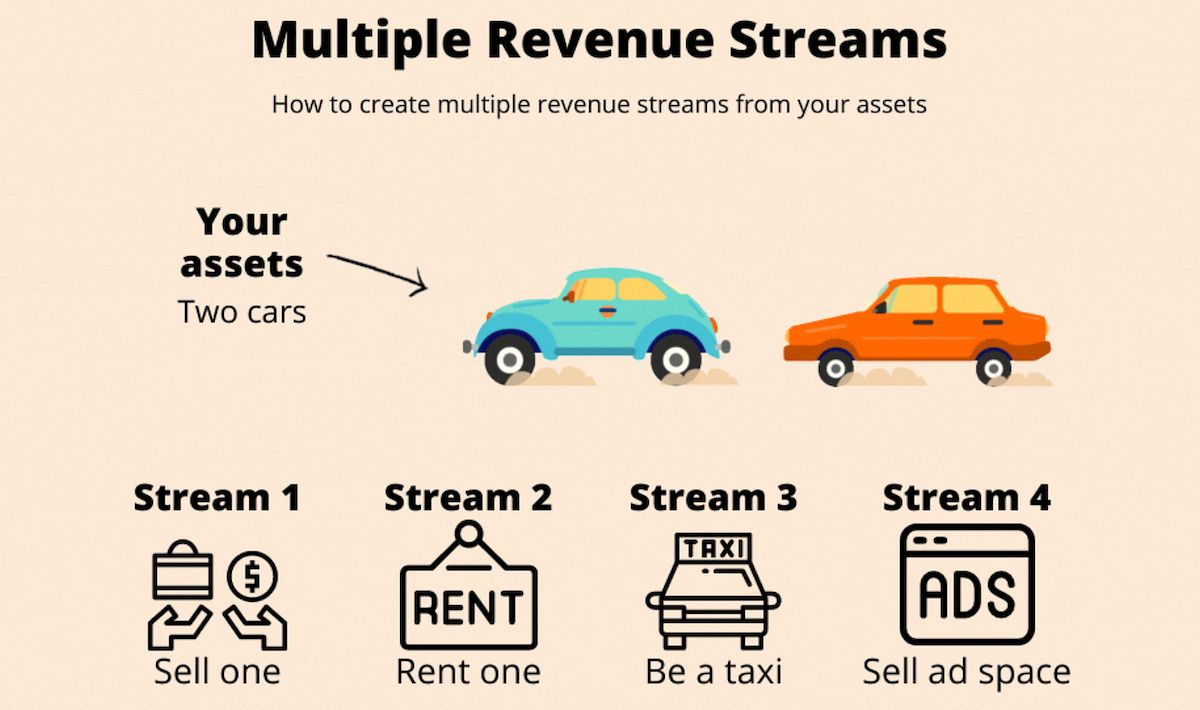
Revenue streams are the ways a company generates profit from selling products or services to its customer segments. Here are some common methods for creating revenue streams:
- Asset Sale: The company sells ownership rights of a physical product to the customer.
- Usage Fee: The company charges a fee when customers use a product or service.
- Subscription Fees: The company charges a recurring fee for customers to use a product or service regularly.
- Lending/Renting/Leasing: Customers pay a fee for the exclusive right to use a product for a specific period.
- Licensing: The company charges a fee for the use of intellectual property.
- Brokerage Fees: Companies or individuals acting as intermediaries between two parties charge a brokerage fee for their service.
- Advertising: The company charges fees from parties who want to advertise their products on its platform.
After establishing revenue streams, determining an effective price for the product or service is crucial. This process should include testing, adjusting prices, and documenting results to evaluate and optimize the pricing strategy.
Key Resources (KR)
These are the core assets of the business that help create value for customers. Resources can be classified into main types such as human, financial, physical, and intellectual.
Listing all resources is very important, as it helps you clearly identify the essential products or services needed to support customers, while also eliminating unnecessary resources to save costs for the business.
After finalizing this list, you can decide how much capital to invest in key resources to ensure the business operates stably and sustainably.
Key Activities (KA)
These are the key activities that help create value for customers and ensure the business model operates effectively. Businesses should start by listing the main activities associated with their revenue streams.
Next, you need to evaluate which activities play the most important role, while also considering their impact to decide whether to add or eliminate unnecessary activities.
Key Partnerships (KP)
To ensure the business model operates effectively and to minimize risks, businesses should establish partnerships with high-quality suppliers. These partners will support and complement each other, helping the company create valuable solutions.

A business’s partners can be divided into three types:
- Strategic alliances between competitors (also known as coopetition)
- Joint ventures
- Buyer-supplier relationships
You should start by identifying key partners, then plan for future partnerships. Use these relationships to assess areas for improvement and determine what type of partners will be needed next.
Cost Structure (CS)
The cost structure is understood as the set of costs necessary to operate a business under a specific business model. Businesses can optimize their cost structure by reducing investment capital in business operations or by focusing on increasing product value, such as maximizing the value delivered to customers.
Here are some common characteristics of a cost structure:
- Fixed Costs: These are costs that do not change over a certain period, regardless of how much the business produces or sells.
- Variable Costs: These costs vary depending on the level of production or business activity.
- Economies of Scale: As the scale of production increases, the cost per unit of product decreases.
- Economies of Scope: A business can reduce costs by investing in activities related to or supporting its main product.
The first step is to clearly identify all costs related to the business’s operations. Clearly understanding and accurately grasping these costs is a crucial factor in building a solid business model.
After identifying them, listing all costs in the Business Model Canvas is necessary for a more comprehensive and visual overview, which helps in planning how to manage each type of cost. You can look for ways to cut some costs through savings measures or efficiency measurement. At the same time, you should also consider increasing investment in specific items if they can yield higher profits in the future.
Pros and Cons of the Canvas Model

Pros
The Canvas model is favored by entrepreneurs for its ability to support business model innovation. Specifically, this model offers:
- Focus: Using the Canvas model for business planning helps you focus on core elements, rather than having to present all the details at length. This makes the plan more concise and focused.
- Flexibility: The model is presented concisely, allowing users to easily test, experiment, and adjust content as needed.
- Clarity: Employees can easily understand the entire business plan and clearly grasp the goals the business is aiming for.
Cons
Besides its advantages, the Canvas model also has some limitations that businesses should be aware of:
- The Canvas model focuses on listing the internal factors of a business but does not address external factors, which often have a significant impact on the survival and development of the business, especially factors related to competition.
- This model does not address the company’s vision, mission, and strategic goals, focusing mainly on the value provided to customers, revenue, cost structure, and profit. Therefore, this model may be less suitable for non-governmental organizations or government agencies.
- The model does not cover the human element and the interaction between team members, which is one of the key factors in creating value for customers. This can lead to an incomplete and inaccurate identification of the factors that create customer value.
Example of a Business Model Canvas
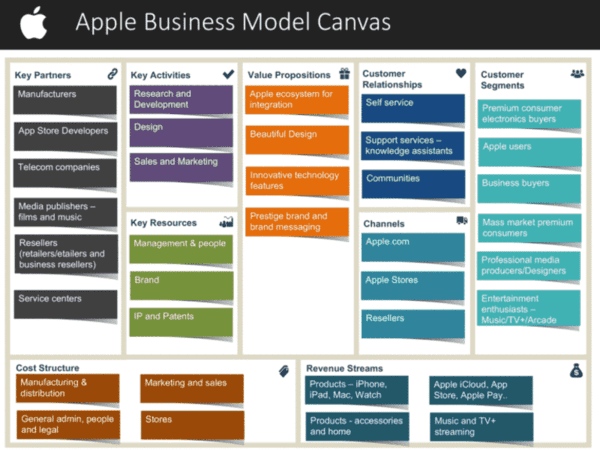
Apple is a prime example of success in applying the Business Model Canvas. This model helped Apple not only launch a standout product but also build a comprehensive ecosystem, changing the way music is consumed and distributed.
Apple completely changed the global music industry landscape with the introduction of the iPod. Through iTunes, Apple skillfully combined hardware, software, and an online store into a seamless experience, creating a groundbreaking music platform. Although not the pioneer in the MP3 player field, Apple executed its business model brilliantly, achieving long-term success through its uniqueness and integration of key elements.
Apple’s Canvas model demonstrates a perfect combination of core elements, from creating value for users to establishing long-term partnerships. Apple established agreements with music producers, allowing it to sell music directly through its iTunes store.
Apple’s primary revenue came from iPod sales. However, the success of the App Store also put significant pressure on its competitors.
Key Considerations When Building a Canvas Model
The Canvas model is a useful tool that helps businesses easily plan and track important factors during their development. When implementing the Canvas model, you should pay attention to the following points:
- List all content under each category, being as detailed as possible for each item. After completing the list on the first sheet, continue using second, third, and other sheets as needed.
- Continue to filter and select content within the 11 categories, developing and refining until no new ideas emerge. Do not tear up the written sheets; keep them.
- Dedicate 90 minutes of intense focus each day to each section of the work. Afterward, you can continue to research and think about the model, and repeat the process the next day. Sometimes, the best ideas come when we are resting.
————————–
The Canvas model is a flexible tool suitable for most business models, so you can certainly apply it to your project. We hope the information in this article has helped you better understand the Canvas model, its advantages, and the 9 key elements for building a complete Canvas model.