


 12/05/2026
  252 views
Kanban vs Scrum are two popular methods used in project management. However, not everyone can distinguish between these two methods and know how to apply them optimally. So, what are the similarities and differences between Kanban and Scrum? How can you choose the most suitable method for your project management process? Let’s find out with 1Office in the following article.
Mục lục
1. The Basics of Kanban vs Scrum
1.1. The Kanban Method
- What is the Kanban method?
Kanban is a production and project management method used to optimize workflow and manage the production process. Kanban was developed by Toyota as part of the Just-in-Time (JIT) production system.
Kanban is widely applied in various industries, popular in software projects, manufacturing, marketing, and human resource management. This method helps improve performance and reduce project completion time, while also increasing the flexibility and efficiency of the production and management process.
- How does the Kanban method work?
Kanban uses a Kanban Board to manage and monitor the work process. This Kanban Board contains Kanban Cards that represent the tasks or goals of the project and their statuses. These statuses are typically “To Do,” “In Progress,” and “Done.”
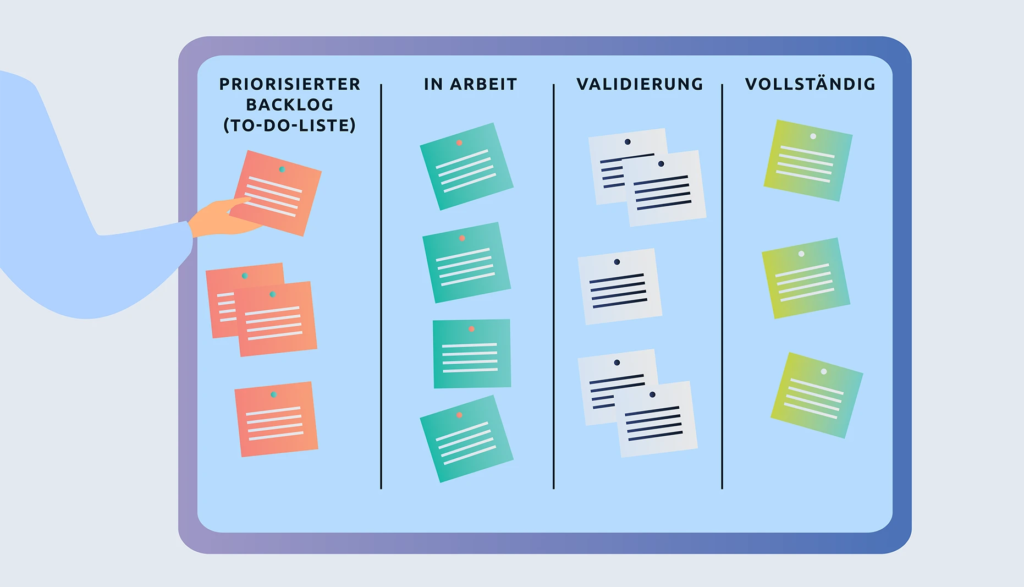
When a new task is established, a new Kanban card is created and placed on the Kanban board. The task moves through different statuses on the Kanban board as it is being worked on. When a task is completed, the Kanban card is moved to the position marked as “Done.”
>> Learn more: What is Kanban? How to apply Kanban in task management
1.2. The Scrum Method
- What is the Scrum method?
Scrum is a popular Agile method used in project management and software development. This method is used to manage complex projects by focusing on continuous evaluation and adjustment activities to achieve the highest efficiency in the shortest amount of time.
Applying the Scrum method helps increase the productivity and efficiency of the product development process, while minimizing rigidity and increasing the flexibility of the production process.
- How does the Scrum method work?
Scrum focuses on optimizing product development by using short sprints, during which the Scrum team carries out the necessary activities to create the product incrementally. Scrum is managed by a Product Owner, a Scrum Master, and a Development Team.
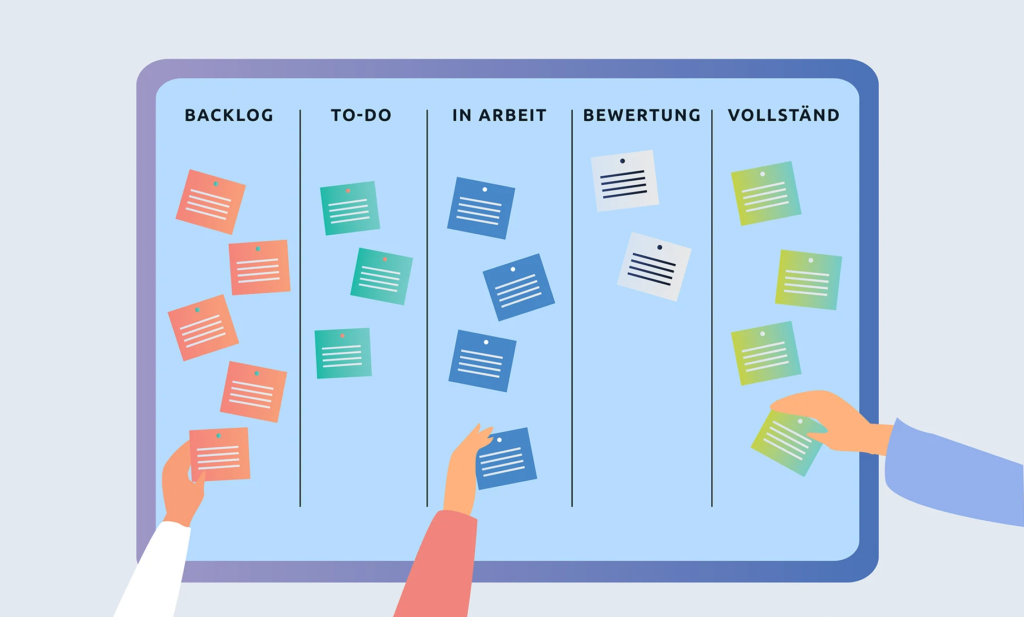
The activities in Scrum include:
- Sprint Planning: The Sprint Planning is a meeting between the Product Owner, Scrum Master, and the Development Team to decide on the product development activities for a specific Sprint. In this meeting, the Product Owner explains the customer’s requirements and goals and identifies the tasks to be completed in the Sprint.
- Sprint Execution: Once the Sprint begins, the Development Team performs the necessary activities to complete the assigned work and achieve the Sprint goal. The Scrum Master ensures that the Development Team adheres to the Scrum rules and helps resolve any issues that arise during the process.
- Daily Scrum: This is a daily meeting held during the Sprint, where the Development Team updates on their work progress, discusses any problems encountered, and finds solutions to achieve the Sprint goal.
- Sprint Review: When the Sprint ends, the Development Team holds a Sprint Review meeting with stakeholders to present the products completed during the Sprint, known as the Increment, and to evaluate the results and project progress.
- Sprint Retrospective: This is a meeting held after the Sprint Review, where the Development Team evaluates the results and draws lessons from the development activities within the Sprint. From there, they devise improvement solutions to enhance the product development process in future Sprints.
>> Learn more: What is the Scrum model? Roles and principles of Scrum
2. Comparing Kanban vs Scrum: Similarities and Differences
2.1. Similarities between Kanban vs Scrum
- Both focus on flexibility and continuous improvement in the product development process.
- Both methods help the product development team focus on specific goals and develop high-quality products.
- Both consider the customer to be the center of the product development process, and continuously interact with customers to update and evaluate their requirements.
- Both methods are based on breaking down work into smaller parts for easier management and faster results.
2.2. Differences between Kanban vs Scrum
|
Key Differences |
Kanban Method |
Scrum Method |
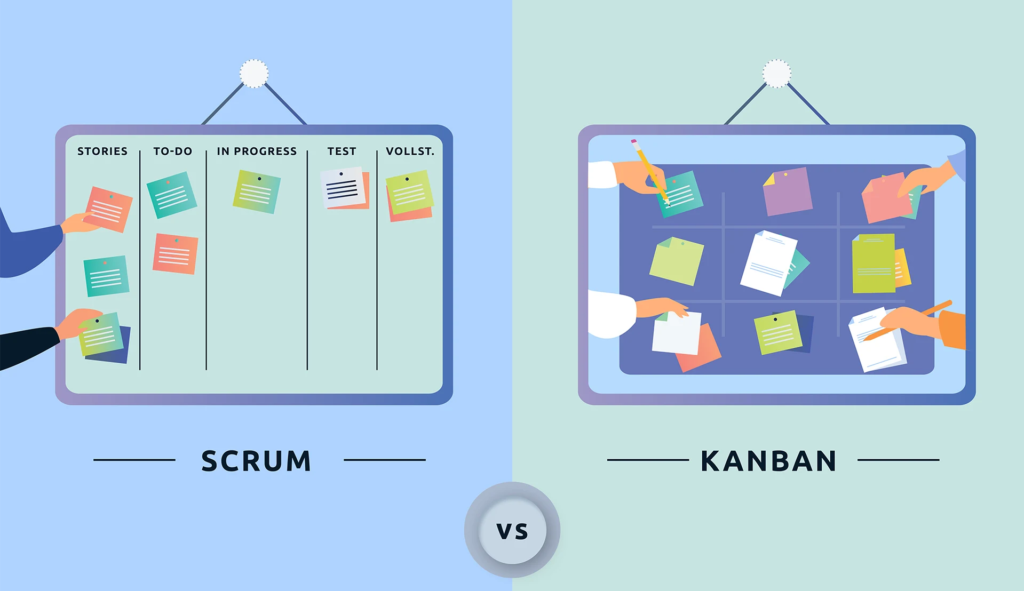
| Implementation Time | No fixed cycles. | Has development cycles according to Sprints. |
| Periodic Adjustments | Frequent, changes are made only when needed. | Mostly adjusted only during the new Sprint planning process. |
| Suitable for | Projects that are small in scale or clearly separated. | Large projects with more complex requirements. |
| Scope | The scope of work can change at any time. | The scope of work is frozen throughout the Sprint. |
| Schedule | No fixed schedule; work is done on demand. | Tasks are scheduled throughout the Sprint. |
| Scope Changes | Frequent and can be made at any time. | Scope changes are discouraged and only made when necessary. |
| Meetings | No mandatory recurring meetings. | Recurring Sprint meetings include: Sprint Planning, Daily Scrum, Sprint Review, and Sprint Retrospective. |
| Completed Product | The product is released when ready, with no specific deadlines. | A product increment is released at the end of each Sprint. |
| Roles | No specific roles. | Has specific roles such as Scrum Master, Product Owner, and Development Team. |
| Control | Performed continuously, the goal is to minimize wait times and optimize process efficiency. | Tighter control, with the goal of ensuring customer requirements are met and work is completed within the Sprint. |
Learn about 1Office’s project management features
3. Kanban vs. Scrum: Which method is superior?
Neither method is inherently superior to the other. Each has its own advantages and limitations, making them suitable for different situations and goals. The choice of the appropriate method will depend on specific criteria and practical circumstances. Here are some criteria managers can consider when making a choice:
- Project Complexity: Scrum is often used for more complex projects as it allows for planning, goal setting, and progress tracking for each Sprint. Meanwhile, Kanban is typically used for simpler projects as it enables continuous workflow tracking and improvement.
- Flexibility: If your project involves constant changes and requires quick adaptation, Kanban may be the better choice as it does not require sprints and allows for changes based on requirements and priorities throughout the work process. In contrast, Scrum requires fixed sprints and regular meetings, making it less flexible than Kanban.
- Project Scale: If your project is small-scale or focuses on optimizing an existing workflow, Kanban might be more suitable. Meanwhile, Scrum is the optimal choice for large-scale projects that require a clear and specific division of work.
- Work Division: If the project requires a clear and specific division of tasks, Scrum may be more suitable. If you want to focus on process management and ensure that work is carried out seamlessly, Kanban might be a better fit.
- Work Execution Sequence: If task priorities change frequently, Kanban could also be a better choice. In Kanban, work is arranged by priority, so more important tasks can be addressed first without waiting for the end of a cycle as in Scrum.
Get a free consultation and demo of 1Office software
In the article above, 1Office has provided readers with essential knowledge about Kanban vs. Scrum. In project work management, besides choosing the right methodology, applying technology is a necessary condition for the workflow to run as smoothly and efficiently as possible. For a consultation and trial of the market-leading work management software, please contact us using the information below:
- Hotline: 083 483 8888
- 1Office Fanpage: https://www.facebook.com/1officevn
- Youtube Channel: https://www.youtube.com/c/1OfficeNềntảngquảnlýtổngthểDoanhNghiệp
















