13/05/2026
  2602 views
E-invoices and digital signatures are becoming increasingly popular in business operations today due to their high applicability in saving time, money, and improving work quality. Many questions about e-invoices and digital signatures are being searched for every day. Let’s find the answers with 1Office in the article below.
Mục lục
- 1. What is an e-invoice?
- 2. Detailed answers to the most common questions about e-invoices today
- 2.1 Legal validity of e-invoices
- 2.2 What are the advantages of e-invoices over traditional invoices?
- 2.3 What types of invoices are included in e-invoices?
- 2.4 Differentiating between electronic signatures and digital signatures
- 2.5 What do businesses need to prepare when registering to use e-invoices?
- 2.6 E-invoice question: Can the issuance date of an e-invoice be backdated?
- 2.7 How are e-invoices used when regulations require goods in transit to have a red invoice?
1. What is an e-invoice?
In an era where the digital transformation trend is positively impacting the market economy, the term “e-invoice” is no longer unfamiliar to CEOs and business managers. The benefits and efficiency that e-invoices bring are a strong impression for businesses seeking advanced solutions in business management in the market. So, what is an e-invoice?
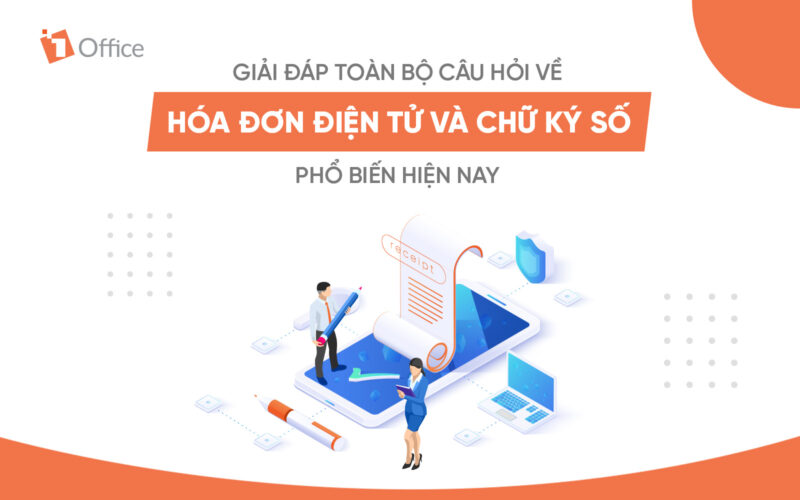
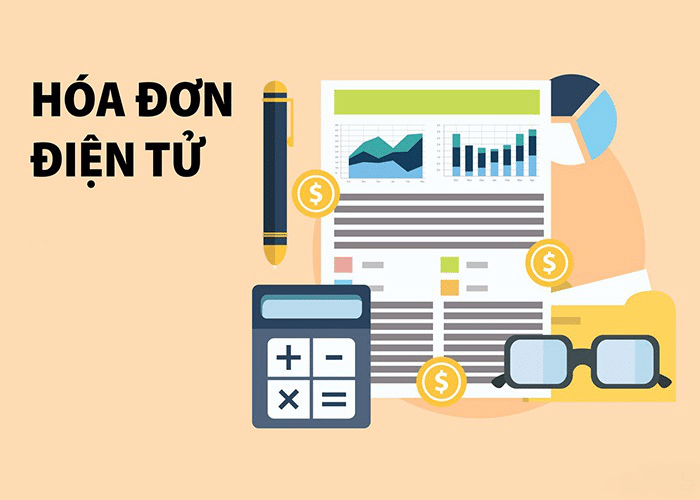
An e-invoice is a collection of electronic data messages about the sale of goods and provision of services, which is created, issued, sent, received, stored, and managed by electronic means.
An e-invoice (HĐĐT) is one of three types of invoices (Self-printed invoices; Pre-printed invoices; E-invoices). Instead of being created on paper, an e-invoice is created & stored on electronic devices. An e-invoice has the same legal validity as a regular invoice.
Because of these benefits, e-invoices are increasingly preferred and widely used in businesses today as they meet the needs for saving time, connecting quickly, and solving the problems of printing and exchanging invoices swiftly. Buyers and sellers can have an invoice with a digital signature in just a few seconds.
2. Detailed answers to the most common questions about e-invoices today
While researching e-invoices and digital signatures, 1Office has noticed many related questions about these two fields. Common questions about online digital signatures (electronic signatures), digital signing, and e-invoices, along with their answers, have been compiled below:
2.1 Legal validity of e-invoices
This is a top-priority question about e-invoices because businesses want to ensure a model is legal before implementing it. E-invoices are implemented based on the following legal grounds:
– Has the same legal validity as a paper invoice
– Accepted by the Ministry of Finance and the General Department of Taxation
– Fully complies with the Law on Electronic Transactions
Users can refer to documents on e-invoices issued by the government, such as the Law on Electronic Transactions 2005; Decrees like No. 51/2010/ND-CP on invoices for selling goods and providing services, Decree No. 57/2006/ND-CP on E-commerce, etc., along with documents issued by the Ministry of Finance such as Circular No. 153/2010/TT-BTC or Circular No. 32/2010/TT-BTC,…
Many decrees and circulars have been issued to affirm that the use of e-invoices is completely legal and meets the requirements of normal transactions.
2.2 What are the advantages of e-invoices over traditional invoices?
First, the most recognizable benefit of e-invoices is cost savings. With e-invoices, users can save money on printing, preservation, and storage costs as all documents are processed through the system and sent via the internet. Next is time savings, as the payment transaction process is faster, with no waiting time for sending and receiving invoices.
Another advantage is increased security, as e-invoices can be copied into multiple versions, eliminating the fear of loss or damage, and they are easy to reissue if an incident occurs. Over time, e-invoices are stored neatly in files and systems, making it easy to look up and account for them when work arises. In the long term, it is also an effective way to protect the environment as offices move towards becoming “paperless”.
2.3 What types of invoices are included in e-invoices?
E-invoices include the following types: export invoices; value-added tax (VAT) invoices; sales invoices; other invoices including stamps, tickets, cards, insurance premium receipts, etc.; air freight charge receipts, international transport charge documents, bank service fee documents, etc., with their form and content established according to international practices and relevant legal regulations. This means that all types of commercial transactions can use e-invoices.
2.4 Differentiating between electronic signatures and digital signatures
Differentiating between digital signatures and electronic signatures based on their definitions:
An electronic signature is information attached to data (text, images, videos, etc.) to identify the owner of that data. Simply put, an electronic signature serves the same purpose as a company’s seal. It is an inseparable part of an e-invoice, helping to authenticate that the e-invoice was issued by that specific business.
As for a digital signature, according to Clause 6, Article 3 of Decree 130/2018/ND-CP guiding the Law on Electronic Transactions regarding digital signatures – electronic signatures – tokens: A digital signature is a form of electronic signature created by transforming a data message using an asymmetric cryptography system, whereby a person who has the original data message and the signer’s public key can accurately determine:
– The above transformation was created using the correct private key corresponding to the public key in a key pair.
– The content integrity of the data message since the above transformation was performed.
Therefore, a digital signature is a device that encrypts all the data and information of a business/individual, used in place of a handwritten signature on digital documents and records. Meanwhile, an electronic signature is information attached to data to identify the owner of that data.
2.5 What do businesses need to prepare when registering to use e-invoices?
If you have already learned about the benefits of e-invoices, your business likely has questions like the one above. To register to use e-invoices, the following requirements must be met:
– Meet the requirements of Circular 32/2011/TT-BTC on the conditions for creating e-invoices
– Businesses can either develop their own e-invoice software or use solutions from e-invoice and digital signature software providers like 1Office. The e-invoice and digital signature feature is one of 1Office’s standout features on the market today.
– After meeting the conditions for creating e-invoices, the business issues a decision to adopt e-invoices (HDTT), sends it to the tax authority, and has it accepted by the tax authority.
2.6 E-invoice question: Can the issuance date of an e-invoice be backdated?
The answer is NO, and in fact, backdating an e-invoice or the act of issuing an e-invoice at the wrong time will result in administrative penalties.
2.7 How are e-invoices used when regulations require goods in transit to have a red invoice?
This e-invoice question is a common concern for many businesses dealing with goods that require a red invoice. In this case, the e-invoice is converted to a paper invoiceRegister for a consultation: 083 483 8888
For more details, please visit:
Fanpage: https://www.facebook.com/1officevn/
Youtube: https://www.youtube.com/channel/UCeTIRNqxaTwk0_kcTw6SxmA