


 13/05/2026
  195 views
Industry 4.0 is a journey, not something that happens overnight, but one that follows a specific cycle. From a digital government to a digital economy, and more broadly, a digital society? What are the limits of digital transformation? Perhaps there are no limits at all. In the article below, 1Office will discuss digital transformation in the 4.0 era: mindset or tool, from a business perspective, through the stories of business leaders.
Mục lục
- 1. An Approach to Digital Transformation – The Revolution of the 4.0 Era
- 2. Why Has Digital Transformation Become a Trend in the 4.0 Era?
- 3. Digital Transformation: Mindset or Tool?
- The mindset for approaching digital transformation is the guiding principle for all business managers entering the 4.0 revolution. With the right mindset, people will begin to understand: What is digital transformation? Why is digital transformation important? And why must our business quickly transform digitally, and what is the appropriate way to do so?
- 4. Industry 4.0 Digital Transformation Trends – From the Perspective of Successful Case Studies
- 5. Conclusion
1. An Approach to Digital Transformation – The Revolution of the 4.0 Era
Industry 4.0 has strongly impacted all economic, social, and daily activities, gradually changing human habits. Following this trend, digital transformation has become a mandatory transition for businesses that want to thrive in the market.
Today, the traditional person-to-person business model and language-based customer communication tools have been digitized and streamlined by AI, the optimal management and storage capabilities of cloud computing, and the connectivity of the Internet. Digital transformation was identified by economists as a trend and a revolution with significant influence in Europe and America as early as the 20th century. However, for Asian countries, it truly reached a tipping point in the 2020s.
Singapore is one of the first Asian countries to quickly embrace the digital transformation trend. Businesses in the lion city all prioritize allocating maximum human resources, resources, and capital to keep up with the “digital transformation revolution.” The country has arranged for experienced experts to provide free consulting throughout the entire process for small and medium-sized enterprises undergoing digital transformation. If one argues that Singapore’s rapid digital transformation is because it is one of the Four Asian Tigers, we can look at a neighboring country that is quite similar to Vietnam – Thailand. In the Land of Golden Temples, as early as 2016, the government launched a long-term plan called “Digital Thailand” – encouraging businesses to digitize. Similar to Singapore, Thailand also focuses on young enterprises and startups by establishing the National Innovation Agency, whose main task is to help businesses with financing and innovation. Looking at the stories of these two regional countries, Thailand and Singapore, and comparing them to Vietnam’s story, what do we see?
Frankly, Vietnam’s digital transformation has been slow compared to its international peers, a shortcoming that became even more apparent after the COVID-19 pandemic. While we might have been indifferent or taken a superficial approach to digital transformation before, the pandemic, with over 70,000 businesses withdrawing from the market, has taught a valuable lesson: embrace the digital revolution and digital transformation, or the market can “kick you out” at any time. In Vietnam, the earliest industries to undergo digital transformation include finance, transportation, and tourism. However, not every business has a proper understanding of digital transformation, especially small businesses (which account for up to 97%).
From this, Vietnamese business managers have realized that digital transformation is increasingly demonstrating its role in business development: keeping up with global trends, asserting one’s position, and creating unique value.
2. Why Has Digital Transformation Become a Trend in the 4.0 Era?
The reason for the Industry 4.0 digital transformation trend is the change in the workforce. The main labor generation is Gen X (35 – 49 years old) working with Gen Y and Z – these are the generations leading the way in accessing information technology, working anytime, anywhere, and optimizing productivity. While Gen X values stability and sustainability, Gen Z prioritizes creativity, freedom, integration, and responsiveness to all trends. Gen X may be slower than their global peers, but Gen Z is not; they immediately understand what the world needs, what they want, and how to lead. Therefore, the Industry 4.0 digital transformation revolution reflects the very life demands of the workforce: fast – scientific – comprehensive – detailed. Businesses are forced to adapt to this trend and develop further.
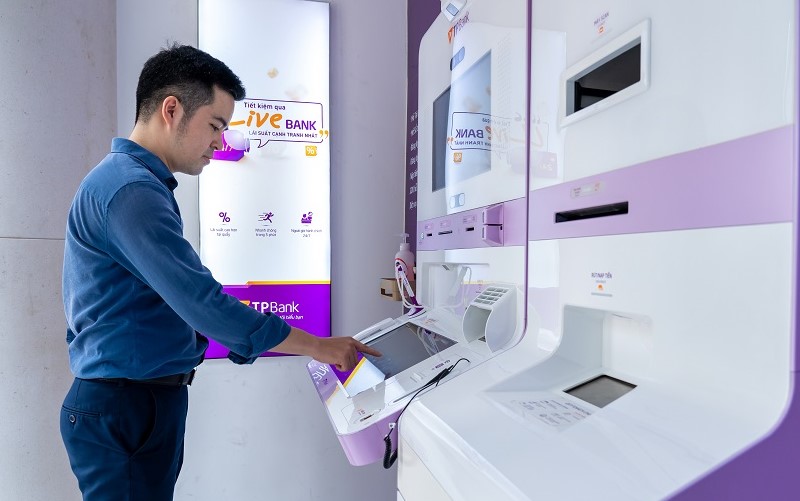
If digital transformation in business is understood to only include digital products, the scope would be too narrow. The approach to digital transformation includes digital products, as well as the digitization of processes, human resources, work methods, and operating procedures. An easy-to-understand example is TPBank, one of the pioneering banks in digital transformation with its LiveBank system serving customers 24/7. The advantages of LiveBank not only meet customer needs—serving them anytime, anywhere, and reducing peripheral tasks like visiting a branch during office hours—but also benefit the bank itself: reducing personnel costs and automating business processes, leading to faster service and higher accuracy.
According to Mr. Nguyen Trung Kien, Chief Strategy Officer of VNPT Information Technology Company: “About 65% of business leaders expect to increase their investment in digital transformation. The trend shows that businesses are prioritizing large-scale remote work, cybersecurity for information security, e-commerce, and process automation.”
However, many businesses still don’t know where to start with digital transformation. Where to begin? How to implement it? How to control and measure it? These are the recurring questions for business managers in the 4.0 era.
3. Digital Transformation: Mindset or Tool?
The mindset for approaching digital transformation is the guiding principle for all business managers entering the 4.0 revolution. With the right mindset, people will begin to understand: What is digital transformation? Why is digital transformation important? And why must our business quickly transform digitally, and what is the appropriate way to do so?
There are many approaches to digital transformation. Some businesses focus on people and human resources. They want to build a digital work culture by reducing “idle” personnel—those who repeatedly perform low-skilled tasks that don’t foster creativity, working like machines. Indeed, businesses aiming for digital transformation through a lean HR approach have begun to entertain the idea of integrating machines to work alongside humans. This approach is mainly seen in the banking and manufacturing sectors—specific industries with multiple management levels, high workloads, and many repetitive processes, such as issuing queue numbers or reception duties. Digital transformation activities in the banking and manufacturing sectors are quite dynamic, especially as the Covid pandemic has dealt a heavy blow to the economy, affecting all industries.
Transform or be left behind? The answer became clear as the economy was directly impacted by the pandemic. According to statistics, over 94% of commercial banks have engaged in digital transformation. They are transitioning from needing many personnel to a leaner structure, digitizing processes on computers to reduce risks, increase accuracy and reliability, and launch digital products. It is even predicted that in about 10 years, some job categories, such as bank tellers and retail staff, may disappear. Banks and manufacturing facilities can still operate, perhaps even more accurately and quickly, by participating in the digital revolution. They can reduce costs related to salaries and social benefits for employees while ensuring the accuracy and speed of specific tasks related to health or finance.
Meanwhile, many other businesses approach digital transformation with a technology-system mindset, primarily in the service, IT, construction, and technology company sectors. The precision and speed of machines, the ability to digitize business processes—allowing CEOs and managers to know how their business is operating, the status of projects, and who is in charge—are key drivers. Being able to collect loyalty points via QR codes when shopping or scanning codes to check inventory status are just small examples of the thousands of benefits of digital transformation. Processes, tasks, and projects are consolidated in the palm of your hand, on a laptop, or on a mobile phone, allowing everyone to work proactively anytime, anywhere. This helps increase labor productivity and reduce unnecessary costs.
Although each industry has a different approach to digital transformation, they all recognize one crucial commonality. It requires a thorough understanding of the business’s organizational operations—this is the fundamental first step to digitizing our content and the foundation for developing new processes. From there, we can build technology-driven solutions to advance our digital transformation journey. With this mindset, businesses can begin to build specific tools to solve their unique needs.
Every business has small processes within a larger chain of processes. For example, human resource management in a company involves more than just recruitment. The broader scope of HR management includes other processes like record keeping, timekeeping, payroll, performance evaluation, KPI management, and more. These are smaller problems within the overall human resource management challenge. As a business develops, managers will realize that each process requires specific tools to manage and enhance work productivity. For small-scale businesses, a manager might only need a few simple, even free, tools. However, for medium and large enterprises, the number of tools increases, and they require a much broader scope of coverage.
At this point, managers will find that while small tools allow them to see the detailed, individual issues of each process, comprehensive tools provide an overview of all business problems. The challenge of overall management applies to all business models, from small to large. Businesses can choose to deploy their digital transformation system on-premise or in the cloud. Simply put, on-premise means setting up a comprehensive process and work management system on your own servers. In the cloud, you purchase services from providers to store your information. This benefit allows business operations and management to achieve maximum productivity. All information is centralized in one place and easily searchable with just a single click.
With these challenges addressed, taking a comprehensive view of the 4.0 digital transformation revolution, Mr. Pham The Truong, former General Director of Microsoft Vietnam, concluded: “It is the combination of people and technology within an organization that will create new opportunities for the business. Applying technology is only the first step for an organization to transform into a digital enterprise. To succeed, a business needs vision, strategy, organizational culture, and distinctive potential. Businesses that possess all four of these elements will lead the way in digital transformation, enhancing their competitiveness and creating different products, services, and business models in the new era.”
To answer the question at the beginning of the article: Digital transformation: Mindset or tool? We can understand that business digital transformation starts with the mindset. A digital transformation mindset will lead to actions to carry out the digital transformation of one’s business. From those actions, business managers have specific tools to maximize employee productivity, maximize revenue, and can set expectations for the company’s long-term development.
4. Industry 4.0 Digital Transformation Trends – From the Perspective of Successful Case Studies
When learning about successful digital transformation case studies, we gain a more intuitive perspective on this rapidly growing trend. Digital transformation is present in every aspect of the economy. In the manufacturing sector, we can mention the world-famous car company – Ford. According to Bloomberg, Ford will invest $11 billion to restructure its business. The American automaker hopes that investing in digital technology will help strengthen revenue through new products and services. The company has applied vision-based automated inspection methods for painting car models in its factories using virtual reality, the Internet of Things (IoT), and AI. Using these technologies, the company improves its ability to detect defects and minimize errors on its car models. Factory data is screened by technology and used by AI to detect and prevent production errors in real-time. Although it cannot put Ford in the leading position in the automotive manufacturing sector because this industry is currently very competitive and customers have many choices, digital transformation is an important and necessary step to help this company avoid falling behind and secure its own position in the market.
Besides the manufacturing industry, the real estate sector has also seen positive highlights of the digital transformation trend, mainly in customer care and outreach activities. In a large and competitive market like China, Lianjia is a company classified as a “unicorn” in the real estate technology field. Established in 2001, after 20 years, this company now has over 8,000 offices and 150,000 brokers, managing more than 500,000 apartments. So what is the key that helps Lianjia’s leaders manage their work? It’s all thanks to digital transformation. The ability to leverage technological advancements, significantly increase productivity through process automation, comprehensive process management, automated customer care, and allowing customers to easily check prices through Lianjia’s integrated information network… helps save time and costs for both buyers and sellers. A tech-enabled broker can serve 10 times more clients than a traditional broker.
Besides the manufacturing industry, the real estate sector has also seen positive highlights of the digital transformation trend, mainly in customer care and outreach activities. In a large and competitive market like China, Lianjia – a real estate company established in 2001 – now has over 8,000 offices and 150,000 brokers, managing more than 500,000 apartments. So what is the key that helps Lianjia’s leaders manage their work? It’s all thanks to digital transformation. The ability to leverage technological advancements, significantly increase productivity through process automation, comprehensive process management, automated customer care, and allowing customers to easily check prices through Lianjia’s integrated information network… helps save time and costs for both buyers and sellers. A tech-enabled broker can serve 10 times more clients than a traditional broker. To give a simple example, in traditional brokerage, one broker can only assist one client with different requirements (direct exchange, meetings) – but with tech-enabled brokerage, one broker can assist 10 people at the same time via a computer screen by sending property information to clients who share the same requirements for price, number of rooms, residential location, etc. With digital transformation, customers can even proactively find a house that suits their requirements (filtering information through funnels for price, location, etc.) and only need to talk directly with the broker when finalizing the purchase.

Turning to the stories of Vietnamese businesses, Cong Ca Phe is a quite successful case study in applying digital transformation to business management and operations. This is not a small shop but a well-established coffee chain in the market. The large number of customers, many franchise stores, large quantities of imported and used raw materials, a large workforce, and advertising and customer care projects that need constant monitoring were the challenging problems the CEO of Cong Ca Phe shared with 1Office. With digital transformation and a digitized process system, Cong Ca Phe has synchronized tasks such as human resource management, project management, and back-office departments across its entire system. The success of Cong Ca Phe in effectively managing 60 domestic stores and opening stores abroad in countries like South Korea and Malaysia is a noteworthy achievement for its business application.
The success of pioneering businesses that have applied digital transformation is an encouragement to companies that have been, are, and will be learning about it. It is never too late if business managers and CEOs dedicate time and effort to understanding it; only those who stand outside this development trend will struggle in the face of the Industry 4.0 technology storm.
5. Conclusion
Digital transformation is an inevitable trend of development. Missing the digital transformation wave will put businesses at a competitive disadvantage in both domestic and international markets.
Like the carriages and connecting links of a train, mindset is the connecting link, and tools are the carriages. The links help the carriages connect tightly; just one broken link can derail the entire train system. Similarly, in the process of business digital transformation, mindset and tools are two closely related issues. The right mindset with the wrong tools will leave business problems unsolved, leading to stagnation, or even more complications that result in costly expenses and wasted money. Conversely, with the wrong mindset, no tool can solve the problem—this shows that the business’s perspective is flawed, failing to recognize its difficulties or which departments need streamlining—making any tool ineffective.
Finally, a sincere message from 1Office to the business managers of the new era: Learn about digital transformation—that is the mindset; keep up with digital transformation, revolutionize your business towards digitalization—that is the action, the tool. The market is always competitive, but there is always a place for those who are agile and learn new and scientific things.
















