


 13/05/2026
  246 views
In the new era of technology, Digital Transformation is an inevitable trend for every business. It is both an opportunity and a challenge for businesses to completely change their traditional management models and operate entirely on the Internet.
Mục lục
What is Digital Transformation?
Digital transformation is the process of applying technological advancements to solve life’s problems more effectively. For business management, digital transformation is the application of business management software to operate all tasks on the Internet and digitize all company documents into a central storage system.

6 DIGITAL TRANSFORMATION TRENDS IN 2019
1. More Advanced Chatbots
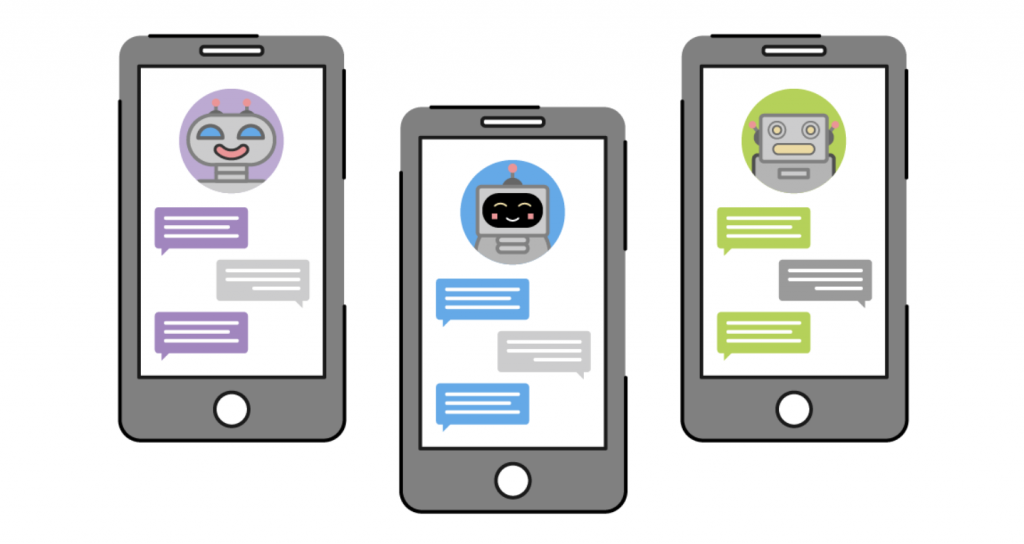
A chatbot is a computer program or an artificial intelligence that conducts a conversation through auditory or text-based methods. In 2019, major advancements were made in natural language processing and the analysis of human emotional expressions.
Many believe that this natural language processing will completely change the service industry, eliminating the need for human operation in areas like fast-food chains, loan processes, and job recruitment.
By the end of 2019, about 40% of large companies will have adopted this technology, making chatbots one of the top technology transformation trends of the year. However, many believe that companies will choose to upskill their employees rather than replace them, because while machines can handle clearer requests, they still lack the empathy and emotional understanding needed to provide customers with a superior experience.
2. Cloud Computing
Companies are gradually realizing that using public clouds, private clouds, or data centers in isolation is not a good option. Occasionally, they need to be combined. Therefore, the cloud connectivity process is continuously being refined to keep up with changing business needs such as storage, connectivity, security, or application development…
Major public cloud providers worldwide are also starting to offer private cloud options. Multicloud will be the new buzzword in manufacturing technology.

3. Blockchain
The concept of blockchain seems to be only associated with cryptocurrency, with many believing it is more of a marketing strategy than a real technology.
To date, this technology has been a mess, as blockchain is too complex for non-experts to use, and there is currently no standard method of application.
For widespread adoption, an easy-to-understand version needs to be created so that people can apply it immediately. IBM has been working to make blockchain more popular beyond its application in cryptocurrency. IBM has now announced it will research the potential of blockchain in the transportation of goods and services. Other technology developers have also taken steps to delve deeper to realize the potential of blockchain in 2019.

4. Machines replacing manual labor
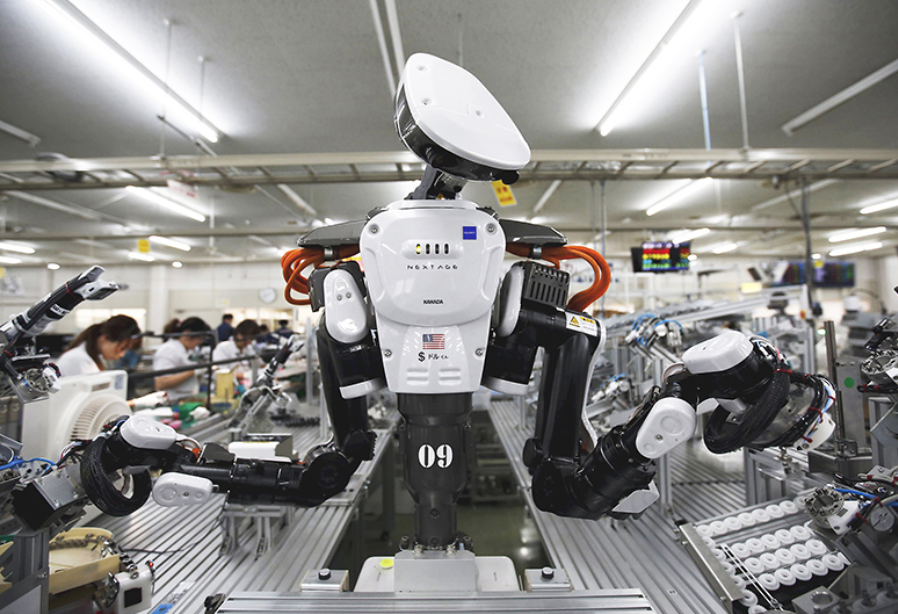
Management software, robots, artificial intelligence… have been and are appearing in Vietnamese businesses, bringing major changes throughout the entire enterprise, from management and sales to HR and marketing.
By applying high-tech techniques, manual labor will be significantly reduced, and especially, the productivity of each employee will increase. For complex tasks that require significant investment, the number of personnel needed for completion will be considerably reduced.
Technological applications not only cut personnel costs but also significantly enhance efficiency. This is why every business is catching on to the new way of managing enterprises in the era of digital transformation.
5. The AR (Augmented Reality) Trend
Augmented reality (AR) technology was once only considered viable for games and highly specialized applications on the market. This interactive technology continued to be a hot topic when discussing digital transformation trends in 2019.
AR can be widely applied in employee training. That’s everything a technology needs: not just to be cool, but also to be useful. Some believe AR’s development is slow, but this technology could actually accelerate in 2019.

6. Investing in management software
According to Cisco’s Global Index survey, by 2018, 59% of work was performed on management software systems, and by 2019, this rate reached 83%.
This shows that the digital transformation trend towards business management software is inevitable.
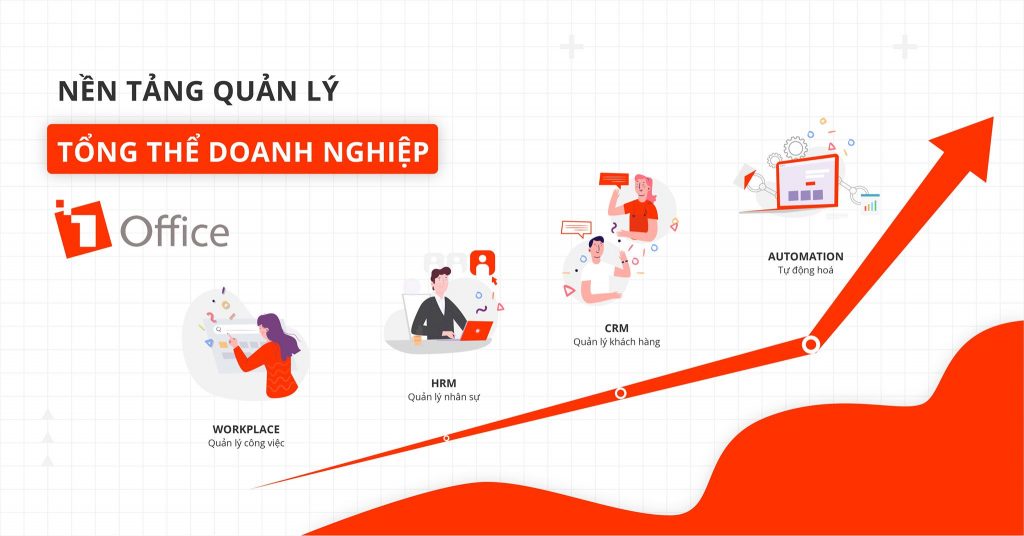
With software, businesses can manage all modules:
- Work management
- HR management
- Customer management
- Marketing management
- Inventory management
- Fund management
- Asset management
- Set up automated projects and processes
- Set up alerts
HOW TO IMPLEMENT DIGITAL TRANSFORMATION FOR BUSINESSES
According to Saigon Times Online, digital transformation is becoming increasingly important in the Vietnamese business community. A simple digital transformation roadmap is based on two main factors: market/external orientation and efficiency/internal orientation for the digital strategy.
The internal orientation factor focuses on optimizing processes and operational costs for businesses.
The external orientation factor focuses on creating and delivering breakthrough value to customers.
“Businesses undergoing digital transformation can choose one of the four basic options below:
– Small-scale/experimental internal and market orientation: This is when a business chooses a process or a part of a task that creates small value for customers and holds a non-critical position in the overall operational process. For example, a travel company decides to automate the task of sending customer care emails and offering new products/services to customers; in this case, the strategic choice is a smartphone-based customer care system that activates and sends a product code to the center when the customer initiates it.
Strategy 1 is very suitable for businesses as it helps leaders and managers understand the practical values of digital transformation.
– Large-scale internal orientation and small-scale/optimized market/external orientation: This option is suitable for businesses that want to optimize their internal operational processes, ensuring cost and operational efficiency. An example of this choice is a transportation company deciding to implement a system to monitor and operate its entire fleet to meet customer demands. A second example is the process of hotels connecting their booking systems with booking websites to optimize their sales systems.
Strategy 2 is suitable for businesses with large-scale operations. Most large enterprises have implemented this choice in recent years. Businesses should focus on this option as their operational scope expands over time. An important reason for choosing option 2 is that the process, being primarily internal, poses fewer risks to the brand and the market.
– Small-scale internal orientation and large-scale/value-creating market orientation: This is the choice when a business aims to develop digital products/services to create breakthrough, innovative value for customers. The essence of this choice is to digitize the entire customer service and value creation process. For example, for option 3, an education company might decide to implement AI and an online video training system to provide educational products/services to customers. Another example is a travel company using big data to provide hotel selection and booking services.
– Large-scale internal and market orientation: This is the most thorough and also the riskiest option for a business. The company digitizes new products/services according to option 3, while also digitizing all other processes and products within the business. For example, the aforementioned education company could digitize the entire process of student admission, class operation, and control, in addition to its digital online training product. The travel company could digitize the entire process of receiving and operating tours in parallel with its digital hotel booking product.
Which strategy to choose depends on the resources, intentions, and market competition for each business. However, according to the author, businesses should quickly implement options 1 and 2 because they carry less risk, as the activities are focused internally.
Option 3 is suitable for businesses in highly competitive industries or where competitors have a high degree of digitization, such as tourism and retail. In other words, large enterprises need to innovate quickly to create digital products/services alongside their traditional ones.
Option 4 applies to businesses whose competitors have digitized almost all of their operations. Vivid examples of this choice are ride-hailing services and banking.”
Furthermore, for a successful digital transformation, businesses need to transform their internal resources, which involves using an intelligent management system and digitizing all resources.
1Office all-in-one business management software partners with businesses on their digital transformation journey!
Read more articles at:
4 HR MANAGEMENT STRATEGIES FOR EACH STAGE OF BUSINESS DEVELOPMENT
25+ Best and Most Effective Work Management Software in 2023
















