09/05/2026
  172 views
Discover 13+ of the latest sample business plans for 2026 to help your business gain a comprehensive and detailed overview of how to create an effective business plan. In this article, 1Office will compile a variety of templates, from Excel, Word, and PowerPoint to those for different industries, along with detailed instructions to help businesses easily apply them to their projects.
Mục lục
1. A Compilation of 13+ Sample Business Plans [Latest for 2026]
| A business plan is a comprehensive document that records goals, strategies, business model, target market, marketing and sales plans, financial forecasts, and risk management for a specific period. It acts as a roadmap, helping the business determine its direction, allocate resources, and implement the necessary steps to achieve its goals, while minimizing risks. |
1.1. Business Plan Template (Excel File)
The business plan in Excel is structured as a visual spreadsheet, including key components such as the project summary, company information, SWOT analysis, financial plan, and accompanying data tables. Users can work directly on the file, enter numbers, and immediately observe changes in business projections. This is a suitable option for businesses that prioritize data-driven management and need to make quick updates in response to market or operational changes.
>>> Download the detailed Excel business plan template – LATEST 2026 update now

1.2. Detailed Business Plan Template (Word)
The Word template is structured like a complete proposal, clearly divided into sections according to the standard business plan layout. Each section includes instructions, guiding questions, and a content framework to help users easily add information. This format is suitable for creating a professional, polished presentation for investors, financial partners, or strategic planning meetings.
>>> Download the detailed Word business plan template – LATEST 2026 update now

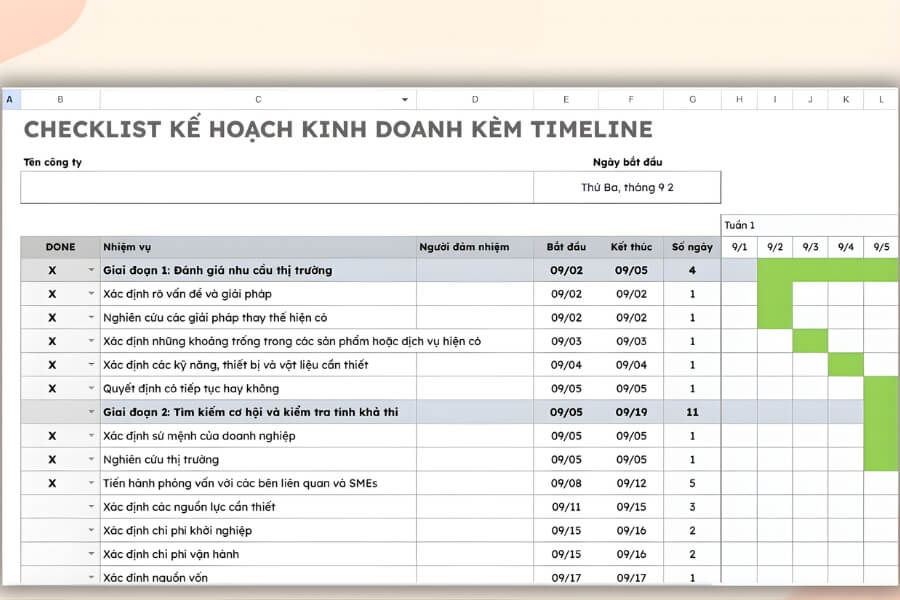
1.3. Business Plan Checklist Template
The business plan checklist acts as a “control map” to help you review all the essential content required in your plan. Instead of having to remember each item, you can simply go through the list, check off completed sections, and immediately identify any missing items or areas needing more information. This is a very convenient tool for busy business owners or teams collaborating on a plan who need a common standard to ensure completeness and professionalism.
>>> Download the detailed Business Plan Checklist Template – LATEST 2026 update now
1.4. Simple Business Plan Template (Word)
The Word template is structured like a complete proposal, clearly divided into sections according to the standard business plan layout. Each section includes instructions, guiding questions, and a content framework to help users easily add information. This format is suitable for creating a professional, polished presentation for investors, financial partners, or strategic planning meetings.
<a href="https://1office.vn/wp-content/uploads/2025/12/Bản-kế-This plan is a detailed guide to help businesses shape their digital business model. It includes defining online business goals, analyzing the market and customer behavior in the digital environment, building marketing strategies for websites, e-commerce platforms, and social media, as well as creating financial forecasts and an operational structure. This enables businesses to optimize their digital platform operations and minimize risks when expanding their online business.
>>> Download the LATEST updated Online Business Plan Template for 2026 now

2. What a Business Plan Must Include
Below are the fundamental sections that a complete business plan typically includes, helping you detail the implementation from idea to execution:
Section 1. Executive Summary
Purpose: To help investors quickly grasp the overall project, including the idea, product, objectives, market, differentiators, operating model, and reasons to invest. This section should be concise, succinct, and about 1-2 pages long.
- Founding Idea: Present the reason for the project’s inception, including what customer problem the business aims to solve. Are there any market opportunities the business has identified?
- Product/Service: Describe the main software/service, its key features, and the value it delivers. Answer the question, “What will customers receive, and what problem will be solved?”
- Project Objectives: Define the company’s position in 1, 3, and 5 years regarding customers, revenue, market share, and brand.
- Target Market: Answer the question, “Who is the ideal customer? What are their industry characteristics, scale, needs, and product/service usage behavior?”
- Competitors & Differentiation: List the main competitors and state the project’s differentiators and competitive advantages over them.
- Operating Model: Explain how the project creates value and revenue, its main operational processes, and how customers use the product/service.
- Keys to Success: State the factors that will determine the project’s success, including people, product, technology, marketing, and customer care.
- Reasons to Invest: Present the profit potential, market opportunities, competitive advantages, use of investment capital, and expected returns.
Note:
- When starting the plan, outline the main content and key metrics, which will serve as a basis for implementing activities aimed at those goals and metrics.
- After completing the plan, rewrite this summary to be easy to understand, easy to grasp, and accurately reflect the project overview.
- During implementation, the business can adjust specific activities but should limit changes to the objectives and key metrics to ensure the plan’s consistency.

Section 2. Company Overview
Purpose: This section helps investors clearly understand the nature of the business, including its mission, vision, objectives, business model, target market, competitive capabilities, and legal structure. This serves as a basis for evaluating the startup’s vision, strategy, and operational capacity.
- General Company Information: Provide complete basic information including Company Name, headquarters, phone number, website, legal representative, year of establishment, and legal entity type.
- Mission Statement: Present the company’s mission, including the core values it aims to deliver to customers, employees, and society.
- Define the sales process: from lead – consultation – demo – contract signing – implementation – post-sales care.
- Sales model: selling monthly/yearly licenses, with accompanying support service packages.
- Sales team allocation: Inside Sales (online sales), Field Sales (large clients), Customer Success (caring for existing customers).
- Sales KPIs: number of contracts signed, revenue, customer retention rate, average value per customer.
- Define the organizational structure: product development, marketing, sales, customer care, administration – finance.
- Phased recruitment plan: staffing needs for product development, market expansion, and customer care.
- Training and skill development policy: professional skills, technology, sales and customer care skills.
- HR KPIs: task completion rate, team performance, employee satisfaction level.
- Revenue forecast: by new customers, license packages, support services.
- Cost forecast: product development, marketing, personnel, operational, and administrative costs.
- Break-even point and cash flow: determine the time to achieve ROI, balance monthly/quarterly income and expenses.
- Capital raising plan (if needed): amount of capital needed, purpose of use, projected profit, rate of return.
- Leadership team information: List the information of the founder, co-founders, and board of directors. Include names, roles, experience, and key contributions to the business. If there are expert advisors, their roles and areas of expertise should also be clearly stated.
- Organizational chart: Present the company’s overall operational chart, showing the relationships between departments, teams, and key personnel. This chart helps readers understand how the entire startup communicates, coordinates, and operates.
- Choose a suitable structural model to optimize operational efficiency:
- Flat Structure: Reduces management levels, promotes direct communication and quick decision-making, thereby increasing flexibility, encouraging creativity, and allowing for timely feedback during operations.
- Team-based Structure: Organizes employees into self-managed teams based on specific projects or goals, which helps enhance collaboration, encourage creativity, and increase individual accountability for work results.
- Matrix Structure: Combines functional and project-based structures, allowing employees to report to multiple managers, thus enabling more flexible resource utilization, promoting cross-departmental collaboration, and improving project execution efficiency.
- Note on application: The organizational structure not only affects communication but also determines the speed of implementing the operational plan. Startups should choose a model that fits their scale, goals, and company culture to achieve optimal efficiency.
- Determine startup costs: List all necessary expenses to establish the business and get the project into initial operation. This includes: business registration fees, office rent, equipment, software, initial recruitment, launch marketing, and legal fees. A detailed cost determination helps in accurately forecasting capital needs and creating a reasonable financial plan.
- Working capital: Determine the capital needed to sustain daily operations in the initial phase. This includes operating costs, employee salaries, infrastructure maintenance, marketing, costs for raw materials or software, and other incidental expenses. It is advisable to project capital for at least 6-12 months of operation to ensure stability.
- Balance sheet: Create a projected balance sheet, listing assets, liabilities, and owner’s equity. This statement helps investors and managers understand the initial financial position of the business, thereby assessing profitability and managing risks.
- Personal financial statement (if needed): In cases of raising capital from individuals or obtaining bank loans, provide the founder’s personal financial statement to demonstrate the ability to contribute capital, ensure financial responsibility, and increase credibility with investors.
- Supplementary documents: The business can include documents that help illustrate or clarify the business plan, such as: project implementation timeline, risk management chart, detailed implementation plan for each phase, or supplementary market research reports.
- Financial and legal documents: Includes documents proving the financial and legal status of the business, such as projected financial statements, balance sheets, business licenses, contracts with suppliers or strategic partners.
- Other reference materials: Other appendices may include management team profiles, founder and co-founder CVs, patent certificates, intellectual property rights certificates, sample customer contracts, or any document you believe will help the reader better understand and trust the project.
- Purpose of the appendix: To help readers, especially investors or partners, easily look up detailed information, verify important data, and understand the factors supporting the investment decision.
- Sales Division: optimize sales channels, allocate appropriate targets, and strengthen the team for better performance.
- Marketing Department: identify key campaigns, plan content, and allocate budgets for each channel.
- Production – Operations: focus on increasing productivity, controlling quality, and refining processes.
- Technology Division: implement new systems and apply software to reduce costs and increase accuracy.
- Human Resources: develop plans for recruitment, training, and team development to maintain organizational capabilities.
- Outline the basic business idea: First, briefly write down the main idea of your business, focusing on the problem you want to solve and the solution you plan to provide. This outline helps shape the overall direction and identify the next steps in the planning process.
- Develop a specific business concept: After outlining, develop the idea into feasible steps: product/service, target customers, revenue model, marketing strategy. This gives the plan depth and makes it more persuasive to investors or partners.
- Conduct market research: Understanding the market, competitors, customer needs, and industry trends is the foundation for shaping your business strategy. Market data will help you identify your competitive advantage and make smarter decisions.
- Find talented people to assist: A complete business plan requires contributions from experienced professionals in key areas like marketing, finance, and operations. They will help the business avoid mistakes and increase the chances of successfully executing the plan.
- Maintain strong financial control: Estimating costs, revenue, profit, and cash flow is essential for a feasible plan. A detailed financial plan helps the business manage risks, raise capital effectively, and track operational progress.
- Focus on business operations: No matter how detailed the plan is, the ultimate focus is on implementation and operation. Always ensure that strategies, goals, and specific actions are all geared towards creating real value, serving customers, and driving business growth.
- Hotline: 083 483 8888
- Facebook: https://www.facebook.com/1officevn/
- Youtube: https://www.youtube.com/@1office-chuyendoisodn
- Zalo OA: https://zalo.me/3883877516951440238
<li style="font-weight: 400;" aria-level="(2) Sales Plan:
(3) Human Resources Plan:
(4) Financial Plan:

Section 6: Organizational Structure
Purpose: This section outlines the operational framework of the business, including the leadership team, expert advisors, and organizational chart. This part helps investors understand who leads, who is responsible for each area, and what management model is being applied. The goal is to build confidence that the business has the right team and a strong enough organizational structure to implement the plan.
Section 7: Startup Costs and Working Capital
Purpose: This section aims to clarify the total investment required for the business to start and sustain operations. It includes startup costs, working capital needs, and related financial documents. The goal is to show that the business clearly understands its financial situation and has a reasonable, transparent, and convincing plan for using capital.

Section 8. Appendix
Purpose: The appendix is used to supplement documents that readers may need for further reference, such as detailed data, forms, vouchers, legal documents, or risk analysis. The goal of this section is to provide evidence and supporting information, making the business plan more complete, reliable, and verifiable.
3. Components of a Business Plan
Below are the essential components that make up a business plan, from the business overview to operational and financial strategies:
3.1. Overall Review of Previous Period’s Results
The planner should summarize the results of achieving the previous period’s goals, including revenue, costs, profit, and growth rate. At the same time, it is necessary to analyze key KPI metrics for each area such as business, operations, finance, and human resources.
Next, identify existing problems, determine their causes, and draw lessons learned. This information will serve as an important foundation for building an action plan and setting goals for the next period.
Performance evaluation becomes easier and more accurate when using 1Office’s CRM software, which helps consolidate customer data, track sales, and report KPIs automatically. As a result, the business can quickly identify existing problems, determine their causes, and draw lessons learned, creating a solid foundation for building an action plan and goals for the next period.

3.2. Market Context & Impactful Trends
The market and development trends are key factors that influence customer needs and behavior. They are also external causes that may require the business to adjust its goals and business plan. Therefore, whenever updating the plan, the business should carefully consider these factors.
Specifically, the business needs to analyze current market trends, assess changes from competitors, and also consider impacts from the external environment such as legal policies, new technologies, raw material costs, or human resources.
3.3. Quarterly/Annual Business Goals
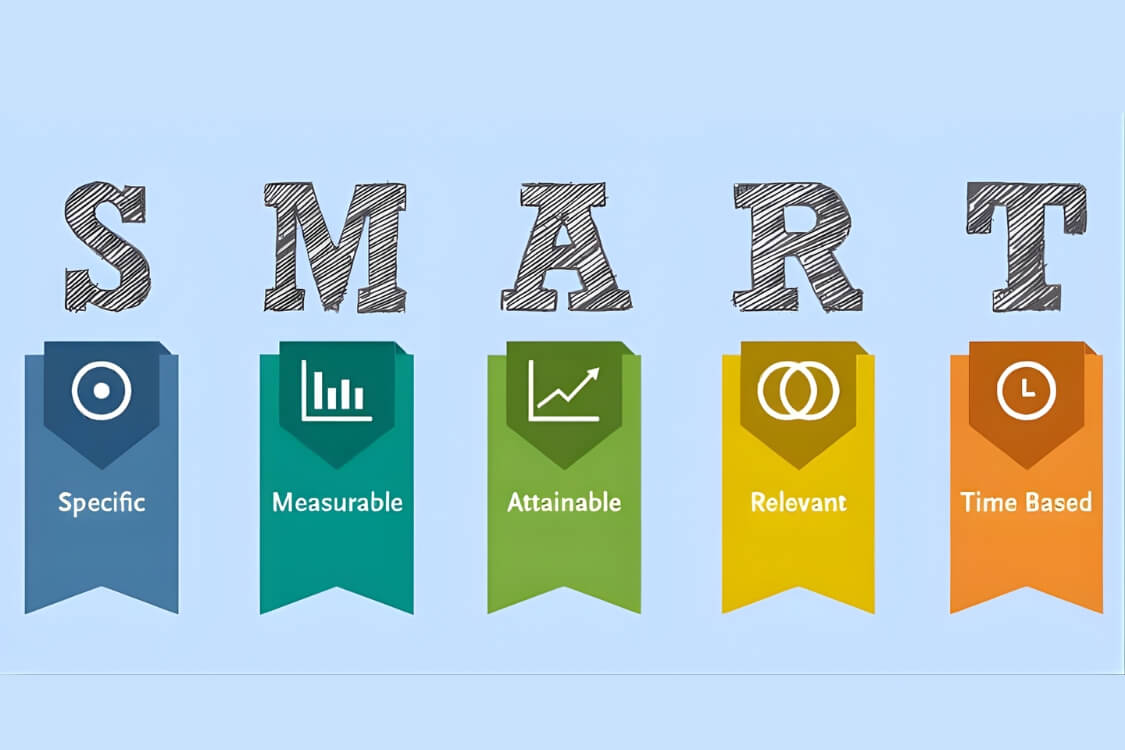
Businesses should define clear, specific goals and can apply methods like OKRs or SMART to ensure results are easy to track and evaluate. To create a comprehensive picture of these goals, they should be broken down by department or operational area, for example: Sales, Marketing, Production, Finance… This helps connect overall objectives with specific actions in each department.
In addition to goals for maintaining stable operations, businesses can also set “breakthrough” goals to create development momentum and drive innovation during the planning phase.
3.4. Implementation Strategy and Solutions
At this stage, businesses need to clearly define their core focus: increasing market coverage, upgrading products/services, improving operational efficiency, or accelerating digital transformation. Once the direction is set, the next step is to translate the strategy into specific action steps for each department.
For example:
This section helps connect overall objectives with the specific execution of each department.
3.5. Financial Projections, Measurement, and Reporting
A complete business plan always needs a financial projection section, including expected revenue, cost structure, and estimated profit for each phase. This helps businesses proactively manage cash flow and identify potential financial risks early on.
Along with financial forecasts, businesses need to establish a system for regular measurement and reporting. The tracking metrics must accurately reflect progress and the degree of goal completion, allowing leadership to make timely adjustments when necessary.

4. Tips for Writing a Complete Business Plan
Here are the key points to remember to build a feasible, realistic, and effective business plan.

The sample business plans in this article will help you systemize your ideas, track progress, and effectively control your project with clarity. To optimize customer management, enhance sales performance, and connect departments, you can implement 1Office’s CRM software—the perfect support tool to turn your business plan into tangible results. Contact 1Office today for a detailed consultation and to experience a CRM solution tailored to your business’s scale!
5. 1Office’s HRM Software Helps Businesses Plan More Effectively
With 1HRM, businesses can create weekly, monthly, quarterly, or annual plans based on actual needs for recruitment, personnel allocation, salary and bonus budgets, training, and performance evaluation. Thanks to centralized and continuously updated data, managers can easily track personnel changes, identify the need for additional resources, and devise plans that align with business goals.
Furthermore, when combined with AI, 1Office’s HRM software helps businesses analyze data faster, provides automatic reminders, warns of personnel shortages, and supports the creation of plans that closely match the actual situation. Instead of manual planning across multiple separate files, businesses can centrally manage the entire process on a unified, transparent, and more controllable platform. As a result, 1Office HRM not only optimizes daily HR management but also becomes a tool that supports businesses in long-term planning, efficient resource utilization, and enhancing operational capacity during growth phases.