


17 Standard Job Application Form Templates in Word – Free, Latest 2026


An application letter is a crucial part of an application package, playing a decisive role in making a first impression on recruiters. In this article, 1Office will provide you with over 17 standard application letter templates in Word format, suitable for various industries and levels. Additionally, we will also provide a download link for the Word file and detailed instructions on how to write a professional and effective application letter, helping you demonstrate your suitability for the position and increase your chances of success. Let’s learn how to create a perfect, impressive, and persuasive application letter.
Mục lục
- 1. What is an application letter?
- 2. 17 Latest Application Letter Templates in Word Format for 2026 by Industry
- 2.1 General Application Letter Template for Various Industries
- 2.2 Handwritten Application Letter Template
- 2.3 Application Letter Template for Fresh Graduates
- 2.4 Sample Application Letter for Accountants
- 2.5 Sample Application Letter for HR & Admin Staff
- 2.6 Sample Job Application for HR Specialist
- 2.7 Sample Job Application for Marketing Staff
- 2.8 Sample Job Application for Construction Engineer
- 2.9 Sample Job Application for Programmer
- 2.10 Sample Job Application for Business/Sales
- 2.11 Sample Job Application for the Banking Sector
- 2.12 Sample Job Application for the Import-Export Sector
- 2.13 Sample Job Application for a Worker
- 2.14 English Job Application Template for Various Industries
- 2.15. Job Application Template for Experienced Candidates
- 2.16. Job Application Template for Candidates with No Experience
- 2.17. Job Application Template for Receptionist Position with No Experience
- 3. Common Types of Job Applications
- 4. Standard Structure of a Job Application Template
- 5. Guide to Writing an Impressive Job Application Letter
- 5.3. Word Application Letter
- 6. Tips for Writing and Using Application Letter Templates
- 7. Mistakes to Avoid When Writing an Application Letter
- 7.1. Spelling and Grammar Mistakes
- 7.2. Writing an Overly Long Application
- 7.3. Using Inappropriate Language
- 7.4. Not Customizing the Application for Each Company
- 7.5. Not Checking Information Before Sending
- 7.6. Being Overly Confident or Overly Humble
- 7.7. Not Having a Clear Conclusion
- 7.8. Overemphasizing “Me” Instead of “the Company”
- 8. Frequently Asked Questions (FAQs) about Application Letters
- 9. Conclusion
1. What is an application letter?
An application letter is an important document that a candidate sends along with their application when applying for a job position. This is an opportunity for the candidate to introduce themselves, explain why they are interested in the job, and why they are the right fit for the position. An application letter usually accompanies a CV (curriculum vitae); however, it is not just a summary of personal information but also a letter that demonstrates the candidate’s professionalism, commitment, and serious attitude towards the job.
Make a first impression on recruiters
An application letter is the first opportunity for a candidate to present themselves to a recruiter. A clearly written, professional, and easy-to-understand letter will help the candidate make a good impression and capture the recruiter’s interest.
A tool to demonstrate suitability for the job
An application letter is not just a place for candidates to state their personal information, but also a place to clearly express their reasons for applying and their commitment to the job and the organization. Recruiters can easily see whether the candidate truly understands the company and the job position, as well as whether the candidate meets the job requirements.
Reflects the candidate’s writing and communication skills
An application letter is also a factor in assessing a candidate’s communication skills, especially their ability to write coherently and accurately. For many job positions, writing skills are very important, so recruiters will highly value an application letter that demonstrates professionalism in its presentation and use of language.
2. 17 Latest Application Letter Templates in Word Format for 2026 by Industry
2.1 General Application Letter Template for Various Industries
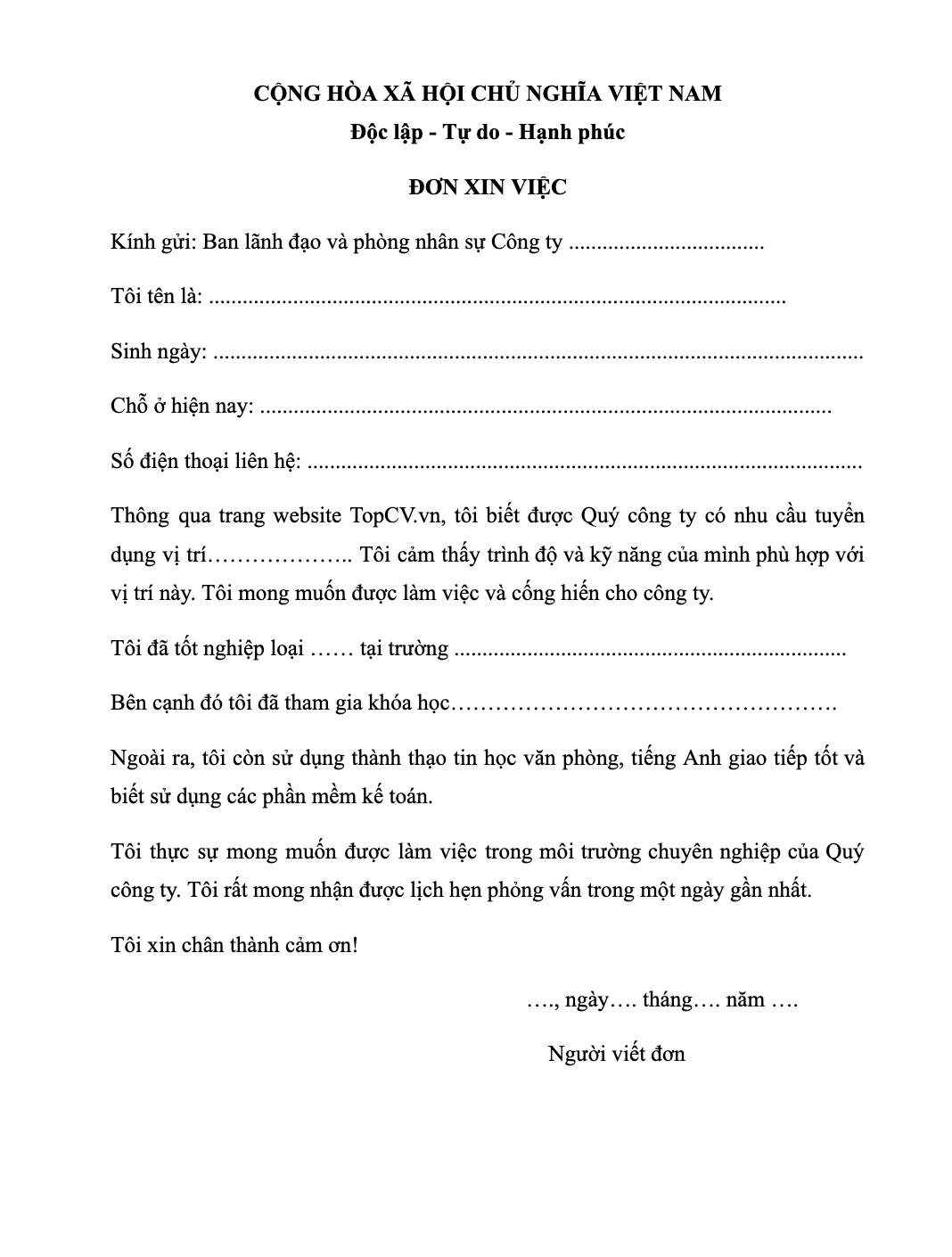
DOWNLOAD THE GENERAL APPLICATION LETTER TEMPLATE (WORD FILE) HERE
2.2 Handwritten Application Letter Template
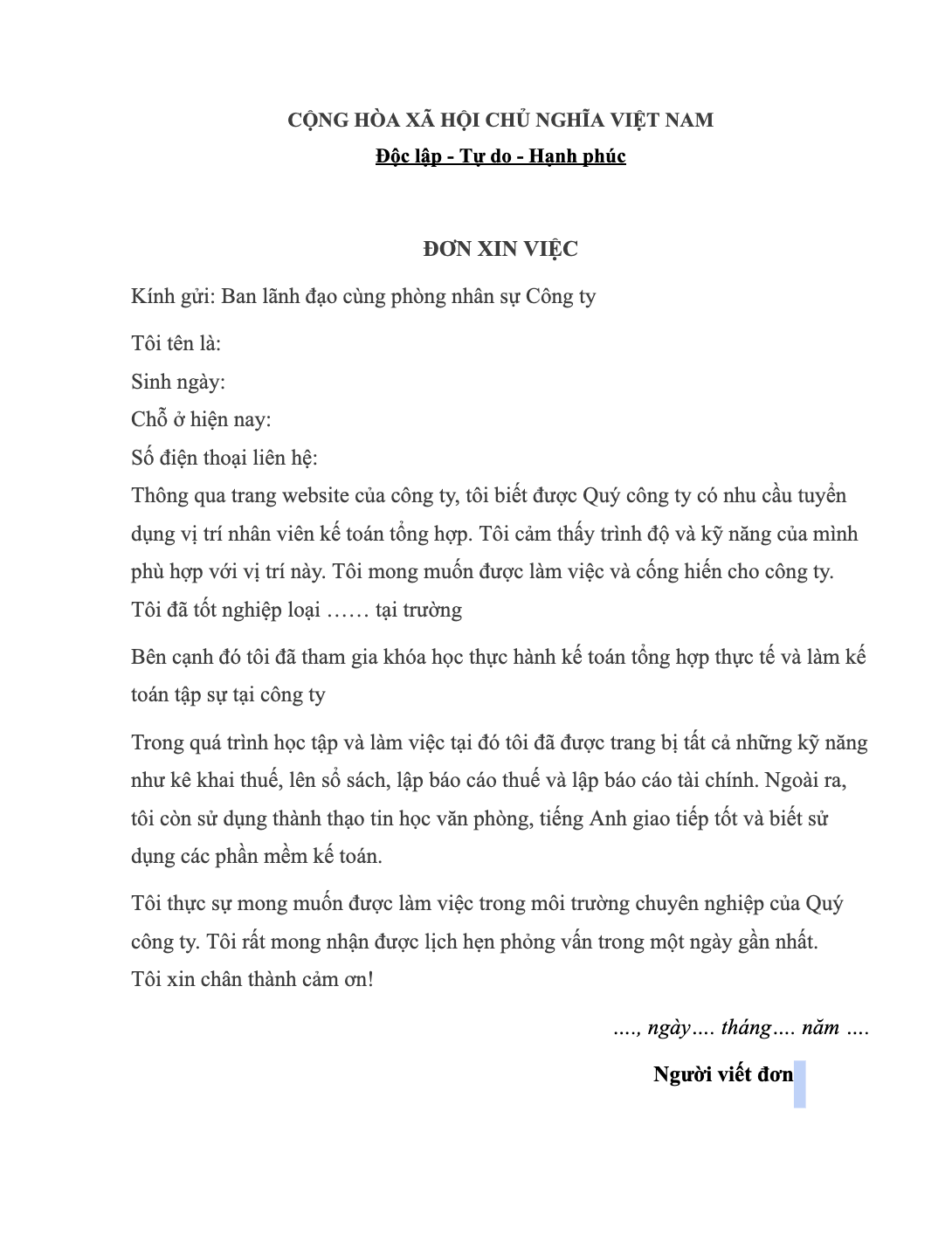
2.3 Application Letter Template for Fresh Graduates
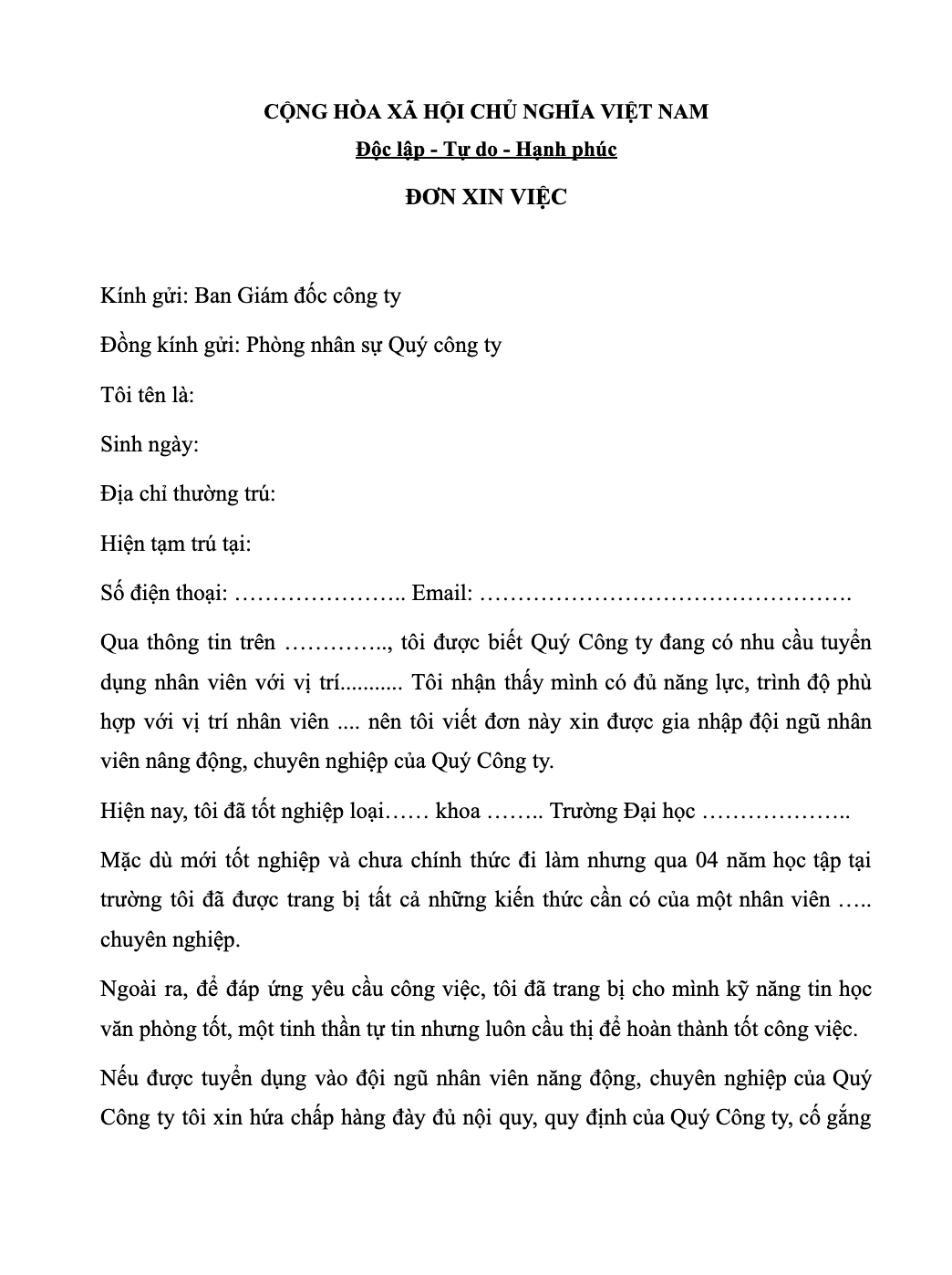
DOWNLOAD THE APPLICATION LETTER TEMPLATE FOR FRESH GRADUATES HERE
2.4 Sample Application Letter for Accountants
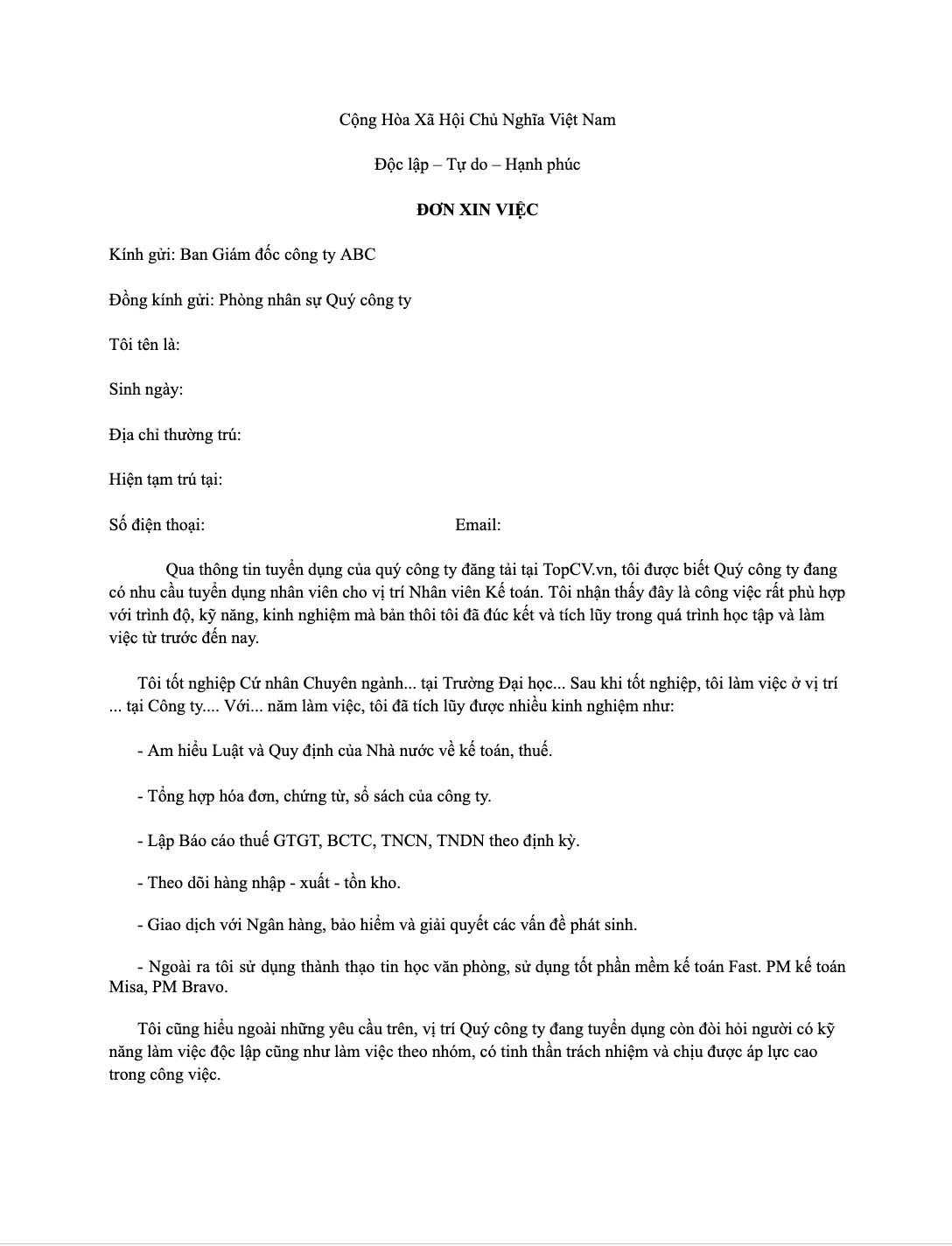
DOWNLOAD THE APPLICATION LETTER TEMPLATE FOR ACCOUNTANTS HERE
2.5 Sample Application Letter for HR & Admin Staff
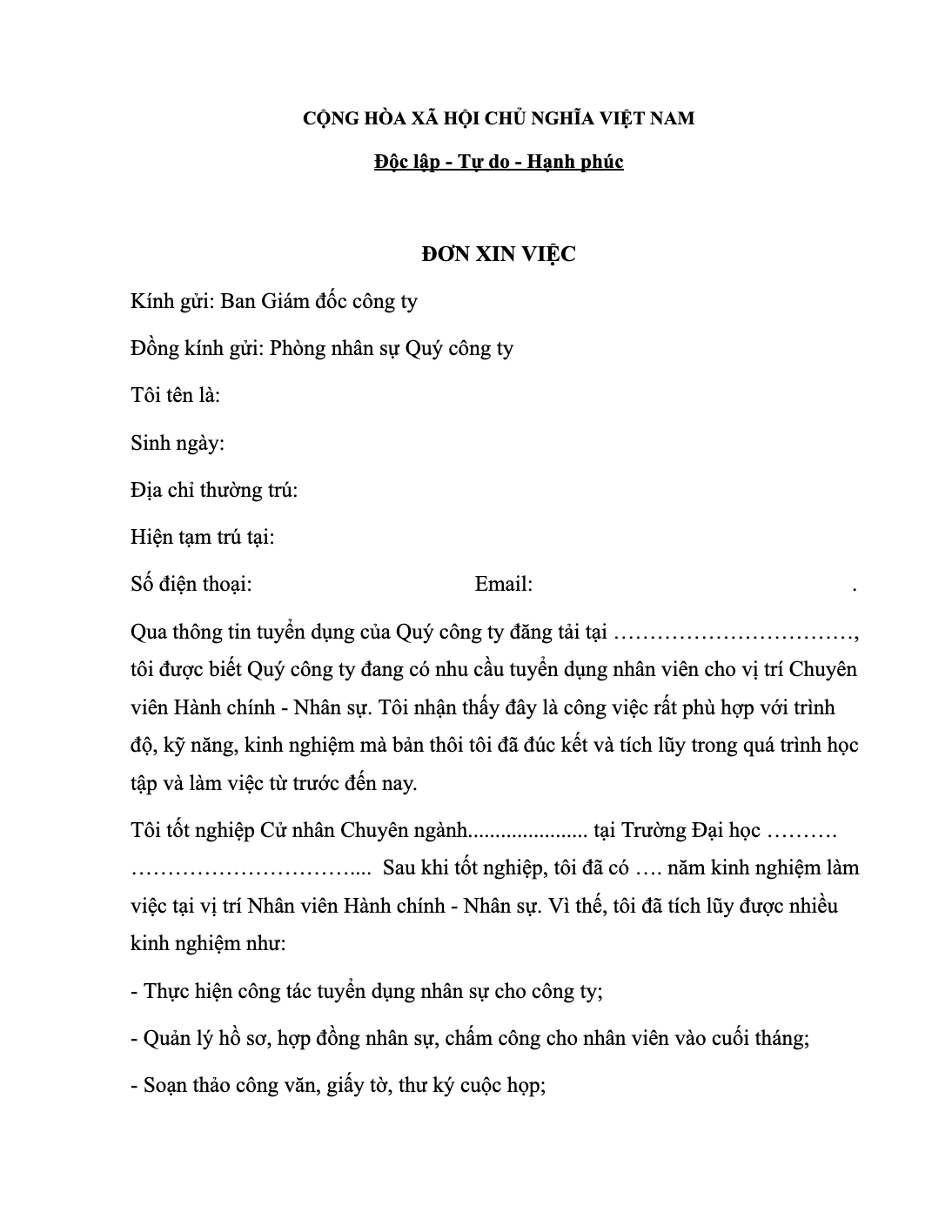
DOWNLOAD THE APPLICATION LETTER TEMPLATE FOR HR & ADMIN STAFF HERE
2.6 Sample Job Application for HR Specialist
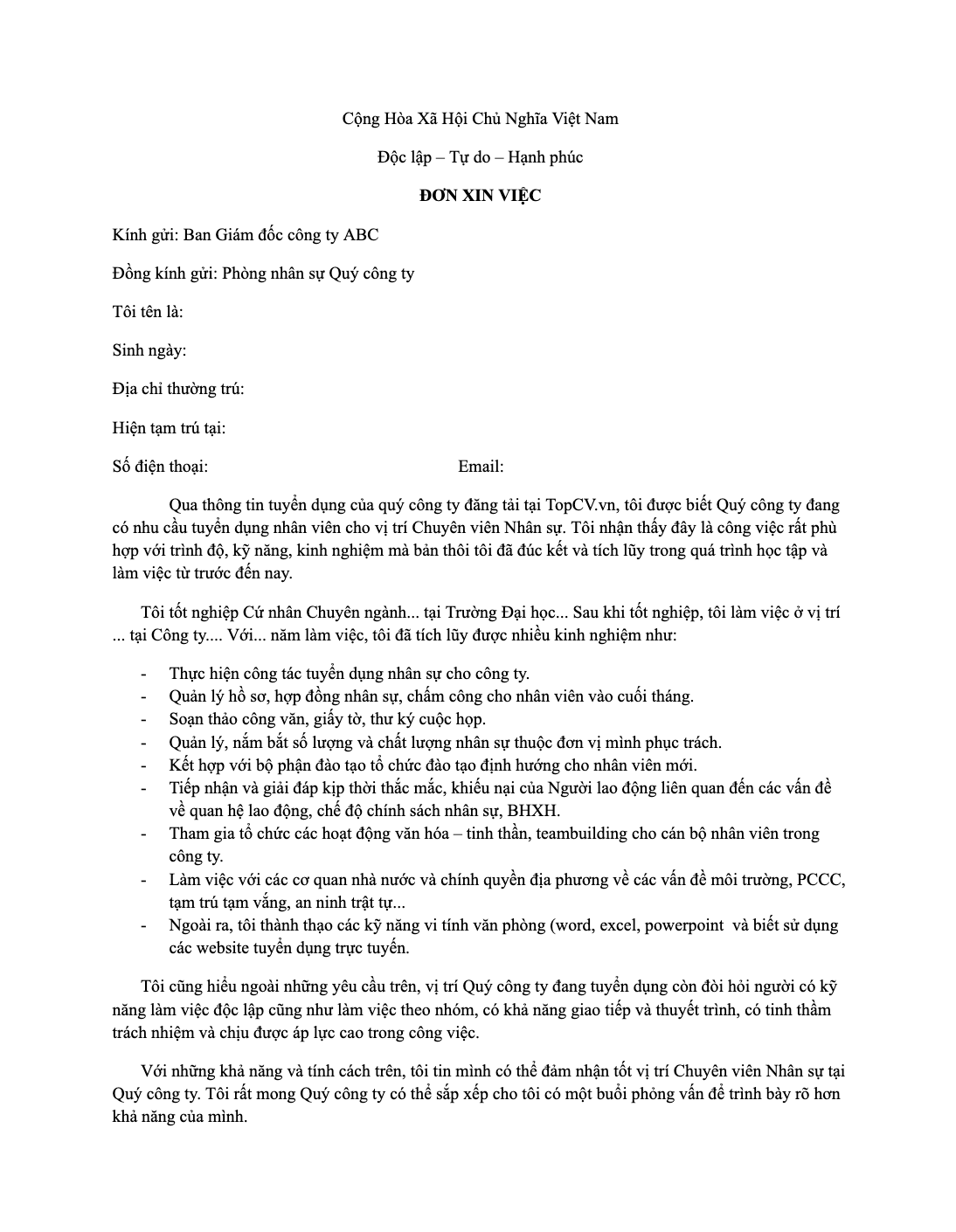
2.7 Sample Job Application for Marketing Staff
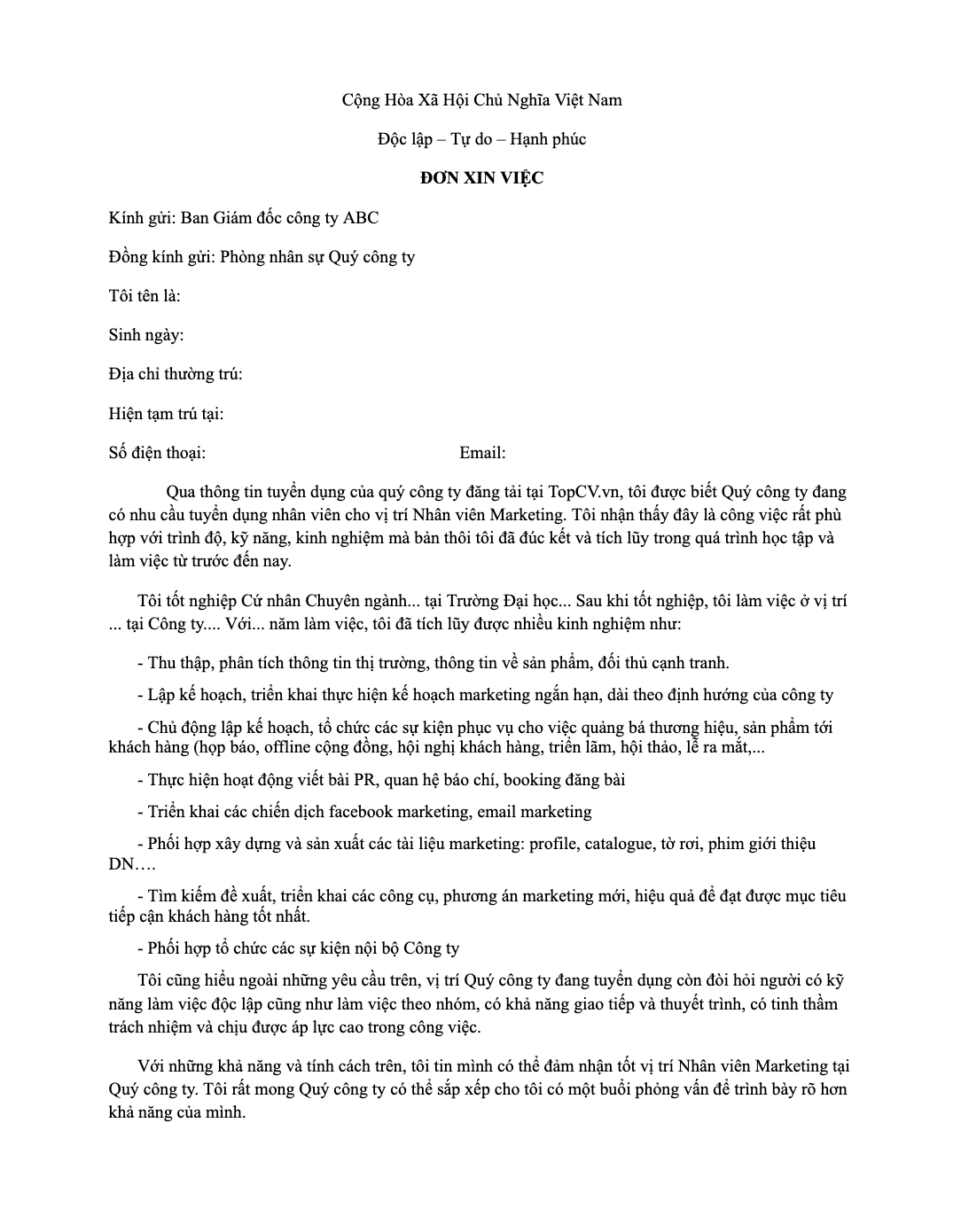
2.8 Sample Job Application for Construction Engineer
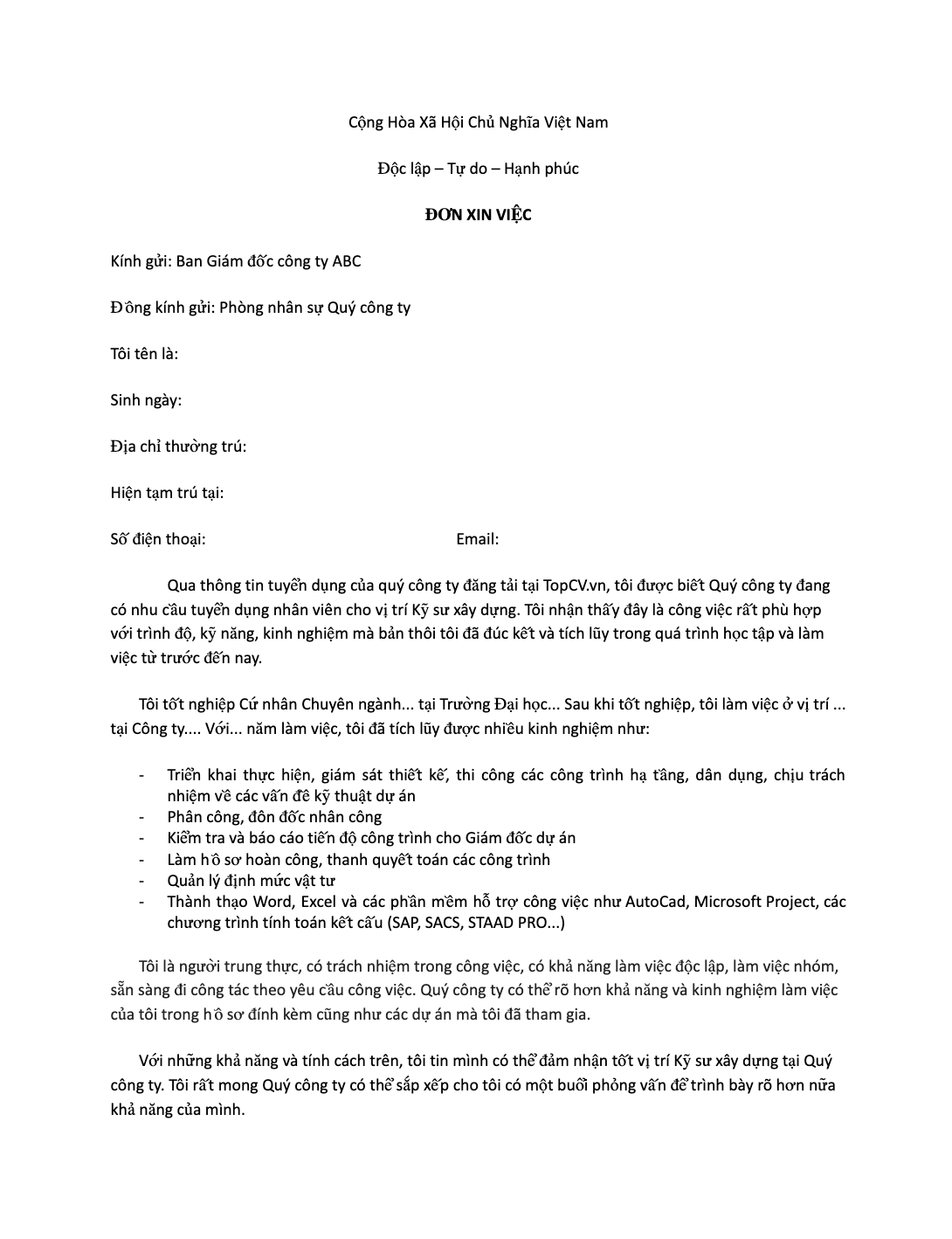
DOWNLOAD THE JOB APPLICATION FORM FOR CONSTRUCTION ENGINEER HERE
2.9 Sample Job Application for Programmer
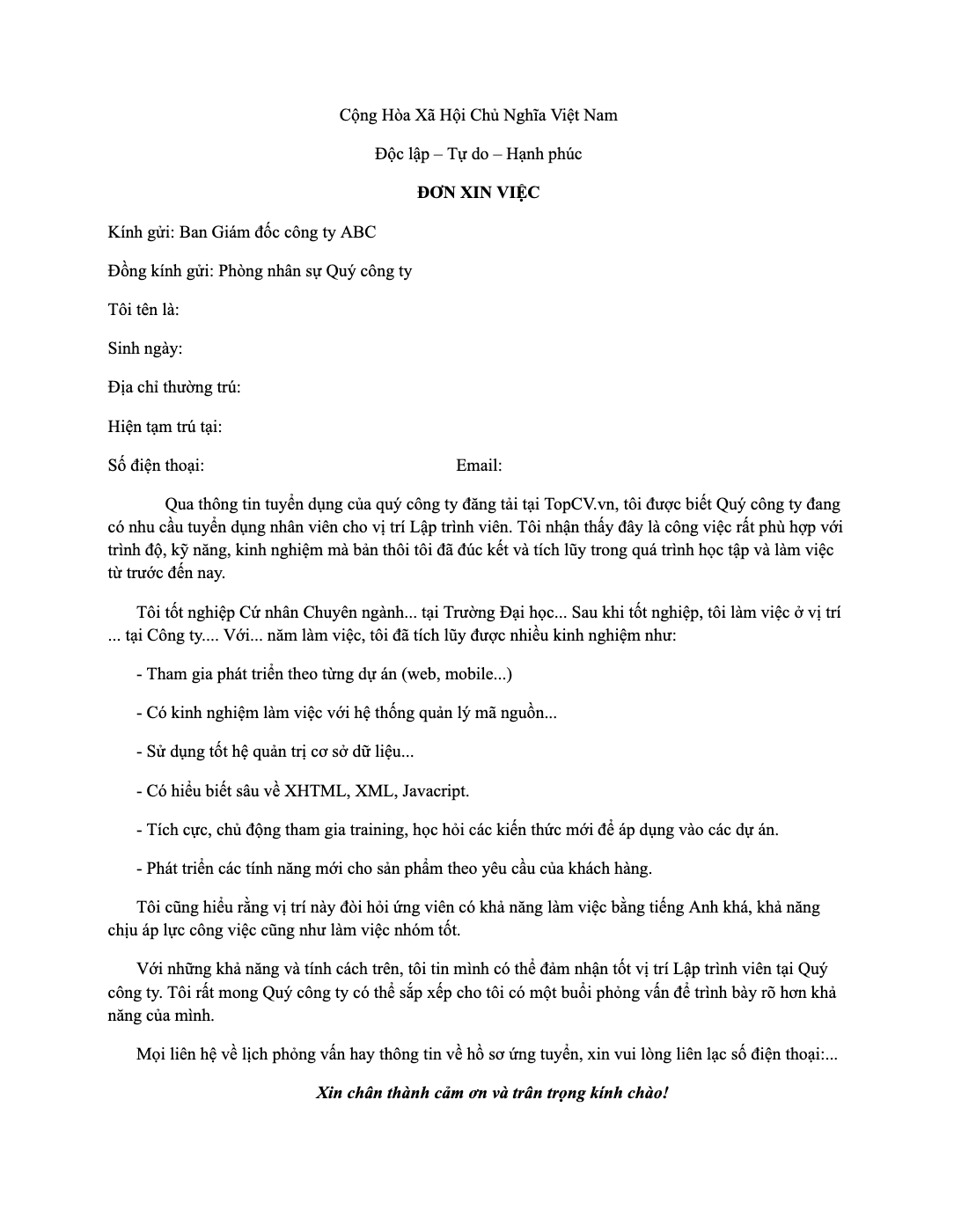
2.10 Sample Job Application for Business/Sales
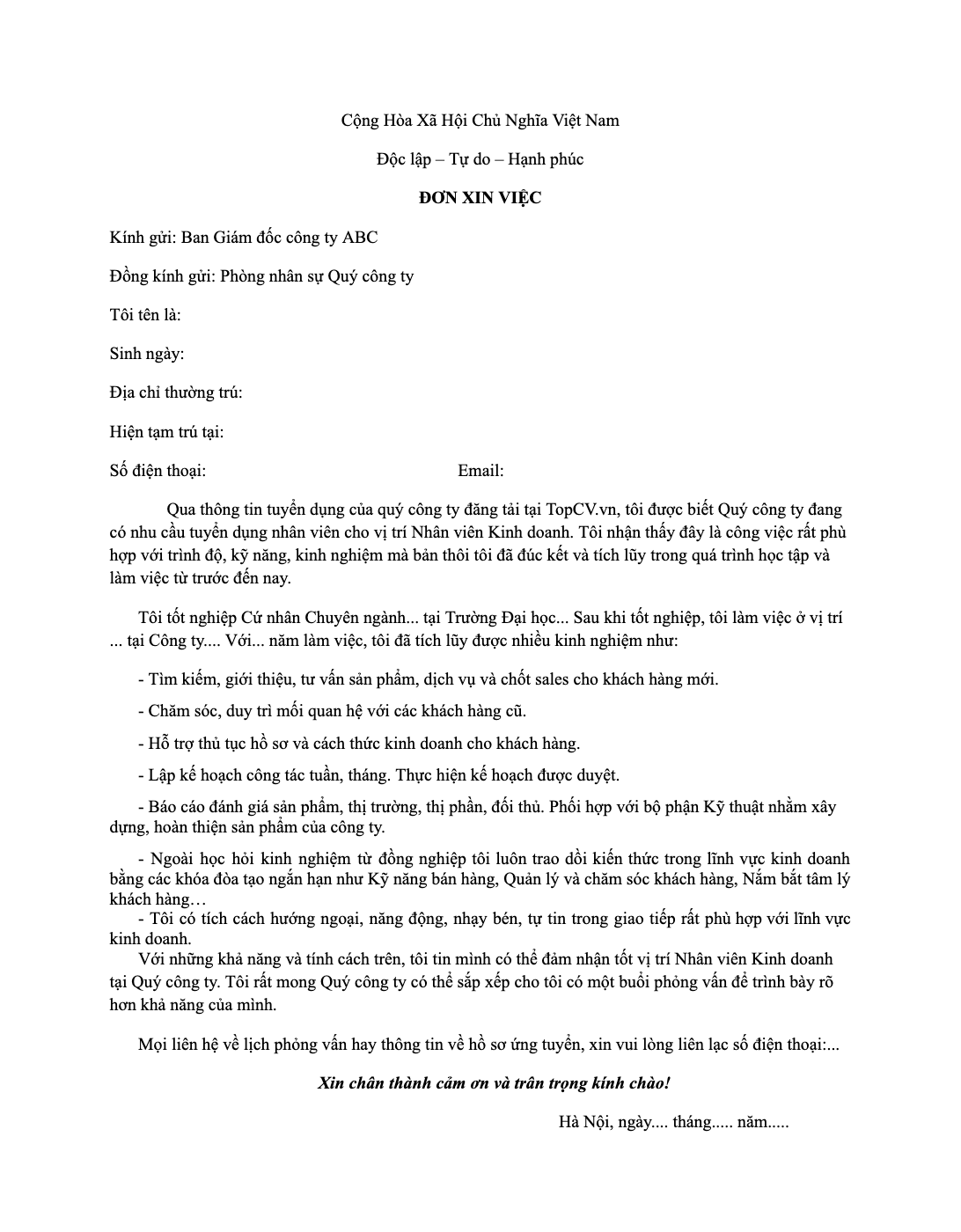
2.11 Sample Job Application for the Banking Sector
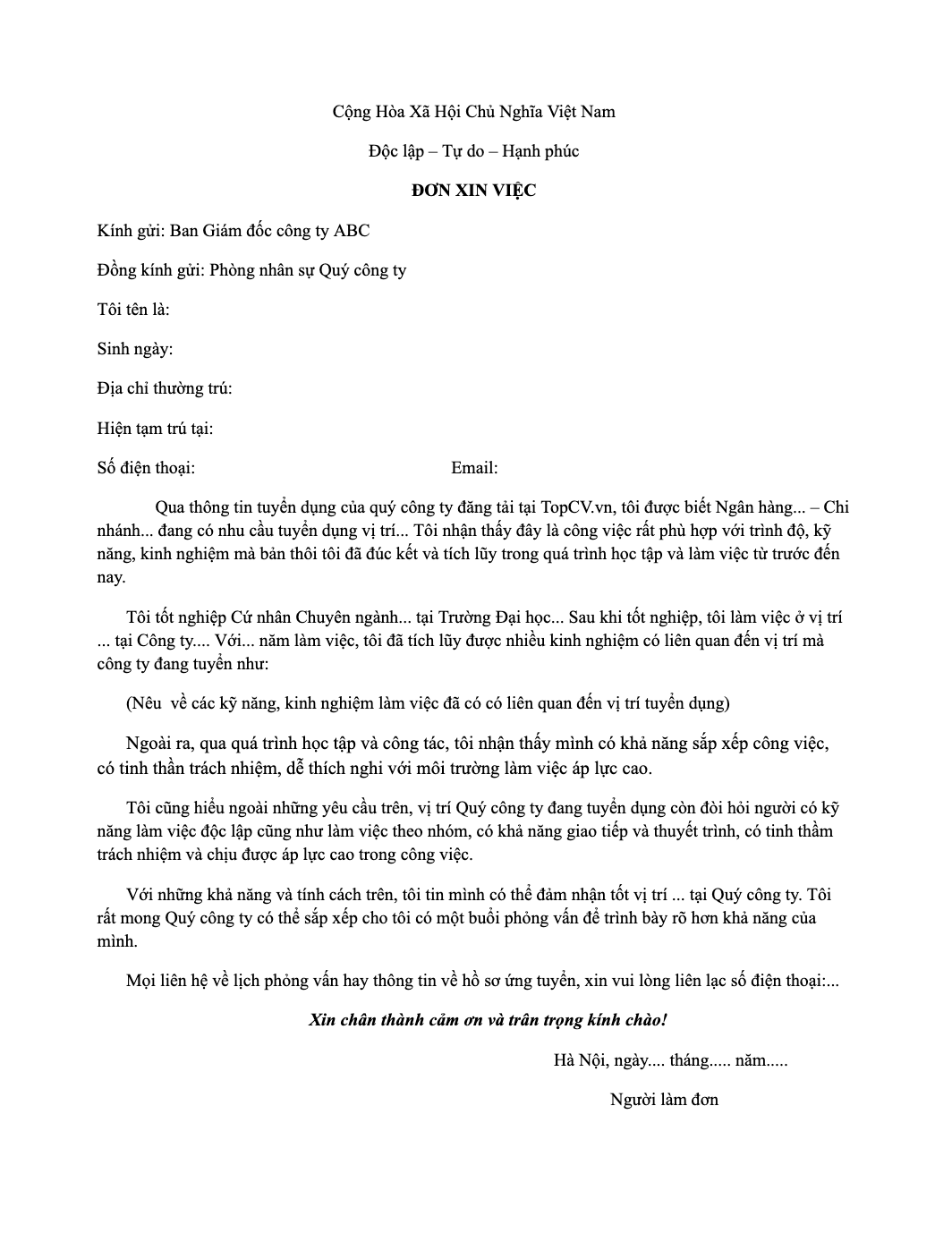
2.12 Sample Job Application for the Import-Export Sector
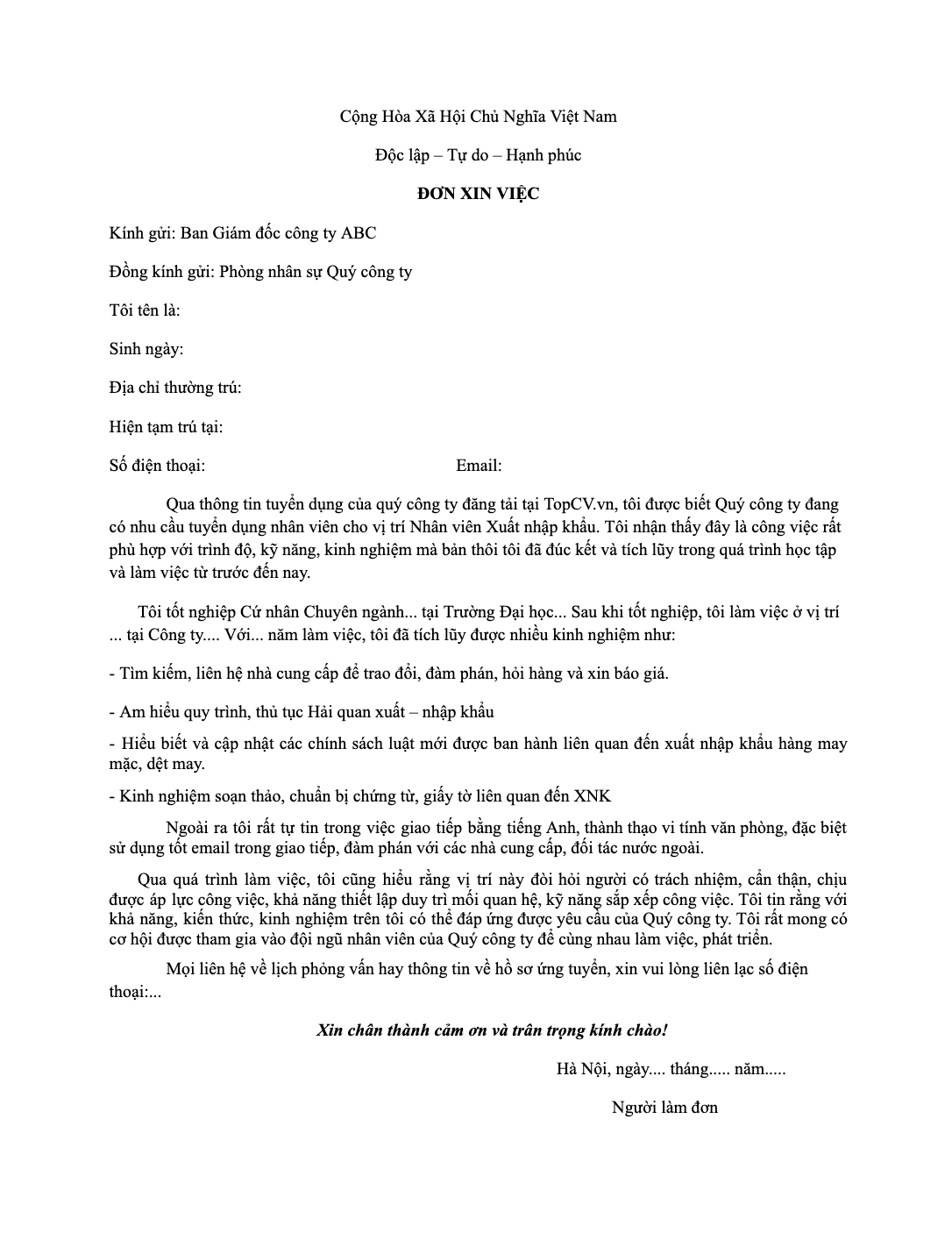
DOWNLOAD THE JOB APPLICATION FORM FOR THE IMPORT-EXPORT SECTOR HERE
2.13 Sample Job Application for a Worker
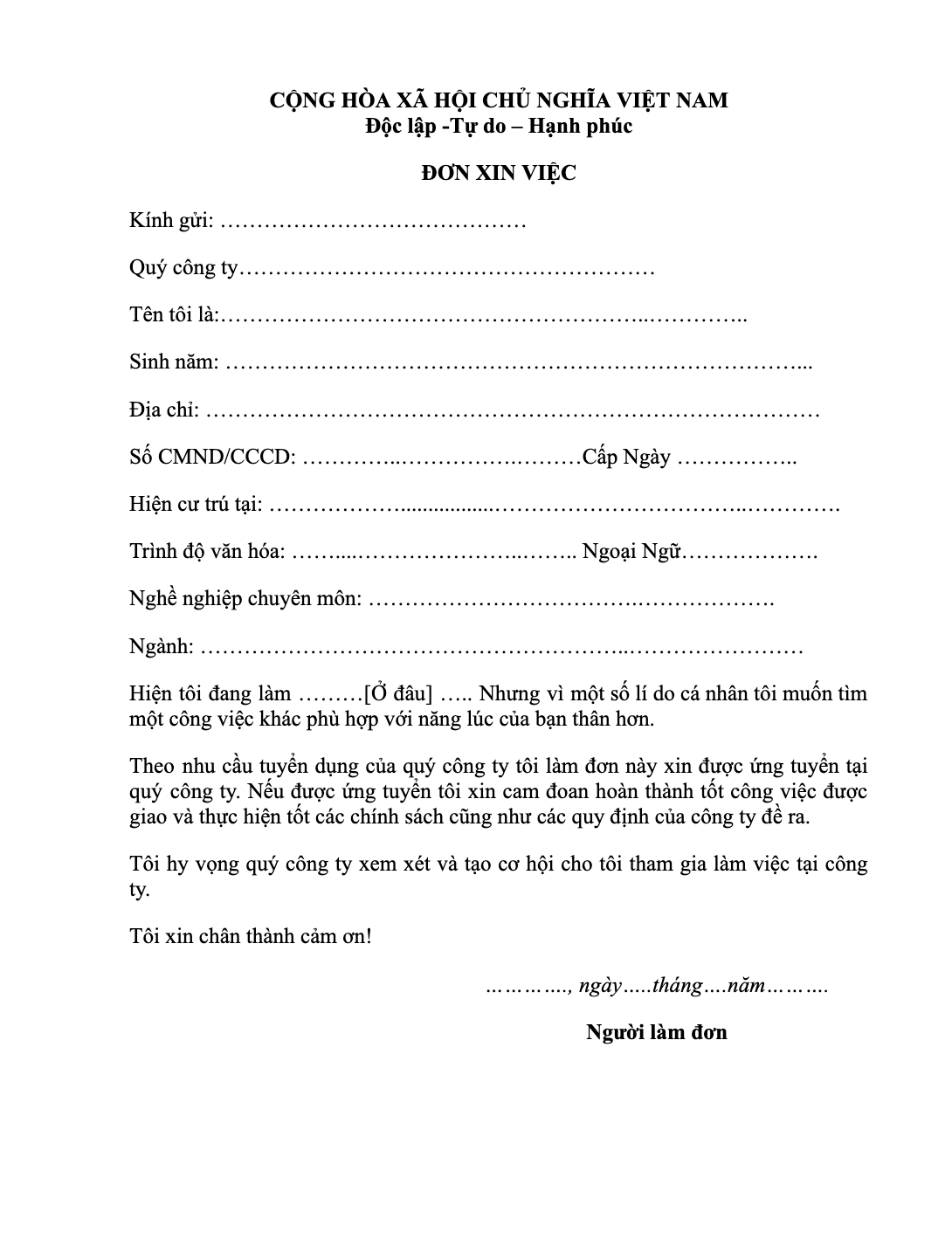
2.14 English Job Application Template for Various Industries
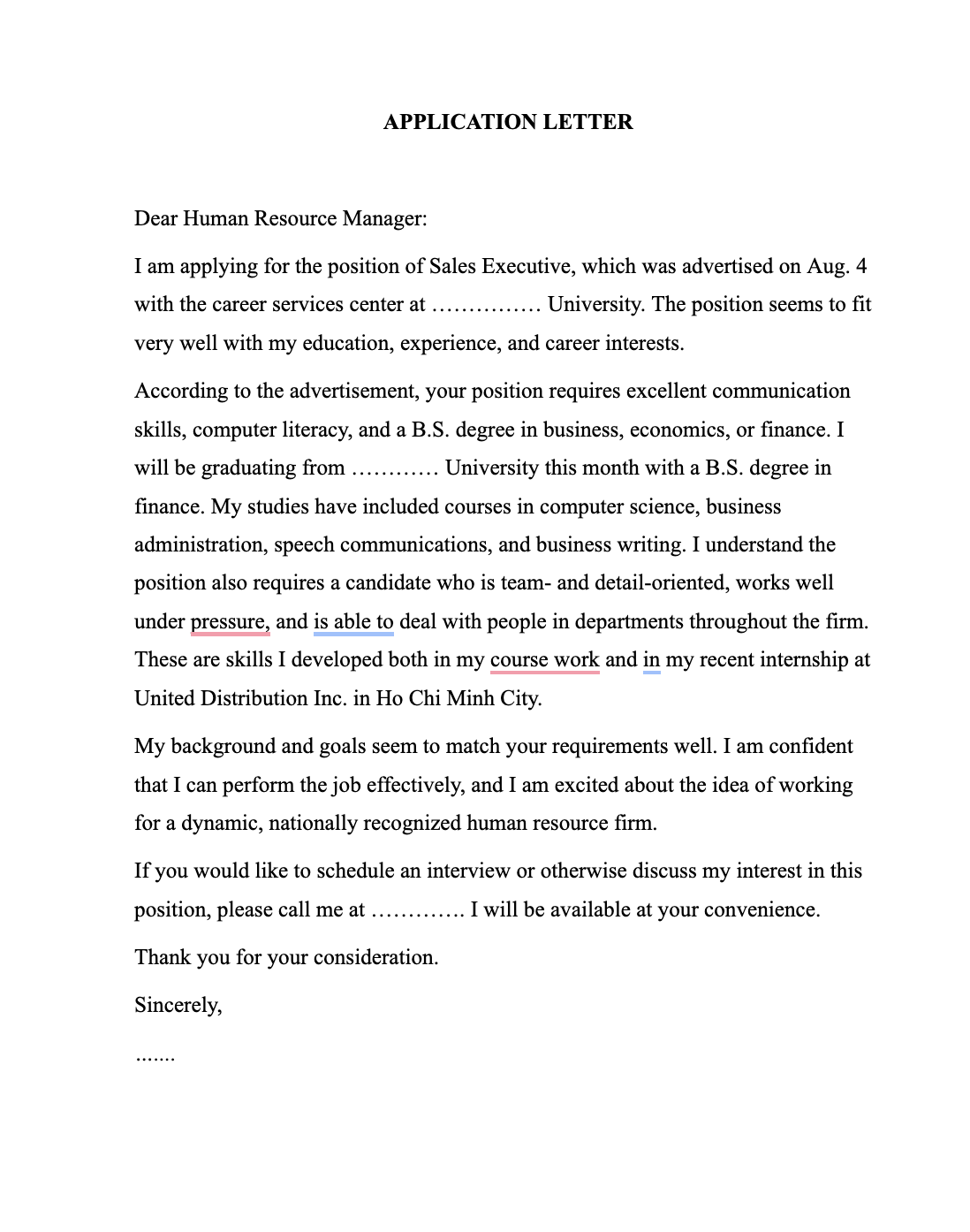
2.15. Job Application Template for Experienced Candidates
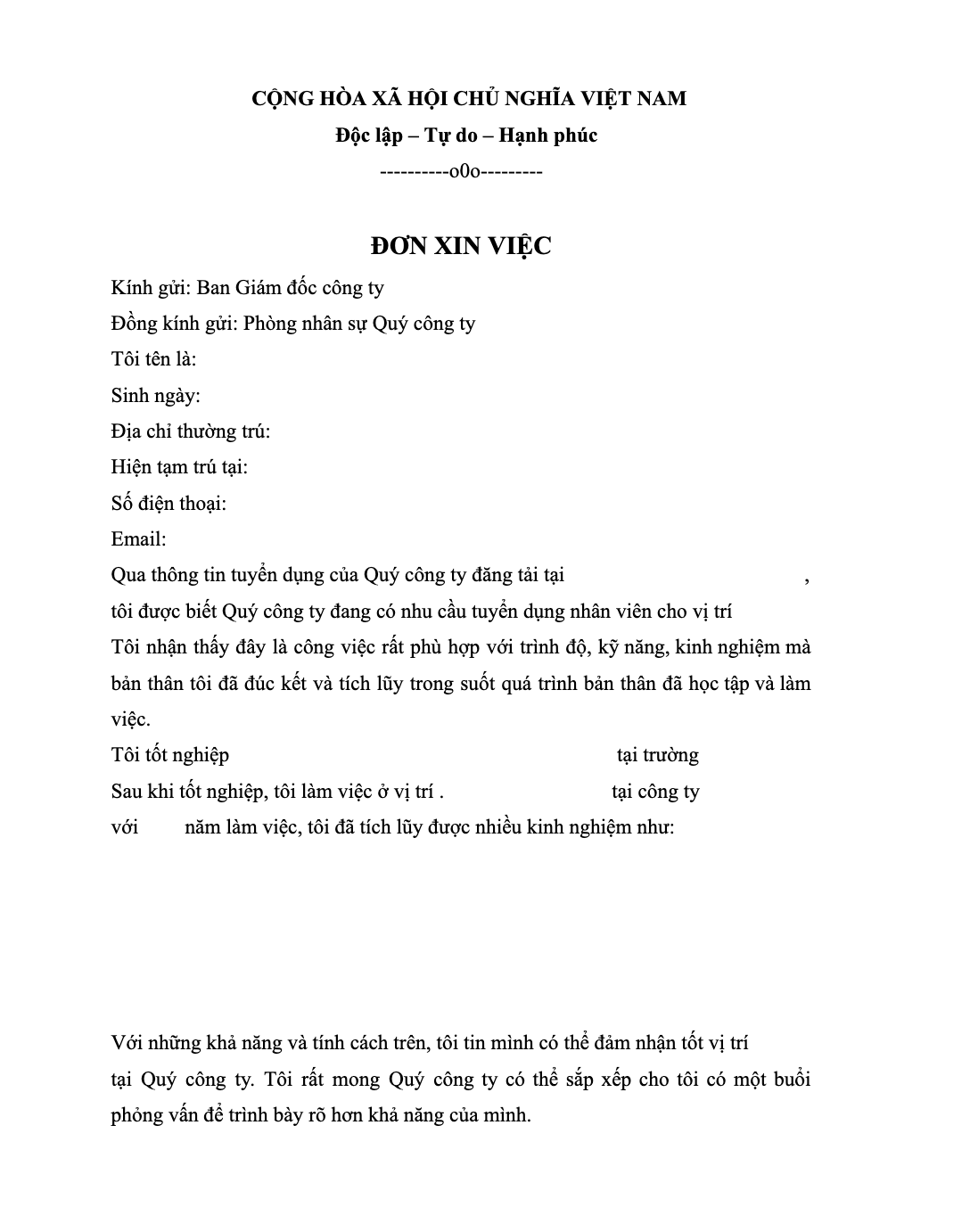
DOWNLOAD THE JOB APPLICATION FORM FOR EXPERIENCED CANDIDATES HERE
2.16. Job Application Template for Candidates with No Experience
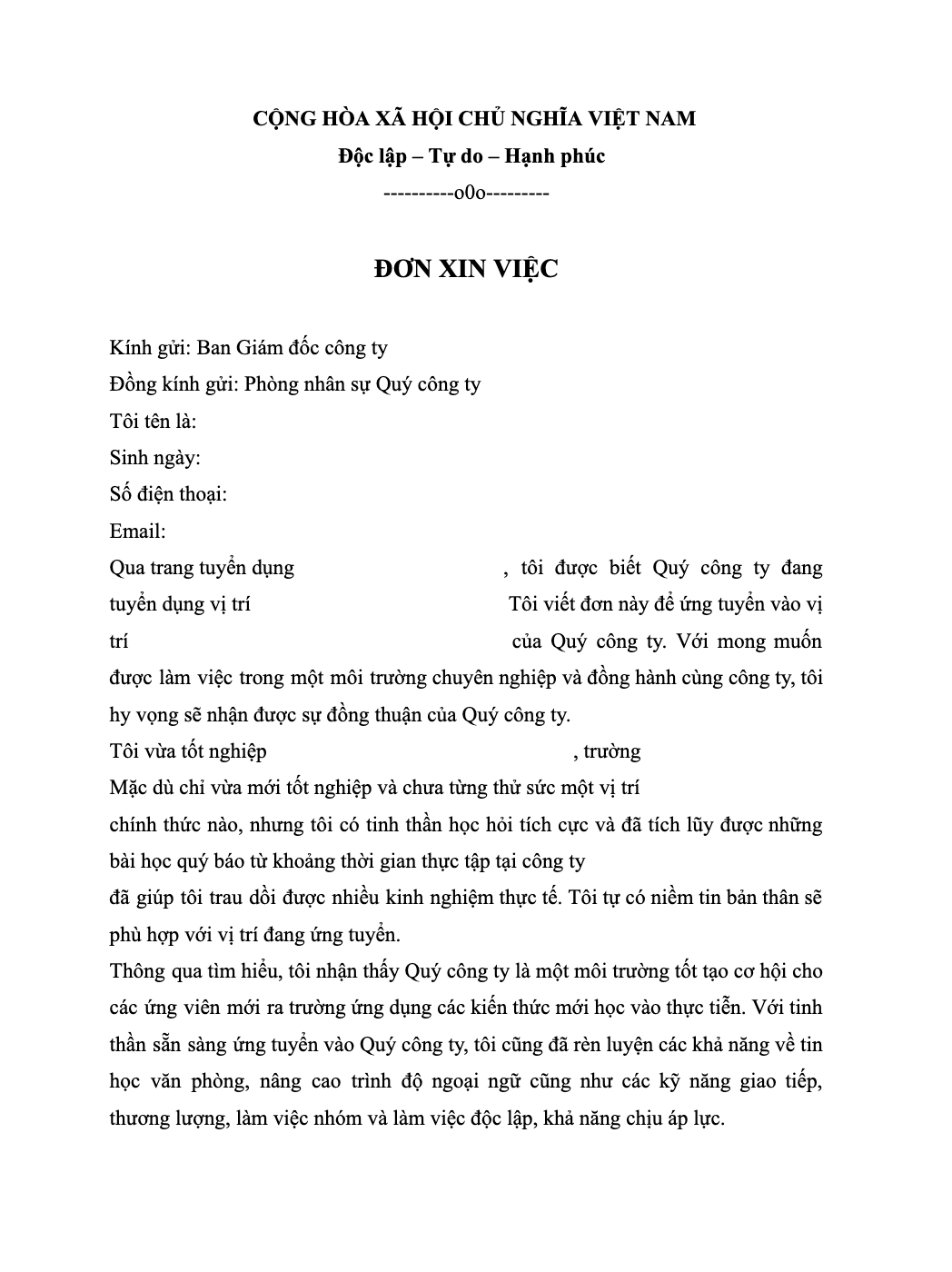
DOWNLOAD THE JOB APPLICATION TEMPLATE FOR CANDIDATES WITH NO EXPERIENCE HERE
2.17. Job Application Template for Receptionist Position with No Experience
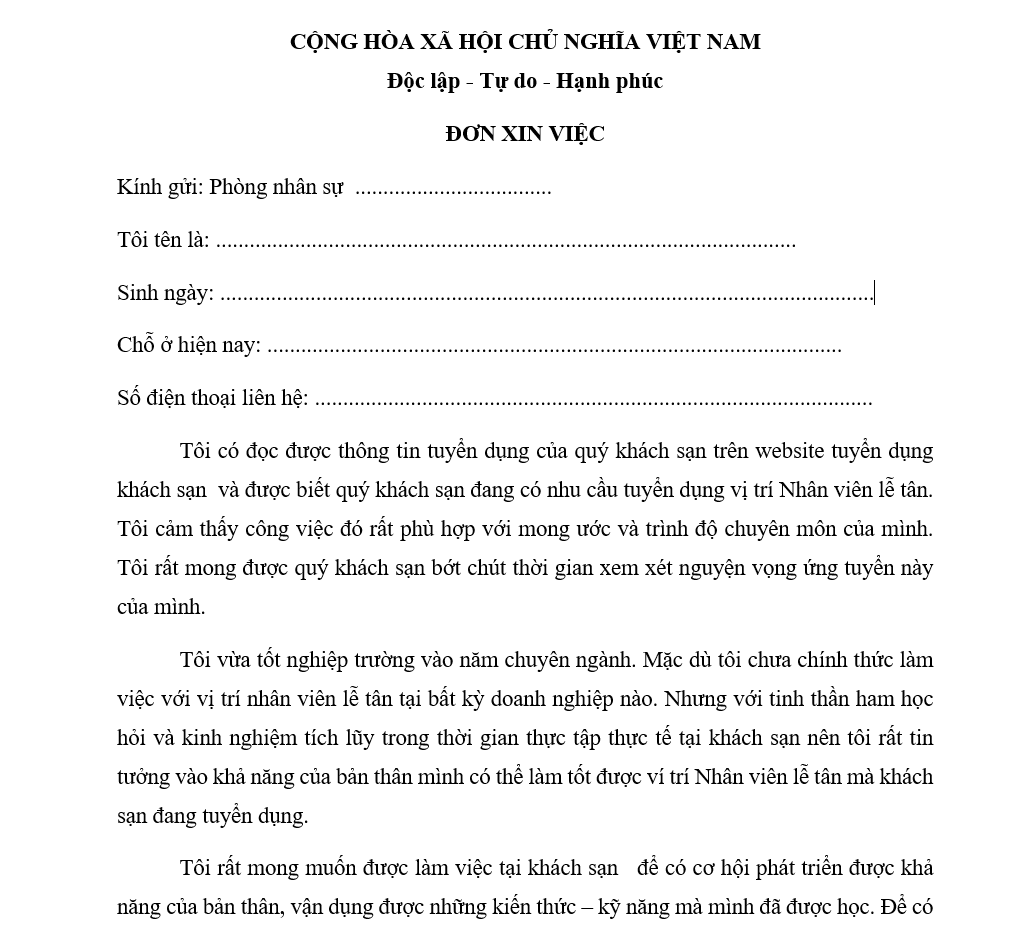
DOWNLOAD THE JOB APPLICATION TEMPLATE FOR HOTEL RECEPTIONIST POSITION HERE
3. Common Types of Job Applications
3.1. Job Application via Email
This is the most common form of job application in today’s digital age. Candidates draft their application and send it directly to the recruiter via email. Email applications are usually sent as the body of the email or as an attachment (typically a PDF or Word file).
When sending via email, candidates should pay attention to the subject line, use a polite greeting, and ensure the content is concise, clear, and professional.
3.2. Handwritten Job Application
A handwritten job application demonstrates sincerity and a special interest in the position. Although not as common as before, in some cases, especially for professions that require meticulousness and thoughtfulness, a handwritten application is still preferred. It can make a deeper impression and clearly show the candidate’s effort; however, it requires the writer to have neat, clear handwriting and no spelling errors.
3.3. Word Document Job Application
A Word document application is the most common format when candidates submit their job applications. This type allows applicants to edit and format the content as they wish before printing or emailing it. An application written in Microsoft Word will have a standard format, be easy to edit, and suitable for printing or sending as an email attachment. Notably, it allows candidates to easily adjust fonts and align paragraphs appropriately.
3.4. Job Application on Online Recruitment Sites
In addition to traditional methods, recruitment websites like VietnamWorks, TopCV, LinkedIn, and many other platforms now allow candidates to apply for jobs online. On these platforms, candidates can create an online profile, fill in their information, and attach their application directly within the recruitment site’s application. This is a convenient application method that helps candidates save time and easily track the status of their application.
4. Standard Structure of a Job Application Template
To ensure professionalism and completeness, a job application template should include the following basic sections:
4.1. Opening: Personal Information and Salutation
Personal Information: In the opening section, candidates need to provide their full personal information, including full name, address, phone number, and email. This information helps recruiters easily contact you when needed.
For example:
- Full Name: Nguyen Van A
- Address: 123 ABC Street, Hanoi City
- Phone Number: 0123456789
- Email: nguyenvana@example.com
Salutation: The salutation must be polite and accurate, usually “Dear” followed by the company name or the recruiter’s name, if known.
For example:
- Dear: XYZ Company Recruitment Team.
4.2. Body: Self-Introduction and Reason for Applying
This is the most important part of the job application, where you can show your interest in the position and explain why you are a suitable candidate.
Self-Introduction: Briefly introduce yourself, including your educational background, skills, and work experience relevant to the position.
For example: “My name is Nguyen Van A, and I graduated from the National Economics University with a major in Business Administration. I have 3 years of experience as a Sales Executive at ABC Company.”
Reason for Applying: Clearly state why you want to apply for this position and why you are interested in the company.
For example: “With my passion and experience in the business field, I wish to work at XYZ Company, where I can fully utilize my abilities and contribute to the company’s growth.”
4.3. Closing: Thank You and Commitment
The closing of the application should express gratitude to the recruiter and show your readiness for an interview.
Thank You: Offer a sincere thank you to the recruiter for taking the time to read your application.
For example:
“Thank you sincerely for taking the time to review my application.”
Commitment and desire for an interview: Show your readiness to participate in an interview and express your desire to work in the company’s environment.
Example:
“I look forward to the opportunity to discuss my qualifications in more detail during an interview. I hope to hear from your company soon.”
Signature and name: If sending by email, you can simply end the letter and type your name. If it’s a handwritten letter, you need to sign your name at the end.
Example: Nguyen Van A (Signature if handwritten)
5. Guide to Writing an Impressive Job Application Letter

5.1. Job Application via Email
Sending a job application via email is a common practice in modern recruitment. To make a good impression on recruiters, you should follow these principles:
Email Subject Line:
- The subject line should be clear and precise so recruiters can easily identify it. For example:
“Application for Marketing Staff position – Nguyen Van A”
“Applying for Accountant position – Nguyen Thi B” - Avoid vague or overly general subject lines like “Job Application”.
Email Salutation:
- Ensure the salutation is polite and professional. For example:
“Dear XYZ Company Hiring Team” or if you know the recipient’s name: “Dear Mr./Ms. [Recruiter’s Name]”.
Email Body:
In the email body, you should briefly introduce yourself, state your reason for applying, and mention skills relevant to the job.
- Introduce yourself: Name, position you are applying for, and a brief overview of your work experience.
- Reason for applying: Clearly state why you are interested in the company and this specific position.
- Conclusion and commitment: Express your gratitude and your desire for an opportunity to discuss further in an interview.
Closing the email:
- Thank you and contact information: “Thank you for taking the time to review my application. I look forward to your response and the opportunity to discuss this position further.”
- Signature: Simply type your name and contact information.
Attachments:
- Make sure you attach your CV and application letter (in PDF or Word format) to the email. Mention in the email body that you have attached your documents.
- Example: “I have attached my CV and application letter for your reference.”
5.2. Handwritten Application Letter
A handwritten application letter can make a strong impression on recruiters, especially in fields that require meticulousness and attention to detail. Here are the steps to guide you in writing a perfect handwritten application letter:
Paper and Pen:
- Use clean, white paper with no errors or smudges.
- Choose a fountain pen or ballpoint pen with black or dark blue ink. Ensure your handwriting is clear and legible.
Format:
- Opening: Write your personal information (full name, address, phone number, email) and a salutation starting with “Dear…” or “Hello…”.
- Body: Present your reason for applying, and the skills and experience you have that are relevant to the job.
- Closing: A sincere thank you and a desire for an interview opportunity. Don’t forget to sign your name below the closing.
Presentation:
- Write in straight lines, avoiding handwriting that is too large or too small. Ensure there are no spelling or grammatical errors.
- Each section of the letter (opening, body, closing) should be clear, easy to read, and not cluttered.
Signature:
- At the end of the letter, you need to sign your name below the conclusion to create a professional touch.
5.3. Word Application Letter
A Word application letter is the most common and convenient type, allowing you to easily edit and send it via email or print it for direct submission. The steps to write a Word application letter are:
Choose a suitable font:
- Use easy-to-read fonts like Arial, Times New Roman, or Calibri, with a font size of 12 for the body text.
- Section headings can be bolded to stand out, for example, “Introduction,” “Reason for Applying.”
Text Alignment:
- Justify the text on both sides, with a line spacing of 1.15 or 1.5 to ensure the letter is easy to read.
- Ensure all necessary sections are included: Introduction, reason for applying, skills and experience relevant to the job, and a closing with a thank you and a request for an interview.
Use short paragraphs:
- Each paragraph should only present one idea. Avoid making paragraphs too long to help the reader follow and understand easily.
Proofread carefully before sending:
- Carefully check for spelling and grammar errors before sending or printing. Ensure there are no minor mistakes that could cost you points with the recruiter.
Save and attach the file:
- Save the application letter as a Word or PDF file, then attach it to the email when applying.
5.4. Application Letters on Online Job Boards
Many online job boards now allow you to submit your application directly through their system. This is a convenient and popular method. Here are instructions for writing an application letter on job boards:
Create a profile on the job board:
- Before submitting your application, you need to create a candidate profile on the job board. Provide your personal information, educational background, work experience, and skills required for the job.
Fill out the online application form:
- Some job boards provide a pre-made application form; you just need to fill in the required fields. Ensure you fill it out completely and accurately, avoiding any omissions of important information.
Tailor the content accordingly:
- Some job boards allow you to upload a separate application letter or write one directly on the platform. Make sure you tailor the content to fit the company and the position you are applying for.
Track your application progress:
- After submitting your application, you can track its status through the job board to see the results and interview progress.
>>> Read more: Guide to Writing Career Objectives in a CV with Detailed Samples
6. Tips for Writing and Using Application Letter Templates
6.1. Choose the Appropriate Language and Style
Precise and formal language: Use precise, easy-to-understand language and avoid inappropriate words. An application letter is a formal document, so avoid overly colloquial or casual language.
- Example: “Dear Hiring Committee…” instead of “Hey guys, I’m…”
Coherent and clear writing style: Present your ideas clearly and coherently. Ensure each section of the letter is closely linked, so the reader doesn’t get sidetracked.
6.2. Focus on Relevant Strengths and Skills
Highlight key skills: Focus on the skills, experiences, or achievements you have that are relevant to the position you’re applying for. Don’t just list all your skills; select the most important ones that help you stand out from other candidates.
- Example: “With 5 years of experience in project management, I helped Company A complete projects on schedule and achieve results that exceeded expectations.”
Clearly state your suitability for the job: Explain why you are a suitable candidate for this position. This will help the recruiter understand why you are interested and how you can contribute to the company’s growth.
6.3. Be Concise and to the Point
Simple yet impressive: Ensure your application letter is not too long, as recruiters may not have much time to read all the details. Write concisely and to the point, but make sure it’s comprehensive.
- Example: “With 3 years of experience as a Marketing Executive at XYZ company, I developed strategies that helped increase revenue by 20% over the past year.”
Don’t ramble, avoid being long-winded: Ensure every sentence in the letter has a purpose and gets straight to the point. Avoid writing unnecessary sentences or repeating ideas.
6.4. Personalize the Content for Each Company and Position
Make your application letter special: Instead of using a generic application letter for every company, tailor the content to fit each company and position you are applying for. This will show your interest and effort in the application process.
- Example: “I am particularly interested in this position at ABC Company because I admire the values the company upholds, and I believe my project management skills will help me contribute to the company’s success.”
Show you’ve researched the company: Clearly state why you want to work at that company. This not only shows your interest but also helps you stand out from other candidates.
6.5. Check Carefully for Spelling and Grammar Errors
Spelling and grammar are important factors: Spelling or grammar mistakes can make recruiters feel you are careless and unprofessional. Before sending your application, take the time to proofread it and use a spell-checking tool if necessary.
Proofread to ensure accuracy: After completing your application, read it again to ensure the content is not only correct but also easy to understand and coherent.
6.6. Focus on the closing
End the application professionally: The closing of your application is very important, as it is your last chance to demonstrate your professionalism and attitude. Thank the recruiter for their time and consideration of your profile and express your desire for an interview.
- Example: “Thank you for considering my application. I look forward to the opportunity to discuss my skills and experience further in person.”
7. Mistakes to Avoid When Writing an Application Letter
7.1. Spelling and Grammar Mistakes
- The importance of spelling and grammar: Spelling or grammar mistakes can make recruiters feel you are careless and unprofessional. This can get you eliminated in the first round.
- How to avoid: Before sending your application, carefully check for spelling and grammar mistakes. You can use spell-checking tools like Grammarly or Microsoft Word to help detect and correct errors.
7.2. Writing an Overly Long Application
- A long and incoherent application will bore recruiters, and they won’t have the patience to read it all. Especially in a corporate environment, recruiters often have limited time to review profiles.
- How to avoid: Keep your application short, concise, and to the point. Only mention the most important points directly related to the job you are applying for.
7.3. Using Inappropriate Language
- Using incorrect or overly casual language can prevent you from making a good impression. This is especially important in industries that require a high degree of professionalism.
- How to avoid: Use formal, precise language and avoid rude or unprofessional words. Be careful to avoid abbreviations or slang unless it is part of the culture of the company you are applying to.
7.4. Not Customizing the Application for Each Company
- If you use a generic application template for all companies, recruiters will feel that you haven’t taken the time to research the company and the position you are applying for. This will reduce your chances of being hired.
- How to avoid: Customize your application for each specific company and position. Clearly state why you are interested in that company and why you are a suitable candidate for the job.
7.5. Not Checking Information Before Sending
- Failing to check information carefully can lead to serious errors such as the wrong company name, incorrect job title, or inaccurate personal information. This can get you eliminated in the first round.
- How to avoid: Before sending your application, make sure all personal information, the company name, the position you are applying for, and other details are correct. You can ask a friend or family member to proofread it to spot any errors.
7.6. Being Overly Confident or Overly Humble
- If you come across as too arrogant, recruiters will think you are not humble and may have difficulty working in a team. Conversely, if you are overly humble, recruiters may feel you lack confidence and are not capable enough for the job.
- How to avoid: Strike a balance between confidence and humility. Highlight your strengths without sounding arrogant. At the same time, show your willingness to learn and grow in the job.
7.7. Not Having a Clear Conclusion
- A vague or indecisive conclusion can make recruiters feel that you are not genuinely interested in the job or lack initiative.
- How to avoid: End your application with a thank you and clearly express your desire for an interview or further discussion about the position. Don’t forget to include your contact information so recruiters can easily reach you.
7.8. Overemphasizing “Me” Instead of “the Company”
- Some candidates focus too much on their own benefits without explaining how they can contribute to the company’s growth. Recruiters typically look for candidates who can bring value to the organization.
- How to avoid: Emphasize what you can bring to the company. Clearly present how you can contribute and help the company grow, rather than just focusing on what you want.
8. Frequently Asked Questions (FAQs) about Application Letters
Are application letters and CVs interchangeable?
No. A CV is a detailed list of your academic and work history (focusing on “What you have”), while a cover letter is a letter expressing your aspirations and suitability (focusing on “Why you should be chosen”). You need to send both to create a complete application package.
What is a reasonable length for a cover letter?
The ideal length is to fit on one A4 page (about 300 – 500 words). Recruiters spend very little time skimming, so write concisely, be succinct, and get straight to the value you can contribute to the business.
Should I use the same cover letter template for all companies?
You shouldn’t. This is a common mistake that gets applications rejected. Each company has its own culture and requirements, so you need to “personalize” your letter by mentioning the company’s name and explaining the specific reasons why you want to join that organization instead of another.
When should I use a handwritten cover letter instead of a typed one?
Use a handwritten letter when the recruiter specifically requests it in the job posting, or when applying for positions that require meticulousness and good handwriting (such as teachers, editors). If there are no special requirements, a typed letter (Word/PDF) is still the most professional and common choice.
Should I include my desired salary in the cover letter?
Only include it when the recruiter clearly requests it in the job posting. Otherwise, save this topic for the in-person interview. Mentioning a salary too early can cause you to lose negotiating leverage or be eliminated if the figure doesn’t fit their budget.
9. Conclusion
A well-crafted cover letter template is not just an administrative formality but also your “ticket” to standing out among hundreds of candidates. By combining the right template with personalized content, you can convincingly convey your dedication and professional competence to the recruiter.
Start your career journey with a professional application package today. We wish you the best in landing your dream job soon!




