


 13/05/2026
  352 views
Although the concept of the “E-Office” is relatively new, it has brought a breath of fresh air to the business market, especially after the negative impacts of COVID-19. Business managers are curious about what it is and why it has become a trend in this day and age. The answer can be found in this article by 1Office.
Mục lục
1. E-Office – The New Playground for Digital Businesses
In the 2020s, the world entered the peak era of information technology, artificial intelligence, and cloud computing. It’s even predicted that this is not the highest point of human technological conquest. In business, it’s even more crucial to be agile, adapt to the market, and apply technological advancements to lead in every field, making business operations faster and more flexible. Conversely, if your business is slow to adapt in both business and technology, it can easily be left behind. The global connectivity of the Internet, combined with the need to optimize processes and quickly resolve work-related issues, has culminated in comprehensive remote business management solutions. Among these, medium and large-sized enterprises are gradually implementing the E-Office. This is a positive sign, showing a significant transformation as traditional offices are modeled into electronic offices with all the functions and tasks of a business.
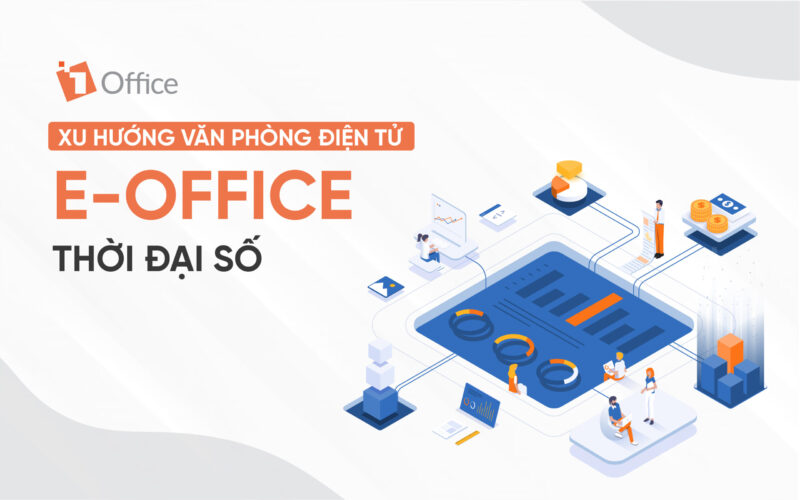
However, don’t confuse an E-Office with a website. While a website is where a business showcases what it offers to customers (contact forms, products, services, company introductions) with the main purpose of customer-business interaction, an E-Office facilitates interaction within the company. It represents the company’s assets (human resources, intellectual capital, departments, property, etc.) once they are modeled and digitized. In this context, the electronic office (or E-Office) is a form of remote business management. It is a software that fully integrates applications to serve the needs of management, work record processing, information exchange, internal operations, and the creation and management of documents, official letters, and reports, all with the aim of replacing and modernizing traditional information management methods.
With these advantages, the E-Office meets the remote management needs of business leaders during periods of social distancing due to pandemics, when employees work from home. Even after social distancing ends, this remains a popular trend because it satisfies the need to reduce operational costs, such as printing and paperwork management expenses. The E-Office helps businesses move towards a “paperless office”—a place where all documents and records are stored on the company’s internal system. In the long run, it supports the growth of a business with multiple satellite locations, all brought together and represented in a single space—the digital space.
2. The E-Office Model in the World and in Vietnam
No one can deny the benefits of digital transformation for businesses; it has elevated the current business model to a new level compared to traditional business. A traditional office is defined more by its physical space than as a comprehensive repository for all company information. The company’s file room may not even contain all the data you need, and figuring out where it’s stored and finding it quickly can be very time-consuming. This is when the need for an E-Office becomes apparent.
The E-Office emerged alongside the development of business digital transformation. It marks the shift from traditional, manual, paper-heavy management and face-to-face communication to online management for assigning tasks, working, and storing documents and records over a network. At a time when Industry 4.0 is developing rapidly, the E-Office is considered a strength for businesses to assert themselves as leaders in the digital transformation trend. Abroad, the E-Office appeared quite early (around 2011, when Industry 4.0 was first introduced at the Hannover Fair in Germany). Later, as digital transformation began to blossom in the Vietnamese market, pioneering businesses adopted a positive mindset, seeing the bright spots in building an E-Office—it needed to go hand-in-hand with the company’s digital transformation. In other words, during the digital transformation process, businesses have essentially “lifted and shifted” everything a traditional office has, digitizing and systematizing the data within the E-Office.
3. How is an E-Office Different from a Traditional Office?
The answer is that it is both different and not different from a traditional office. It’s not different in that an E-Office also has all the same departments as a regular business, achieved by personalizing each individual’s information on the system and organizing them into corresponding departments. The managers are still directors and department heads. Tasks are still assigned, managed, and monitored just as they would be in a traditional office. The difference that creates the advantage of an E-Office is its ability to accurately store and classify documents on a unified online platform (here referred to as the company’s internal network). Information about tasks and projects is updated quickly and accurately from top to bottom through announcements and documents, without wasting time disseminating information verbally from superiors to subordinates as in a traditional office.

The E-Office is even faster and more streamlined than a physical office, despite not lacking any business functions. From the system of departments to individuals within the company, it is even superior in managing and storing documents and records. In the near future, as information technology becomes a competitive advantage for businesses, a well-organized and systematic E-Office will certainly help increase the team’s productivity and work quality.
4. Benefits of the E-Office – Why Will It Become a Trend?
As a part of digital transformation, the e-office is inevitably becoming an essential trend for businesses in the digital age due to its undeniable benefits.
Minimize printing costs: With an e-office, documents and information are stored as files, sorted, and categorized into separate folders for easy retrieval. Users can easily search for information and read it online from anywhere (for example, 10 people in the Marketing department can read a document for an upcoming project instead of printing 10 different copies). Businesses no longer need to spend a lot on paper, ink, printers, and machine maintenance fees—a significant expense in traditional offices.
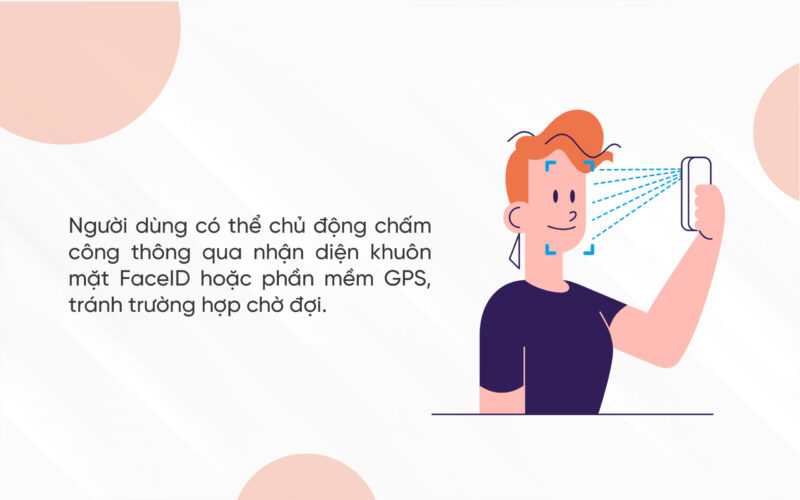
Save time: By modeling workflows and digitizing data, updates are always available in the E-Office. Tasks are performed scientifically and implemented through a logical system, leading to faster completion. This is especially effective with online timekeeping systems. Many supporting software applications allow users to clock in automatically via GPS (personal phones can access the system, reducing waiting time). This is very effective during social distancing, business trips, or remote work. Employees can also track their leave days and timekeeping records, which are always updated on the system.
Standardize business processes: For each department’s processes, paperwork, forms, and reports, there are specific standards. In an E-Office, businesses will build standard form templates corresponding to each department. Establishing business processes and then applying them to the e-office system is very important. Because when the process is set up correctly, tasks are performed according to a certain standard with defined steps. From one step to the next, users cannot skip steps or work carelessly without following the standard. This is because, understandably, these business processes, during standardization, will come with specific conditions. Users must meet all the conditions in one step to proceed to the next.
Standardizing business processes minimizes issues like bottlenecks that cause work backlogs and waste money and time. Additionally, with standardized processes, new employees won’t require extensive training—they just need to follow the specific processes on the E-Office and can quickly get up to speed.
From these advantages, the E-Office fully meets the requirements of businesses in the digital age: CONNECTED – SECURE – OPTIMIZED. Connected with complete information across departments and seamless workflows – Secure during the pandemic, with secure information and document storage – Optimized work productivity and reduced redundant costs. It has become a trend as leaders increasingly see the importance of digital transformation for their businesses, realizing the need to prioritize building a tech-enabled office as quickly as possible.
5. What do businesses need to implement an e-office?
The E-Office is becoming increasingly practical for digital businesses. They cannot stay out of the ‘vortex’ and need to quickly build an e-office to work faster and more effectively. However, just like building a house, leaders need to plan and prepare the ‘materials’ before presenting ideas to the company’s IT department or third-party vendors to create a blueprint.
Standardize paperwork and reporting systems: As analyzed, one of the advantages of an e-office is the standardization of business processes and paperwork. Businesses wanting to implement an E-Office need to standardize the documents and reports used internally for employees to follow.
Determine the appropriate e-office model: Each business operates differently with its own industry-specific characteristics and workforce. Determining a suitable e-office model for employees and the management needs of the supervisory board is an essential requirement. It’s like building a house: you determine the style you want to build and the type of house that suits your needs.
Plan, guide, and implement: This process requires a guide who truly understands the company’s corresponding e-office model to then instruct the staff. Necessary requirements and standards can be added during use. At this stage, you need to detail the implementation timeline, the deadline for building this e-office, who is responsible for which part, and how the parts will link together. This is a crucial step in the e-office construction process. Starting from the standardized data system, this is the actual ‘construction’ of an office.
Test, measure, and monitor: This is the part where you evaluate the results after implementing the e-office. From there, you can conclude whether it is suitable for long-term use. Is there anything that needs to be improved, changed, or removed? The acceptance process for an E-Office doesn’t just happen in a day, a week, or a month. It requires continuous feedback and comments throughout its use. Because as technology develops, some functions may become limited or obsolete. The role of the E-Office is to always update with the best and most superior features for the user’s business and the current era.
Today, businesses need to keep up with the business transformation trend to avoid falling behind and to stay in sync with current trends. The E-Office is an optimal solution that should be explored and quickly adopted in today’s digital age. Through this article, 1Office hopes to share another perspective on the e-office with business leaders to work and grow together.
















