


 12/05/2026
  345 views
In today’s fiercely competitive era, finding and recruiting talent plays an extremely important role in the success of every business. An effective interview process is the key to helping businesses attract the best and most suitable candidates for the position. Let’s follow along with 1Office in the article below!
Mục lục
1. An effective and optimized 9-step recruitment interview process
The recruitment interview process is a series of steps involving interaction with candidates to determine their capabilities, evaluate them, and find the right person for the job. Each business will have a different recruitment process, but it usually includes the following steps:
Step 1: Determine recruitment needs

This is the most important step in the recruitment process because it determines the organization’s actual needs. To carry out this step effectively, the organization needs to perform several activities:
- Assess existing job positions within the organization and determine if there is a need to expand or create new job positions.
- Evaluate the organization’s development trends to forecast future recruitment needs.
- Interact with other departments in the organization to clearly understand their needs and how they affect recruitment demands.
- Analyze and identify the necessary skills, experience, and personal qualities for each job position.
- Evaluate the existing human resources within the organization to see if they can be reallocated or if their work performance can be improved.
This step helps the organization clearly understand its specific needs and define recruitment goals in a clear, purposeful manner. This, in turn, shapes the important factors in the recruitment interview process, such as the number of employees to hire, specific job positions, and required skills.
Step 2: Build a recruitment plan
Building a recruitment plan is a crucial part of the recruitment process as it details the activities and resources needed to carry out the process effectively. Below are some factors to analyze and determine during this stage:

- Define clear recruitment goals: It is necessary to clearly define the number and type of personnel to be recruited, along with the skill and experience requirements for each position.
- Determine financial and human resources: You must ensure that there are sufficient financial and human resources to carry out the recruitment process effectively. This includes the recruitment budget, the number of staff involved in the process, and other resources such as supporting tools and software.
- Identify recruitment channels: You must identify suitable recruitment channels to reach the target candidate audience. This may include using job boards, social media, industry events, or partnering with recruitment agencies.
- Create a recruitment schedule: A specific schedule for the steps and timing of each activity in the recruitment process needs to be established. This helps ensure that everyone involved is aware of and adheres to the set schedule.
- Define evaluation criteria: It is necessary to clearly define the criteria for evaluating and selecting candidates, including skills, experience, personality, and suitability for the job position.
- Develop a communication and marketing plan: To attract candidates, an effective communication and marketing plan needs to be developed. This includes creating engaging and creative content to promote the job position and the company’s brand.
By building a detailed and solid recruitment plan, businesses can execute the recruitment process effectively and optimally, while ensuring they attract and select the most suitable candidates for the job.
Step 3: Draft the job description
Drafting the job description (JD) is a crucial step in the recruitment process because it provides detailed and clear information about the position to be filled. A complete job description will include the following information:

Detailed job description: The job description must detail the tasks, responsibilities, and role of the position, helping candidates clearly understand what is expected of them in this role.
Skill and experience requirements: It must clearly define the necessary skills and desired level of experience from candidates, with the goal of filtering out unsuitable applicants and focusing on those with the most relevant abilities and experience.
Information about the work environment: The job description should also provide information about the work environment, organizational culture, and job benefits to attract candidates and help them understand the workplace they would be joining.
Terms and conditions of employment: In addition to describing duties and responsibilities, the job description should also provide detailed information about the terms and conditions of employment, such as salary, insurance benefits, and company policies.
The job description needs to be updated periodically to reflect changes in job requirements and business needs. It also needs to be flexible enough to be adjusted based on feedback from the recruitment process and actual work, thereby helping candidates better understand the job position, work environment, and the company’s expectations.
Step 4: Search for candidates
Businesses need to identify recruitment channels suitable for the job position and target candidate audience. These channels can include recruitment websites like TopCV, VietNamWorks,… social media platforms like LinkedIn, Facebook, Twitter, recruitment events, as well as partnerships with recruitment agencies.

Relationships and networks are a crucial part of sourcing candidates. Businesses can leverage the networks of current employees, former employees, partners, or industry experts to reach potential candidates.
After each candidate sourcing campaign, managers need to evaluate and measure the performance of recruitment channels to understand their effectiveness and find ways to optimize the sourcing process in the future.
Step 5: Screening Resumes

Before starting to screen resumes, it’s necessary to clearly define the essential criteria for the job position, including skills, education level, work experience, and other factors related to the specific job. One of the important points when screening resumes is to carefully review the candidate’s skills and experience. It’s essential to ensure that the candidate’s resume accurately reflects their abilities and experience relevant to the job position.
By conducting the resume screening process thoroughly and effectively, businesses can focus on selecting the most suitable candidates for the job position and minimize the time and cost of the recruitment process.
Step 6: Interviewing Candidates
Interviewing candidates is one of the most important steps in the recruitment process, as it provides an opportunity to directly assess the candidate’s skills, experience, and suitability for the job position. Before conducting an interview, recruiters need to prepare carefully by reading and understanding the candidate’s resume, developing appropriate interview questions, and defining specific objectives for the interview.

There are many different types of interviews, such as individual interviews, group interviews, phone interviews, video interviews, etc. Typically, businesses will organize one of the following three interview formats:
- Screening interview: Conducted in the form of a phone call to the candidate.
- In-person interview: The candidate will come to the company’s office to interview with the specialized department and the recruitment department.
- In-depth interview: The candidate will be directly interviewed by the head of the department after passing the two rounds above.
During the interview process, the recruiter needs to take notes of the candidate’s answers and evaluate them based on the pre-established criteria. This helps the business easily compare and select the most suitable candidate after all interviews are concluded.
Step 7: Evaluating Candidates

After completing the interviews, the recruiter needs to thoroughly analyze and evaluate the information and data collected from the candidates to get a comprehensive and detailed view of each one. It is necessary to compare candidates against each other based on pre-established criteria such as skills, experience, personality, and suitability for the job position. This comparison helps the recruiter better understand the strengths and weaknesses of each candidate.
Candidate evaluation must be conducted fairly and objectively, based on important and clear criteria. Subjective assessments based on unclear standards or those that do not accurately reflect the candidate’s abilities and experience should be avoided.
Step 8: Sending the Job Offer Letter
The job offer letter must be drafted accurately and professionally as it marks the final step and the beginning of the candidate’s integration into the company.
A job offer letter template should provide specific information such as the job title, salary, start date, and terms and conditions related to employment. It should also provide detailed information about the next steps in the integration process, such as work time and location, the onboarding process, and other relevant information.
Step 9: Onboarding

Onboarding is the process of bringing a new hire into the organization and helping them integrate and work effectively from day one. Before the new hire starts, a detailed and precise onboarding plan must be prepared. This plan should include information about the work environment, procedures, contact persons, and necessary documents for the integration process.
The onboarding process begins by welcoming the new hire and introducing them to members of the organization, including managers, colleagues, and other departments. This helps create a welcoming and comfortable environment for the new hire.
Onboarding also includes providing necessary information about the organization, the job position, and the company’s rules and policies. Additionally, training and guidance on the specific tasks the hire will perform must be provided.
2. Why do businesses need to build an interview process?

The interview process plays a crucial role in effective personnel recruitment for businesses. Building a structured interview process brings many benefits, such as:
- Ensures consistency and objectivity: The interview process helps ensure that all candidates are evaluated fairly and consistently based on the same criteria.
- Improves recruitment efficiency: The interview process helps businesses save time and resources in recruitment by eliminating unsuitable candidates from the beginning.
- Recruits suitable candidates: An effective interview process helps businesses accurately assess the capabilities and skills of candidates to select the most suitable one for the position.
- Enhances corporate image: A professional interview process helps enhance the company’s image in the eyes of candidates, creating a good impression and attracting potential candidates.
Therefore, building a structured and effective interview process is an extremely important step in successfully recruiting personnel for a business.
3. Notes for a recruitment interview process
Below are some notes to help you conduct an effective and professional recruitment interview process:
- Provide detailed and complete interview information to candidates: Including time, location, interviewer, dress code requirements, etc. This helps candidates prepare better for the interview and demonstrates the company’s professionalism.
- Create a comfortable and uninterrupted interview environment: Choose a suitable interview location, ensuring it is quiet and private. Prepare all necessary equipment. This helps candidates feel more comfortable and confident, allowing them to present themselves at their best.
- Schedule reminders for all interview participants: Send reminder emails or messages to candidates and interviewers about the interview time and location. This helps ensure the interview takes place on time and smoothly.
- Listen and carefully note down important information about the candidate, ask clear, specific, and relevant questions for the position, and avoid vague, difficult-to-answer, or discriminatory questions.
4. Comprehensive Recruitment Management Solution – 1Office HRM
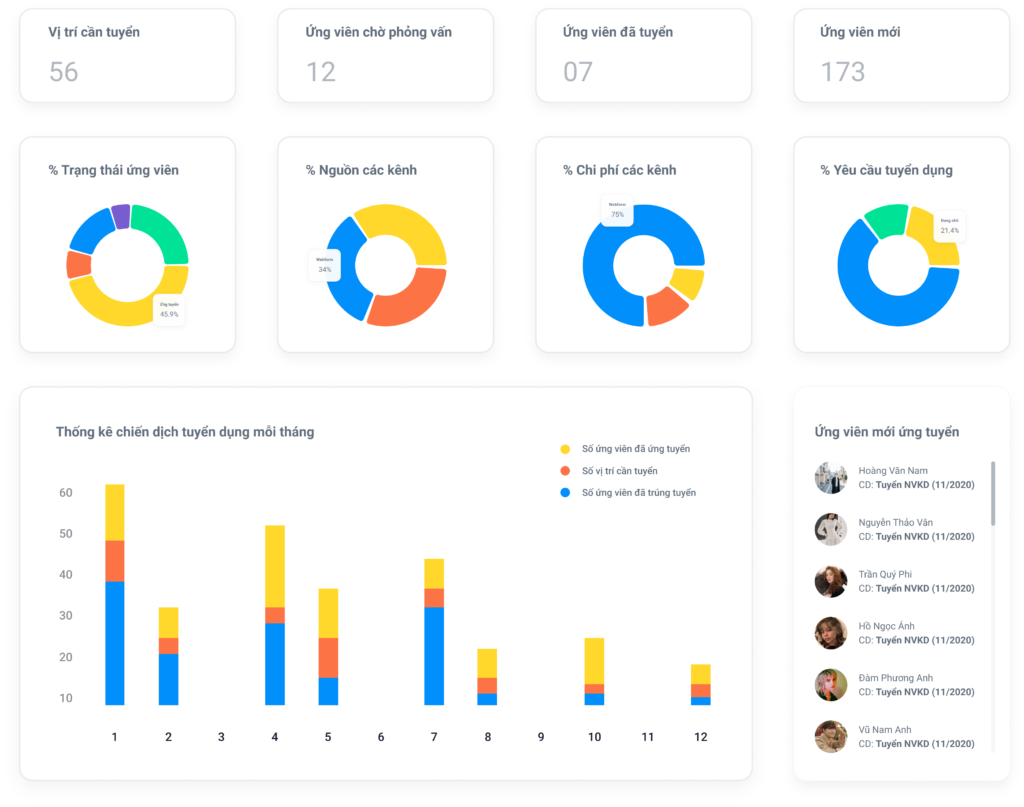
An effective personnel interview process not only leaves a good impression on candidates but also increases the company’s recruitment opportunities. 1Office HRM is a comprehensive software solution for recruitment, helping businesses:
- Automate the personnel interview process from screening resumes, scheduling interviews, to evaluating candidates.
- Manage candidate profiles securely and systematically, making them easy to search and access when needed.
- Provide reports to track recruitment progress for each position, helping businesses evaluate the effectiveness of their recruitment process.
With 1Office HRM, businesses can easily conduct an effective and professional interview process, recruit suitable employees, and enhance recruitment efficiency. Contact 1Office now for a consultation and a free trial of the comprehensive recruitment management solution:
- Hotline: 083 483 8888
- Facebook: https://www.facebook.com/1officevn/
- Youtube: https://www.youtube.com/@1office-chuyendoisodn
















