


 12/05/2026
  301 views
Nowadays, electronic labor contracts are gradually becoming a popular form of agreement at Vietnamese businesses. Compared to paper contracts, electronic contracts offer many advantages for both employees and employers. So, what is an electronic labor contract? What are the characteristics and legal validity of this type of contract? Let’s find out with 1Office in this article.
Mục lục
- 1. What is an electronic labor contract?
- 2. Characteristics of Electronic Employment Contracts
- 3. Legal validity of electronic labor contracts
- 4. Conditions for a lawful electronic labor contract
- 5. Pros and Cons of Electronic Labor Contracts
- 6. Considerations When Concluding Electronic Employment Contracts
- 7. Conclusion
1. What is an electronic labor contract?
| A labor contract is an agreement between an employee and an employer regarding a paid job, salary, working conditions, and the rights and obligations of each party in the labor relationship. A labor contract concluded via electronic means in the form of a data message, in accordance with the law on electronic transactions, has the same validity as a written labor contract.
According to Articles 13 and 14 of the 2019 Labor Code |
Thus, an electronic employment contract is a type of employment contract concluded through electronic means, having the same legal validity as a paper-based employment contract.
Using electronic employment contracts helps managers save time, reduce paperwork, and increase convenience in the human resource management process. However, businesses also need to comply with relevant legal regulations to ensure legality and transparency in labor transactions.
2. Characteristics of Electronic Employment Contracts
| 1. Electronic labor contract signing process | Exchanging data messages on digital signature and electronic contract software is the most common form of entering into an electronic labor contract. Specifically, the process for signing an electronic labor contract is as follows:
|
| 2. Legal validity of electronic labor contracts | The legal validity of electronic labor contracts is stipulated in Article 14 of the 2019 Labor Code.
An electronic labor contract has the same legal validity as a written labor contract and complies with the laws on electronic transactions. |
| 3. Parties with authority to enter into the contract | The parties with the authority to enter into an electronic labor contract are the employee and the employer, as detailed in Article 18 of the 2019 Labor Code.
In this regard, an employee can enter into multiple labor contracts but must ensure full compliance with the contents agreed upon in the contracts. |
| 4. Conditions for ensuring legality | An electronic labor contract is considered legal when it fully meets the conditions for electronic documents and the use of digital signatures according to Article 13 of the 2015 Law on Electronic Transactions.
The content of a data message is considered intact if its content has not been altered since its initial creation, except for formal changes that occur during the process of sending, storing, or displaying the data message. |
| 5. Classification of electronic labor contracts | Similar to written labor contracts, there are currently 2 types of electronic labor contracts: fixed-term labor contracts and indefinite-term labor contracts. |
3. Legal validity of electronic labor contracts
The legal validity of electronic labor contracts is stipulated in Article 14 of the 2019 Labor Code. Accordingly, an electronic labor contract concluded via electronic means in the form of a data message, as prescribed by the law on electronic transactions, has the same validity as a written labor contract.

Thus, an electronic labor contract has the same legal validity as a paper-based written labor contract and is protected by labor law. The parties to an electronic labor contract have the same rights and obligations as those to a paper-based written labor contract.
For an electronic labor contract to be legally valid, it must meet the following conditions:
- It must be concluded between the employee and the employer.
- It must have the digital signature or other form of electronic authentication of the signing parties.
- The content of the contract must not be contrary to the law.
4. Conditions for a lawful electronic labor contract
In transactions, if the employee and the employer choose to sign a contract via electronic means, they must fully comply with the regulations on electronic documents and digital signatures.

Pursuant to Article 13 of the 2005 Law on Electronic Transactions, which regulates data messages having the same validity as originals, as follows:
| A data message is as valid as an original document when it meets the following conditions:
1. The integrity of the data message’s content is maintained from the moment it was first generated as a complete data message. The content of a data message is considered intact if that content has not been altered, except for changes in format that arise during the process of sending, storing, or displaying the data message; 2. The content of the data message is accessible and usable in its complete form when necessary. |
Pursuant to Clause 6, Article 3 of Decree 130/2018/ND-CP on digital signatures and digital signature certification services:
| A digital signature is a form of electronic signature created by transforming a data message using an asymmetric cryptography system, whereby the recipient of the original data message and the signer’s public key can accurately determine:
a) The aforementioned transformation was created using the exact private key that corresponds to the public key in the same key pair; b) The integrity of the data message’s content since the aforementioned transformation was performed. |
Therefore, for an electronic labor contract to be legally valid, the integrity of the data message must be ensured, and the use of digital signatures must comply with conditions regarding message transformation and maintaining content integrity.
5. Pros and Cons of Electronic Labor Contracts

5.1. Advantages of Electronic Labor Contracts
- Saves time and costs: The online signing process eliminates the need for in-person meetings, saving time and expenses for both employees and employers.
- Convenient signing, storage, and management: All contracts are managed online on the system, making it easy to retrieve and manage information.
- Enhanced security: All types of electronic labor contracts are encrypted and stored on a secure system, helping all parties ensure the confidentiality of contract information.
- Increased transparency and accessibility: Storing contracts in electronic format enhances transparency and makes information easier to retrieve.
5.2. Disadvantages of Electronic Labor Contracts
- Requires IT knowledge: To sign and use electronic labor contracts, both employees and employers need to be familiar with information technology.
- Reliance on trust: Since electronic labor contracts are signed and stored online, a level of trust is required between the participating parties.
- Technical risks: There are potential technical risks, such as hacker attacks, data loss, etc.
5.3. Comparison: Pros and Cons of Electronic vs. Paper Labor Contracts
| Electronic Labor Contract | Written Labor Contract | |
| Signing Process | The electronic labor contract signing process is fast, streamlined, online, and requires no in-person meetings. | The signing process is cumbersome, complex, and requires all parties to meet in person to sign. |
| Signing Method | Sign online, remotely, anytime, anywhere, on any device from computers to phones. Supports submitting multiple contracts for signing at once. | Requires direct, manual signing on paper contracts, and each contract must be signed individually. |
| Signature Type | Uses digital signatures | Manual signatures |
| Classification & Storage | Classified, stored, and managed online, making information retrieval convenient. | Must be stored as hard copies, making information retrieval difficult. |
| Security & Integrity | Can be encrypted and stored on secure systems. | Prone to forgery and unauthorized changes to the contract content. |
| Cost | Saves time and money for both employees and employers. | Can be costly in terms of time and expenses for travel, printing, and storage. |
Electronic employment contracts are a new form of concluding employment agreements, offering many benefits to both employees and employers. However, it’s important to note the advantages and disadvantages of electronic employment contracts to use them effectively and ensure the legal rights and interests of all contracting parties.
6. Considerations When Concluding Electronic Employment Contracts
To ensure the legal rights and interests of the contracting parties, employees and employers should consider the following points when concluding a contract:

6.1. Verifying Digital Certificates on Electronic Employment Contracts
A digital certificate is a type of electronic signature issued by a certification authority. A digital certificate has the same legal validity as a handwritten signature and is used to verify the signer’s identity and the integrity of the data message.
When concluding an electronic employment contract, the parties need to verify each other’s digital certificates to ensure that the person signing the contract is authorized and that the contract’s content has not been altered after signing. The method for verifying a digital certificate is as follows:
- Access the website of the certification authority.
- Enter the digital certificate number of the contracting party.
- Check the contracting party’s information on the website.
6.2. Using Electronic Signatures in Contract Signing
An electronic signature is a legally recognized method of electronic authentication with the same legal validity as a handwritten signature. Therefore, when concluding an electronic employment contract, the parties must use electronic signatures to confirm the contract signing. Electronic signatures can be created using electronic signature software such as: 1Office, FPT, Viettel, VNPT, etc.
6.3. Checking the Integrity of the Electronic Employment Contract
After signing the electronic employment contract, the parties need to check the integrity of the contract to ensure that its content has not been altered after signing. Adhering to the above considerations will help the parties to an electronic employment contract protect their legal rights and interests.
6.4. Investing in Technology Infrastructure and Human Resource Training
To use electronic employment contracts effectively, businesses need to invest in technology infrastructure such as computers, internet networks, electronic employment contract management software, etc. At the same time, it is necessary to train human resources who understand electronic employment contracts, including employees, employers, and management and HR staff.
6.5. Choosing a Provider that Suits the Business’s Needs
When choosing an electronic employment contract service provider, businesses should consider the following factors:
- The provider’s reputation in the market and whether they are trusted by many businesses.
- The safety and security of the electronic employment contract’s information, preventing theft, forgery, etc.
- Suitability for the business’s needs, including features, utilities, pricing, etc.
7. Conclusion
The above is all the information businesses need to know about electronic employment contracts, along with regulations on their legal validity and security conditions. In the current era of digital transformation, digital signature and electronic contract software are gradually becoming the preferred method for many businesses, replacing traditional paper contracts.
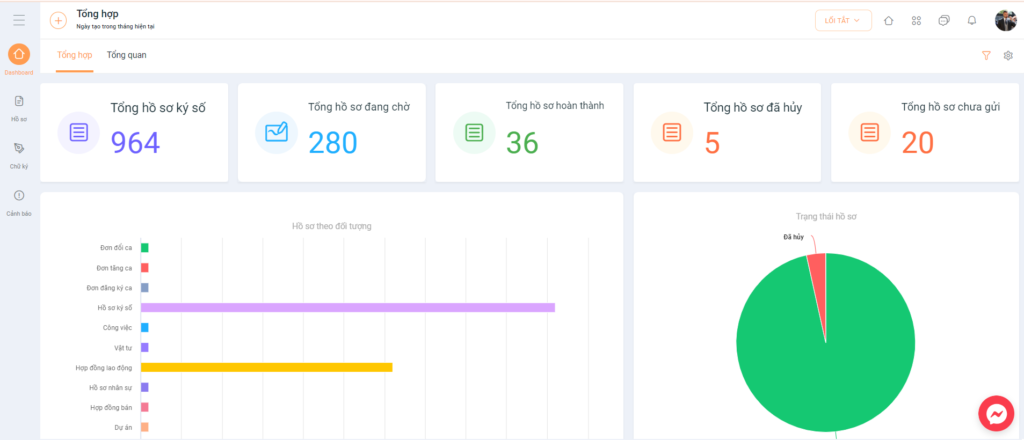
Among them, 1Office’s digital signature and electronic contract software is a comprehensive solution that helps businesses perform digital signing and conclude electronic contracts quickly, conveniently, and securely. With its outstanding advantages and features, 1Office is becoming the solution chosen by over 5,000 businesses to implement digital signing and conclude electronic contracts.
If your business needs a consultation or a free trial of the 1Office digital signature feature, please contact us via Hotline: 083 483 8888 for completely free support. We wish you success
















